

Q&A’s With Two Travel Show Hosts
Recently, some colleagues asked me what it would take for journalist Kim Haas become public television’s next Rick Steves.
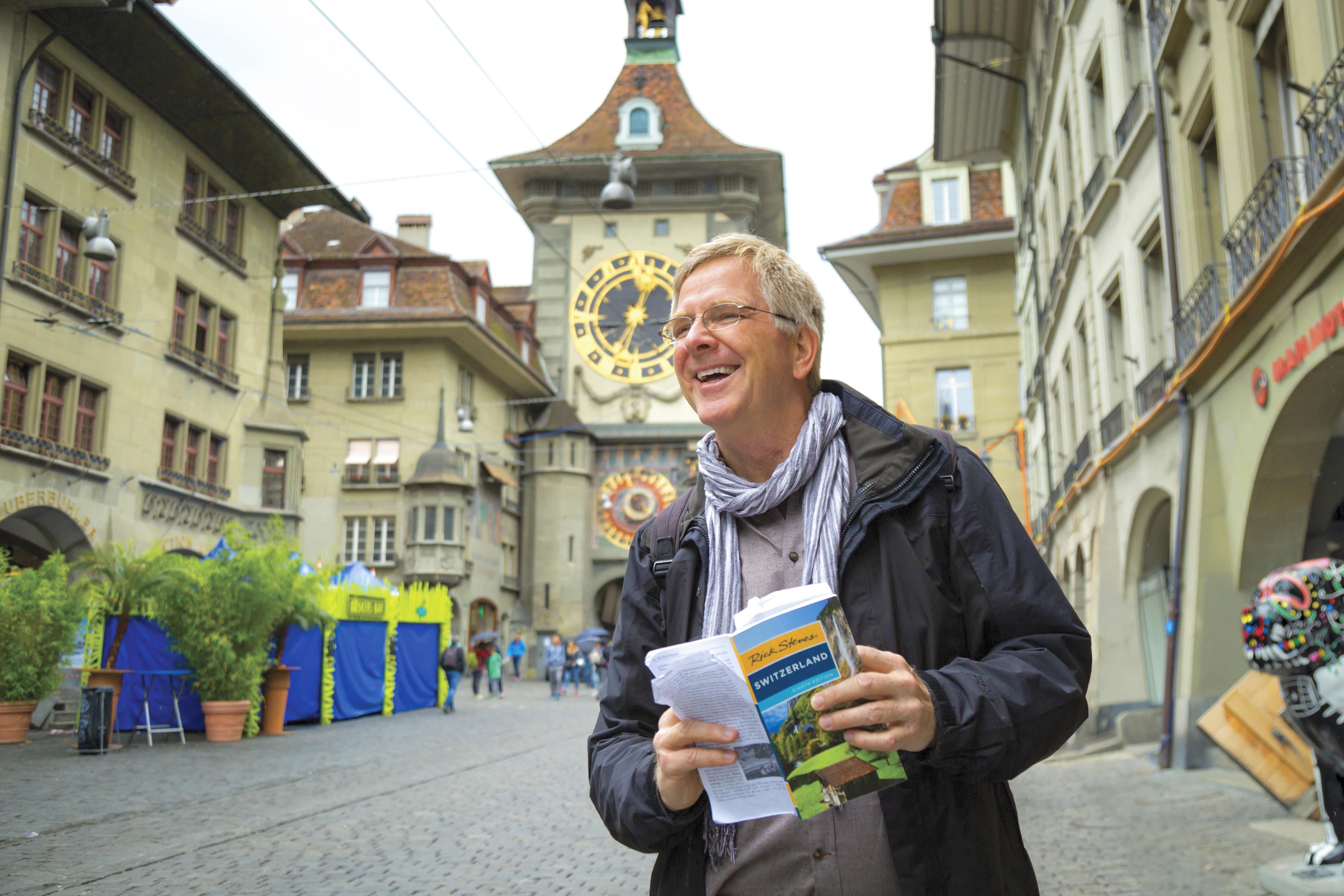
Steves is a public television pillar. And beyond being a knowledgeable travel guide and educator, he’s built a production house that routinely gives back to public television through eager participation in televised fundraising segments for local stations and the sale of show merchandise — even special tours of Europe.
Haas is a newcomer to public television. She is also Black, and her travel show centers on the little-explored (until now, perhaps) Afro Latino culture throughout the Americas. Would those two things throw barriers in front of her? I ended up writing a column addressing diversity in public media programming.
I asked Steves if he got any special head starts, legs up or feet in doors to launch his on-air career?
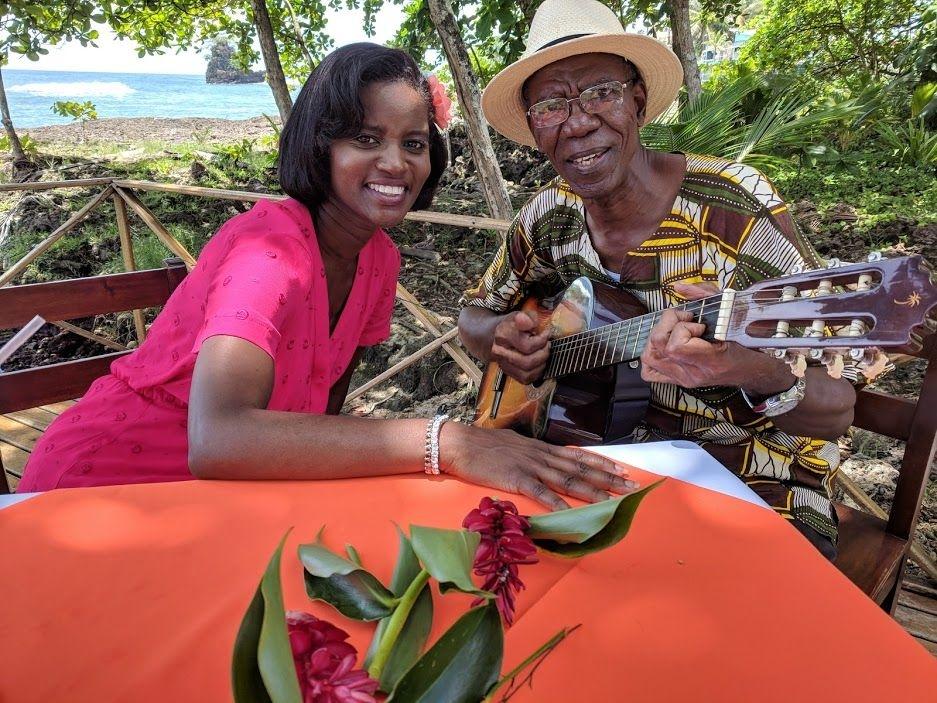
I also asked Kim Haas what it’s taken to get her new public television show, “Afro-Latino Travels with Kim Haas,” off the ground and on the air.
Here are excerpts from those online conversations:
Rick Steves:I became passionate about teaching (sharing the lessons I learned from my school of hard knocks) about traveling in Europe and understanding what you’d see and experience in Europe as a typical traveler from the United States. I taught in any way I could and eventually offered my teaching and content in many ways for free to get a bigger audience. (Through lectures, radio and TV shows.) I kept a focus (Europe, which I had a decade of experience exploring when I started and now have four decades of experience exploring) and I kept my eye on a big and general market (Paris rather than Kyiv, general travel interests with a high mindedness rather than opera or cuisine or bird watching) and I kept it accessible (not too sophisticated and a little bit childish) so people’s eyes don’t glaze over.
Back in the late 1980s, we were a group with a common vision: take my local travel lectures about travel in Europe and build a TV series around them. It took one funder with a few thousand dollars, and five dreamers who would invest "sweat equity" in the project. It was painful for me to see the results of our hard work in Europe not (generate) enough money to see us through a quality post production process, but that's the nature of the upstart TV production beast.
Our three-week pilot was picked up by a couple stations (Buffalo, Pittsburgh, and Seattle, I think). It was good enough for us to (later) try an entire 13-week series.
Since 1990, I have produced about 180 episodes and specials (over) 15 seasons … And since 2000, I've had the same crew (producer Simon Griffith, editor Steve Cammerano, cameramen Karel Bauer and Peter Rummel). We are a proud part of the public television family with lots more quality travel television in the pipeline!
Kim Haas: I know that it has taken many producers years from conception to airing of their shows. However, the length of time varies with each person and their individual circumstances. It took me a decade for a variety of reasons: My daughter was born and I wanted to spend time with her while she was a baby. I have another business focusing on multilingual communications and community outreach which I devote a lot of time to.
Ricardo: Describe obstacles you have had to overcome to get your travel show off the ground.
Kim:Securing funding has been extremely challenging.
When I first started pitching the idea of the show to corporations, organizations, foundations, tourism boards and individuals, people were not familiar with the term “Afro Latino.” And, unfortunately, once I explained that the show celebrated and honored Afro Latinos, there wasn’t much interest.
I received so much rejection over the years. It was absolutely incredible. But, I always believed in the show, the importance of celebrating Afro-Latinos and their rich legacy in Latin America. I never gave up because I believed in the importance of the show, I spent my own money to develop, research and shoot it in Costa Rica. Self-funding by producers is not uncommon. Sometimes, it’s the difference between bringing your idea to fruition and keeping your idea in your head or on paper.
Rick: The main thing is money — how do I justify the cost and why would a (public television) station justify airing it?
If there’s no market and appetite for the show, it can be worthwhile as anything, but there’s no gas in the tank. That is the nature of media and publishing. For example, as much as I’d love to see more information on accessible travel (I wrote a fine book about that one time that sold in the hundreds) there’s not enough of a market for that to happen without a patron.
Once I did get on the air, it (became) important for my show to be seen as a “cash cow” by the stations. That’s why I put so much energy into membership specials. (I produce about two a year…two more due in March 2021.)
Year after year, we built “carriage.” I stoked our station relations by dedicating lots of energy to pledge events. And soon we were in every market in the (public television system). We still provide our programming free to the system and work very hard to provide compelling (and effective) pledge specials.
Ricardo: I am sure you’ve worked very hard to get your show on PBS’ radar. And I am sure you’ve learned a lot about what it takes to get an idea on the air and keep it there. Do you believe there is room for more diversity in the universe of public media travel shows? Would a show that features Afro-Latin culture, food and art be welcome?
Kim: These communities have persevered and contributed magnificently to Latin American history and culture despite centuries of being ignored and devalued.
When (Afro Latinos are shown on television) their roles tend to be minor, negative and stereotypical. Many Afro Latinos tell me they feel ignored and invisible. It is disheartening not to see Afro Latinos represented in the media, and I wanted to help change the media representations and portrayals.
(After our first shows aired) people are reaching out and telling us how much they learned about Costa Rica’s black population, that they are so glad to see positive portrayals of black people on television, and that they are learning about the varied African diaspora,” Haas said.
Rick:Of course there is room for more diversity and quality shows that celebrate diversity and thoughtfully teach such subjects as you envision would be welcome. But, as long as TV is a business and as long as well-produced content is costly, money is the key ingredient to make it possible. Without a big market, it’s very tough to get the finances.
(My advice would be to) produce shows that have a long life and that are accessible to a broad audience. Find out how to produce these shows with a guerilla production style that makes them economical to produce. Work with stations … assuming that they are in economic crisis. (My shows have always been free to American Public Television stations and I’ve stayed away from any distribution system that adds a needless middleman to an already tough equation.)
I have never been able to get any serious underwriting money so, for many years now, I’ve basically not tried.
Ricardo: Name one break that’s come your way — that’s convinced you to keep going.
Kim:Luckily, we received in-kind support from the Costa Rica Tourism Board which paid for the (film) crew’s airline tickets, lodging, meals and ground transportation expenses during production. I still had to pay the crew’s wages, gear and related expenses but the tourism board’s in-kind support defrayed a lot of the expenses I would have had to cover. It was a great help.
Thankfully, this summer, I received a grant from the Ford Foundation for post-production expenses. That financial support was a life saver and enabled us to edit the shows and submit them for broadcast.
Rick: (I’ve come to see) my profit as "trips impacted" or "Americans' point of view impacted" rather than conventional profit. That has been a saving grace for me. Also, I believe in (Oregon Public Television -- my “presenting” station) and see the content that I can provide as part of the mission of public broadcasting, so I'm mission-driven in that regard too.
---
Photo credits
Rick Steves, New York Times Magazine by Zachary Scott
Kim Haas, courtesy of "Afro-American Travels with Kim Haas"