

Do journalists today have an obligation to blind objectivity? What do we do with verified fake news that’s often dressed up and sold as a legitimate argument?
Is it right to air untruths, without commentary or qualifier, against verifiable facts just to appear objective and balanced?
Does being open to “all sides” mean you have to treat demonstrably false information as a legitimate debate counterpoint?
These questions come to my mind as the PBS Public Editor. Our office fields several emails and phone calls each day from viewers who feel strongly about this topic. The complaints say PBS journalists deny “equal time” to claims by former President Donald Trump and his supporters that the November election was stolen from him. That untruth has fueled deep division in our country. It even led to the sacking of the Capitol building by angry Trump supporters a month ago.
Last November, a PBS viewer objected to the very practice of calling out known falsehoods and undoubtedly would object to the statement I just made. He wrote in an email:
"When you momentar[il]y flash/post ‘Officials have found no evidence of significant voter fraud or irregularities’ today 11/29/2020 pertaining to [former White House press secretary] Kayleigh McEnany's 11/20 press release [it] is evidence [of] your organization's willful ignorance or purposeful lying actions. Why should I ever trust you to bring me truthful and current news?!!!?" -- Jerry Kelly, Colorado Springs
But facts are knowable and provable and cannot be tailored to the whims of an individual. A fact, simply defined by the Oxford English Dictionary, is “a thing that is known or proved to be true.”
The latest edition of the Associated Press Stylebook, treated like a bible by most reporters and copyeditors, considers “fake news” to be “shorthand for deliberate falsehoods or fiction masked as news.” Journalists following AP guidance describe what is false and back it up with facts. “Avoid amplifying the false claim,” AP says. Reporters adhering to AP style do not label as “fake news” items that are legitimately disputed. The subject has been so hotly debated that the AP had to update its entry on “misinformation, fact checks and fake news” in May 2020.
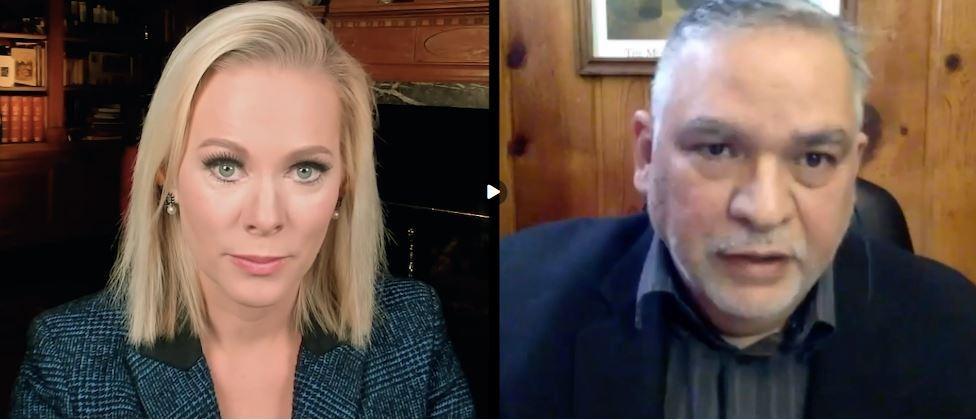
In a twist to how we usually do things, I’m limiting my printed observations here in favor of the webcast of a substantial conversation I recently had on this subject. Margaret Hoover, host of PBS’ Firing Line, knows a thing or two about opinions, and dedicates quality time to calling out empty arguments. So we asked her about fairness, objectivity and our responsibilities as journalists.
This topic is increasingly difficult these days because everyone seems to have retreated to their own camps. From there, they’re calling on PBS news people to be “fair” and “objective,” when they’re actually demanding we close our eyes to obvious holes in their arguments.
“What about Hunter Biden and China?” and “You’re ignoring the evidence” from (choose your swing state) that shows ballots being moved or snuck into the election count. Credible journalism has shown those two stories don’t hold water. Yet, when we don’t air them, or when we clearly identify them as unsubstantiated, many viewers have told me Robert MacNeil and Jim Lehrer would be ashamed that we’re not being fair or objective.
Journalists are not infallible and they, like all humans, are subject to subjectivity. But I dare say the legendary PBS newsmen would instead be concerned if today’s journalists simply parroted what politicians or the powerful said, without a proper dig for the truth.
---
PBS researcher Daniel J. Macy contributed to this report.