A death in Minneapolis, a shooting in Portland, and an overwhelming sense that Stephen Miller and company are playing for keeps. The panel discusses the Trump's administration’s aggressive immigration crackdown.
Clip: What is the goal of Trump's aggressive immigration crackdown?
Jan. 09, 2026 AT 8:46 p.m. EST
TRANSCRIPT
Notice: Transcripts are machine and human generated and lightly edited for accuracy. They may contain errors.
Jeffrey Goldberg: Susan, I want to switch to ICE and the domestic issues. There's no sign that the opposition in cities like Minneapolis, Portland, and so on is doing anything but making Trump and J.D. Vance and Stephen Miller double down on aggressive enforcement. Where is this heading?
Susan Glasser: Yes. I think that's an important point to make, Jeff, is that it seems that this is, in some ways what they wanted, or a political goal of theirs, was to incite, you know, conflict inside the country division, rancor, escalation. There are, of course, many mayors, not just the mayor of Minneapolis, who believe that the presence in their cities of this enhanced ICE presence, these immigration crackdowns is designed, in fact, to provoke civil conflict.
You do hear Miller and Trump muttering all the time about the possibility of invoking something like the Insurrection Act, especially as courts rule against them in terms of troops. And you have this horrific incident in Minneapolis, which would be terrible under any circumstance.
But what I've noticed, and we've all seen it obviously, is the specific, calculated decision in particular by Vice President Vance to inflame the situation. He has spent the last several days constantly on social media vilifying the woman who was killed after dropping off her child at school in the morning rather than doing what any other politician would have done in our lifetime, simply saying, this is a tragedy, it should be investigated. Vance has made it a strategy to escalate this and to pit Americans against each other. And, yes, maybe he's trying to distract from the fact that Donald Trump is not the America first isolationist that J.D. Vance thought he was, or that he campaigned on. I don't know. But it's very divisive and very painful to us (ph).
Jeffrey Goldberg: I think one of the novel aspects of this that you're referring to is that, ordinarily in an incident like this, federal officials all the way up to the president would say, let's see, the FBI is investigating, you're going to look at everything, hear all the audio and investigate and interrogate everyone. And here, the administration has made a decision that she' -- the woman who was killed is practically Antifa. This is genuinely new and troubling from the perspective of due process.
Stephen Hayes: I mean beyond Antifa, right? He called her -- they called her a domestic terrorist.
Jeffrey Goldberg: Domestic terrorist, yes.
Stephen Hayes: So literally Antifa.
Jeffrey Goldberg: Right.
Stephen Hayes: Plus, look, I think, yes, we should be troubled by the incident itself, which was tragic for all the reasons everybody has already talked about. The fact that the president and virtually everybody in his administration has doubled and tripled down on making these attacks on this woman by saying things that they can't possibly know, they can't possibly prove, some of them demonstrably untrue, it's hard to come to a conclusion other than the one that Susan comes to, which is that this is part of the goal that they would like to have this situation inflamed.
Jeffrey Goldberg: Yes. Vivian in just a minute that we have left, J.D. Vance has said that the ICE officers operating in these cities are operating with absolute immunity. You're a lawyer. Explain where that idea might come from.
Vivian Salama: So, possibly from the office of the vice president, where they --
Jeffrey Goldberg: Not necessarily from American law.
Vivian Salama: It is not from American law.
It is challenging for -- it is hard to prosecute in a state court these types of matters. It would be very hard to prosecute, but whether or not they were protected by immunity, that doesn't seem to be the case.
And I think one of the underlying themes of everything we've spoken about today is that the White House is now trying to test the limits of executive power. And we've seen that in everything we've discussed over the course of the past week. We've seen that from Stephen Miller's rhetoric and the vice president's as well, and it's extraordinary that they've managed to take it this far on all of these issues.
Jeffrey Goldberg: That might be the common theme here, the endless pushing out of the boundaries of executive power. I think it's going to be a continuing subject for us, but I'm sorry to say that we have to leave it there.
FROM THIS EPISODE

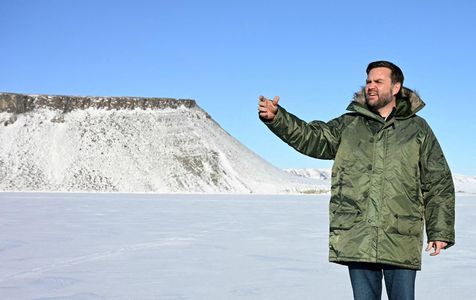
Clip: Trump’s Greenland threats and imperialist ambitions
It’s been another tumultuous week for America, and for America’s allies and adversaries. It was only a week ago that Delta Force operators snatched Nicolas Maduro from his home in Venezuela, and it was only a few days ago that we all realized that President Trump was completely serious about seizing Greenland.
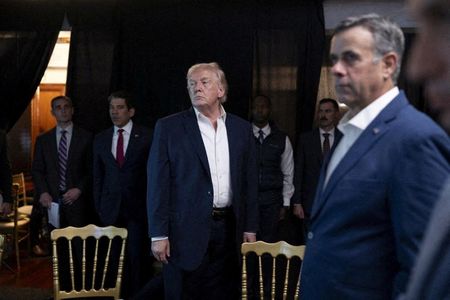
Full Episode: Washington Week with The Atlantic full episode, 1/9/26
Donald Trump often says he’s not a neoconservative and not a nation-builder, but he seems to be trying to remake the world. And at home, he’s unleashed ICE to remake America’s demographic reality. Join moderator Jeffrey Goldberg, Peter Baker of The New York Times, Susan Glasser of The New Yorker, Stephen Hayes of The Dispatch and Vivian Salama of The Atlantic to discuss this and more.


© 1996 - 2026 WETA. All Rights Reserved.
PBS is a 501(c)(3) not-for-profit organization