President Trump has demanded Iran’s unconditional surrender, but we also know that ending Middle East wars on U.S. terms is no easy thing. The panel discusses the decision to go to war and examines the American strategy to the extent that there is, in fact, a strategy.
Clip: Trump demands Iran’s surrender, but ending war is not easy
Mar. 06, 2026 AT 8:41 p.m. EST
TRANSCRIPT
Notice: Transcripts are machine and human generated and lightly edited for accuracy. They may contain errors.
Jeffrey Goldberg: But Trump is different than a typical American leader in a lot of ways, including the way that -- I mean, Nancy, there's a reasonable chance that Donald Trump on Tuesday comes out and declares victory, we've won. You could say, look we've destroyed for a second time the nuclear facilities. We've taken out 80 percent of the ballistic missiles. I'm done. And we also know that he has a short attention span. So, I mean, what are the chances that by the end of -- by next Friday, by next weekend, we're going, oh, yes, I remember the war that we had in Iran, in the same way that we talk about Venezuela in the past tense?
Nancy Youssef: There is a chance. Because, look, this war, the preliminary estimates is that it's costing $8 billion a day. It is draining air defense capability. It's putting a huge strain on the force. And he has set the groundwork to say that any military campaign is successful because it's a weaker Iran. And if it doesn't go well after that, he can say I gave the Iranian people a chance and they didn't take it. And so he created an exit ramp for himself in terms of his narrative around this. But that doesn't mean that there won't be second and third order effects on the ground. He can't stop the economic impacts of this going on well beyond the military campaign because you will not see ships transiting the Strait of Hormuz until they are confident that the security situation is stabilized.
Jeffrey Goldberg: Right.
Nancy Youssef: So, he can stop it on one level, but he can't control all the timelines that are related to it.
Jeffrey Goldberg: Karim, I have an impossible question for you. What is the Trump doctrine? I mean, what have -- how would you define Trump foreign policy based on what we've seen in Venezuela, Nigeria, possibly Ecuador now, and Iran, and maybe in a theater near you very shortly, Cuba, how do you -- how are you thinking about what category does this fall in international relations terminology?
Karim Sadjapour: Well, if I had to summarize it in one word, I'd say improvisation. I think that he wants big victories, obviously big dramatic victories, but very short-term thinking and totally improvised hour to hour his -- the way he articulates his endgame can change. And what Nancy mentioned now is important, Jeff, because what Iran's strategy is right now, its retaliatory strategy, is to actually negatively impact American public opinion. They're trying to spike the price of oil. There's some service members who've been killed. There's explosions happening in different places throughout the Persian Gulf. And they want Americans to look at their television set and say, what's going on here? How do we get ourselves into this situation?
Jeffrey Goldberg: Right.
Karim Sadjapour: And they're hoping American public opinion is going to restrain these ambitions that Trump has.
Jeffrey Goldberg: You have written about the long and sorry history of the American presidency and the Islamic Republic. Talk about that for a minute and talk about whether your own sources inside the administration recognize that Iran has the capacity to undo American presidencies.
Karim Sadjapour: So, from 1979 when the revolution happened to the present, by my count, Iran has consumed at least five American presidencies. So, the revolution and the hostage crisis ended Jimmy Carter's presidency.
Jeffrey Goldberg: Right.
Karim Sadjapour: Iran Contra tainted Ronald Reagan's presidency. 9/11 was not Iran, but then when George Bush launched the Iraq War, Iran sabotaged the Iraq enterprise for President Bush, you know, consuming his presidency. Then we go to Barack Obama and the nuclear deal, the JCPOA, which consumed the second half of his presidency. Joe Biden, October 7th, 2023, that was an Iranian proxy, Hamas, that invaded Israel and then two years of wars with Iran, and now President Trump. And so I do think when you listen to the president's own language, he's hoping to be the guy that ends this 47-year nuisance of the Islamic Republic of Iran. And I do think, as we've all said, that he has a short attention span to try to do that.
Jeffrey Goldberg: Yes. Peter, it's interesting though. It has been a stalwart enemy of the United States and has undone the U.S. in various ways.
Peter Baker: Yes.
Jeffrey Goldberg: It's not the worst theory in the world to say, let's just deal with it once and for all, right?
Peter Baker: It's certainly true that there are plenty of reasons why the United States would want a different regime in Tehran, no question about it. And he outlined them in that eight-minute video he put on air in the middle of the night when the strikes started. What he didn't explain is why now. And I think you could have come out and said, look, because it's been 47 years, it's now time to finally deal with it. Okay, maybe the public would've accepted that, but he did nothing to lay the groundwork for that. He did nothing to convince the Americans this is necessary to do now. Because if you sit there and say, look, they've been a thorn in our side for all these years, they've killed these people, they've been, you know, a malign force in the neighborhood, a lot of Americans say, okay. And then so why now?
Jeffrey Goldberg: Right. I want to -- I'll come back to you, Susan, but I want to talk about one thing, Pete Hegseth. You mentioned the deaths in this war so far. Six Americans have been killed so far. It's a small number relative to other wars of America in the Middle East, but it's still six too many. Here's Pete Hegseth. I want you to watch this for a minute talking about this just the other day.
Pete Hegseth, Secretary of Defense: This is what the fake news misses. We've taken control of Iran's airspace and waterways without boots on the ground. We control their fate. But when a few drones get through, or tragic things happen, it's front page news. I get it, the press only wants to make the president look bad, but try for once to report the reality.
Jeffrey Goldberg: Susan, this is out of the norm for the way defense leaders speak about wartime casualties. That's probably an understatement.
Susan Glasser: I think it's fair to say it's an understatement, Jeff. You know, when you accuse people of getting themselves killed because they want to make Donald Trump look bad, you know, I would wonder what he would say when he looked the families of those people in the eye. And, you know, as your colleague, Nancy, has reported, you know, those folks in Kuwait were killed by an Iranian drone. And there are real questions about whether the American military was actually prepared for this kind of drone warfare that we've seen previewed on the ground over the last four years in this horrible conflict between Russia and Ukraine, in which Russia has been fighting with Iranians supplied drones that are exactly the drones that are now being flown against American targets and allied targets all across the Gulf right now.
Jeffrey Goldberg: Right.
Susan Glasser: So, it's not only a fairly shocking statement, but, in general, if you look at the performance of Pete Hegseth this week, what you've seen is war as video game. And, in fact, the White House literally released a video in which it, in his place (ph), what you could only call sort of, you know, pounding music and, you know, sort of war porn, images of targets being struck. And I think it's a pretty shocking moment, I think, for many people who see this power being wielded.
Jeffrey Goldberg: Nancy, last word to you on this. I am curious to know what you're hearing from inside the Pentagon, still a Pentagon correspondent, even though they kicked you and your colleagues out of the Pentagon. What are the generals and flag officers, other flag officers saying about this?
Nancy Youssef: About that moment in particular, there was a real stun silence about it. We all remember Robert Gates, for example, asking for news clips about the fall and sitting in the plane, you'd watch them cry over the loss of these men and women.
Jeffrey Goldberg: Former secretary of defense.
Nancy Youssef: That's right, because the secretary of defense gave the order to send them in harm's way. And a lot of generals still carry pictures, even in retirement of people who've lost in their command. So, it was painful to hear.
Jeffrey Goldberg: Well, we're going to have to leave it there. We'll be talking about this next week, of course. I want to thank you.
FROM THIS EPISODE

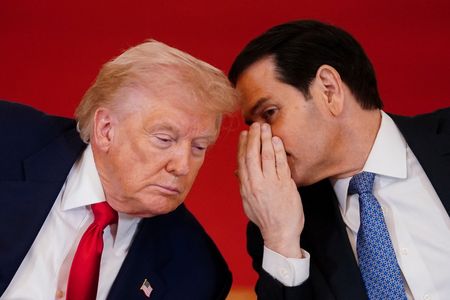
Clip: Trump's rationale and objectives for Iran war remain unclear
It was just last week that President Trump launched a war against Iran after telling Americans that he was opposed to new wars, especially new Middle East wars. The Iranian regime is practically leaderless and on its back foot, but the commander-in-chief of American forces has yet to explain to a doubting public the rationale for the war.
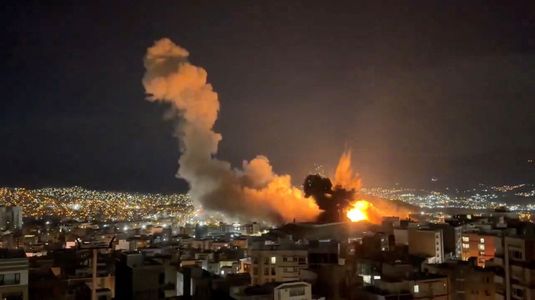
Full Episode: Washington Week with The Atlantic full episode, 3/6/26
It’s been a week since the United States and Israel went to war with Iran. The question for President Trump and Prime Minister Netanyahu remains: Why did they attack, and why now? Join moderator Jeffrey Goldberg, Peter Baker of The New York Times, Susan Glasser of The New Yorker, and Karim Sadjadpour and Nancy Youssef of The Atlantic to discuss this and more.


© 1996 - 2026 WETA. All Rights Reserved.
PBS is a 501(c)(3) not-for-profit organization