Over 250 years, the United States has become the world’s dominant economic power. The panel examines how it achieved that status and whether it can keep it.
Clip: Why has America been the economic engine of the world for so long?
Jun. 12, 2026 AT 8:18 p.m. EDT
TRANSCRIPT
Notice: Transcripts are machine and human generated and lightly edited for accuracy. They may contain errors.
Jeffrey Goldberg: Why has America been the economic engine of the world for so long? I don't think it's chauvinistic to say that we've invented a disproportionate number of the things that were worth inventing here. What is the secret of that success and how does it relate to democracy? And what is its future if democracy itself is on a kind of a rear movement, a retreat?
Idrees Kahloon, Staff Writer, The Atlantic: So, it's a hard question, especially because I covered politics for The Economist.
Jeffrey Goldberg: Yes. So, I found out late.
Idrees Kahloon: But I'll try. I think a few things. You know, America is a continent-sized free trade area which, you know, is valuable. It's been protected by oceans on either side. It's been able to develop for a long period without really getting embroiled into wars until it became hegemonic later in its life.
But there are also other things foundational to it. So, you know, patents and intellectual property are actually written into the Constitution as an enumerated power that Congress has to promote. And over time, we have also gained tremendous population through immigration waves, and that has, you know, never really gone down easily.
You know, in 1840 when Irish and Germans and Nordic people were coming over, like that was very, very controversial, right? That was not accepted. But, you know, those people contributed to our economic development. We saw in like the 20th century when we leaped ahead in scientific progress, a lot of that was, again, you know, immigrants who came over.
And we see that now as well, right? There is something about America, not just the fact that it brain drains the rest of the world, which I think is really the American superpower and has been for a long time, but also that you know, we have deep financial markets. We set up after World War II a global trade system in which we were the hegemon of that too. We have the dollar that everyone trades in. We should be sitting very pretty.
But to your point about what comes next, you know, we have gotten tired of this role of being an economic hegemon and a militaristic hegemon as well, right? We want to kind of pull away from all of this. One of Trump's nominees on the Federal Reserve says that, you know, countries should pay us for the privilege of using the dollar, which is a great way to get them to move away from doing that.
We're tired of the free trade system that we've benefited from so much. And, of course, we're pushing as hard as we can to tamp down on immigration, both legal and illegal. And we are also politicizing justice in a way that, you know, could at some point threaten property rights, but I don't think we're there yet.
But all of which is say that we've ascended to this peak. You know, we're doing a lot better than Europe is in a lot of ways. But in terms of where we're moving, I think that is a harder place to kind of be optimistic about.
Jeffrey Goldberg: Let me ask you a follow-up. It's akin to the question I asked Peter a little while ago. Are you surprised that, on the one hand, the data shows that immigration is a net benefit to the economy of the United States and is the engine of growth and innovation? Are you surprised by the way people have thought about immigration has shifted so radically in our country over the last 10, 15 years?
Idrees Kahloon: It's a cycle, right? So, you see in the 1840s, when we have mass migration of people from Ireland and Germany, that's the advent of nativism at the time, right? You have the Know Nothing party anti-Masonic league in 1920, right, right before the Ellis Island, the heyday of the Ellis Island immigration. That's when the border slammed shut in 1924 and stayed shut for 40 years.
So, in all of those times, you know, there's a big surge, and then there's a huge nativistic backlash. Those migrants were then incorporated into the American body politic. They're not thought of as, you know, Irish American. They're thought of as American. And that happened 100 years ago. It happened almost 200 years ago, and I feel like it's happening now as well.
FROM THIS EPISODE

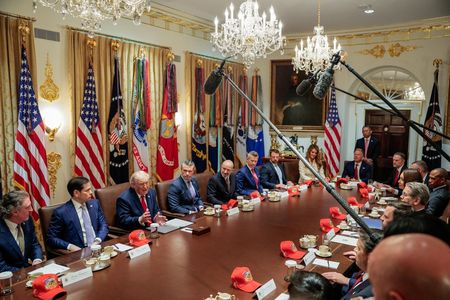
Clip: Is America driven by democratic ideals or transactional interests?
The panel discusses whether the United States is becoming transactional in its foreign policy, in the style associated with Donald Trump, or whether older idealistic principles still guide it.
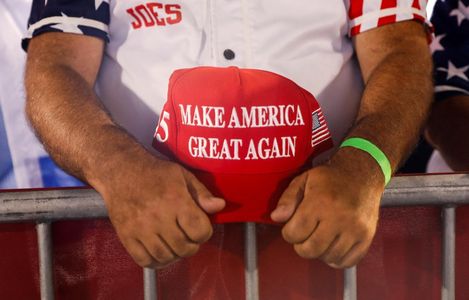
Clip: Is Trump a symptom or the cause of political polarization?
It's hard to find a unifying principle today, but everyone in America agrees that something's broken. The panel discusses whether President Trump is a symptom of dysfunction and polarization or the cause of it.

Clip: Has the United States lived up to the principles formulated 250 years ago?
As the United States marks its 250th anniversary, the panel discusses if America has lived up to the principles set forth by its founders.
Full Episode: Washington Week with The Atlantic full episode, 6/12/26
As the United States approaches the 250th anniversary of the Declaration of Independence, we're looking at the state of our democracy and where we’re headed. On a special edition of Washington Week, Jeffrey Goldberg sits down with The Atlantic's Tim Alberta, Idrees Kahloon and Ashley Parker, Stephen Hayes of The Dispatch, Peter Baker of The New York Times and Susan Glasser of The New Yorker.


© 1996 - 2026 WETA. All Rights Reserved.
PBS is a 501(c)(3) not-for-profit organization