Q&A with the Cast and Crew
short | 46:37 | CC
Stars Kyle MacLachlan, Sofia Helin, the series' crew answered questions about bringing the historically inspired series to life.
- Hi everyone.
My name is Jenelle Riley.
I'm an editor at Variety.
And I am so thrilled to be here today.
For this Q & A. With, what has become my obsession and probably yours.
"Atlantic Crossing."
I'm gonna be taking some questions from the audience during the discussion.
So if you have one, there should be a Q & A button at the bottom of your screen.
Go ahead and submit one there.
And I'll try to get to as many as possible.
And now please join me in welcoming the people who brought this beautiful series to life.
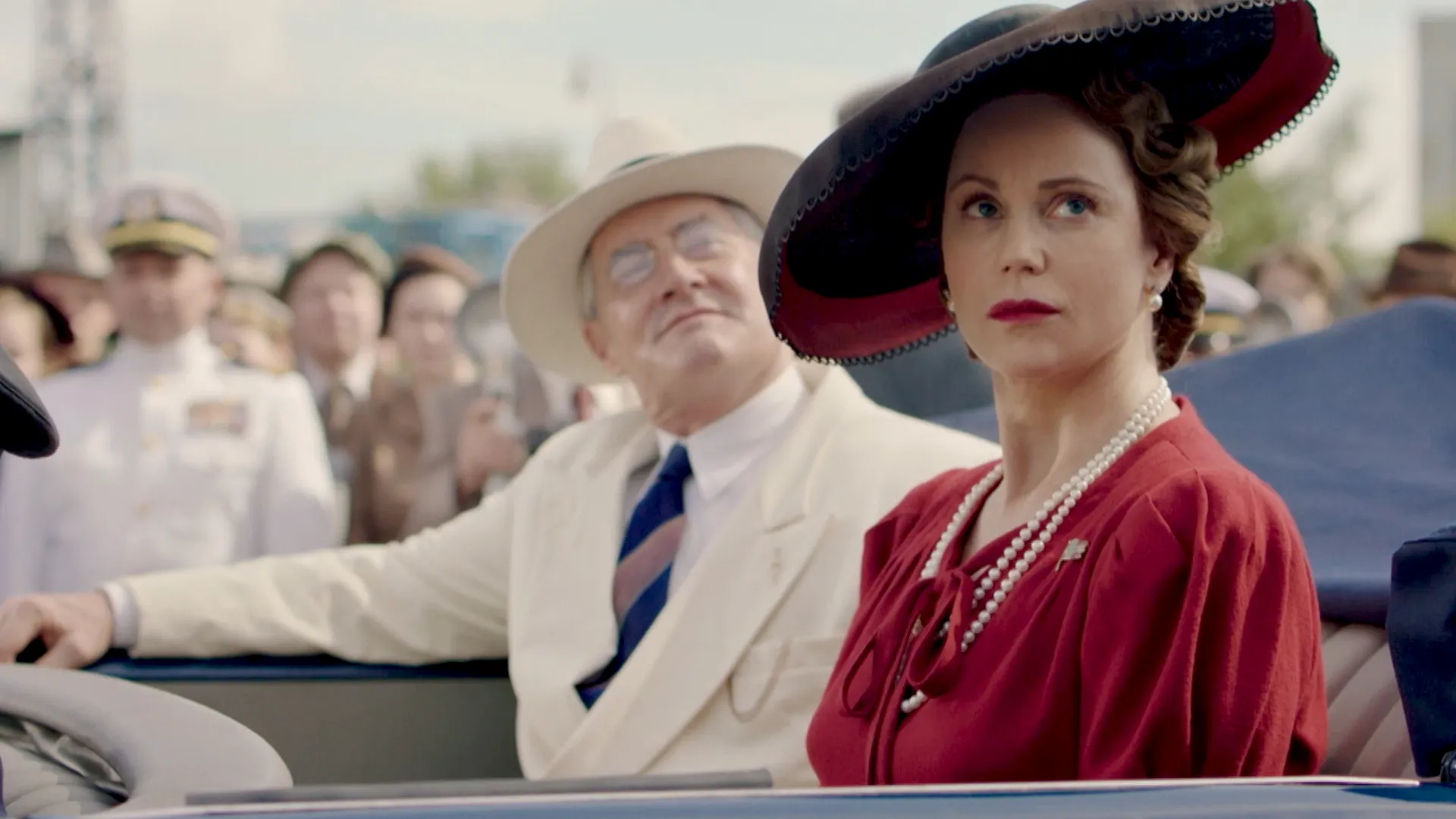
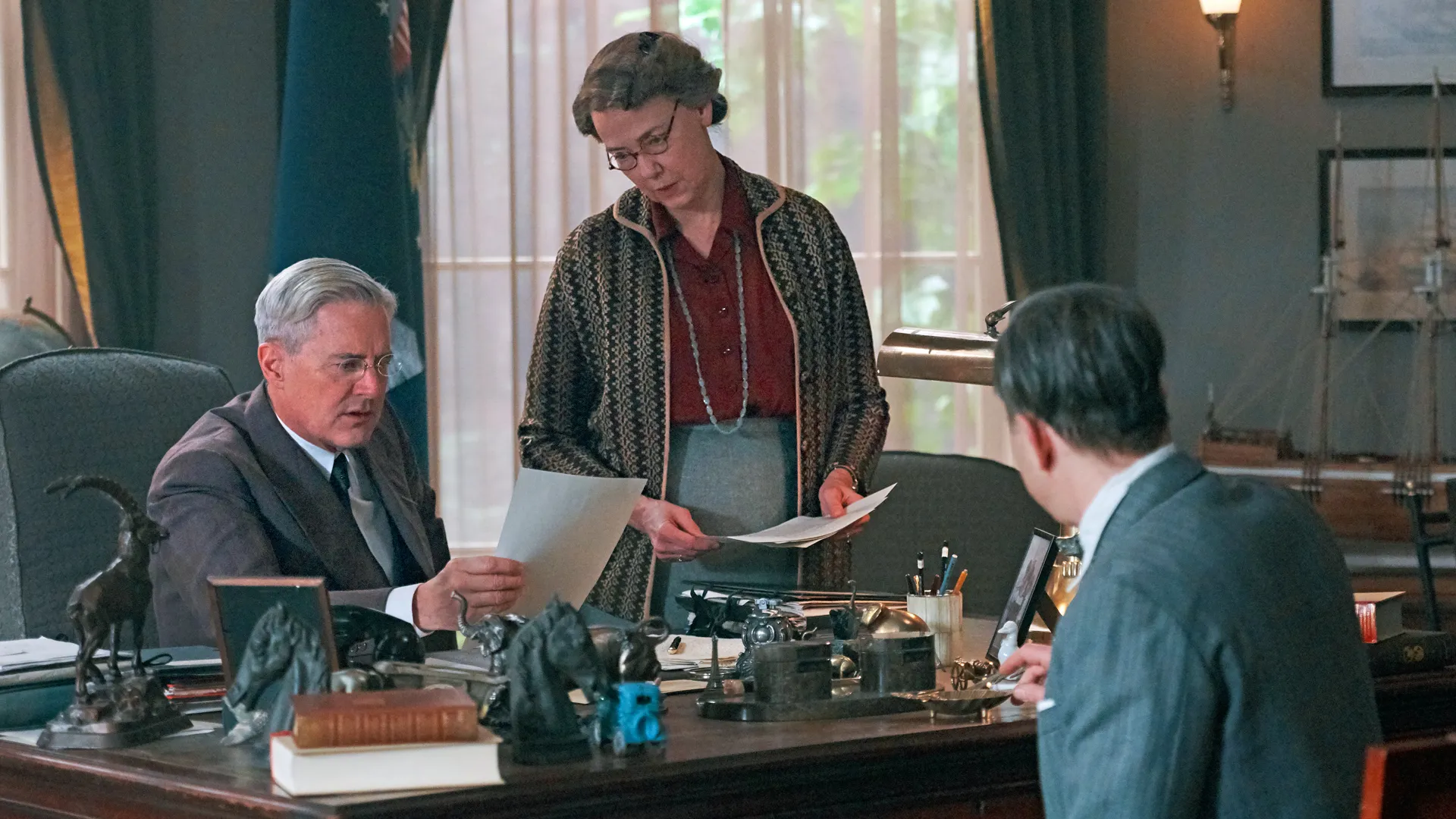
I want to start with the actor who portrays US president Franklin D. Roosevelt.
Please welcome Kyle MacLachlan.
- Hey.
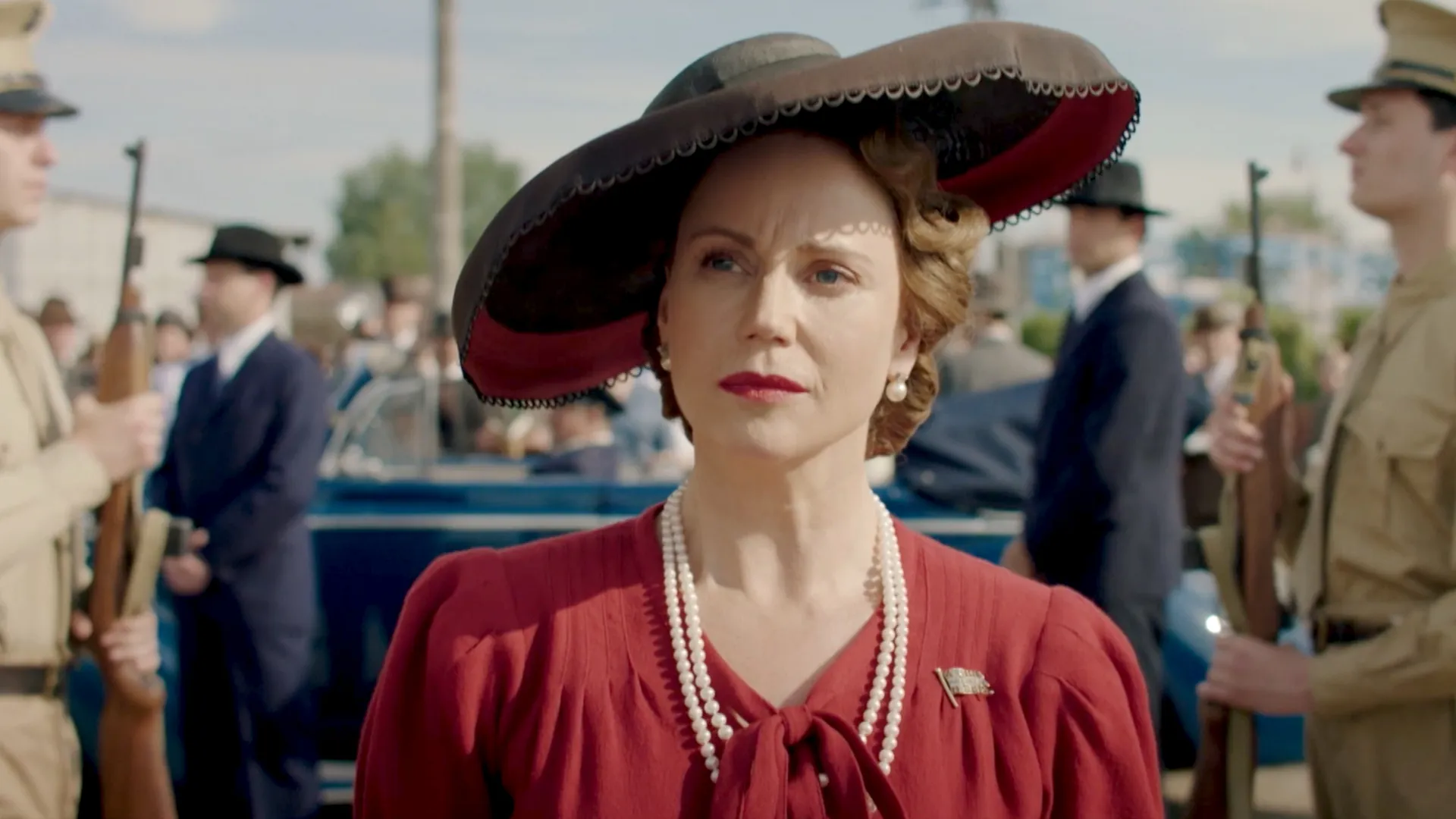
- We also have joining us the actor who portrays the Norwegian Crown Princess Martha.
Please welcome Sofia Helin.
The shows director, script writer and executive producer.
Alexander Eik We also have script writer, Linda May Kallestein.
Joining us.
And "Masterpiece" Executive Producer, Susanne Simpson.
- Hi everyone.
- Thank you all so much for being here today.
Congratulations on a beautiful series.
I feel we should start with Alexander, who is the creator of the show.
Also, obviously writer and director.
How did you come to know the story of Crown Princess Martha?
And what interested you, in telling this story about this particular time?
- Well, actually it started all the way back in 2011.
I read this article in a Norwegian newspaper about Crown Princess Martha spending five years in America.
Having a very, very close relationship to president Roosevelt.
And it just struck me that I didn't know actually anything about Martha at all.
I hardly knew that she was, that she stayed in America during the length of the war.
And, I was very intrigued by the speculations that there was a romantic relationship between the crown princess and the president.
So, I was really just curious.
And I started doing my own little research to try and find out more.
And I just realized that actually people, really hard to find any information on Martha at all.
She's a very obscure figure in Norwegian history.
And that got me, all the more intrigued actually.
And then I was lucky to have Linda on board as a co-writer.
And together we started doing research back in 2012.
And six years later we started, well we were in the middle of writing the script.
It took a very long time to find enough information to get to know Martha.
So that's why it took such a long time.
Yeah.
So that's where it started.
- You're making me feel a lot better.
Because, while I was watching this.
I was mortified.
I didn't know this story.
So, I feel a little bit better knowing that it wasn't a wildly popular story.
And you really had to research to get some of this information.
And Linda, I'm curious.
Oh, go ahead.
- No, no it's fine.
- Linda, what interested you in being a part of this series?
And could you ever have imagined it would be six or seven years of research when you started?
- No, absolutely not.
Sometimes it's good, but you don't know ahead of time But it was worth all the time.
So maybe I would have even done it, even if I knew that.
Well, just like Alexander said.
In Norway this story is completely unknown.
And, I barely never even thought about that.
We had a queen who never became a queen.
She was a crown princess.
She died very young in the 50s.
So when I was growing up, Olav was then the King.
I never really thought about that there was a woman that was missing by his side.
So for me, she was totally unknown.
And people I spoke to had no idea.
Anything about her either.
So just going into the material and finding a little nugget here and a little nugget there.
And then piecing this together.
And seeing that you know what, there's a big story here.
There's an untold story that probably because she died as young as she did.
It died with her.
And the stories of war are usually stories about men.
So to find this amazing figure and a woman who played a huge part of Norway's war story.
Being that close to the president.
I mean, who gets to be that close to the most powerful man on the planet.
And we know that she spent more time with him than anybody else except for his advisors during all the war years.
So they were extremely close, and spent a lot of time.
So, the story is intriguing.
And the more we found out, the more intrigued we became.
- Susanne "Masterpiece" is obviously synonymous with beautiful quality productions.
So, "Atlantic Crossing" theme is like the perfect home for it.
But how did you sort of become aware of this project?
And how did "Masterpiece" get involved?
- Well, we became aware of it while it was in production.
And, it wasn't until I had a chance to actually see the first episode.
That I became totally intrigued by the whole thing.
I had never heard of the story.
I had never heard of Crown Princess Martha.
It was so beautifully shot.
And it starts with a real romance between Olav and the crown princess.
And so I was immediately intrigued.
But, just to do my due diligence.
I had to find out from Alexander and Linda, how much of the story was true and how much of it was fiction.
And, they gave me what was the most impressive look at what they had put together.
And so, then I became convinced this was really a story that our audience would love.
I mean, it was beautifully done.
Something nobody had ever heard of.
And had of course Kyle and Sophia as the leads.
And they're both just spectacular.
And I think "Masterpiece" likes to think of itself as a place where great writing, great acting, great production values.
And this show had it all.
- Absolutely.
And obviously the show doesn't work without the perfect cast.
So I would love to talk to Kyle and Sophia about how the project found its way to you.
And, was it an instant yes?
When you heard the story, when you read the scripts.
Were you at all familiar with these events?
And let's start with Kyle.
- Oh, thank you.
I was sent the script through the channels in Los Angeles.
Through my agent.
And, was very intrigued with the story.
Also, the idea of playing FDR.
That's a kind of a mountain of an assignment.
And I was very excited about it.
I loved what I read.
I love the fact that the story focused on the family.
I love the fact that it was also focused on a woman.
A woman's journey.
And really finding her voice.
And that Franklin was a supporter of that.
I liked that dynamic very much.
And in the conversation that I had with Alexander when we were first speaking on the phone.
I recognized in him, the kind of director that I would love to work with.
A very thoughtful, very detail, oriented.
And based upon the script.
I also saw the Franklin that he and Linda created was someone that I identified with.
And look forward to playing.
He had a personality that I thought was really spot on.
So all of those elements were there for me.
- I can't get over how much you look and sound like him.
Had anyone ever said to you before that you resembled FDR?
- No, actually.
When I thought about it.
I said, "Oh, actually yeah it could possibly work."
And one of the questions of course with Alex.
Was whether or not we do any kind of prosthetic stuff.
And, we decided pretty early on not to.
And really just rely on the glasses and kind of the haircut.
And the attitude to convey the personality of president FDR.
- Yeah, it's funny when I heard that casting.
I was like, "Oh yeah, of course."
But I never would've thought of it on my own.
So I guess congratulations to Alexander are in due.
- It was so intriguing to have Kyle coming to Prague in the pre-production.
And seeing him taking on the character.
Both mentally and physically.
And it is a very physical role due to the characters fiscal condition.
And he was in a wheelchair of course.
But I think Kyle really managed to, I mean, Kyle had of course done his own research before we met the first time.
And studying Roosevelt's manners.
And how he was using his body, and moving.
And of course we decided not to go for, not to try and force an emulation.
Try to make Kyle be like a lookalike of FDR.
We were more looking into a method where Kyle would do his interpretations through his own persona.
And there somewhere, find the resemblance in a more organic way, natural way.
So, and I think Kyle really succeeded with that.
In a way that exceeded my hopes and expectations.
And I guess you're right.
He really does look like FDR.
In that role.
- Yeah.
- Thanks Alex.
- Sophie, what about for you.
Were you at all familiar with Crown Princess Martha?
And, as someone who maybe isn't as iconic and recognizable as FDR.
Were you able to draw on newsreels or anything to sort of, get a sense of her?
- Yeah, I had never heard of her when Alexander pitched it to me.
And, that itself was intriguing.
Because he explained to me the role she played during the Second World War.
And the other thing is that I as a Swedish woman.
I've learned about Norwegian history.
About the male heroes from the Second World War.
And so on for years and for years.
And now, there was a story from another perspective.
And that's always interesting.
If you want to tell a true story through, as a drama.
To me it's always interesting to see, to get to know what kind of angle will you take.
What kind of perspective do you want to show.
And this so clearly wanted to tell her story.
So that itself was intriguing to me.
And also that she was so unknown also in Sweden.
I mean, she was a Swedish princess to begin with.
But I'd never heard of her before.
So yeah, I instantly said yes to the question.
- She was so ahead of her time in so many ways.
They're so many things that occur in this series that feels so relevant today.
I have to imagine you fell in love with her instantly?
- Yeah, I did.
Even though, I mean we don't look alike at all.
I think.
And we had to make a choice early on if we wanted to put on nose and teeth.
And so on.
And also the way she spoke.
Cause I listened to old tapes of her pronunciation of the Norwegian language and so on.
So we made some choices to move away from really how she really looked like.
But to focus on being close to me in order to get close to the audience.
That's always a question when you're doing a real person.
- Yeah.
I would love to talk a little bit more about the research.
Both for the cast and the creatives.
Alexander and Linda, you mentioned you spent over six years sort of researching the story.
In that time.
Did you sort of imagine what it would be in the beginning?
And then the more you learned.
Cause sometimes truth is stranger than fiction.
Did it sort of change the story as you continued?
- Yeah.
I mean we did right very early on.
I mean, almost immediately we started writing the script.
In 2012.
But then we did it as a feature film.
And we were having, we really struggled with that story.
Because we just, the more we learned and the more research we did.
The more the story just expanded.
And to the point where the producer said that, "It's never gonna work."
Because five years to compress that into a feature film.
Makes the story, yeah compressed.
And then we realized that of course it has to be a series.
It has to be, eight episodes.
Eight hours instead of two.
So, but of course the research process is detectives work.
And especially when it comes to this story.
Because Martha was so unknown.
There was so little written about Martha.
And the few books we found about Martha.
They were written by people who didn't really know her.
And observed her from a very great distance.
So to us as story tellers.
We needed to get as close as possible.
So we really did a very groundbreaking research on Martha.
We went places.
And found stuff that never had been revealed before.
And we had to puzzle all these pieces together.
And of course it was painstakingly slow.
And, well I can only speak for myself.
But I was, it really drove me crazy sometimes.
If I had Olav.
Olav would call for his dog.
And then I realized, "What's the name of the dog?"
And then like three weeks later, I had the name of the dog.
And I could write "Vimsa" in the script.
It drove me crazy.
But then again, we found these nuggets of gold.
Then it was so rewarding.
And as you say, sometimes truth is stranger than fiction.
And we really found so many things through our research that we could never have made up.
And that reasoning made the efforts, it made it worthwhile.
- Linda, was there anything in particular you discovered that really surprised you?
Caught you off guard?
And ended up becoming part of a story?
Or maybe it didn't.
Cause you weren't able to include it for whatever reasons.
- I think what really got us started that was the most surprising that held throughout.
Was how subconscious she was about helping Norway.
That that was the forefront of her mind the whole time we were in the presidential library.
Roosevelt's presidential library.
And went through the archives there.
And that's the only place that we actually found any letters that she wrote by herself.
Because there's no other documentation.
Her letter is if she had any journals or diaries if they exist, they're not accessible by the public.
And there just to find some small little letters where she wrote to Franklin.
That okay, "My son is sick."
And then at the same time.
She would then go on to say, "I'm sending you some clippings from a newspaper."
And she said, "Is this true?"
"I hope you can keep us in mind."
"And please help my little country."
So she kept appealing to him about her little country.
She was very humble in the way she presented this.
But like they said in the letter.
Where she's talking about the fever Harald had.
And then all of a sudden she would do this jump and go into something political.
Something as a lobbyist.
So what surprised me also later on.
As we came across an interview with a gentlemen who had worked for the Norwegian Information Office.
And he gave this interview, I guess around 2000-2002.
When he was quite old at the time.
And he had gone with the Norwegian ambassador home to Martha on a regular basis to feed her information.
So that when she was at the right place at the right time.
She could then just tell the president or whoever she was with.
That this is what's going on.
So she was extremely on top of things.
And this was all secret.
There were no written documents about this ambassador, and this guy.
They snuck in when people were out.
So even those living with her didn't know that this had happened.
So finding things like that.
Was like, "Yeah, we're onto something."
And our sort of anticipation, "Is this true?"
Like Alexander said, we kept finding nuggets and nuggets.
And the thing is too, it's frustrating.
Cause you find A, B, and then maybe E. And it's like okay.
"Where's C and D what happened?"
And there's nothing.
Or things that we had given up on.
Trying to find a solution and answers to.
And maybe three years later.
They just magically appeared.
It was like, "Oh, finally."
And that was such a relief when you're digging and digging.
And then you just give up.
And then somehow you turn a stone.
And it's like, "Ooh, there it is."
- I mean, for the actors.
You can do all this preparation and all this research.
But, when you show up on this beautiful set in Prague.
And you put on the costume, and the hair and makeup.
How much does that really help you as an actor truly transform into that character?
- Sofia.
- Kyle.
Go ahead Kyle.
- Well Prague is beautiful.
I don't know about Barrandov studios.
But they were okay.
The research, and I'll just speak for myself.
But the research, (background noise drowns out other sounds).
Loved it.
I couldn't stop really digging.
And sourced from a couple of places.
And to be honest.
There was an awful lot of information in the script.
That had a lot of work had been done already for me.
So once you have all that information at your fingertips.
Or you've absorbed it, hopefully.
Then of course you have to make the jump to make it your own.
And so that's where that process, and the working closely with Alexander as director.
And then being in the scene of course with Sophia.
And being able to really feel comfortable, I guess.
Kind of letting it all go.
And letting it all kind of hang out.
And hope that you are in a ballpark.
And, I felt like we were all pretty consistent with that.
And it was so helpful to have the eyes and the sensibilities of such a smart group of people around me.
As I was working with that frankly.
I felt that every day that I was on the set.
- So Kyle, I just want to mention.
That you said at one point that one of the things you used for research was Ken Burns series on Roosevelt?
- Yeah.
That was an important one.
They had gone through, and sifted through a lot of the actual footage of Franklin moving and speaking.
And, well with just many, many, many photographs.
And so I was able to study the physicality of him.
And from that kind of I guess.
Distilled out what I thought his personality might be like in certain instances.
I really gravitated towards a guy that loved to be the center of attention.
Could really tell a good joke.
Love to entertained.
Great sense of humor.
Super smart.
Very witty.
And that was all in the script.
So I had a lot of fun with those scenes.
- Sophia, what about for you?
And on a superficial note.
Did you get to keep any of your costumes?
Because they're stunning.
- Yeah, they are stunning.
But to be honest.
I was very relieved to get out of it after so many months.
Eight or nine months in this costume.
Also after a while I could really feel the weight of being royal.
And it was also in the clothes.
The way I felt my body had to be pleasant and nice.
It affected me in that sense.
So I was very happy to have a pair of joggers and a t-shirt on.
(laughs) But they are beautiful, I agree.
But that is helpful.
Cause I thought a lot about, I mean as I said.
Why do we tell this story about this woman and her journey?
She made a political journey.
She became active.
She became not a princess to watch.
But a person to act.
And that was what interested me in this part.
And that also has to do with the way she looked.
And the way she was.
She even had her own, design store in a very fancy place in Stockholm and so on.
So she was very aware of her appearance.
And also raised in Stockholm, in the castle.
So she grew up being a princess.
And to explore what that makes, how that affects a human being.
That was interesting.
And just to feel when she met with Roosevelt.
I imagine that must have been a relief to meet someone who is more famous or bigger.
And is that relaxed.
And the American culture that was much more relaxed at that time than in Europe.
And especially within the royalties.
So I imagine it must have been a lot of fun.
And, at the same time.
A lot of bad conscious for having the husband in London.
And for having your country invaded by Nazis.
And it's a very complex situation.
Yeah, she was a refugee.
- Chemistry, such a difficult thing to define.
Sometimes it works.
And sometimes it doesn't.
Alexander, I'm curious because this show does relies so much on the relationship between the crown princess and FDR.
Did you do sort of, any kind of a chemistry read with your two leads?
Or did you just know it would work?
(laughs) - Well, we didn't have the opportunity to do that on this particular series.
But after having extensive talks with both the actors.
And together before we met physically.
I never actually worried about that.
I really didn't.
Never struck me.
Until you say it now.
Oh my God, I was so lucky.
(all laugh) So we worked that so fine.
Obviously both Kyle and Sophia are very empathetic persons.
And they were casted for these parts for a reason.
I thought that was a very fundamental thing I would look for in these two characters.
In the actress who were playing these two characters that they had to be people's persons.
And have a lot of empathy.
And high EQ.
Social skills.
Because, Martha.
Crown Princess Martha and president Roosevelt.
They were both, they had people skills.
They were both known for treating, everyone they met equally.
Whether they were of high birth.
Or if they were normal people.
And this is a trait that they shared.
And also I think to shade a lot of other things.
I mean as Sophia mentioned.
Both being so famous.
This iconic characters.
But also they shared the experience of living with a lot of physical pain.
Because, yeah they were both troubled by their physical bodies in their lifetime.
And they both had to live those physical challenges and still keep up an appearance.
And always show their best side to the world while they could be in periods suffering really.
And so they had a lot in common, I think.
And I think they hit it off very early on.
And they met the first time in 39.
When Crown Princess Martha and her husband Crown Prince Olav were on a tour.
For, I think 70 days in the States.
And I think they immediately became friends.
Because, when Martha then comes to America one year later after escaping the Nazis.
She's there on invitation by president Roosevelt.
And she actually moves into the White House with her three children.
So that speaks volumes about how quickly they must have connected when they met in 39.
And seeing that the president opened his home to this family, and being so generous in helping them to find a home of their own, not far away from the White House at Pooks Hill in Washington DC.
Yeah.
I think they had a very, very close relationship without speculating.
Yeah.
- I can answer the question about the chemistry between me and Kyle.
I mean, when you came to me.
I had prepared for this role for quite a long time.
And then when you said to me that Kyle was interested.
I mean, I knew that it would work.
I just knew.
And if it didn't work.
I would have made it work.
So I don't think you needed to worry, Alexander.
- That's great.
- But of course, you never know.
- No, you don't.
- I was nervous after watching "The Bridge."
I was like, "Oh boy."
(all laugh) - Yeah, that's very different character.
She's very straightforward, and not so polite.
- That speaks to Sophia skills as an actor.
Because in "The Bridge" she plays a character that, I think it must be the diametrical opposite of Crown Princess Martha.
And comparing those two characters.
I mean, it's hard to believe it's the same actor doing those two roles.
I mean, it's incredible, really.
- It is.
I want to take some questions, go ahead.
- Oh, I was just going to say, and I was so amazed that Sophia you mastered three languages for this role.
Not just English.
But your own Swedish.
But Norwegian as well.
You had to learn a whole new language.
- Yeah, I did.
I mean Norwegian is quite similar to Swedish.
But the melody and many words are different.
So it took a while.
I love languages.
And I had a lot of fun with it.
And I think I was a bit funny to you, Norwegians.
You could laugh at me when I did some mistakes sometimes.
(talking over each other) - No, I mean, it's not that easy.
I think learning Norwegian as a Swede is much harder than you make it sound like now.
And I think we were all really impressed by your diligence, and how you manage.
I mean, you had the opportunity to prepare for this role almost a year ahead of shooting commencing.
So, you utilize that time and you learn a new language.
I'm still very, very impressed.
And you shouldn't lose it, when we speak Norwegian to each other.
- Yeah, yeah.
Remind me.
- Susanne, that actually brings up a point.
This show is slightly different from "Masterpiece" because it's not British.
It was produced in Norway.
In several different languages.
Was the process any different for you?
- We don't often show Norwegian productions.
And in fact, I think this is the very first for us.
And there was a bit of a question about whether our audience would take to the subtitles as easily.
Because, really the first two episodes are mostly in Norwegian.
But our feeling was just, the story was so strong.
And you definitely wanted to know what was going to happen next.
That very swiftly you forgot that you were reading subtitles and just were kind of taken away by the story.
So, and I think that's true.
Because the show is doing extremely well for "Masterpiece."
We have a very big audience for it.
And, a lot of people are letting us know how much they love the show.
- That's great.
We have a question from the audience from Margaret T. Oh, it's question for Kyle.
Wants to know, "With few exceptions much of your work has seemingly entailed playing cocky, off beat or otherwise fringe characters."
"Which is quite the opposite from the Atlantic crossing role."
"What challenges or advantages therefore did you face playing a historically iconic leader shouldering such monumental responsibilities?"
- That had been in the description, I'm not sure I would have taken it on.
That sounds very right.
I did feel a responsibility to create him or recreate him, I guess.
In a way that was responsible and truthful.
And that's where the research is so helpful.
And another source that I had was Doris Kearns Goodwin's book.
She just wrote in great detail.
And used her own detective abilities as a writer to parse what really was happening in the psychology of the person.
And that's where I started.
And I just got drawn in.
And began to, just use your imagination, right?
What must it have been like to have speaking with this?
Where would you have gone mentally?
What could have happened, et cetera.
And then coming out the other side.
What impact did that have on your personality, and the way you look at life going forward?
As an actor I've got to say is maybe it feels the same way.
That's just really great stuff.
That's kind of what I live for.
Is digging in there, and figuring that stuff out.
And when you have a real person, and the only other time I think, I did Ray Manzarek in "The Doors."
You have an actual person that you can draw from.
And I find that really, really challenging and fun.
And I felt the same way about FDR.
- Well, you've also played the mayor of Portland.
And I don't know if you know how accurate that was.
But that is actually, I think that's based on fact entirely.
- Okay.
- We have a question from Jenny G. This could be for Kyle or for the writers.
She asks, "FDR is portrayed as playful and romantic."
"Was he?"
(talking over each other) - He was a ladies man, I think.
The term we'd use.
And really enjoyed having female company around him.
And also just witty banter.
So they had to be smart.
And I think you could, give as good as you could take.
One of those.
And I think he really enjoyed that.
And one of the things that I think he enjoyed about Martha was the ability to sort of trade nice back and forth.
Fun witticisms and comments.
And I think he also appreciated her perspective.
Her point of view.
Coming from Norway and having experienced firsthand what was happening in Europe.
And it was very much in line with the way he felt about how United States should ultimately engage, needed to engage in the war.
And come to the defense of Europe.
It just was, his situation was such that he was leading a country that was very much opposed to any kind of foreign involvement.
So, he had a kindred spirit in Crown Princess Martha.
That was written so beautifully in the script.
- Question for the writers.
It's actually two questions.
And they go together so well.
I'm gonna read them both.
Marilyn G. wants to know what are the main areas of the storyline in this series that weren't technically historical and therefore truly fictional?
And Deborah C. asks, "What were some of the dramatic elements added to the story which were not based in fact?
- I could just say that, well what went on behind closed doors were private matters.
So, we don't have that much information about what was said.
I mean, there are some circumstances where people have reported stuff.
But we actually had to sort of think within the situation what could have happened.
I mean what would be natural?
So when it comes to Crown Princess Martha's relationship with her husband.
They were separated by this ocean.
He was in the middle of a war zone basically.
So we had to speculate on what would that do to a family being separated by war.
He could potentially be killed at any moment.
She was trying to create a very safe, daily life for her children.
So they were in totally different places emotionally.
And what does that do to a relationship?
What does that do to a marriage?
And as we've already seen in the first two episodes.
Olav was very frustrated.
He wanted to help.
He wanted to be active in helping Norway.
And he couldn't.
He was basically put on the sideline by his father.
And you had Martha who was in America.
And she started her journey as in a political sense.
We made that out, basically.
The tension between the two.
But we felt it was possible.
So I dunno if you wanna elaborate on that.
Maybe I sort of downplayed it too much, Alexander.
- No, no, I totally agree.
Well, I also think where the story ventures furthest away from the actual events.
I mean, we really strive to be historical correct with this story.
But of course, when you compress five years of war history into eight hours of drama.
You have to make some tough choices.
And I feel where we sinned the most, so to speak.
Is all the things we left out.
I mean, we could easily have doubled the number of episodes easily.
But of course, the plot line with Eliza Forbes and her interaction with the German, the Nazi saboteurs arriving from a submarine on Long Island.
I mean, that is true.
But the connection between the two, we made that up.
What we know for sure that we found the letter from Roosevelt to Martha.
Where he warns her about Eliza Forbes.
And says in the letter that she's definitely pro Nazi.
And that she's a personal friend of the brother of the Nazi prime minister in Norway, Vidkun Quisling.
And that Secret Service recommends that Martha and her lady in wait Ragni.
That they stay away from Eliza Forbes.
So that we didn't make up.
But the connection between her and the Nazi saboteurs that is for sure.
Something that probably didn't happen.
- Well, just now when you mentioned that you could have doubled your episodes.
I saw Susanne's eyes light up.
(all laugh) She's right here.
I'm sure she would green light it on the spot.
- Just a fun-fact.
The script was around 450 pages.
Just out of curiosity we thought let's just put all the unique scenes together, how long will the script be.
And it was 2,400 pages.
So a lot of material that were left out.
- Oh my goodness.
- Yes.
- And that will be put into a book.
I understand, is that right Linda May?
People will get the whole story at some point.
- Yeah.
I'm writing a non-fiction book based on the research material that we did.
And I've also done some additional research.
Because, at some point when we had all those thousands of pages.
They were certain things that we knew enough about.
And it would've just been terrible headache.
If we'd even found even more details about certain things.
Was like, "Okay, we have to stop this line of inquiry and move on to other things."
Yeah, I guess maybe that's my greatest regret about the whole thing.
When Alexander and I sat down, and we saw that there were eight episodes.
We shouldn't have been so hasty to say it was eight.
We should have just sort of gone a little bit with the material.
And I'm pretty sure we would have ended up at least double the amount of episodes that we ended up being with.
So there's more story to be told.
And also when you have to cut out things.
You still need to keep the essence of certain points that are important.
So you still have to put together different situations and marry them to keep the historical aspect correct.
And the meaning of that, something's important.
It might not have happened the way we show it.
But the whole idea behind it is true.
And how do you then demonstrate that within the short period of time that we have.
Eight hours sounds a lot, but it's not.
- Kyle, you mentioned earlier that you identified in some ways with FDR.
And we have a question from Catherine P. for the actors.
Wants to know.
"In what ways did you find yourself relating personally to these characters?"
And that's for you and Sophia.
- Wow.
I did like his sense of humor.
I enjoy a good banter back and forth myself.
So that part of the equation for me, was pretty accessible.
I guess.
I like challenges.
And I also was really intrigued with the idea of how to make the physicality of him work.
I worked a lot along with Alexander and our props department actually.
To fashion the devices that were actually, that he actually used.
And then also other little implements that gave the illusion of legs that were not functioning.
And that were really, really small in a wheelchair.
We weren't always effective.
But I think for the most part we came up with some pretty good ideas.
So I liked that part of it as well.
- [Jenelle] Sophia, what about for you?
- Yeah.
I could relate to the fact of being a mother.
I'm a mother of two children.
And have to travel a lot and leave them behind.
Because for my profession.
I could relate to her frustration that she had.
Martha, when she had to go travel around America to talk about Norway and so on.
And also the double loyalty between family and trying to save her country.
And I mean, my situation is not at all like hers.
But that I could relate to that stressful situation, in that sense.
That it's hard to be enough everywhere at the same time.
Yeah.
- It's such a wonderful series.
I'm so sorry that we're out of time.
But I want to thank our panelists for coming.
And for all of you for watching.
Remember to tune in our streams.
Sundays at 9/8 central.
Check the website and social channels for content and updates.
Episode 3 airs tonight.
You really don't want to miss it.
You don't want to miss any of them.
I cheated, I've seen it all.
So I'm telling you it gets better and better.
Thank you all so, so much for being here today.
- [All] Thank you.
MASTERPIECE Newsletter
Sign up to get the latest news on your favorite dramas and mysteries, as well as exclusive content, video, sweepstakes and more.