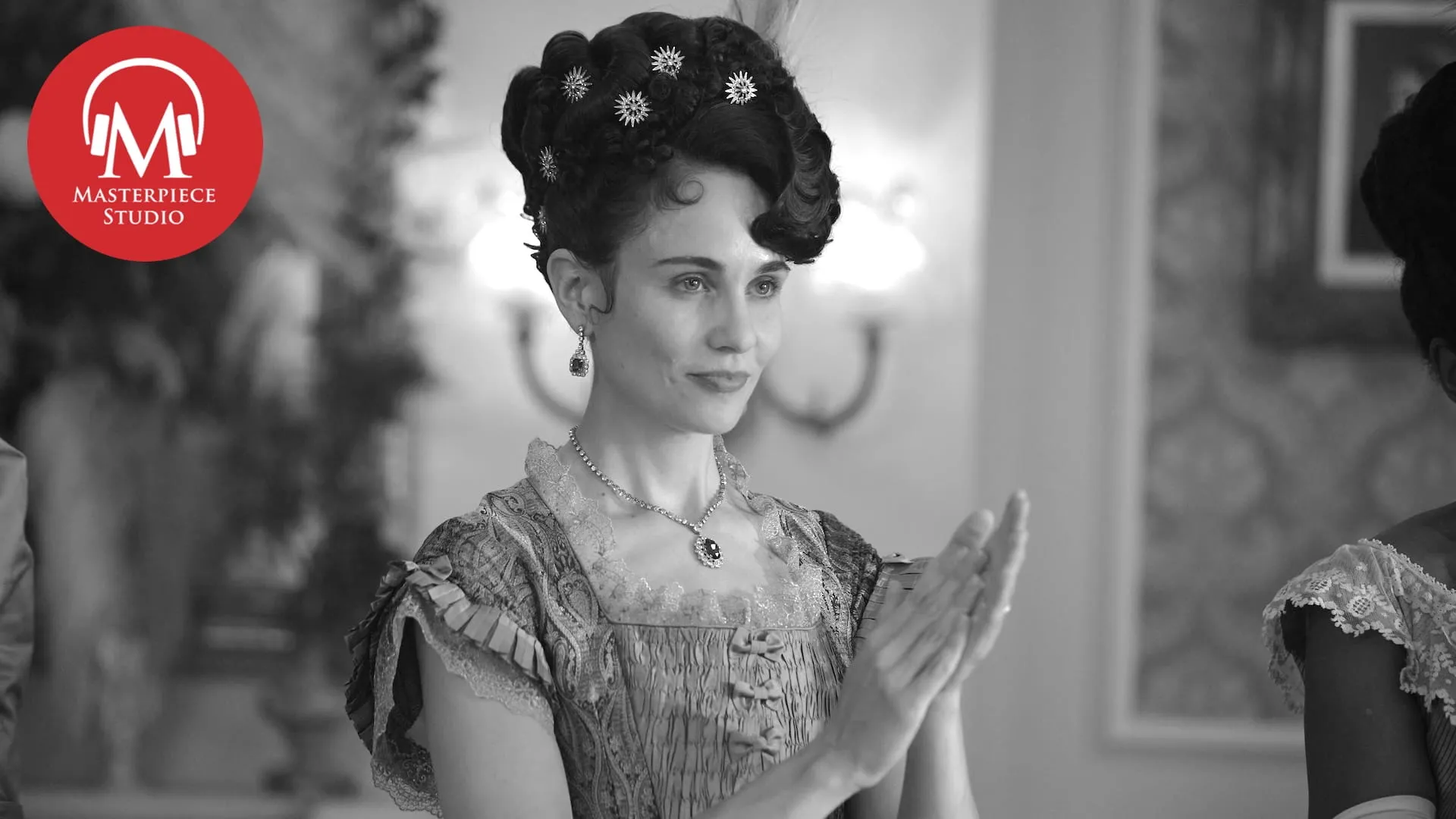
Tuppence Middleton, The Forsytes, Season 1
Released April 19, 2026 31:42
WARNING: This episode contains spoilers for Episode 5 of The Forsytes Season 1.
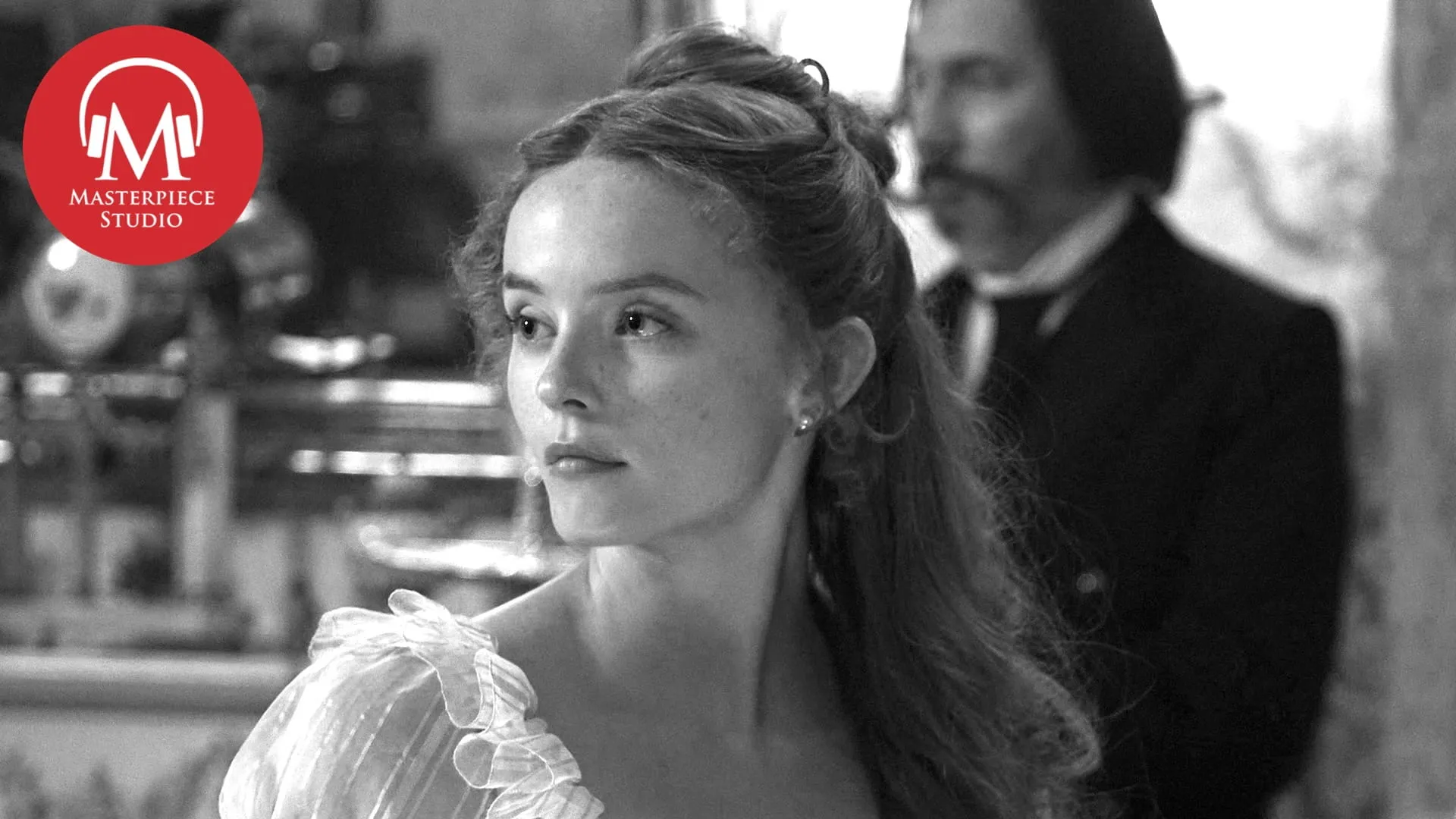
For actor Tuppence Middleton, Frances Forsyte is a complex character. Her heart may be in the right place, but when faced with an impossible situation, she makes some questionable decisions out of self preservation. In this episode, Tuppence shares how her character does all she can to hold together her marriage, the family, and her daughter’s future amidst emotional devastation.
This script has been lightly edited for clarity.
Jace Lacob: I’m Jace Lacob and you’re listening to MASTERPIECE Studio.
In the 10 years since the widowed socialite Frances married Jolyon and moved into the Forsyte home with her daughter June, life in the Forsyte households has remained more or less the same, with Frances ruling as queen bee. But now that Soames’ wife, Irene, has also moved in, the dynamic has shifted, and Frances wastes no time bringing her sister-in-law up to speed on what it is to be a Forsyte lady.
CLIP
Frances: Dear Irene, welcome to the madness. This must all feel very daunting, but I’m here to help you navigate.
Irene: Well, that’s very kind—
Frances: Tomorrow night, you’ll join us for dinner?
Irene: Thank you, we’d be—
Frances: And the day after? I’ll take you into town, introduce you to all our preferred establishments. You’ll want to open accounts of course. Shall we say ten? Splendid.
Despite her upbeat demeanor, Frances’ life is far from sunshine and roses at this point. After learning about her husband’s previous relationship with dressmaker Louisa Byrne and their children together, Frances has requested Jolyon cease contact with Louisa and put this whole matter behind them. Although he agrees, Jo can’t help but now yearn to be a part of their lives, albeit in secret. In a moment of emotional turmoil, Frances arranges for Louisa and her children to be evicted from their shop and apartment.
CLIP
June: Mama, let me help.
Frances: What are you doing? I can manage.
June: Mama, what is it?
Frances: What is it? Your father has resumed relations with that woman. I blame her. He is weak but she has entrapped him.
June: Surely not?
Frances: And if he can’t be trusted to keep his distance, the only solution is for her to be put out of his reach. For good.
Frances’ tactics only push Jolyon, Louisa, and their children closer together as Jolyon decides to provide housing and financial assistance for his children and Louisa while maintaining contact with them. Frances is at a breaking point. With nowhere else to turn, she confides in her father-in-law, Jolyon Sr.
CLIP
Jolyon Sr: The boy’s not thinking straight. Why else would he take such a stance - about two children he’s barely met?
Frances: His own children.
Jolyon Sr: Yes, there is a pull, but it must be resisted. Everything dear to him resides here. Trust me, he’ll return.
Today, we’re joined by actor Tuppence Middleton to discuss how her character, Frances Forsyte, does all she can to hold together her marriage, the family, and her daughter’s future amidst emotional devastation.
Jace Lacob: And this week we are joined by The Forsytes star, Tuppence Middleton. Welcome.
Tuppence Middleton: Hello. Well, thank you so much.
Jace Lacob: Thanks for being here. So, Frances Forsyte appears as a footnote, a mere passing mention in John Galsworthy's The Forsyte Saga novels as the mother of June. But in Debbie Horsfield's reimagining, The Forsytes, Frances is a force of nature whose motivations drive much of the action in Series One. What did you make of the character of Frances initially?
Tuppence Middleton: As soon as I read the script, I totally fell in love with her. It's exactly the kind of character that I love to play. She's very complex, and she has this really interesting mix of playing the role that she knows she should at that time in society, the role of a woman, but also she's very headstrong and business minded, and she has ambition for herself and her family. And so she's sort of boundary-pushing and quite forward thinking for the time, but at the same time, she has that very ingrained sense of late Victorian duty and loyalty and a respect for reputation. So I thought that was such an interesting thing to play alongside all of these problems and dramas that arise in her own family life as the story goes on.
Jace Lacob: The Forsytes begins with that 1877 marriage between Frances and young Jolyon. And this wedding sets in motion a lot of the drama that follows, and it establishes Frances as a springboard to the Forsytes’ social mobility. What does Frances believe she's getting into by marrying into this family, and does she see beyond her love for Jo?
Tuppence Middleton: I think so. I think she's a smart woman. I think she's found herself in a position which not many women found themselves in at that time, which is that she has been widowed. She has a young daughter when she marries Jo, and she's taken into a very reputable family but she comes with her own reputation, and is sort of being drafted in to elevate the reputation of their family too. And the fortunate thing for Frances is that she does love Jo. She falls in love with him. So she has this sense of duty and marrying the right person as far as society is concerned. But also, she's marrying the right person as far as her heart is concerned, because there is a true connection when they marry, and I think it's only later on in their marriage that that is really challenged for the first time.
Jace Lacob: Ann speaking in voiceover, she's pretty blunt about her assessment of Frances.
CLIP
Ann: Frances was a widow. Queen of High society. Hand-picked to cement our status among the London elite.
Jace Lacob: She's a means to an end for the Forsytes, at least. How aware is Frances of the mercenary aspect of the family she's marrying into?
Tuppence Middleton: Oh, I think she's totally aware. I think she's not gone into this situation blindly. I think she understands what her role is, but she also knows that she's going to make the most of it. And that means doing the job that she's been brought in to do, which is to elevate this family, to drive Jo's momentum in terms of the business, and to be a good wife, which is up until the point that we meet her in the story, what she's been doing. And I think that she understands how society works, that's one of her superpowers. She knows how to manipulate the system, and she knows what she should be doing, what she should be saying, who she should be seen with. And she's the best there is at that within the family and also within the high society that the circles that she moves within.
Jace Lacob: I mean, I love the fact that she is so playful about her knowledge of her role. At the wedding reception she says,
CLIP
Frances: My late husband invested with Forsyte & Co. so you might think this is a natural progression. I am a prime asset changing hands. And June has long needed a father figure...
Jace Lacob: I mean, the little laugh that you give as Frances in that scene about being a prime asset to me is so telling. It's perfectly modulated — it's designed to disarm and empower herself, even as she discusses herself as being property. How canny an operator do you see Frances being? She, to me, is almost a master in subtle manipulation.
Tuppence Middleton: Oh, totally. And I think that that was recognized by the family before the match was made. And that's what's so brilliant about Debbie Horsfield's writing, is that she really understands the way in which a woman like this works. And I think that the word “manipulation” can be a very negative thing. But I think she understands both good and bad ways of persuading people to do what she wants, but also persuading to do what she thinks is best for them. So there's many times in the story where she wants her daughter to act a certain way or to do a certain thing, and she has to think of more and more creative ways to do that, because she has a very headstrong daughter, because she's a headstrong woman. And so I found that balance, making Frances a character who is likable and relatable, but also has flaws and has some negative attributes, was a really appealing thing.
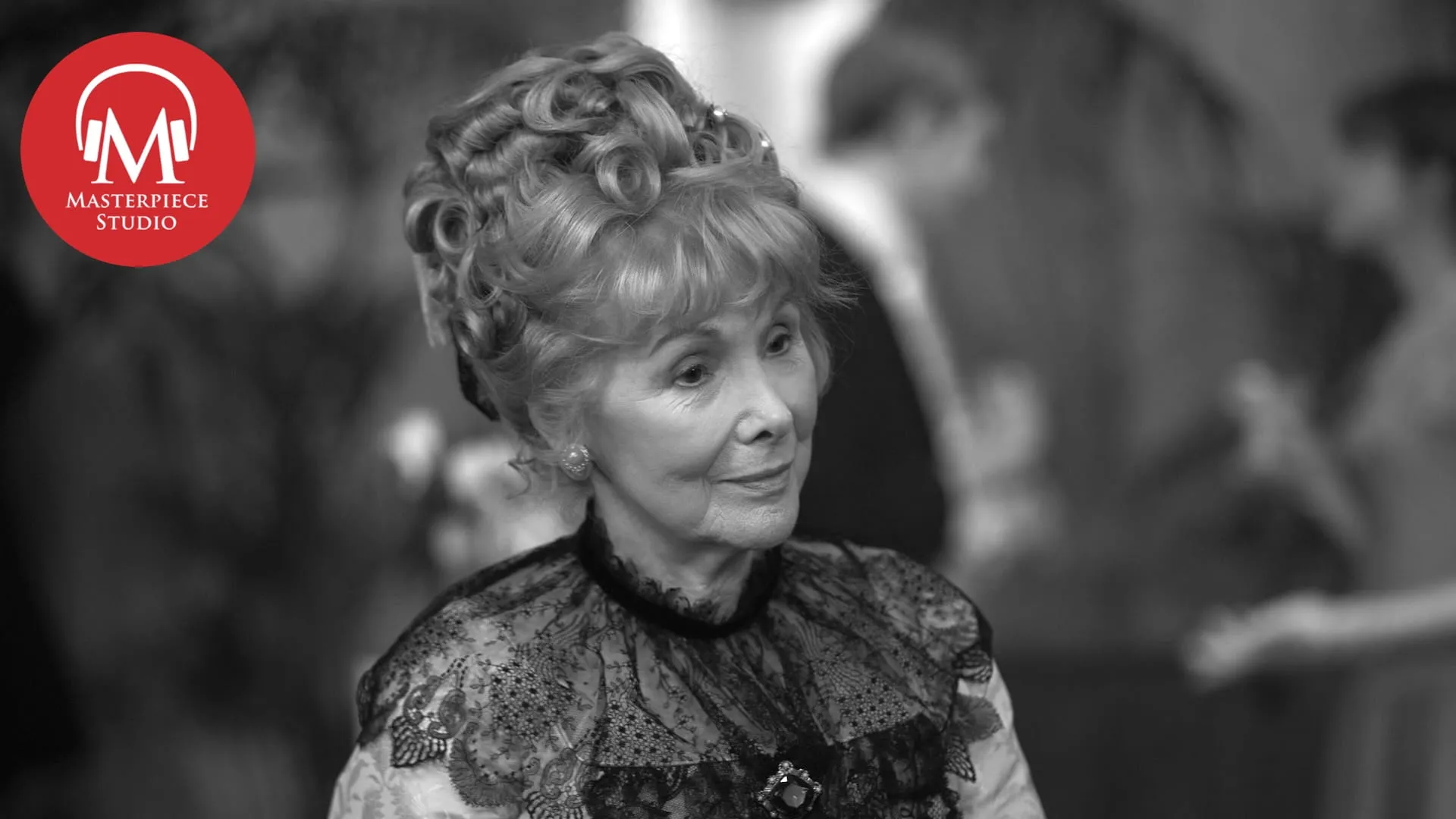
Jace Lacob: I love rebranding manipulation as persuasion. I think that speaks volumes. So, Frances comes face to face with one of her chief social rivals, Susan Hampshire's Lady Carteret, at Louisa Byrne’s dressmaking studio. Frances wants to make a match for her daughter June, with Lady Carteret's grandson, Horatio. And we'll talk about Louisa in a second, but I am curious, how would you describe the relationship between Frances and Lady Carteret?
Tuppence Middleton: Well, I'd say catty was the first word that popped into my mind. There's a lot of, well, persuasion, shall we say, if we're rebranding manipulation. A lot of witty one liners, and I think that they tolerate each other, basically. They both want the same spot at the top, in the throne of high society. And I think Frances feels she very much has it, but Lady Carteret won't give it up without a fight.
Jace Lacob: So, Frances is pretty candid about June.
CLIP
Jolyon: Do we really have to be thinking of a match for June?
Frances: The darling girl is an asset to be deployed strategically, as I was. Hand-picked to ready you for rule.
Jolyon: If only I was the “ruling” type.
Frances: You are my love.
Jace Lacob: Does Frances see Lady Carteret as an obstacle then, one that might ruin her own plans?
Tuppence Middleton: Yes, I think so. Or at least a challenge. I think she feels herself very capable of winning Lady Carteret round in the right circumstances. But yeah, it's very important to her that she merges these families and secures a good future for June and and for the family, especially as she feels Jolyon’s wavering and she feels how even though he's not her biological father, he raised her and so much of his artistic flair and his rebellion has found its way into June. And that's really hard for Frances because she's the one who has been working so hard to sort of… I want to use the word “curate” her daughter, but not curate, but to create this young lady and it could all be thrown away if she makes the wrong decision.
Jace Lacob: We're talking about relationships. And one of my favorite relationships in The Forsytes is that between Frances and Jolyon Sr. which seems to really go beyond that of a woman and her father in law. How would you describe their rapport, and are these two perhaps more like kindred spirits than Frances and her own husband?
Tuppence Middleton: Oh, absolutely. I think that had they been a match for each other at a certain point in time, then perhaps they would have been married to each other. And I think it would have been a good match because they both have a head for business and they both want the same things for the family. And I think there's always been an understanding there. And they understand each other on a level that her and Jo never really have. Really when things get hard for Frances, he is one of the only people that she can turn to as a true friend. And I think he can really listen and understand and offer advice that she respects and will listen to. So, yeah, I think he's the first person she turns to in moments of crisis.
Jace Lacob: I think because they do have this, as you say, this understanding, they have a shared unspoken language between them that is really beautiful to see on screen and very unexpected given the context of their relationship. What does Stephen Moyer bring to those scenes together and what is he like as a scene partner?
Tuppence Middleton: Oh, Steve is great. I love him. He's just brilliant. There's such a lightness about him. He's really, as a person, as an actor, a great listener and very compassionate and understanding. And I think that he gives to Jolyon Sr., naturally, he doesn't have to even think about it. And so it was just really nice. We had a very silly time. And I think that because a lot of our scenes, especially towards the end of the series, are a bit heavier that it felt really nice to have such a kind of light hearted, fun relationship off screen. So yeah, I was so lucky to be working with him. And he's been doing this a long time and has some of the industry's funniest anecdotes and stories and advice.
MIDROLL
Jace Lacob: And we’re back with actor Tuppence Middleton. So, Frances has high hopes for June. She knows the value of hindsight and the value of a reputable match in marriage. And she says,
CLIP
Frances: I chose freely. Your father was my first love, and when he died I was sure I would never get over him.
June: But you did?
Frances: Nothing compares to first love. We persuade ourselves, the fever is real. And then, if we’re lucky, we meet our true soulmate and discover something more profound.
June: So Papa’s your soulmate?
Ann: Like magnets, perhaps. The attraction of opposites?
Jace Lacob: Does this in a way explain Frances's later actions, which we'll get to, the belief that Jo is her, quote unquote here, “true soulmate”?
Tuppence Middleton: Yeah, I think so. I think Frances is a fighter. She's someone who will always get back up. And she will always do that herself. I think she's a real survivor. And so if her family's threatened, if her relationship's threatened, if her reputation is threatened, then she will fight to the last breath to defend it and protect it. And I think that she although knows the differences between her and Jolyon, I think she doesn't mind. She finds those things about him charming, and she understands that she has to work on them a little bit more if it works for the family and the family business. But ultimately, she does love him and she doesn't want to see those differences tear their relationship apart.
Jace Lacob: Frances then finds herself enmeshed in a love triangle between herself, her husband and his former lover, the dressmaker Louisa Byrne. And she's shocked to learn that Louisa has two children by Jolyon, who is unaware of his offspring. What does Frances make of this revelation, and how does it reconceptualize the family she's made with Jo and June?
Tuppence Middleton: Well, I think it's really difficult for Frances because, we talked a lot beforehand with Debbie and Meenu, the director, about the fact that she and Jo probably wanted to have kids and probably tried and and they couldn't. And so this is so much more heartbreaking for her that someone else has had his children and he didn't know about it. And so, of course, she knows that he will be interested in pursuing a relationship with them, whether he sees the mother of the children or not, that he will want a relationship with those children.
And although he has raised June from the age of eight and he is a father figure to her, he isn't her biological father. And so I think there is this fear that he could leave them and that there would be no sense of responsibility. And what that might do to his relationship with June, and how difficult that is to see him with another family unit which is bigger than their own. And I think she always knew in the back of her mind that he had love affairs or dalliances while he was away before they married, but she never suspected anything like this to happen, which would actually threaten their day to day relationship.
Jace Lacob: So she does confront Louisa about the children. In episode two, she makes her promise never to tell Jolyon about their existence. “He must never know.” And she says, “It would ruin him. In his business, reputation is everything.” But what is Frances's true fear here, that it would ruin their business, or that it would ruin their family? And does she see the fuller picture of what is at stake?
Tuppence Middleton: I think in a sense it's both because I think you can't have one without the other. I think if the business is ruined, then so are they because that's how they make their living. That's how they can afford to live the lifestyle that they live. That's what keeps her and her daughter in comfort. And it will also destroy the relationship. And if the relationship is destroyed, then Jolyon will likely not have the momentum to take over the succession of the business. And I think that you can't have one without the other. I think she knows that this is a threat to everything in their lives. This is a threat to their family, their relationship, the business. And I think they're all equally important to her because they're so interconnected.
Jace Lacob: It doesn't help either I think, that Forsyte & Co. is a family business, that it almost becomes impossible to separate the family from industry and industry from family. They're so intertwined. In the meantime, however, Frances exudes confidence, control, civility. She's a mirror of London high society in the Victorian era. But behind that facade we begin to see cracks, insecurities. And in Episode Two, she allows herself a moment of vulnerability after learning about the children's existence. How do you see Frances's motivation shifting over the course of the first few episodes here?
Tuppence Middleton: Well, I think at first it feels much simpler to her that yes, her husband is a dreamer and an artist, and he doesn't have the business head that she wants him to have, and and she has to convince him of that in order for him to be the one who gets to take over the company. But then as soon as Louisa comes onto the scene, then her priorities change. And actually it's about making him stay, making him stay in the relationship and stay in the family home and not leave everything that he knows and loves. And that becomes bigger than anything else. And so, her plans for him to take over the business become that much more important, because they are so connected to whether he stays and takes on this duty that she feels he's meant to take on and has always been destined to take on. So, I think that she very rarely allows herself to be vulnerable. But this is probably the first time in her life where she has been challenged to this extent and where her emotions have been pushed to the brink like this.
Jace Lacob: Frances intends to put this behind them, but Jo learns the truth about the children's existence, and she begs Jo to let this go.
CLIP
Frances: We’re a partnership, a family. Let’s not complicate or compromise. We can put all of this behind us and go on as before.
Jolyon: I don’t think you understand. I can’t “go on as before”. “Before”, I was unaware.
Frances: But you’re under no obligation.
Jolyon: I can’t wish away two human beings, Frances.
Frances: You mean to acknowledge them?
Jolyon: I mean not to deny their existence.
Frances: For now, promise me, no one need know. It would be catastrophic, for you as chairman, for us as a family, for me as your wife.
Jolyon: I promise.
Jace Lacob: How heartbreaking is it for Frances that Jo intends to not deny his children's existence, but to, in fact, if not legitimize them, provide for them?
Tuppence Middleton: I think it's so heartbreaking and it's so shameful for her because she will be the talk of the town. It will scandalize them as a couple, their family. I think that it's not an uncommon thing at this time in history for men and women to have these extramarital affairs and for the spouse to turn a blind eye. Which is what she says she is willing to do, essentially, and to forgive him and to work on their relationship and move forward as long as he doesn't legitimize the children or acknowledge them. And so I think the stakes are really high for her personally because it could tarnish her reputation and make an embarrassment of her within the society. And I think that she's someone who's been so highly respected and admired that for her, that's a very awful prospect.
Jace Lacob: At the same time that this is going on, her child June, defies her and follows her heart falling in love with the penniless architect Philip Bosinney. The two are engaged with a proviso from Jolyon that they cannot marry until Philip has his first paid commission. What are Frances's main fears here regarding this match, and does she believe she can ultimately dissuade June?
Tuppence Middleton: Yeah, I think she has always been able to persuade or dissuade anyone of what she wants. So I think that these two things happening at once to her are such a huge blow, because she's not used to not getting her way. And I don't mean that necessarily in a bratty way. I mean, it's just something that she's not experienced before. She's used to things falling into place, or she's used to being able to massage things into the form that she wants them to be. So I think it feels like a conspiracy against her, you know? It's just so heartbreaking on both those levels that she doesn't feel she can get anything right, that she must have done something to deserve this series of unfortunate events. And I think the one just makes the other that much more difficult.
Jace Lacob: I think it would be very simple to frame Frances as a villain. She makes choices such as having Louisa and her children evicted from their shop and home that feel villainous, but she is a woman who is not only scorned, but is looking to hold on to the life and social standing that she has fought for. And in the context of that Victorian obsession with class and status, do you see Frances as a villain or is something altogether different?
Tuppence Middleton: No, I really don't actually. That's why I love the character on the page because I felt that she was very complex in that way. I think that the only way Frances can work as a character is if you feel for her. Because if you just hate her, then anything that happens to her in the negative is something that the audience will cheer for. And of course, we love cheering for the villains sometimes or the villain’s demise, but I think in order for us to feel something for their story, for us to feel the push and pull that Jolyon is feeling, we have to believe that she's a good person and that her heart is in the right place, even if she makes some terrible decisions and she, allows some ugly emotions to to bubble up inside her. I think that ultimately it's because she cares. And she's making these decisions, good and bad, out of love and out of self protection and the protection of others around her.
Jace Lacob: The fifth episode ends with Jo leaving and Frances taking consolation, of course, from Jolyon Sr., who says, “There's a pull, but it must be resisted. Everything dear to him resides here. Trust me, he'll return.” Frances isn't very likely to take this turn of events sitting down. Hell, after all, hath no fury like a woman scorned. Is Frances more desperate to save her marriage or to save face after Jo has walked out on her?
Tuppence Middleton: I think at this stage, she wants to save face and she wants to protect herself and her daughter in the wake of this scandal. But, I don't think the door is closed for her with Jolyon. I think she remains open to the idea of him returning and of talking to him, and I think that she really hopes for what Jolyon Sr. says to be true, which is that he will return.
Jace Lacob: You've been open about your lifelong struggle with OCD, writing about your experience in your 2025 memoir, Scorpions. And you liken your obsessions to those poisonous insects, “My mind is full of scorpions. A cerebral itch, impossible to scratch. I know these creatures well, but they know me better. They answer to another name, this nest of scorpions, the writhing black mass that lives inside my head…” What spurred you to write your memoir?
Tuppence Middleton: I had spoken about it with friends and family and sometimes with work colleagues as well. But I had mentioned it once, OCD that is, in an interview in passing and subsequently it was picked up in other interviews and I was never able to touch on it in the way that I felt it deserved to be touched upon. By that I mean that it was always kind of brushed over, and it was like a sort of headline click baity kind of thing. And I really wanted firstly to give it the space that I felt it needed. Because I had always wanted to read something, not just clinical studies or medical information about a mental health disorder like OCD.
When I was first diagnosed with it and I was 11 or 12, I didn't have any examples of what that looked like, sounded like, felt like. And I really wanted to write the book that I would have loved to read when I was growing up, which was almost more of an immersive experience, which really tries to put you inside the head of someone who has OCD, and how those thoughts work and how those rituals work. But also to talk about it in a way that touched upon the heavier things but felt light and humorous and not alienating for people who had never heard of it or never experienced it. Because I think everyone in some sense can touch the sides of all of these disorders or mental health problems. There is a spectrum and everyone is somewhere on that spectrum. But I think I really wanted to, I suppose, address a few myths about it and also to share my experience of that with other people in the hopes that it might help someone like it could have helped me.
Jace Lacob: Do you see acting then as an escape, a way of keeping the scorpions at bay by becoming someone else, even just for a little bit?
Tuppence Middleton: Definitely. I think a lot of actors probably see it as an escape as well as a tool to tell stories. I think that it's a chance to be someone else. It's a chance to live another life and to experience another life. As shallow as that experience may be compared to the real thing, it's an opportunity to live in someone else's head. And I think when your own head plays tricks on you, then that's quite an appealing idea.
Jace Lacob: Tuppence Middleton, thank you so very much.
Tuppence Middleton: Thank you.
Next time, one of Forsyte & Co.’s favored clients receives a mysterious reimbursement after significant financial losses.
CLIP
Jolyon Sr: Harry Falconer.
James: Yes?
Jolyon Sr: Writing to thank us for reimbursing his losses.
James: What? Did you have something to do with it?
Jolyon Sr: Hardly! Did you?
James: Absolutely not.
Jolyon Sr: Then who?
James: And why?
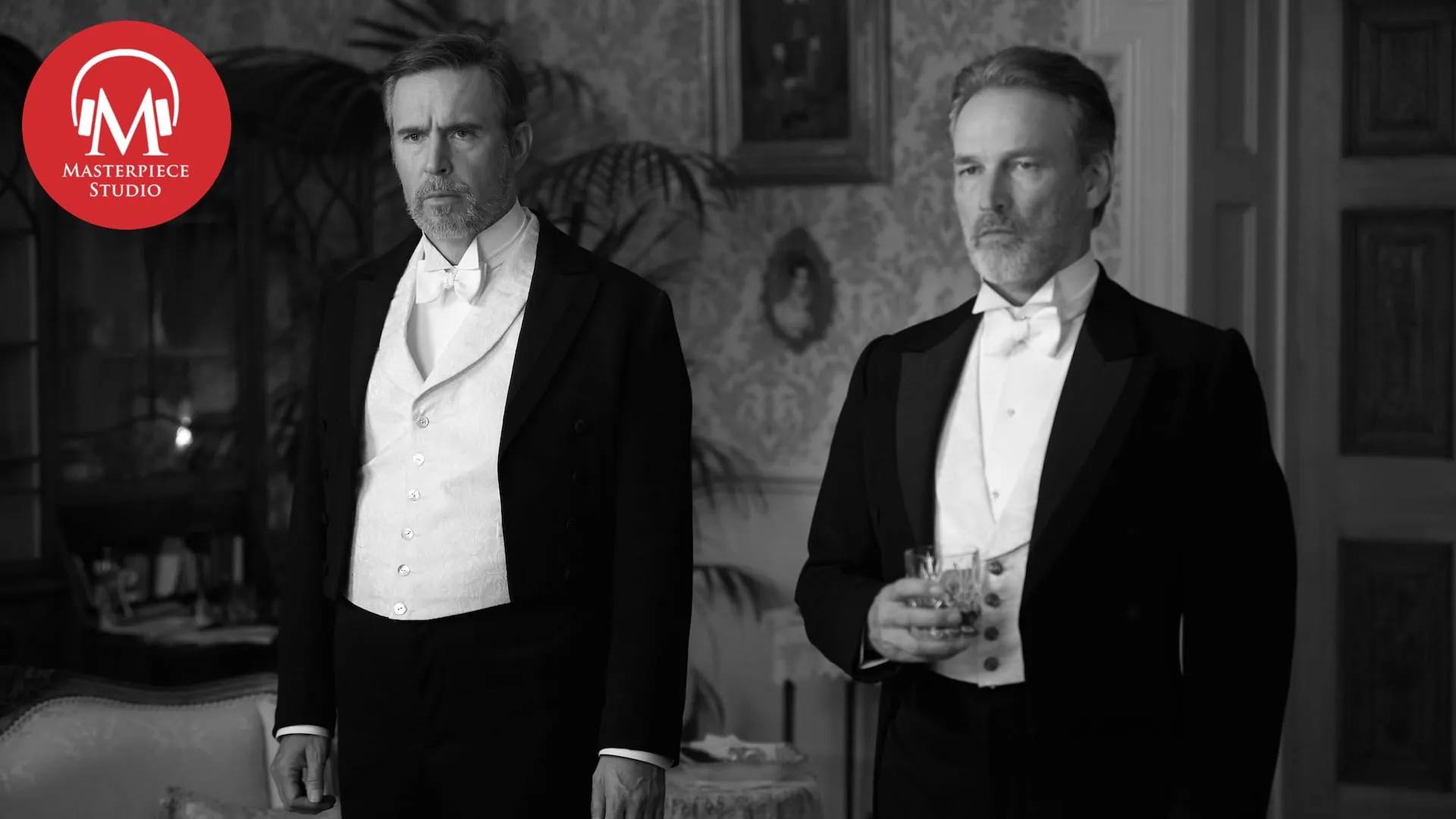
Join us next week as we talk with actors Stephen Moyer and Jack Davenport about playing brothers turned rivals, Jolyon Sr. and James Forsyte, and drawing upon their real-life friendship of 30-plus years.
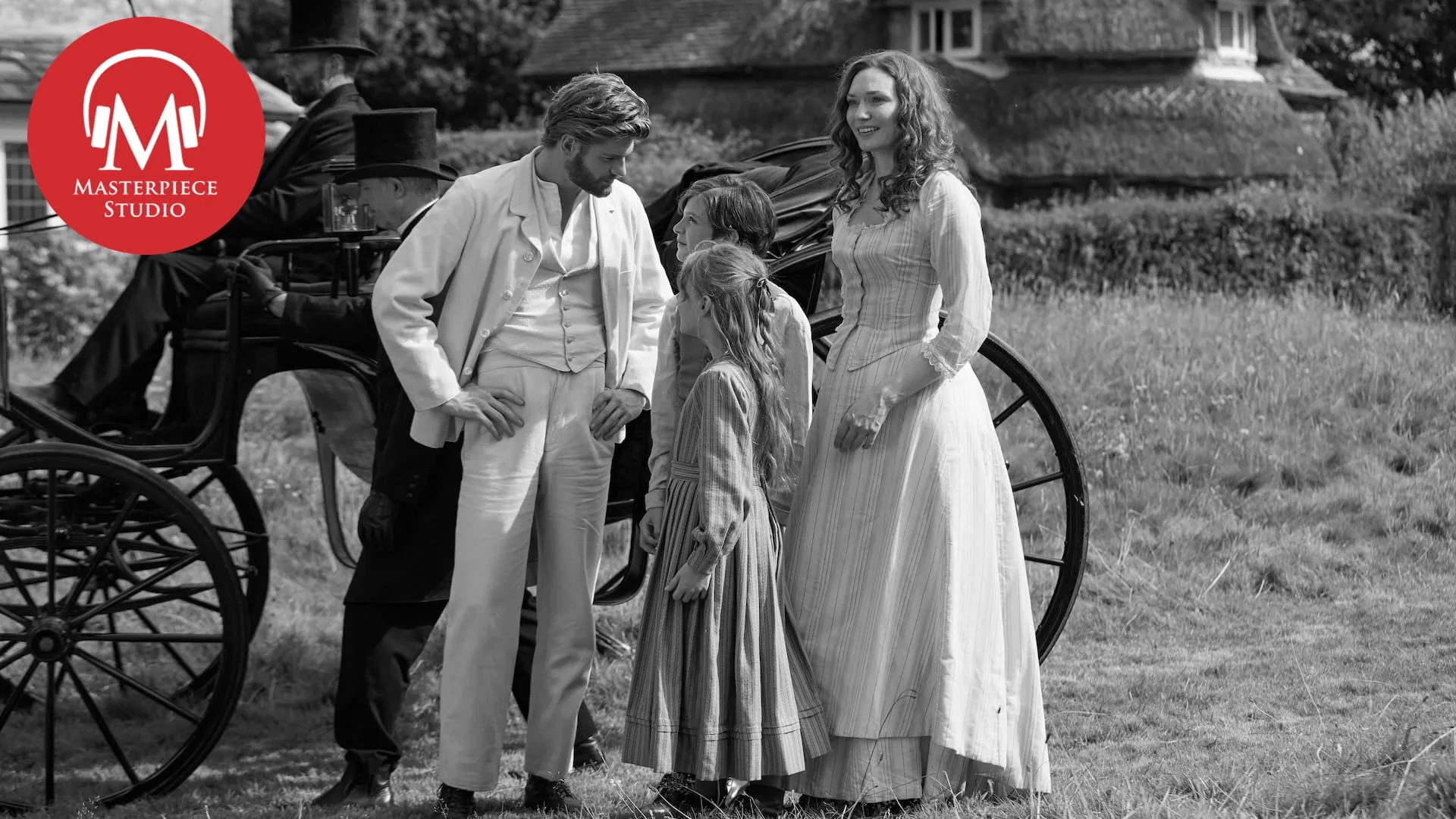
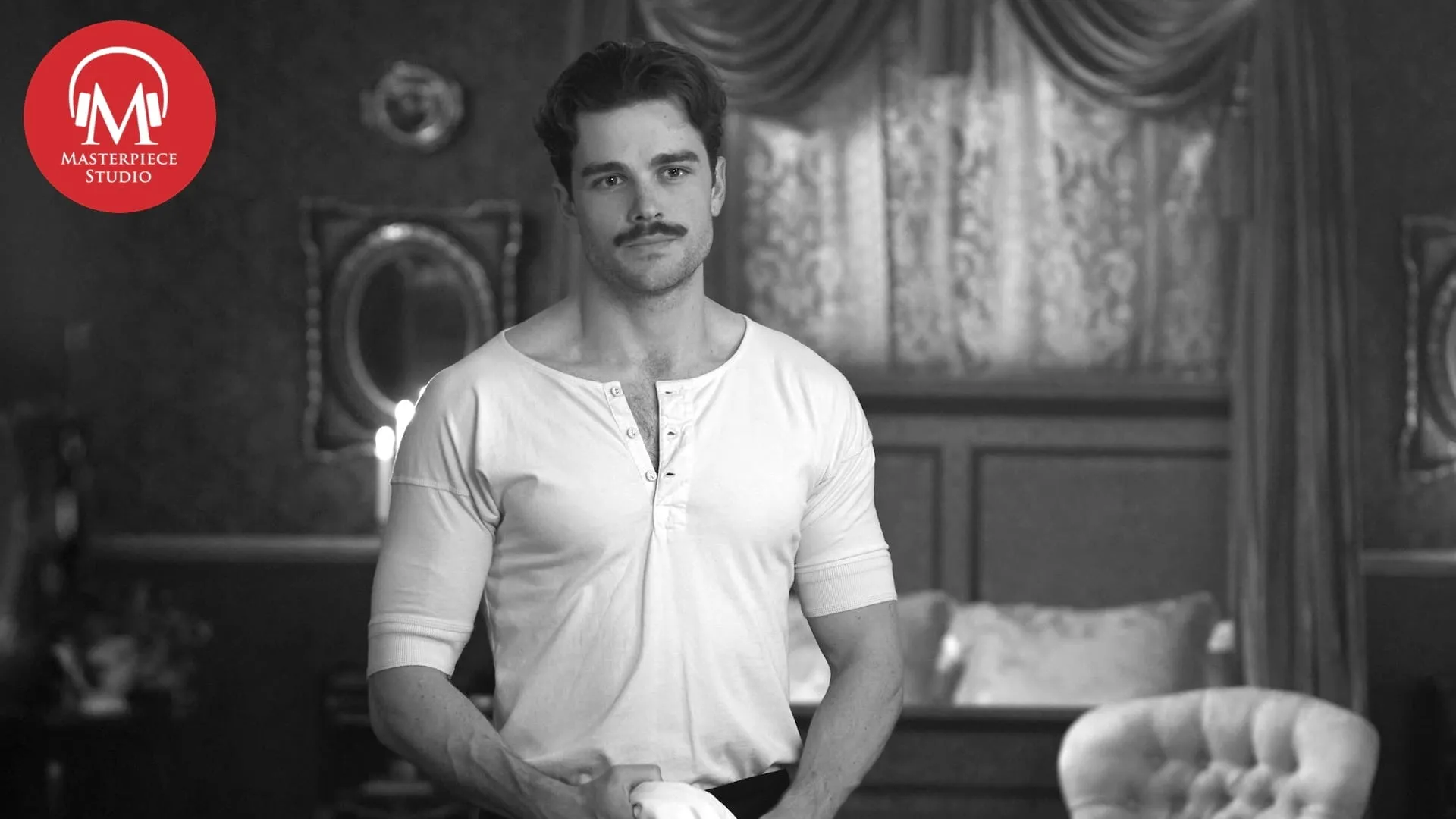
The Forsytes Podcasts
7 More Podcasts


MASTERPIECE Newsletter
Sign up to get the latest news on your favorite dramas and mysteries, as well as exclusive content, video, sweepstakes and more.