
404 Not Found



 |
| ||||||

Failure to Protect: The Taking of Logan Marr
 | |
|
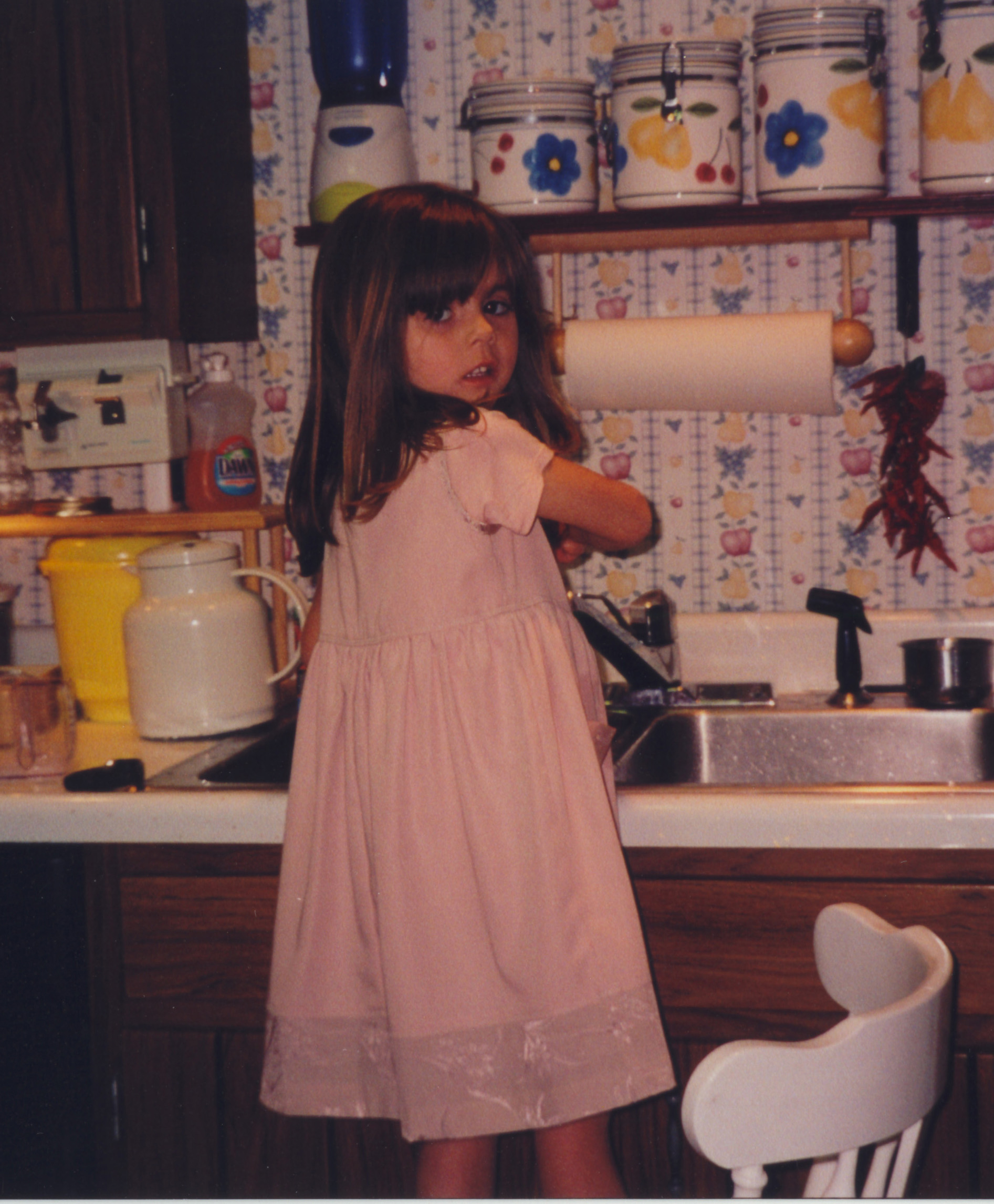
(click to download caption: In "Failure To Protect: The Taking of Logan Marr," airing Thursday, January 30, at 9 P.M. on PBS (check local listings), FRONTLINE investigates the short, troubled life of five-year-old foster child Logan Marr, above. Through extensive interviews with key figures involved in her case, FRONTLINE looks closely at the events that led up to Logan's death: from the state of Maine's decision to remove her from her birth mother's home to her troubled decline and eventual death in foster care. FRONTLINE continues its examination of Maine's Department of Human Services on Thursday, February 6, at 9 P.M. on PBS (check local listings), with "Failure to Protect: The Caseworker Files." For electronic images, contact Jenna Lowe at (617) 300-3500 or e-mail Image may only be used in editorial conjunction with the direct promotion of this film. No other rights are granted. All rights reserved. Photo credit: © WGBH | |
| |
On January 31, 2001, five-year-old Logan Marr was found dead in the basement of her foster mother's home in Chelsea, Maine.
The foster mother--a highly respected former caseworker for Maine's Department of Human Services (DHS)--would later be tried and convicted of manslaughter after police determined that Logan had died from asphyxiation after being bound with duct tape and strapped into a high chair as punishment.
The death of Logan Marr would prompt public outrage and a barrage of questions. Why did the state remove Logan from her biological mother despite no evidence of any physical or sexual abuse? Did the Department of Human Services move too quickly to terminate her mother's parental rights? And did it fail to heed warning signs that Logan was in danger?
In "Failure to Protect: The Taking of Logan Marr," airing Thursday, January 30, at 9 P.M. on PBS (check local listings), FRONTLINE examines how one little girl's death would cause the state of Maine to reexamine its child welfare policies, including its procedures for removing children from their parents. Through extensive interviews with the parties involved--including an exclusive interview with the foster mother convicted of killing Logan--the one-hour documentary investigates the events that led up to Logan's death: from the state's decision to remove her from her birth mother to her troubling years in foster care. In the process, the program casts light on a system that is almost always cloaked in secrecy: state child protective services.
"The termination of a parent's rights to their child is one of the most drastic decisions the state is called upon to make--yet it does so with little or no public scrutiny," says producer Barak Goodman, who co-produced the documentary with his wife, Rachel Dretzin. "The system is almost always shrouded by confidentiality agreements and privacy laws."
While senior DHS officials in Maine declined to be interviewed regarding the Logan Marr case, they did make FRONTLINE an unprecedented offer, allowing producers and a camera crew to observe their normally confidential child protective system from the inside for more than four months. The result of that investigation, a one-hour companion documentary titled "Failure to Protect: The Caseworker Files," airs Thursday, February 6, at 9 P.M. on PBS. Together, the two documentaries offer one of the most in-depth investigations of a child welfare agency ever undertaken on television.
"Failure to Protect: The Taking of Logan Marr" focuses on the stories of two women, each locked in her own battle over Logan: biological mother Christy Marr, who fought to regain custody of her daughter; and Sally Schofield, a DHS caseworker who was determined to adopt Logan even as she found herself struggling to control the child.
Ironically, Christy Marr's first contact with the Department of Human Services arose from a complaint from a surprising source: her own mother. Following Logan's birth, the teenaged Christy had moved into her mother's apartment, where the two fought constantly over how to raise the baby.
"When I used to stand up for myself, she used to get so mad," Christy Marr tells FRONTLINE. "[She'd say] 'Then you need to leave,' you know, one of those attitudes. Then I'd leave and she'd call the state."
DHS reports say that Marr's mother felt she was too immature to raise Logan. Yet the state found no signs of abuse or neglect.
"I was never accused of being an abusive or unfit mother," Marr says. "[I] just had 'things I had to work on,' is how they claimed."
Those "things" included a relationship with an admitted drug user. "Failure to Protect: The Taking of Logan Marr" recounts how Christy Marr suddenly found herself living under a set of rules imposed by DHS--rules which, if broken, would result in Logan's removal from her home.
Henceforth, Marr would not be allowed to have anyone stay over or live with her without first having the person screened and approved by DHS. She was also required to submit names of "people or person with whom she is or plans to become intimately involved," with no contact of any kind occurring until DHS had issued its approval of the person.
Marr admits to feeling resentful of the constrictions placed upon her by the state. "Somebody else was running my life," she says. "I was just a person following rules. Wasn't my direction; wasn't my thoughts, my opinions--it was theirs."
Soon, however, DHS's authority over Marr's life would extend beyond her own relationships to those of her family. After Marr's mother married a man whom DHS believed to be a child sexual offender, DHS forbade Marr to have any contact with her mother. It was a condition that the teenaged mother--with few other sources of emotional support--would find difficult to obey, and one that would ultimately lead to the state's decision to place Logan in foster care for the first time.
It would be the beginning of a two-and-a-half-year battle that would see Christy Marr regain custody of Logan, only to lose her again--along with a second daughter, Bailey. Once again, Marr was not accused of abuse herself, but of allowing her daughters to be around men whom DHS believed might pose a threat.
After receiving an unsubstantiated tip that Marr's new husband had hit her in front of the children, a caseworker named Alison Peters showed up unannounced and removed the girls.
"I'm like, 'You can't do this,'" Marr says. "She goes, 'Oh, yes I can and I'm gonna.' Logan started screaming, 'No, Mommy, don't let 'em take me, please don't let 'em take me!' I told her it was going to be okay."
It would be the last time Logan Marr would ever live with her mother.
The documentary also tells the parallel story of Sally Schofield, a star caseworker in Maine's Department of Human Services. Once involved herself in the process of removing children from allegedly abusive or neglectful parents, Schofield--the mother of two boys--yearned to adopt a little girl. That desire would lead her to five-year-old Logan Marr.
The documentary recounts how Logan began to deteriorate while in foster care, changing from a seemingly ordinary little girl prone to the occasional tantrum to a troubled child who would succumb to frequent uncontrollable rages.
After a "physical incident" occurred between Logan and her second foster mother--an incident that both the foster mother and the state refused to discuss with FRONTLINE--DHS began looking for a new placement for Logan and Bailey. Their search led them to Sally Schofield. Despite having rules that prohibited caseworkers from serving as foster parents, Schofield was swiftly approved as a placement for the two girls.
"At the time the girls needed to move, the department wanted to find a family that would take them now, and then ultimately down the road adopt them so they wouldn't have to move again," Schofield tells FRONTLINE. "You know, we fell in love with those girls probably the first weekend. These were our children."
Not long after moving in with the Schofields, however, Logan began to break down.
"She really had rages," says Schofield. "She would scream at the top of her lungs that she didn't need parents, she didn't need us, she could take care of herself, she'd always done it."
The reports of Logan's behavior worried Christy Marr. "When they said that she was raging and she was throwing things--that wasn't Logan," Marr says. "It didn't make sense to me."
Marr also became concerned when Logan began making comments about her foster mother's treatment of her and Bailey. In the documentary, viewers see a videotape of Marr's supervised Christmas visit with her daughters. In the videotape, Logan abruptly stops opening her presents to tell her mother that Schofield grabbed her face roughly, saying "I cried and it hurts me...she did it to my sister, too." She also had reported being wrapped up in a blanket and constrained by her foster parents.
Marr claims that her attempts to question Logan further about the face-grabbing incident were stopped by DHS supervisors. "I just wanted to ask her so many questions--why, what happened..." Marr says. "I went to say something, and I got a look from the [DHS] supervisor. Like, you know, head shaking, 'No, don't go into detail.' And so I kind of just had to bite my tongue."
Despite laws requiring DHS to visit every foster home quarterly--and to investigate any complaint of physical abuse--caseworker Alison Peters did neither. What's more, just days after Logan's last allegation of abuse Peters offered Schofield encouragement in her quest to adopt the girls through an email saying "Christy is still up to her old tricks, so she continues to make termination of parental rights easier and easier to get." Peters declined FRONTLINE's request for an interview.
Meanwhile, Sally Schofield--who by this time had resigned from DHS--was still struggling with Logan's behavior.
"The thing about dealing with difficult children," Schofield tells FRONTLINE, "is that there's a world of difference between book knowledge and actual experience. Until you've lived with [emotionally troubled] children, you have no idea what it's like."
In "Failure to Protect: The Taking of Logan Marr," Schofield gives her account of the events on the afternoon of Logan's death. According to Schofield, Logan woke up from a nap "raging" and refused to calm down.
"I asked her if she needed to scream, and she said, 'Yes,'" Schofield tells FRONTLINE. "I said, 'Okay, then, let's put you someplace where you can scream.'"
Schofield says she took Logan down to an unfinished portion of her basement and placed her in a high chair. She claims that Logan was "absolutely" free to get out of the high chair and that she checked on her every few minutes to see if she was all right. After putting dinner in the oven, however, Schofield claims she returned to the basement to find Logan lying on the floor, still strapped in the high chair. She wasn't breathing.
Logan was rushed to Maine General Medical Center, where she was pronounced dead.
Police would later question Schofield about her version of events after investigators found long strips of mangled duct tape--some forty feet in all-- strewn around the basement. The tape was covered with long strands of Logan's hair and blood. After police tests and an autopsy confirmed that Logan had suffocated after the duct tape was wound over her face, mouth, and body and then wrapped around the high chair, Sally Schofield was arrested, tried, and convicted of manslaughter.
In her last interview with FRONTLINE before her trial, Schofield continued to deny intentionally harming Logan, calling the child's death "unforeseeable." Her apparent lack of remorse and reluctance to accept responsibility for Logan's death would later be cited by Justice Thomas Delahanty II when he sentenced Schofield in September 2002 to serve twenty years in prison.
The case of Logan Marr would lead to legislative investigations into the practices and policies of Maine's Department of Human Services. To date, however, no significant disciplinary action has been taken against any DHS employee in connection with Logan's death.
FRONTLINE's investigation of Maine's child protective services system continues February 6 with the companion documentary "Failure to Protect: The Caseworker Files," followed by a one-hour town meeting on child welfare policy.
Following the broadcast, visit FRONTLINE's Web site at www.pbs.org/frontline for extended coverage of this story, including:
- Additional background on Logan Marr and the children featured in the companion documentary "Failure to Protect: The Caseworker Files";
- Audiotaped excerpts from the police interrogation of Sally Schofield;
- A reporter's notebook: Rachel Dretzin and Barak Goodman discuss what it was like to film such intimate and emotional scenes and how they were able to gain open-door access to Maine's foster-care system, and more.
"Failure to Protect: The Taking of Logan Marr" is a FRONTLINE co-production with 10/20 Productions, LLC. The producers are Rachel Dretzin and Barak Goodman. The writer is Barak Goodman.
FRONTLINE is produced by WGBH Boston and is broadcast nationwide on PBS. Funding for FRONTLINE is provided through the support of PBS viewers. Additional funding for "Failure to Protect: The Taking of Logan Marr" is provided by The Robert Wood Johnson Foundation.
FRONTLINE is closed-captioned for deaf and hard-of-hearing viewers.
The executive producer for FRONTLINE is David Fanning.
Press contacts:Erin Martin Kane [erin_martin_kane@wgbh.org]
Chris Kelly [chris_kelly@wgbh.org]
(617) 300-3500
FRONTLINE XXI/January 2003
frontline privacy policy · pbs online · wgbh
web site copyright 1995-2014 WGBH educational foundation