
Read Transcript EXPAND
Let's now go back in time to one night in 1972, when a pioneering documentarian invited artists and intellectuals to a dinner party.
The aim was to film their reflections on the cultural movement that they had created half a century earlier, known as the Harlem Renaissance.
It was when an influx of African-Americans in the New York neighborhood prompted an explosion of art, music, and literature celebrating their heritage.
William Greaves' project was never finished, and the footage was largely unseen until now.
Following his death, his son David and granddaughter Liani made it their mission to bring it to the big screen.
The result is Once Upon a Time in Harlem, and it premiered earlier this year at the Sundance Film Festival.
Here's part of the trailer.
Harlem became known as the Mecca of the new Negro.
And it was a sort of standing question.
What will it be tonight?
Will it be straight socialism or Negroology?
For the first time we were aware of so many creative people who were black.
And all of them were aiming at the same thing.
>> The struggle of the Negro, the rise of the Negro.
>> I'm not angry!
>> I'm not angry!
>> They wrote it up.
>> Hughie Blake never shakes hands with a white man.
>> Which is a lie!
I never offer my hand first!
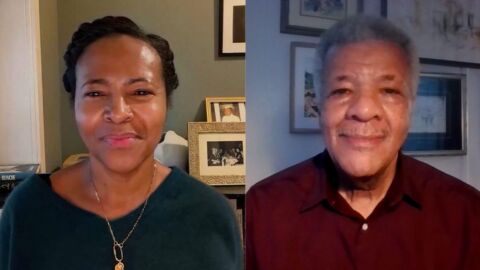
>> David and Liany Greaves speak to Michelle Martin about why America must remember the luminaries of Black history now more than ever.
Thanks, Christiane.
Liany Greaves, David Greaves, thank you both so much for joining us.
Thank you for having us.
David Greaves, I'm going to start with you.
Before we get into that extraordinary afternoon in 1972, would you just tell us about your father, William Greaves, what brought him to film and what gave him the idea to make this film?
Well, what brought him to film was wanting to tell the African-American experience through African-American eyes, if you will.
And that he found that he couldn't do that working in front of the camera, so he wanted to do that from behind the camera.
So that brought him to the whole filmmaking experience, wanting to tell that story.
And then what brought him to this particular film is his growing up in the Harlem Renaissance and the shadow of these luminaries.
He had known them.
He had taken in their creativity, if you will.
And he wanted to make sure that the people of the future, that is now, would see those folks and see as close as possible that experience of the Harlem Renaissance.
And wanted it to, wanted those folks in that era not, not to be forgotten and to be presented from primary sources.
And who could give a real telling of the Harlem Renaissance story.
And Zora had a little apartment on 66th Street.
And it was a beautiful thing to go down to Zora's place and sort of expound your literary ideas.
You know, they can be very important to you when they're yours.
So Liani, I'm going to go to you.
You are William Greaves' granddaughter.
Did you know about this project or what did you know?
Yes, I did know about the project.
I mean, I learned about the project probably in my teens.
I'd always it always been this sort of almost a lore in our family that there was this very important footage that my grandfather had of the Harlem Renaissance and the important people that were in the at this party.
So this had always been a thing that I knew.
And then of course, my grandfather came back to the film throughout the 80s and the 90s and the early 2000s.
And so I certainly saw him working on the film during the 2000s, for example.
What did you know about the Harlem Renaissance?
I knew about the Harlem Renaissance and its influence on him.
My grandfather was sort of the quintessential, I guess, a Renaissance man.
He was a writer and a poet and before an actor, before he became a filmmaker, a dancer.
So, all of that was very alive in in me in terms of our our our history.
I kind of knew, you know, that the names that we do know, right?
Like the Zora Neale Hurston and Langston Hughes.
I I knew those names.
Aaron Douglas.
Um I knew Romare Bearden's name but several of the people in the film I didn't I wasn't aware of and also the importance of their roles.
So, Mr.
Greaves, you were you were behind the camera.
Yes.
In Duke Ellington's townhouse that day.
I mean, I can't even wrap my head around that guest list.
It's I mean, it's almost like a mythical experience that all these people were in one room.
I mean, you're talking about musicians UB Blake and Noble Sissy, photographer James Van Der Zee.
And there are stories told about what the factors were that led Harlem to be the place where this happened.
Everyone brought something.
Africa brought something.
The islands, West Indian islands brought something.
The Western, those of us who came from the West brought something.
Many of our successful people came from the West Indies.
Many of them came already well educated and became our doctors, our lawyers, our drugists, our creative writer.
As a result of the economic development and the political development, there was a ferment which finally brought us the artistic development.
A number of people started to come to Harlem because Harlem became known as the Mecca of the New Negro.
Did you have a sense of that there in the room?
Did that feel very present there then?
Or did it feel even then that it was something in the past?
- Actually, at that point, it was something that was happening then.
It was not something that I was thinking of in terms of, gee, these folks had come together.
It was only after looking at the footage that you realize that all of this, that these folks with their intellectual energy and their, you know, they were seekers of themselves and of intellectual development.
So they all came to this Mecca, if you will, as it's called, the Mecca of the quote, "New Negro."
And being seekers, as they were, they came to the library.
And that's where they began to interact, or at least some of them, a number of them began to interact, circling around the librarians who are the kind of unsung heroes of history, particularly Regina Andrews.
I mean, she's a beautiful young lady behind the desk at the library, and they are, she and her assistant are just very much into the literary world.
And so that when these seekers, if you will, these writers would come in and they would meet her and she was fascinated by them and their work.
So she would invite them to her apartment where she was part, the roommates with Ethel Ray who worked at the Crisis Magazine.
And so they formed sort of a nucleus that all this creative energy could circulate around.
And then they, and in that circulation, they collaborated and produced as Richard Moore says in the film, this concentration produced this glow of light and learning.
And these folks who generally are not thought about were critical to this activity.
They created the space for the artist to be in.
So they were creating these rooms at their, whether it was their private homes, at parties and that kind of thing, at their apartments, but also in the library.
Regina Andrews says in the film that if there was ever, if any of the poets or the writers needed a place to be in order to write, they would give them, make sure they had the quiet space.
I think that role is so important.
These are the people that are creating the space for the artists to work, and introducing them to each other.
And she tells a story about the young writers gathering at her apartment, and one New Year's Eve they were concerned that she never had enough serveware to feed everybody.
It was just the joy of living and creating together.
There were so many of the evenings when these creative writers would share the very first moment of their success with us.
You can see how these nights were many.
And they made for many happy evenings for me.
One New Year's Eve, we decided we would go out and have something to eat.
And we started on a tour of Chinese restaurants and went to about five.
And I found out later that the boys were so concerned over the fact that we never had dishes enough in our apartment to serve all of them at one time, that in each place they acquired a few Chinese plates or bowls or cups and saucers.
And now I own this acquired cutlery and dishes, and I treasure the pieces very highly.
You know, we often think sometimes of artists as being in competition with each other, or, you know, the creatives being sort of... But they were all... it was almost like they were all realized that they were part of something bigger than themselves, if that makes sense.
Yeah, you know, it's just dawned on me quite recently that they were practicing freedom for the first time in a generation, really, a lot of them, you know, they were there.
There's in this generation, a lot, many of their parents were slaves, UB Blake talks about that.
And so freedom was this new, wonderful practice.
And so was this, you know, artistic freedom.
And they were just, you know, they were young and they were happy to be with each other.
And Mr.
Greaves, the gathering, as we said, captures some surprisingly sharp disagreements.
I'm calling him a Negro artist.
I'm calling him an artist, period.
If you want, if he boosts your ego to say Negro, fine.
If it boosts it to say black, fine.
But before anything, he is an artist.
Negro boosts no ego.
Negro is a debasing, degrading term.
That is your opinion.
And Aaron Douglas is an Afro-American artist.
Well, you know, there were sharp disagreements, but there were civil disagreements.
And what was interesting was that how those disagreements that they were having, whether it was about straight socialism or negrology, if it was about how do we call ourselves black, white, negro, etc.
They were also, so those disagreements and those conversations are happening now.
And so that was, that was very interesting.
And that also, you take Lee Whipper, who, his mother was a doctor and his father was a lawyer.
That's about as middle class as you could get in the black community.
They came down from, from, from, from the North and did that, if you will, sort of challenging of the establishment down, down in the South.
So the film shows that there was, this was not a monolith of folks.
They had different thoughts, they had different backgrounds and yet they were able to come, come together.
And as Mr.
Hardy from the UNIA, the United Negro Improvement Association, as he says at the end of the film, they were traveling on different roads, but they all were going to the same goal.
And I think that's what kept it as a very civil relationship, even though they could disagree, but they were all moving in the same direction.
Then you see, you know, I think it was maybe Richard Bruce Nugent, who is an artist, "Wait, wait, wait, hold on here."
And then also seeing some of the women then speak up and say, "Excuse me, what we're not talking about here are the contributions of many of the women."
And that was like, wow, you know, even then they were having those conversations.
So Leigh Ann, how did you all finally bring this film to fruition so that we can all experience it?
Well, my grandmother had gotten a grant to restore the footage.
So her, initially, Louise Archambault Greaves, my grandmother, was sort of working to restore all six, there were 60,000 feet of film that were, that was in storage.
And she was working to have that restored and then make it available on the public archive, a public facing archive that people could study from and learn from.
So that was initially what she was working towards.
And then she passed away in 2023.
We sort of, you know, we got everything right, the legacy kind of fell here.
And, and as we were looking at it, we kept thinking that, you know, we should be making a film.
We should make this film, make this into a film first.
And we still, you know, part of our important part of our mandate is to create that public facing archive.
So that's still happening right now.
That's we're working on that.
But we decided to make the film and so we started working on that in 2023.
The actual the actual film.
I was just wondering what it was like for you though all these years knowing that there was gold in those storage facilities.
Keep in mind my grandfather was when we say he was working on this so he worked on it he shot it in 72 but he was working on this film like actively in the 80s in the 90s in the early 2000s and he died in 2014 but before he passed away in the early 2000s he was working on this film so it had been something that it was the last thing that he was working on and we always knew and that it was you know my grandfather had made over 79 documentaries throughout his career he touched over 200 documentaries that he worked on in some capacity he considered this footage from 1972 to be the most important thing that he'd ever filmed the most important event that he'd ever filmed so when you have that and my grandmother Louise Greaves who worked up until her last breath it was literally until her last breath that she was ensuring that this was going to reach the public.
When we understood how important that was, there wasn't a way that we would not, and when you meet the people, when you meet the character, the personalities in the film and you hear their stories, there's not a way that you don't know how important it is and how important it is to share it.
And so we had not, we did not, there was never a thought to put it back on a shelf.
It just would never have happened.
So before we let you go, you know, this film arrives at a moment when there is actually, you know, political discourse around black history.
I mean, it's this whole notion of what should be taught, what should be preserved.
I mean, you know, this administration, the Trump administration, tried to remove certain information from historical markers in some places that has been recently added.
They're trying to add, you know, disclaimers at some sort of historical sites.
And as we said, some of these folks had parents who were born into slavery, and they've seen, and they also, some of them were living in a time when there was racial violence that was commonplace.
I mean, commonplace.
So I'm wondering what each of you hopes this film will do in the world.
Liani, do you want to start?
I think the film is so historically important in the world right now.
I think it's also, you know, it's also very useful in the world right now.
And my hope is that people will see it, going to see this film.
We wanted for people to be in community, going to see the film in theaters, and that people will see that as a sign of resistance to this kind of oppression that we're experiencing around history and who we are as a nation also.
And I think that it's useful, particularly now because of the themes around it, because of the community and empathy that's exhibited in the film.
I think it's useful for us to remember who we are as a nation, what we're capable of, you know?
And I think it can be very instructive in that way.
So yeah, it feels like an act of service to the nation to be offering this in the world right now.
- I think showing this bill now as opposed to say in '72 or '73, the times now make this bill and seeing it an act of resistance to what is happening is that these are primary sources of folks talking about the Black experience, talking about the American experience, and hearing it unvarnished, if you will, and just straight from the folks who were as close to that time as we're ever going to come.
There is a rich history behind America, behind African Americans in America, that has been lost, but here we are, and we are determined that it will be seen now, and it will be seen in the future, and folks will look at it and say, "Yeah, I have to see this film.
I have to know about this at this time."
And it will not be erased.
David Greaves, Liane Greaves, thank you both so much for talking with me.
Thank you so much for having us.
We appreciate you.
Absolutely.
Thank you.
- "Once Upon a Time in Harlem" is out today in theaters across the United States.
That's it for our program tonight.
If you want to find out what's coming up every night, sign up for our newsletter at pbs.org/amanpour.
Thank you for watching and goodbye from London.
About This Episode EXPAND
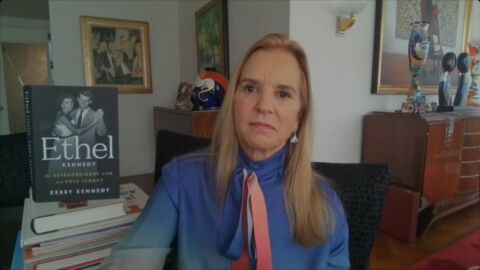
Kerry Kennedy, daughter of AG and Senator Robert Kennedy, who was assassinated in 1968, discusses her new biography of her mother, Ethel Kennedy. Nick Paton Walsh reports on the violence in Haiti. In 1972, William Greaves recorded the last known gathering of Harlem Renaissance luminaries. His son and granddaughter, Liani and David Greaves, have now brought that footage to light in a new film.
WATCH FULL EPISODE