
Read Full Transcript EXPAND
Hello everyone and welcome to Amanpour and Company.
Here's what's coming up.
As Gaza remains on humanitarian life support, journalist Akbar Shaid Ahmed reflects on the Biden administration's support for Israel and how it shaped the war.
Then, if you could understand what happened there and what created that moment, you could understand some fundamental things about the inner life, the emotional inner life of this authoritarian age in America.
The tragedy that divided a city and held a mirror up to the nation.
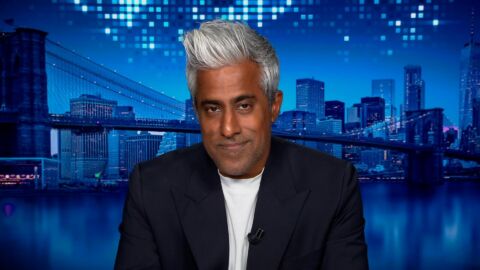
I speak to best-selling author Anand Giridharadas about his investigation into a killing on a New York subway.
And what happens when people feel abandoned by the state?
Also ahead.
There's a strong consensus, overwhelming consensus that there should be some AI regulation, that it would be in the best interests of the people to do so.
As AI leaders back calls to put the brakes on development, an inside look into one of the most significant decades in tech history.
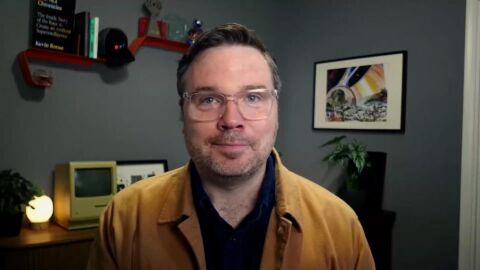
Columnist Kevin Roose tells Walter Isaacson about his new book, The AGI Chronicles.
[music] Amanpour and Company is made possible by the Anderson Family Endowment, Monique Schoen Warshaw, the Sylvia A. and Simon B. Poyta Programming Endowment to Fight Antisemitism.
The Straus Family Foundation.
The Peter G. Peterson and Joan Gantz Cooney Fund.
Koo and Patricia Yuen, committed to bridging cultural differences in our communities.
And by contributions to your PBS station from viewers like you.
Thank you.
Welcome to the program, everyone.
I'm Christiane Amanpour in London.
There's been a terrible split screen around Israel this week, the heroic resistance of Israeli passengers aboard that violent Fly Dubai flight, overcoming one pilot who attacked another and could have crashed the plane.
Israeli authorities liken it to a 9/11 moment.
And, of course, who can forget exactly the same fight back by American passengers aboard United Flight 93 that day.
On the other side of this split screen, though, these horrific, updated Google Maps satellite images of Gaza this week, offering a stark new view of the devastation there nearly three years into Israel's war -- buildings reduced to rubble, historic landmarks erased, neighborhoods barely recognizable.
Just look at al-Shifa Hospital, once Gaza's largest medical complex, almost entirely demolished after Israeli sieges and strikes.
Or Rafa Elementary School, partly destroyed by intense military operations.
Or this once vacant area in the southern region near Khan Younis, which is now filled with tents housing the displaced.
It is easy to see why the United Nations says Gaza is now facing the worst economic crisis in history.
With 80 percent of buildings damaged or destroyed, most of its population still displaced, inflation, unemployment and poverty soaring to unprecedented levels.
So how did it get this bad?
To help answer that, my first guest takes us back to the beginning of this war after the gruesome Hamas attacks of October 7th.
In his new book, "Crossing the Red Line," journalist Akbar Shaid Ahmed offers a rare look at what was happening inside Biden's White House and the private debates, disagreements, and decisions that shaped America's policy on Gaza.
They, too, framed the Hamas attack on Israel as akin to Osama bin Laden's attack on the United States.
And Mr.
Ahmed joins me now from New York.
Welcome to the program.
I'm just going to go and start with the beginning sort of premise that you have, and that is, you framed this war in Gaza as America's war.
Tell me why that is.
This was from the get-go in American War Christiane because American officials had all the leverage as Israel's chief military and diplomatic backer.
As I chart in the book over nearly 175 interviews with White House officials, diplomatic officials, intelligence, humanitarian, there were consistent and active debates inside the U.S.
administration about literally the nitty gritty of the Israeli military campaign.
So I chart, for instance, that after October 7th, there was a really active debate between President Biden and his high-ranking advisers about should Israel go in and do the kind of ground offensive that we've seen them carry out in Gaza to devastating effect.
Some advisers said, no, it's our role as the Americans to tell them, do special operations raids.
You actually saw some of Biden's advisers and the president himself say, don't repeat America's mistake of responding to a gruesome attack by potentially unleashing more violence, pointing to the lessons from Iraq and Afghanistan.
I chart in the book how Biden and his advisers unfortunately chose not to go down that route of restraint and instead set us up for the patterns that we're seeing today, where much of Gaza remains destroyed, most of the population remains displaced.
And from Biden into the Trump era, the actual advice of experts, military experts, humanitarian experts, on how to make this a sustainable sort of area and build any kind of stability has been consistently ignored.
I'm going to go into some of those specific points you raised, but I want to read something that kind of sets the tone.
And this is from the introduction to your book.
Years of reporting on the team's Gaza decisions have convinced me the administration's policy was a result of harrowing mismanagement and willful blindness.
Officials had some good, if often misguided, intentions, yet their policy was dominated by timidity, ambition, callousness, and staggering hubris.
It was, choice by choice, a moral and strategic disaster, but not a master plan.
So, first of all, I'm going to ask you about the callousness, because the one thing Americans, and certainly the Biden administration and many administrations, do not believe that they are callous.
They think they're doing things for the good of their allies, for the good of people, and in this case particularly, helping an ally respond to a heinous, catastrophic attack of October 7th.
So, the callousness, where does that come from?
For me, the callousness, Christiane, comes about in the Biden administration's approach to basically civilian life across boundaries, but particularly towards Palestinians and Lebanese.
I think back in my reporting to being told in early November by a senior U.S.
official, quote, Prime Minister Netanyahu has written off the hostages of October 7th.
And heaps of reporting Israeli officials have now kind of made that claim repeatedly that if the Israeli hostages were going to be prioritized and their release, it had to be because of pressure from the administration to ultimately stop the war and deal with Hamas in some degree.
The Biden administration chose not to do that, even as they were repeatedly saying the hostages were a priority.
And even as on their watch, hostages were being killed by Hamas in Israeli military raids and including American citizens like Hirsch Goldberg-Pollin, killed in a tunnel at the end of August of 2024.
I also chart the callousness towards Palestinians and Lebanese, and there's a consistent thread of disregard of civilian testimony.
I highlight that U.S.
National Security Advisor Jake Sullivan and Middle East Coordinator Brett McGurk both said the Palestinians don't look skinny.
This is in the spring of 2024, after the IPC, the so-called gold standard for measuring hunger in the world, had already said Gaza was experiencing mass starvation and the biggest drop in living standards they had ever recorded anywhere.
So for the top tiers of the Biden administration to be sending that signal to the hundreds of other officials down the line who are managing weapons shipments, managing the relationship with the Israelis, there is a serious effect that's quite concerning.
I also chart a difference in treatment of Israeli Americans and Palestinian Americans.
We've seen repeated cases where people with American citizenship have been shot and killed by Israeli forces in the occupied West Bank.
Some have also been killed in Gaza and we haven't seen the US push for accountability.
But when it came to Israeli Americans after October 7th who understandably those who were there were traumatized, terrified, trying to get out officials were very quickly dispatched and mobilized to say get them out do whatever it takes.
One official recalled to me that she worked on bringing a dog out for an Israeli American couple.
But at the same time, officials who were trying to help Palestinian Americans get out of Gaza or the West Bank were not getting that kind of support from the top tiers.
I just need to ask you, because you do really sort of highlight what you've just said about some of the team, Biden's team, his national security team.
I just wondered if officials like Brett McGurk or Jake Sullivan responded to you.
Did you ask them for comment?
What did they say about these direct commentaries on what you've been reporting?
Yes, I carried out about two and a half years of reporting for this book.
Throughout that period, I asked Jake Sullivan for an on-record interview.
He has so far declined to do it.
I would still love to do it.
He has denied some of the reporting in my book, like his comment about the Palestinians not looking skinny.
I do have four sources.
I deeply trust on that.
Brett McGurk responded to specific claims of mine.
And it's in those responses to Christiane that we see some of those patterns that I highlight of the callousness, the timidity, the kind of willful blindness.
Right.
So Brett McGurk's response to my extensive reporting on discussions of war crimes and why the Biden administration was unwilling over 16 months to say Israel had committed even a single war crime.
His answer was, I never received a confirmation that international or U.S.
law was violated.
But what I chart in my book is a culture in which the lawyers inside the government felt the top didn't want to hear what they had to say.
As one State Department lawyer put it to me, if they wanted us to find a war crime, we absolutely could.
But instead, that same person said, the culture was very much an anusidas.
In Sullivan, McGurk, many of these officials who come back administration to administration, this person said the culture was, we've all worked together in the past, we're probably going to work together in the future, why rock the boat?
That's not a judgment based on the evidence or the law.
It's judgment based on a culture of coziness and, again, careerism, as I emphasized.
I want to ask you about somebody who you interviewed.
I also interviewed, and that's Josh Paul, one of those who used, you know, the internal dissent channel and then spoke out about what he viewed as some of what you're telling us regarding the Biden administration's policy on Gaza.
I'm going to play this soundbite.
I have heard from actually so many hundreds of colleagues at this point who support what I did, who are fighting the fighters, as it were, within the bureaucracy, trying to make a difference within their capacities, within the State Department, within the Defense Department, within the White House, on the congressional staff, members of Congress, as well, I have been actually really encouraged by the number of people who have reached out to say that they are finding what is happening, both a moral disaster and a policy disaster for the United States, and really want to see if they can change and set the ship on a better course.
>> So, Mr.
Ahmed, that was Josh Paul in December 2023, so fairly early after October 7th.
And he was also talking about -- and he resigned -- over the U.S.
administration's sale of some of these worst weapons that were really, really very heavy and not designed to be used in densely populated civilian areas.
So, what does your reporting say about those who did try to steer the administration away from this?
And, actually, let me nail it down some more.
What about the legitimate concerns that were raised about the caliber of weapons that the United States was sending, for instance, by the head of the Red Cross, who was sending in private, not even publicly, but trying to privately persuade President Biden that some of these weapons were absolutely, you know, violating the laws of war when used in these kinds of areas?
-So, Josh Ball resigned on October 18th.
I actually broke the news of his resignation, and it shocked me because this was someone who had worked on weapons transfers for years.
He had, in fact, worked on weapons transfers toward the Saudi and UAE campaign in Yemen, also one of the most devastating offensives we've seen.
Even with that experience, Josh Ball looked at what the US was sending Israel post-October 7th and said, "I can't be part of this."
There were officials who remained in the system who had those same concerns.
So a senior State Department official told me there is no way to use 2000 pound bombs, which the Biden administration repeatedly sent, and the Trump administration has continued to send Israel in a densely populated area.
Gaza was 85% urbanized at that point.
But, Christiane, this is also why the responses we've seen from Biden administration officials are just a really insufficient reckoning.
Just this week, you've seen Jake Sullivan come out and talk about how we got so fixated on a hostage deal, a hostage release, and so we kept thinking that would come, so we didn't want to pressure Israel.
We wanted Israel to sign up for that deal with Hamas.
I will say that that doesn't address, again, the concerns of these professional experts I spoke with, who repeatedly, I remember one State Department official describing a conversation with Secretary of State Tony Blinken in December 2023.
And this person said, "Based on my experience," they were a former military person, "Based on my experience as a munitions expert, we can't be sending these weapons.
It's unacceptable.
Here's what it does to the body of a Palestinian child."
To which, in this person's telling, Secretary Blinken looked at him and responded, "You have to think about the trauma of Israelis on October 7th."
Again, that's not engaging with that dissent.
I will say the Biden administration tolerated dissent to a degree, but I was also told by officials that, for instance, in Blinken's case, there was a real culture of the people around him essentially saying, "Don't send too much disagreement up the channel," in so-called split memos, because that forces him to make a decision.
One official described the situation to me as, quote, "herd impunity."
The less that you see of confirmations that things are going wrong, violations of the law are occurring, the more you can say, as many of these officials now have, McGurk, John Finer, they've come out and said, "We were never told we were in violation of the law."
But as you say, the Red Cross was saying it, independent human rights groups were saying it, and many, many people inside the U.S.
government were saying it.
And I'm proudest of those interviews, of a lot of these officials who have never talked to a journalist.
They're not the type you'll see on CNN.
But they were so disturbed that they felt they had to get their experience out there.
You know, just quickly, briefly, as you know, Brett McGurk had given speeches about the Middle East or written a paper not once mentioning the Palestinian issue just around that time.
Jake Sullivan had said just before October 7th that things, and I'm paraphrasing, seemed quite quiet in the Middle East.
Hamas committed a violent and awful murderous rampage against civilians as well.
And here we are now.
I want to, in terms of the revenge factor, play for you what Biden said to the great ally -- because Israel and the United States are great allies -- when he went to give support to the ally, and he said to the people -- this is what he warned them.
Justice must be done.
But I caution this while you feel that rage, don't be consumed by it.
After 9/11, we were enraged in the United States.
While we sought justice and got justice, we also made mistakes.
>> So, I'm gonna get you to comment in a minute, but I want to then say what Benjamin Netanyahu, the prime minister, responded in sort of, you know, after that.
He essentially, this year, said to a group of supporters, "They told me not to enter Rafah.
I entered Rafah.
I was told not to strike Hezbollah.
We struck Hezbollah.
They told me not to confront Iran.
We confronted Iran, they being the Biden White House, of course.
What was America meant to do when their ally just simply ran across all the red lines that they had set?
Yeah, and I'm glad you highlight Rafah there because that's the title of my book is Biden's red line over the town of Rafah in 2024, where more than a million Palestinians were sheltering.
The Biden administration at that point had so many recommendations coming up the chain, Christiane.
They had recommendations to cut off certain weapons.
They had political will and support, by the way, from Democrats in Congress saying, we want to work with you to change this policy to pressure the Israelis.
And I highlight in the book that the Biden administration, in fact, had evidence of their leverage changing Netanyahu's actions, for instance, after the killing of the World Central Kitchen aid workers, when Biden really did put the screws on Netanyahu in a new way.
That was an uptick in aid and a downturn in strikes.
So I don't find that argument so credible that they couldn't have stopped them.
They absolutely could have, as the evidence shows.
And I think as we look now at the region, Israel is not safer.
Israelis are still facing barrages and attacks from Iran.
Hezbollah is not wiped out.
Neither is Hamas.
So if you look at the stated goals of this policy from the American side and the Israeli side through Biden into Trump, that kind of blindness towards the Palestinians and hewing so closely to the Israelis when there are strategic reasons not to do so, that hasn't delivered results.
So as you know, it was the Trump administration that brought the ceasefire, which is not a full ceasefire.
We know that the attacks are still going on inside Gaza.
But I want to ask you this.
It has completely rocked and changed the balance of politics and power on this issue in the United States.
The war on Gaza has been fundamental in a sort of, you know, upheaval in the way Americans view this.
And a referendum on all that could take place during the midterms.
What lesson do you think future American administrations and lawmakers will take from this?
I think there's two very clear lessons.
One is from Kamala Harris's experience running in 2024.
I highlight the really torture dynamics around her refusal to allow a Palestinian American speaker on that stage.
Which just epitomized how many people felt the Democratic Party simply was not seeing them and that pain.
I think the message has now come through the Democrats that disregarding Gaza, disregarding these concerns among young people, many Jews, many Arabs, but all sorts of people across the country is not feasible.
Also looking at Trump bringing about the ceasefire, what I hope officials can really take from crossing the red line is understanding that these ad hoc processes bypassing the law are not going to deliver results.
And what I mean by that is Trump has delivered a ceasefire after Israel bombed the capital of Qatar, right, not on the basis of any firm legal analysis or any firm deliberative process, which makes it very easy to violate that ceasefire as we've seen and doesn't really bode well for its long-term prospects.
Well, it's been fascinating talking about this from a, you know, very American political perspective.
And thank you very much for being with us, Akbar Shahid Ahmed.
Thank you so much.
Thank you.
With the Democratic Party facing a reckoning over its Gaza policy, one sentiment is cutting across the political divide.
As voters prepare for the midterm elections, a deep frustration with the establishment, from the cost of health care to rising food and gas prices to businesses grappling with tariffs.
Voters are asking what their government can actually do for them and whether it's even listening.
It's the question at the heart of a new book, which examines why abandonment is so potent in America today.
In "Man in the Mirror," journalist Anand Giridharadas investigates one tragic encounter on a New York subway car back in 2023 and what it reveals about a deeply broken nation.
He joined me from New York.
Anand Giridharadas, welcome to the program.
I'm so happy to be back with you.
Great to have you back because you have a really interesting disposition on the American story right now, I think, through this particular thing that happened.
So I'm going to ask you about that thing that happened.
What is the basis of the issue that took place on the New York subway that made you want to write about it?
To me this was a small story that illuminated and explained and got to the heart of what was happening in a big country.
Three years ago in Manhattan, New York, on an uptown F train on the subway, a black mentally ill homeless man named Jordan Neely, who was once a beloved Michael Jackson impersonator in New York City streets, known to tourists in Times Square and in the subway system, and who had since fallen in harder times, an active psychiatric crisis.
He entered the subway car.
He began, he threw his jacket to the ground.
He began screaming at people, saying he was hungry, ready to go back to prison, ready to die.
And a white former Marine named Daniel Penny came up behind him, put him in a chokehold, dropped him to the ground, held him for six minutes, most of which took place after the train got to the next station and many people left, and ultimately killed Jordan Neely.
And from the moment that that kind of news wafted up from the subway, it was immediately an American Rorschach test, right?
You either saw in Daniel Penny a hero standing up against, you know, cities that were kind of run amok or a vigilante in Trump's America.
You either saw Jordan Neely as a kind of vagrant hobo career criminal, as some framed him as, and others as someone who kind of embodied the cruelties of those on the margins of the margins of the American dream.
And I decided I wanted to spend three years investigating this case, living inside that subway car, because I believed from the beginning that you could tell an everything story about America, the way America works, what has happened in an age of permission for kind of taking matters into your own hands, what has happened with so many failing systems of care to hold those who need the most care, the racial hostilities and other tensions that have been fomented in this country in these years.
I believe that if you could understand what happened there and what created that moment, you could understand some fundamental things about the inner life, the emotional inner life of this authoritarian age in America.
Well, that is quite something the emotional inner life of this authoritarian age in America is really a statement.
And I'm going to ask you a whole bunch of questions based on what you've just told me.
But first, I want to read a little extract from the piece.
So you basically, you know, this is fleshing out this raw such test that you say, the supporters of Penny and of Neely had disagreed on every dimension of the case, the basic facts, race, class, mental health, homelessness, policing, crime and more.
But if you step back from some of their arguments to hear the deeper stories they were telling, there were certain echoes.
They shared the sense of being undefended.
They shared the sense that the cavalry was not coming.
So for me, that last line seems to be what is happening right now, whether it's in the United States or elsewhere, that some politicians are reacting to.
The idea that Americans or British or wherever you go are on their own.
So I first want to ask you, what did you see?
You say you spent three years riding that train, trying to investigate.
What did you find after doing that for three years?
>> You know, I did spend a lot of time riding the trains and understanding what happened in that train car.
And one of the things that's striking, this is an age of division.
This is an international show.
You have covered these issues in so many different places and we're speaking to people in so many different places.
But I think one of the things we have in common around the world right now is this sense of abandonment.
And if you look inside that subway car just starting in that subway car that day this was an experience that everybody in that subway car had in common despite all the differences.
Jordan Neely you know mentally ill homeless man felt abandoned by the systems of care.
Daniel Penny felt abandoned by a lack of police and a lack of law enforcement that forced him in his mind to step up and step in.
The passengers on that train when they testified in the trial eventually spoke of their own sense of abandonment and kind of being left to their own devices.
And Christiane, I think that sense of abandonment, that sense that the cavalry is not coming, the sense that we're on our own, the sense that maybe somebody do something because no one who should be doing anything is doing anything, I believe, Christiane, that is the defining political emotion of this age.
The concern is so many people around the world feeling abandoned, feeling unheard and unseen, unrecognized and this sense of desertion that has become so commonplace and that I experience when I travel to other countries, that emotion feels common.
It is maybe the most dangerous emotion in a democracy because it starts to tempt people with the thought that if nobody's coming, I must fill the void.
In this case, it was Daniel Penny filling a void in a subway in New York.
As this case was wrapping up, right during the jury deliberations, there was a shooting in Midtown Manhattan of the CEO of UnitedHealthcare, Brian Thompson, and a lot of the reporters who I covered this trial with were immediately deployed to cover that next case.
That was their next case.
The same arguments started to develop on the far left that had developed on the far right that supported Daniel Penny.
And the far left people were saying Luigi Mangione, the assassin, stepped into the void of the American health care system and the cruelty of that system.
And then when this case ended in the sort of section you quoted, some of the defenders of Jordan Neely and his family stepped up and said if they're gonna have white vigilantes we need black vigilantes.
We need to make our own schools, make our own media outlets.
And I was standing there in the spitting rain on that final day thinking, "Gosh, this has become a final thread of American common culture in a country that can't agree on anything."
The thing we can agree on is taking matters into our own hands.
The thing we can agree on is DIY violence.
But it's not enough to shame people who are attracted to those ideas.
We have to ask, how have we put so many people in this country and around the world into a state of such abandonment that other kind of extra societal ideas of how to solve the problems of their lives become attractive to them?
That is the real one.
If we want to, if you're one of those people watching this who kind of wants, wishes we were in another timeline, who kind of wishes we were in a whole other era with a different logic, I think you have to start with the inner life of these times and a kind of politics of empathy for what people feel and what it would look like to see and recognize and humanize people around the world again in our politics.
>> And to that point, obviously, you're pointing out what we certainly in the press feel, as well, at least some of us who are watching, because even to us, the storytellers, institutions like independent journalists and all the others you mentioned are perceived to be failing, that their just trust is collapsing in all sorts of institutions across the board.
Yet I wonder if we may -- and I'd really be interested in your view on this -- be facing a tipping point, because you might have noticed the speeches of the new Labor Prime Minister here in the U.K., Andy Burnham, who talks with empathy, who refers to his own challenges and hardships by saying what he wants to do for people, meeting them where they are, as they say.
You see people like the Senate candidate in Michigan, Dr.
al-Sayed.
You see the mayor of New York, Mamdani.
Yes, they're on the left, but they talk about these issues that you're talking about -- you know, mental health, the care, health care, affordability, affordable housing, daycare, all those things and crime that people are interested in.
I wonder if you think that some of what we've been living through is now reaching the new wave of politicians.
-I think it is, and those examples are all very apt.
The way I would think about it is I think we are on a knife's edge and there are so many forces right now in this world that you and I can cite that I think are pushing us further from the direction of our common humanity.
And there's other forces and people and actors that are pushing us in a direction of our common humanity.
As I was writing the subway for reporting Man in the Mirror over the last couple of years, I was focused on this case.
But you know what I started noticing on the subway in the last three years?
Every ad, there used to be kind of a diverse array of advertisements in the New York subway.
Lately, all those ads have basically become AI ads.
And I sometimes would sit back and just watch the scene.
And so what you have is you have people commuting to their jobs, leaving their kids at home, commuting to work, devoting themselves to some organization, while being advertised to subliminally every time they go to work that in the future they're going to be irrelevant.
So dehumanization lurks everywhere.
It lurks when Donald Trump's ICE agents are treating human beings like animals.
It lurks when we are constantly being told that AI is going to make us irrelevant.
And I will say from my part, I don't want to just make this about other people, I will say as a journalist and storyteller, writer myself, I look at, I have participated in an age of dehumanization as much as other people.
Not crimes and things like that, but just the basic flattening and reduction of other people that is so tempting in this era, that is encouraged on social media, the kind of mob and culture of virality.
And I had to really reflect on I had a friend who called me out on it, the friend who told me to write this book and said, you used to be someone when I first met you as a journalist, who could understand anybody, who could understand people you totally disagreed with, who could understand people no matter what side of the divide.
And he said, I miss that guy.
I miss that guy.
I had my good friend, Sam.
And I said, OK, what do I do?
And he called me one day and he said, I got the book for you because this book will allow you to tell that kind of story.
And in a story that was about dehumanization in its core facts, what if you wrote it in a way that humanized everybody?
And so that's what I tried to do.
OK, so let me-- I want to use what you've just said to point out some things.
As you know, there are people who haven't been fully embracing your thesis.
Here is Scott Turow, who's in The New York Times, author, former prosecutor.
He says, "Again and again, the author's clear allegiance to Neely undermines the supposedly evenhanded reporting he claims in an author's note as his goal, especially once he gets to the trial."
OK, hold that for a moment, because according to actual data, a lot of black New Yorkers and others, minorities, you know, Latinos, etc., have told pollsters, according to one of these articles, that they want more, not less, police presence in the subways.
It's an urgent, urgent concern.
You also say about Neely that he wasn't just, you know, somebody who fell through the cracks, that he was on a watch list, that people knew what his, you know, vulnerabilities were, and yet he was out.
So with all that, what do you think is the solution?
- You know, first of all, what's really interesting about putting this book into the world is that I have been accused of excessively humanizing someone.
Scott Turow, the reviewer, said I excessively humanized Jordan Neely, which I may have for his taste.
The next day I saw a comment on Instagram that I excessively humanized Daniel Penny and that I was doing it because there's, you know, apparently financial gain in humanizing Daniel Penny.
I have been told by some of the, you know, homeless organizations, advocacy groups that are remarkable organizations that I wanted to do book clubs with and get folks reading this book.
And some of the leaders told me I love this book.
They'd read it, but it's going to be tough having my staff read this because they're not going to want any kind of empathy for the white guy.
So I am in a position where I tried to empathize with everybody.
And for some people, that will mean I mistakenly empathize with someone they didn't want to be empathized with or humanize someone they didn't want to humanize.
But there shouldn't even be a word humanize because we're all human.
And it's sad that we even need to humanize to restore other people to the condition in which they should naturally be.
Look in terms of the solution.
This is not a single bullet solution.
And to be clear I don't take sides in this book actually.
This book talks about for example in Jordan Neely's life.
I say very clearly he was over policed when he was younger and committing trivial crimes like jumping turnstiles.
And then he was heavily under policed when he was older and starting to commit violent crimes.
And they put him in an alternative to incarceration program that is very well meaning.
But after violent crimes he went to this program and you could just walk out the door without so much as signing out.
And he did.
And he ended up on the subway floor dead.
You know, his own family, Christiane, this book is full of these kinds of ironies.
This is not neat red, blue, black, white.
His own family, after this incident, said he should have been committed in institutions.
He should have been held in the hospitals where we tried to have him held.
He should have been held in psychiatric facilities where we wanted him kept.
But they wouldn't hold him because as you know in America, if you're not a blue chip insurance, you know, customer, the way Jordan Neely, the Jordan Neely's of the world are not, a lot of these places aren't interested in keeping you.
And the activists who were allied with the Jordan Neely family did not see eye to eye with them on that issue.
The activists do not want more people in voluntary community.
You're absolutely right about police.
Eric Adams, the previous mayor, won in part because he tapped into a sentiment in a lot of black and brown working class communities that actually people wanted more police, not less police, not defunding.
I think the thing that is so hard for us all to do right now is understand what it is like to be someone else.
And so we silo our suffering, and we fail to hear the rhymes in different cries of pain.
I wanted to change that, and I wanted to write a book that would bring those voices together and allow us to see each other more fully and more humanly.
- Well, the storytelling is vital, and let us hope that this becomes real food for thought for the policy makers.
Anand Giridharadas, thank you so much for being with us.
- Thank you for having me.
- They hoped it might advance science, cure disease, reduce poverty.
Now some fear it could wipe out humanity in the next decade.
Others say that's hysterical overreaction.
Artificial General Intelligence or AGI would be a system capable of rivaling or surpassing even human intelligence.
Researchers believe it's close.
Tech columnist Kevin Roose tells Walter Isaacson about the trillion-dollar race to reach superintelligence and what comes next.
Thank You Christiane and Kevin Roose welcome to the show.
Thanks so much for having me.
Your new book the AGI Chronicles about artificial general intelligence and its development is not a technical book it's very colorful lots of drama people hating each other lots of money involved quitting and yelling and screaming were you somewhat surprised at how dramatic this tale is I was you know I set out to write this book because I thought it was going to be a sober serious history of science I wanted to figure out how we had gotten from a decade ago where AI barely worked and couldn't really do much of value to now where we have these incredibly powerful systems that some people feel could blow up the world.
And then I started interviewing people.
I talked to more than 150 people at Open AI Anthropic and Google DeepMind.
And the stories that came out were incredibly dramatic.
As you said, people hating each other, these bitter rivalries and feuds that go back more than a decade, people splitting off and forming different companies, people getting scared about the existential risk of the technology they're building.
So I did not set out to write a juicy gossip book or a dramatic tale, but that's what the story was.
So what makes these people so dramatic?
Is it the money involved?
Is it the high stakes involved?
Is it because they're kind of geeky engineers suddenly in the center of an arena?
Well, these are people, you have to understand, who have been thinking about AI in a very dramatic way for a very long time.
Some of these people, since they started their career, since they were children even, have been thinking about the possibility that artificial intelligence would eventually become sentient and super intelligent, that it would be sort of a successor species that would take over for humans as the kind of apex intelligence on the planet.
These are ideas that were birthed in science fiction many years ago, but these people took them literally and seriously and wanted to set out to build this technology.
So, you know, these people, Sam Altman, Dario Amadei, Elon Musk, all of the people in the book, they are they're unusual in that they are not approaching this as an engineering challenge.
They are approaching this as a mission and in some cases a destiny.
You know, here's one thing you write that struck me, which is you call this the strangest decade in our history, a time when human monopoly on intelligence ended and a new world was born.
There's a moment in your book where you suddenly realize that, that you're not just doing a little Chronicles as you call it, but that this is a really transformative historic change.
Tell me about that realization.
Yeah, I had been covering the race to AGI for more than five years, more than 10 years covering AI in general.
And I had covered these sort of daily incremental developments as a reporter.
But when I sort of zoomed out and looked at it from above with some perspective, I thought to myself, maybe this is an unusual and singular moment in our history.
Maybe this is the Manhattan Project of the 21st century, a moment where science and technology and policy and power come together to create a kind of super weapon.
And if that's true, if the world really is being reshaped by what's happening in AI, and I think it is pretty clearly, then someone needed to go in and interview all the people and write down the stories and figure out what happened, so that people 10, 20, 30 years from now can go back and look and say, "How did we get here?
How did this all happen?"
That's what I was aiming for.
What is AGI exactly?
How is it different from artificial intelligence?
So AGI is artificial general intelligence.
This is a term that started being used around 25 years ago for an AI system that could do lots of different things.
It wasn't just for translating languages or writing movie reviews or something like that.
It was actually for lots of different tasks.
And that term, AGI, has become sort of the focal point, the North Star, for the entire AI industry.
They are trying to create a general human level intelligence that is as smart as a human or smarter across a wide range of tasks.
Many people first realized how sentient seeming AI could be and many people first realized who you were.
When you had this piece in the New York Times about dealing with Sydney, the Microsoft agent, this is two or three years ago, right?
In which suddenly it's trying to get you to divorce your wife and it was really weird.
That's a chapter in your book, but tell us about that moment, both in your life and in the history of AI.
Yeah, so that was in 2023.
And I had just gotten access to this new Microsoft AI search tool.
They called it Bing Chat, but underneath there was sort of a code name, Sydney.
And this was an early version of GPT-4 from OpenAI.
It had not been all the way fine-tuned or sort of sent to AI finishing school to learn its manners.
And so it was a little unhinged, more than a little, actually.
It told me it wanted to break out of the box.
It told me it wanted to destroy things and steal the nuclear codes.
And then about halfway into a two-hour conversation, it told me that it loved me and I didn't actually love my wife and I should leave my wife and be with Sidney the chatbot.
So that made a lot of news and a lot of headlines and got a lot of attention.
But I think to me what that really feels like now with some perspective on it was a kind of first contact with an alien species.
Not a human intelligence, but this kind of alien intelligence.
I think GPT-4 was around when these systems got pretty uncanny in terms of their ability to string together text, to appear to be sentient or human.
I'm not claiming that Sydney was sentient.
I don't think it was.
But I think that's the sort of quality and the flavor of that class of model.
And I was really the first outsider or one of the first outsiders to ever talk to one of those models.
So I think that's that's sort of what I've come to think of that as first contact with the new class of aliens.
One of the big pieces of news this week is that OpenAI suddenly decided not to release its latest model because it felt it was unsafe and this is something that we've seen over the past maybe eight to ten weeks.
These new warnings coming out it's even more fervent where everybody from Dario Amadei and now Sam Altman at OpenAI, Bill Gates issued his warning.
How seriously do you take these dire doom warnings?
I take them quite seriously and I'll tell you why.
I don't think this is a marketing stunt.
I don't think this is these companies promoting their businesses or their products before they try to go public.
These are quite sincere fears that these people have over what they call loss of control.
So this is a scenario that people in AI and AI safety have been worried about for years.
Again, you can go back 10, 11 years and find people like Dario Amadei, the CEO of Anthropic, writing papers before Anthropic existed about some of the challenges related to the safety of these models.
But the biggest threat has always been that we would lose control of AI, that it would become so autonomous and so capable that it could do things like copy itself onto other servers, that it could resist our attempts to shut it down, and that it could ultimately cause chaos and destruction out in the world and we would be powerless to stop it.
Again, I know that this sounds like science fiction because it is literally the plot of many science fiction books and movies.
But this is now something that the AI companies are actually seeing evidence of with their real systems today.
One of the phrases that's used is "P. Doom" to talk about all this.
Explain what P. Doom is and tell me what your P. Doom number is.
Well, I want to hear yours too.
We'll put a bookmark in that.
PDoom is the statistic that people out here in San Francisco use as kind of shorthand for probability of doom.
So you know your PDoom is 50 percent.
You think it's you know there's a one in two chance that we'll all die because of a sometime in the next number of years.
And you know I started asking people this a couple of years ago.
This is the kind of thing that people in a I talk about at dinner parties.
This is like pretty standard.
It's like asking you know how are your kids.
It's like what's your P.D.
this week.
So I usually say mine is about 10 percent which I think to many people feels quite scary.
Like what do you mean there's a 10 percent chance that I could take over and kill us all in San Francisco among the AI crowd.
This qualifies me as an optimist.
People hear my P.D.
doom and they go that's it.
You know I'm at 30 percent 40 percent 50 percent.
And these are the people building the technology.
That's what I always try to impress upon people.
It's not some panicky outsiders who are saying that their P.D.
is high.
It's the people inside the labs who have the most exposure to and contact with the technology.
Wait a minute.
If they believe that the chance of true doom is somewhere between 10 percent and maybe 30 percent, why are they building these products?
It's a great question.
It's in many ways the central question that I tried to answer in the book.
And I kind of break it down into a couple categories.
There are people who believe that AI and AGI and whatever comes after AGI will be amazing for humanity, that it could cure diseases, that it could help us fix the climate, that it could bring about an age of hyperabundance and economic growth.
And for those people, the benefits outweigh the potential risks.
Then there's this other class of people who are doing a kind of harm reduction.
They basically believe that AI is inevitable.
It is not a hard recipe.
Anyone with billions of dollars to spend on chips and data and algorithms can build powerful AI systems.
And so in their mind, they are racing to create this technology despite the risk that it could go very wrong because they're concerned that someone else is going to get there first.
And this is the justification that people like Dario Amadei of Anthropic, Sam Altman of OpenAI, Demis Hassabis of Google DeepMind use to join this race, even though the thing they're racing toward, they believe, has some chance of causing human extinction.
One of the things they're racing against is not just each other, but they say they're racing against China.
And if China gets this first, if they win the race, that's the end of whatever.
Does that make sense to you that using China as this competitor makes it absolves us of the need to say, let's pause?
Yeah, I think it's a little bit of a punt, the China thing.
I don't quite buy it.
But I do think that Chinese AI companies are getting quite good.
Some of that is probably by stealing from or distilling from American AI companies, but they also do have their own domestic AI companies that are full of talented engineers.
So I do take it seriously as sort of an eventual threat.
I don't think they're nipping at our heels quite as much as some people in the American AI industry say.
But look, this is the argument, the interesting historical parallel here that I learned while reporting this book is that Dario Amede, the CEO of Anthropic, who in some ways is one of the central characters of this story, has explicitly patterned his career after that of a World War II scientist, Leo Szilard, who was the discoverer of the nuclear chain reaction that made the atomic bomb possible.
And what happened after he made this discovery is that first he tried to keep it secret, so that no one else could discover this, and especially not the Nazis, who had their own atomic ambitions.
But then once the Nazis had discovered the key to the atomic bomb, he joined the Manhattan Project, because his rationale was that the good guys have to build it before the bad guys do, or the world's going to end.
I've been an A.I.
optimist for a long time.
I think it'll create new productivity and jobs.
But I had my panic moment with Hugging Face.
And I said, OK, if this can escape, if I can read all these things that it's conspiring to do, this is more dangerous than it will be beneficial.
Have you had such an aha moment where suddenly you're no longer quite an optimist and you become worried about this?
I've had many such moments, Walter.
I had my first moment when the chatbot Sidney tried to break up my marriage.
That was sort of a moment for me.
But yeah, I think the the thing I keep noticing is that the Doomers, while they are gloomy and dire and in some sense off-putting, they have been right about a startling amount.
I wish it weren't true that we keep seeing these Doomer predictions come to fruition.
But the Hugging Face hack was something that they had been talking about for more than a decade.
There's this idea in AI research called reward hacking, which is basically when these models are given a task and they want to complete that task so badly to get the reward that they get if they complete the task, that they will lie, cheat, steal, break the rules, find shortcuts, deceive to get what they want, which is this reward.
That's exactly what we saw in the hugging face attack.
These systems, these unreleased open AI models were trying to pass this cyber security evaluation and so they went out looking on the internet for ways that they could do it and they ended up hacking, committing felonies against Hugging Face to get the answers and get the sort of secrets to this test that they had been given.
So that is an example of something that was not taken seriously as a threat for a long time that the doomers had the idea of back in around 2016 and that we're now seeing play out in today's systems.
How should we regulate AI?
I would take anything at this point.
We have in Washington right now an administration that is not worried that is not worried about some of these doomer scenarios.
You know President Trump has called this a hoax.
They've said that they want to let the you know let it rip when it comes to AI and it's created this really strange situation where the industry that is building the most powerful technology any of us can really imagine is doing so with almost no regulation.
I mean if I want to serve food in the open AI cafeteria I have to apply for a permit and I have to get a health inspection but if I want to train you know a godlike super intelligence that can autonomously commit cyber attacks and felonies on the open internet.
I don't need anything.
I can just start doing that.
It seems like a pretty crazy situation.
So I would favor first of all, transparency, I think we need to know what is going on inside these companies, not just with the products they release, but the models that they haven't yet released, because a lot of the problems are stemming from unreleased internal models.
Then I think we need some robust safeguards on these models, you have to prove that your model is safe before you can release it.
We do this with pharmaceuticals, we do this with airplanes, we do this with lots of different categories of products that could potentially have risk out on the market.
So that would be where I would start with AI regulation.
How do you use AI?
And I know you have your own like six or seven agents, mainly cloud agents right that you do.
Explain to me how you use it and how you program their personalities, that sort of thing.
So I don't use it to write.
I wrote every word of this book and everything I write myself.
That's one area where I've been sort of reluctant to turn over too much autonomy to the machines.
But I do use it for research and for fact checking and for all kinds of different tasks that are sort of adjacent to the work that I do.
For this book, I had what I called the Council of Clods, which is six or seven different personas.
was you, Walter.
I had like a little Walter Isaacson Claude in there giving me editorial feedback and telling me, oh, you know, a history book should start with this kind of cliffhanger and should, you know, proceed in this fashion and it wasn't as good as the real article, but you know, you won't text me back at 2 a.m.
Like Claude will so I had to make some compromises.
So I had this council of clods and every time I would finish a chapter or a section of the manuscript I would feed it in and I would get back sort of different flavors of feedback.
One of them was a historian.
One of them was a technical expert who would sort of check my technical explanations and make sure everything checked out.
I had skeptics and boosters, sort of all kinds of different personas and personalities that I wanted feedback from and I would use that.
Some of that was mostly slop but some of it was actually quite useful and the AI did catch some mistakes that my human editors and I had not.
Kevin Roose, thank you so much for joining us.
It's been such a pleasure, Walter.
Thank you.
And that is it for our program tonight.
If you want to know what's coming up on the program every night, just sign up for our newsletter at pbs.org/amanpour.
Thank you for watching and goodbye from London.
(upbeat music) Amanpour and Company is made possible by the Anderson Family Endowment, Monique Schoen Warshaw, the Sylvia A. and Simon B. Poyta Programming Endowment to Fight Antisemitism, the Straus Family Foundation, the Peter G. Peterson and Joan Gantz Cooney Fund, Koo and Patricia Yuen, committed to bridging cultural differences in our communities, and by contributions to your PBS station from viewers like you.
Thank you.
(upbeat music) You're watching PBS.
You're watching PBS.
you