
Watch more of correspondent Kim Lawton’s interviews with Rev. Mike Slaughter, pastor of Ginghamsburg Church in Tipp City, Ohio, who says faith communities must remind the world “that there is a moral mandate we have as human beings toward the treatment of other human beings.”
Author Archives: Fred Yi
Mezuzah
RABBI TAMARA MILLER: The word mezuzah means doorpost. So in the Book of Deuteronomy, in the sixth chapter, it does say that we should put on our doorposts, on our gates of our homes, this mezuzah.
Most often the mezuzah will have the letter Shin. It stands for one of God’s names, which is Shaddai, which has been translated as “Almighty.”
Inside is the holy text that comes from the Book of Deuteronomy. We call it the Shema, which means “Hear, O Israel, the Lord is one.” And then it continues to say what we should do, which is to love your Lord, your God, with all your heart, with all your mind, with all your spirit. The text is always the same. It has to be on parchment.
 In order for it to be authentic, it has to be written by a holy person for whom this is their holy work. And so that mezuzah, what’s written on that parchment is a way of saying God, the universe, the holy is protecting us as we go in and outside of our homes.
Chanukat Ha’Bayit means dedication. Chanukat means “a dedication” of the Bayit, “of the home.” It’s important that people do witness your new home and be part of the ceremony.
The mezuzah is placed on the right-hand side of the doorpost, about a third of the way down, and in the homes of Ashkenazic Jews, Jews from Eastern Europe, they would have it slanting inside, towards the open of the door, towards the home. The Sephardic Jews that come from North Africa, they put it straight up and down.
If you only have one mezuzah, it should be placed outside. Then you can put a mezuzah on every door in your house, outside every room. The only place you’re not supposed to put it on is the bathroom.
An object such as the mezuzah is so accessible to people. You don’t have to go into the synagogue. You just have to go into your house, which is something that you do on a daily basis. I love the fact that it’s affixed, and it’s not movable, because that’s like God is our rock—always there, always affixed to our hearts.
Listen Now
Listen to this episode now:
[powerpress]
Easter Hope in Haiti
KIM LAWTON, correspondent: About 20 miles outside Port-au-Prince, Leogane was near the epicenter of January’s catastrophic quake. Roughly 80 percent of this city was destroyed. But at the Lamb Center Ministries Children’s Home, they’re still singing about joy. There doesn’t seem a lot to be joyful about. The orphanage’s main building was completely destroyed in the earthquake. Several staff members were killed in the collapse, although all of the 260 orphans who lived in the compound did survive. Now the children are sleeping in a tent city nearby, and they come here for activities during the daytime. Pastor Jeanot Deceus, who leads the ministry, is having a difficult time finding regular sources of food and water. He says he has faith that God will help them. He told me, despite it all, he still sees hope everyday.
PASTOR JEANOT DECEUS (Lamb Center Ministries Children’s Home, speaking through translator): All of the kids is the hope of the country.
 LAWTON: The kids are the hope of the country.
DECEUS: Yeah.
LAWTON: It’s been almost three months since what people here call “le tremblement de terre”—the trembling of the Earth. The evidence of destruction and death is still almost everywhere. But the traditional Easter message is that death doesn’t have the ultimate victory, and this Easter season many Christians who live here, and those who are working here, say they are clinging to glimpses of hope that resurrection will still come.
Hope can be easy to miss in this massive tent camp of displaced people that has sprung up at the former Petionville Country Club. Some 40,000 homeless Haitians now live at the bottom of the hilly area that was once a golf course for the wealthy, and that’s just a fraction of the estimated half a million Haitians who still don’t have adequate shelter.
Catholic Relief Services (CRS) is helping lead humanitarian efforts on the ground. CRS camp coordinator Niek de Goeij says getting food and water to the people has been a logistical nightmare.
NIEK DE GOEIJ (Catholic Relief Services): This is about as complicated as a food distribution can get in terms of logistics. It took us a good two days to figure out how to do it, and I think now we’ve got it down.
 LAWTON: Because of the camp’s terrain, big delivery trucks can’t get in. They drive as far as they can, and then the supplies are transferred to smaller pickup trucks, which can maneuver their way further into the camp. When the pickup trucks get as far as they can, workers take the bags of food by wheelbarrow to the waiting families below. They can deliver USAID-donated cooking oil, flour, peas, and bulgur to about 7,000 people a day. Over several days, they provide everyone in the camp food rations that should last for a month.
DE GOEIJ: The calculation is for a family of six a little less than 2,000 calories per person per day for 30 days. It’s not a full ration. People need to complement it with some protein and vegetables, but at least it gives them a good calorie base.
LAWTON: While a camp DJ gives instructions and offers entertainment, thousands of people, mostly women, wait in line for hours in the blazing sun to get their rations. The camp has the women receive the rations, de Goeij says, because they’re less aggressive than the men and less likely to start food riots. The camp also offers medical services, provided mostly by volunteer doctors from the US and other countries. Conditions are not ideal by any means, but still it’s considered one of the most successful camps in Haiti, and people here are grateful for it.
This woman told me, “We don’t have a good government, so it was a grace from God that the other nations came to help us.”
CRS and other relief groups are also working on long-term recovery plans. But it’s hard to get to that when meeting immediate needs is still such a huge undertaking. The magnitude of it all can be overwhelming, but de Goeij says, for him, hope gets defined in the small moments.
DE GOEIJ: Just the other day, there was a man who lost his leg during the earthquake, a recent amputee. He couldn’t stand in line, he’s the head of his household, he doesn’t have a wife, and, you know, we can pick him out of the line, and we can help him through the system, and five minutes later he walks off with a food ration, and people with a wheelbarrow helped him with that. Those are very little things, but…
LAWTON: He says he tries to focus on what has been accomplished, not on what still needs to be done.
 DE GOEIJ: I come home at night, and I’m grumpy, and I’m crabby, and then I have a colleague slapping me on the shoulder and saying, you know, whatever happened today, 7,000 people are eating tonight because of the work that you did today. That helps.
LAWTON: At Hopital Adventiste d’Haiti, the Adventist Hospital in the suburb of Carrefour, issues of life and death are still very much at the fore. The hospital was built in 1978, but it had struggled in recent years until being adopted by Adventist Health International and the Loma Linda University School of Medicine. Within days of the quake, Adventist doctors came rushing in from the US and around the world. There’s been an outpouring of donations, and the hospital has now become one of the best facilities in the country.
ANDREW HAGLUND (Hopital Adventiste d’Haiti): Unfortunately, we’re still dealing with quake-related trauma that has yet to be cared for. We’re doing orthopedic surgery right now downstairs on cases that have not been treated—fractured hip, fractured femur, so in addition there’s lots and lots of follow-up care.
LAWTON: Loma Linda assistant professor Andrew Haglund is the acting hospital administrator. He arrived six days after the quake and is not sure how long he’ll stay.
 HAGLUND: It’s very, very difficult. You’re seeing things and exposed to things that you would never see at home, and I think we start the day with prayer, and we end the day with prayer and pray all day long for the safety and for the healing of this nation.
LAWTON: With all the earthquake-related orthopedic injuries and amputations, the hospital is specializing in prosthetics and rehabilitation, and the Americans are training Haitian doctors to carry that work into the future.
HAGLUND: That’s where I see the hope—that we can make a difference and that hopefully we are bringing light to this nation where hope is rare.
LAWTON: The faith-based medical ministry Cure International has been supporting work at the hospital and helping to coordinate volunteer medical teams. Phil Hudson is directing Cure International’s efforts here. He too, defines hope by each person who is helped.
PHIL HUDSON (Cure International): And you say regardless of this list, regardless of I’ve got 20 hours of work to do tomorrow plus whatever comes up tomorrow, it all comes back to this child is good, and they’ve been touched by the love of God, even if no one ever says anything to them about God, and that’s what does it for me.
LAWTON: Hudson worries that American concern about Haiti is already starting to wane.
 HUDSON: It’s a shame for our country to allow something like this to exist in our hemisphere so close to our shores and it’s been a shame for years, and if we don’t stay with it it’ll be a big blot on us.
LAWTON: But he’s determined to see that new life does come.
HUDSON: If we only leave Haiti the way that it was before the earthquake we will not have done a good job, and so everything that we’re doing needs to be for the long term, and I am hopeful that we can leave things better than they were before.
LAWTON: The Haiti Gospel Mission Community Church is about 45 minutes outside Port-au-Prince. The building did sustain some damage in the earthquake, although not severe. Church leaders say they’re not only repairing the damage, they’re going to make the church even stronger and more beautiful than it was before.
Pastor Elison Bien-Aime says the earthquake has actually strengthened people’s faith.
PASTOR ELISON BIEN-AIME (Haiti Gospel Mission Community Church): We see, we can see in the visages…
LAWTON: …in the faces…
BIEN-AIME: …in the faces of the Haitian people the “esperance,” the hope, because when we talk with them all people swear you, “I live because Jesus loves me.”
LAWTON: Pastor Elison says the support from around the world has helped his people see a new vision for their nation.
BIEN-AIME: They feel the Lord has a dream for this country, and then we are not sad.
LAWTON: And some signs of the new vision are already starting to take shape. As the choir practices on Monday morning, the sounds of construction are in the background.
I’m Kim Lawton in Haiti.
Embryonic Stem Cell Controversy
BETTY ROLLIN, correspondent: Andy Trevino took to his new baby sister, Sophia, from the start, and in more ways than one, she took to him. One of the reasons Sophia was conceived was to save her brother’s life. Shortly after Andy’s birth, he got sick—very sick. His immune system just didn’t seem to be working.
ANDRES TREVINO: He started having very rare infections—infections of his central nervous system, infections of his stomach, infections of his lungs.
ROLLIN: The Trevinos were desperate for a diagnosis, which they weren’t able to get in Mexico City where they lived. They wound up at the Children’s Hospital in Boston and learned that Andy had a rare genetic mutation called NEMO that was causing his immune system to fail.
TREVINO: We decided to keep him safe with antibiotics and a lot of medicines, about 13 types of medications, and then to try to find a compatible donor for a bone marrow stem cell transplant.
ROLLIN: But they couldn’t find one.
TREVINO: One day one of the physicians came to our hospital room and told us there is always the option of having another baby, and after birth we could use the umbilical cord stem cells for Andy.
ROLLIN: And that’s what you did.
TREVINO: That’s what we did.
PAULINA TREVINO: It wasn’t difficult for me to take this decision because we always wanted another child, and to know that this other child was going to be able to save my son’s life, it was exciting.
ROLLIN: IVF, in vitro fertilization, was the only way to create an embryo that would be free of the genetic mutation that Paulina carried. It took 36 embryos to get a big enough selection to achieve success.
DR. GEORGE DALEY (Children’s Hospital Boston): There was no way to cure Andy without the decision of the family to have another child whose cells matched Andy’s, and indeed by performing in vitro fertilization and selecting for the tissue type, they were able to have a child whose bone marrow could cure Andy.
ROLLIN: And now Andy is well, and he has two sisters, Sophia and most recently nine-month-old Tania. The family lives outside of Boston, where Andres has a job with Children’s Hospital. The Trevinos are Catholic. The Catholic Church believes that life begins at conception, that creating embryos through in vitro fertilization, which is what the Trevinos did, is wrong.
Richard Doerflinger with the US Conference of Catholic Bishops believes that each embryo deserves respect.
RICHARD DOERFLINGER (US Conference of Catholic Bishops): We are talking here about life, about a human life at a very, very early and undeveloped stage, but human life nonetheless.
ROLLIN: Dr. Daley disputes that an embryo in this stage is a human life.
DR. DALEY: We are talking about the first three or four days after conception when the human embryo is a tiny ball of cells, between 50 and 200 cells. It’s a speck smaller than a period at the end of a sentence. You need a microscope to see it.
ROLLIN: The church also believes the destruction of embryos to obtain embryonic stem cells for research is immoral.
DOERFLINGER: When we are talking about stem cell research, we are talking about a way to destroy that life, cut it off at a certain stage for the benefit for others. We think that’s wrong to do that.
ROLLIN: But Louis Guenin, professor of ethics at Harvard Medical School, says that the research is not only not wrong, it would be wrong not to do it.
LOUIS GUENIN (Harvard Medical School): It’s a biological fact that those embryos outside of a womb can’t mature beyond about two weeks. Knowing that, we have to take account for moral purposes of the duty of beneficence, the duty to come to the aid of those who suffer if we can do so without unreasonable burden.
ROLLIN: In a document called “Dignitas Personae,” issued by the Vatican in 2008, the church reiterated its existing ban on IVF and on the destruction of embryos for stem cell research, which is not to say that there are not individual Catholics like the Trevinos who choose not to follow the church’s teachings.
DR. DALEY: Stem cells are part of what we call regenerative medicine, because stem cells are involved in the natural repair and regeneration of our tissues. They teach us an enormous amount about the disease process, but they give us this possibility for regenerating tissues, and that’s why they are of such tremendous scientific importance, but also potential medical value in the future.
ROLLIN: Because of that, the Trevinos decided to donate their remaining embryos to Dr. Daley’s lab.
TREVINO: This decision that we took saved the life of my son. It gave us a beautiful daughter, actually two beautiful daughters, and it allowed us to hopefully help other people with the cells that have been created at the lab.
DR. DALEY: We succeeded in generating two embryonic stem cell lines, one of which carries the precise gene defect that affects Andy. That line is enormously valuable to us.
ROLLIN: But Catholics and others who think the research is immoral favor using adult stem cells. Dr. Daley studies adult stem cells, but believes the use of embryonic stem cells is crucial.
DR. DALEY: If we want to understand the earliest stages of human development, how we lay down all the different tissues, then we are best to study these early embryonic or pluripotent stem cells.
ROLLIN: Now that the Obama administration has allowed federal funding for embryonic stem cell research, there are many more stem cell lines available. But scientists are still barred from using embryos to create new stem cell lines with federal funding.
DR. DALEY: And there’s a pipeline of hundreds of lines waiting for approval. So the policy is in place, but it’s going to take months, maybe a year or more, to implement it. So there’s still a certain delay and frustration.
ROLLIN: As long as some people believe that an early-stage embryo is a human being, the moral battle over embryonic stem cell research will continue. Meanwhile, Andy Trevino has benefited from stem cell therapy, and others with his disease will benefit from the stem cell lines donated by his parents.
For Religion & Ethics NewsWeekly, I’m Betty Rollin in Sudbury, Massachusetts.
Dr. George Daley Extended Interview
It’s been one year since President Barack Obama lifted the Bush era’s eight-year ban on federal funding for embryonic stem cell research. Read excerpts from producer Susan Goldstein’s and correspondent Betty Rollin’s recent interview about ethical guidelines, current research, and the limitations of Obama’s policy with Dr. George Daley of Children’s Hospital Boston, where a new web site is now available on the state of stem cell research.
 Stem cells are the master cells of the human body. They are the seeds for our tissues. They come in two varieties. They are pluripotent, which means they can make any tissue in the body, and the classical pluripotent stem cell is the embryonic stem cell which comes from the earliest human embryos. There are also stem cells in our adult tissues, so called adult stem cells, or better somatic stem cells, stem cells of the body, and I think the analogy to plants is a good one. We are talking about the seeds for our tissues, so if our skin is like a lawn of grass, the stem cells of the skin are the grass seeds.
Embryonic or pluripotent stem cells are different from adult stem cells. They teach us different things. If we want to understand the earliest stages of human development, how we lay down all the different tissues, then we are best to study these early embryonic or pluripotent stem cells. If we are just interested in the skin, for instance, then we study the skin stem cell. So it’s not one is better than the other, it’s that they teach us very different things. My laboratory studies both side by side. We study embryonic stem cells as well as the adult stem cell for the blood-forming system, so called hematopoietic stem cells. We found that actually studying both types side by side gives us a much greater insight into their functions.
The research is answering very fundamental questions, first of all, but the promise is that one day we might learn to deliver stem cells as curative therapies. For now we can use stem cells to treat diseases of the blood. So if a child has a genetic disease or leukemia or lymphoma, we might use a blood stem cell typically taken from a healthy sibling to try to cure that child’s disease. But there are many diseases that we can’t approach yet with stem cells, other diseases of the blood that aren’t easily treated by bone marrow transplant, diseases of other organ systems like diabetes, or even in adults diseases of the degenerating brain. We believe that stem cells offer a new approach. It gives us a new way of organizing our thinking about the way tissues form and the way tissues could be affected by disease. Stem cells are part of what we call regenerative medicine, because stem cells are involved in the natural repair and regeneration of our tissues. They teach us enormous amount about the disease process, but they give us this possibility for regenerating tissues, and that’s why they are of such tremendous scientific importance, but also potential medical value in the future.
Under the last administration we were operating under a very restrictive policy, so in 2001 President Bush allowed funding for a very small number of embryonic stem cell lines, and over the last decade over 1,000 new lines have been created. The new Obama policy opens up the possibility for federally funded researchers to use all of those lines. So you can imagine it creates a much greater opportunity for scientists to use the many hundreds of lines that have been generated that model specific human diseases, lines that have been made under pristine medical conditions. Those are all valuable, but until the new policy they haven’t been accessible to us who are working under federal funding.
With many governmental policies, the devil is in the details. So the [Obama] policy was announced in March of 2009. In July of 2009, the National Institutes of Health implemented the policy with a very exhaustive new set of guidelines, and in December they’ve approved their first 13 lines. Now our lines from Children’s Hospital were 11 of the first 13, which is very exciting. But now it’s a complicated policy. We have only one line that we were able to use under the old policy that’s been accepted under the new policy, and there’s a pipeline of hundreds of lines waiting for approval. So the policy is in place, but it’s going to take months, maybe a year of more, to implement it. So there’s still a certain delay and frustration.
Embryonic stem cells come from human embryos left over from in vitro fertilization (IVF). One in six couples in our society can’t have children. They are infertile, and they will often turn to in vitro reproductive assistance in a very sincere desire to have their own family. So the egg and the sperm can be brought together in a petri dish. Now in order to make it safer for the woman, this is done in a way that many embryos are created and then frozen away. Then the couple may choose to have one, two, and sometimes three children, and the remaining embryos are left behind. In the past, couples had the chance to discard those as medical waste or to donate them to research, and some chose to donate them for the creation of these embryonic stem cell lines. Now a small number of these embryos can be adopted by other couples, but we are talking about hundreds of thousands of embryos throughout the country, and they are never going to become babies. Now there is an ethical debate about the value, and it essentially pits the societal interest in directing research in the cure of diseases against the moral status of this early human embryo.
Human embryonic stem cells are derived from this earliest stage of human development. Now we are talking about the first three or four days after conception, when the human embryo is a tiny ball of cells, between 50 and 200 cells. It’s a speck smaller than a period at the end of a sentence. You need a microscope to see it. There’s no structure, there’s no body parts. In fact, there’s not even a single cell there that persists in our bodies. They’re stem cells that will give rise to all the tissues. There’s no nerve cells, there’s no blood cells, and it’s a very, very primitive structure that in more than half the cases doesn’t even implant productively in the uterus. So scientists look upon these as extremely valuable cells, tissues, not as people. But the debate rages on because there are some in our society who want to say that the human person begins at the point of conception and therefore should be free from experimentation. This particular view, that life begins at conception, is a historical feature that can be traced to Pope Pius IX in the late 1800s. There are certain other religious groups, evangelical Christians, that tend to hold to this very, very strict notion, life begins at conception. From a scientific point of view I find this curious, because life is everlasting. All cells are alive. The sperm is a live cell, the egg is a live cell. All life has to derive from preexisting life, and then, of course,the life of a cell is very different from the life of a person. When I’m a physician thinking about a patient’s death I don’t think about their cells dying. I think about their coordinated, integrated physiologies stopping. Their brain dies, their heart stops. We define brain death as a way independent of the death of a body. In fact, the body can be sustained in brain dead individuals on a respirator to help with breathing, make sure that the heart continues to pump. This is a very different concept than saying that a cell is alive. But one looks at it from a practical point of view. One actually dissects the very nature of cells relative to the nature and needs of human beings, of persons, persons with disease, persons with needs that call on us in a much greater sense than cells would call on us. I think that we can make those distinctions.
We do believe that there is medical value in creating cells, sometimes in the form of embryos that are matched to individuals. That gives us an enormous ability to take a person’s cells and make them into a stem cell. Now it’s been disparaged as somehow creating human life. The fact is, once again, the cells are all living. We are simply changing the nature of one cell into another for research purposes. Some of the heat around this debate of creating life has really dissipated because of this new way of making pluripotent stem cells which we call now induced pluripotency. So I can now start with skin cells or blood cells and add a few genes. These are genes that are resident in embryonic stem cells that give them this special ability to make any tissue. By simply transferring those genes from embryonic stem cells into skin tissue or blood tissue, we turn them back into their embryonic state. This gives us the opportunity to make stem cells from any patient That way we can study their disease, and we can make cells that are the patient’s own cells so they would not be rejected, should we would want to or need to transplant them back for a type of therapy. It does address some of the ethical challenges, and it gives us enormous new opportunities to study research tools and to develop new therapies.
We need both embryonic as well as adult stem cells in research. Embryonic stem cells and this new form of induced pluripotent stem cells do more things. There are much more basic, fundamental cells. They haven’t become patterned or specialized in any particular tissue. The stem cells from adult tissues are already kind of restricted. The stem cells from the blood only form blood; they don’t form skin.
When President Bush announced his policy in 2001, it essentially took the federal government out of the oversight of most embryonic stem cell research. That left it up to the scientists to create guidelines themselves. Here in the US, the National Academy of Scientists came out with a set of guidelines, and internationally the International Society for Stem Cell Research came out with independent guidelines. I chaired the task force for this international society, and we established guidelines which defined areas of permissible research and impermissible research. There has been a longstanding tradition that respects the ability to work with a human embryo up to 14 days. Fourteen days is considered the time when the early human form starts to take shape, and there’s the sense that beyond that there’s a boundary, and scientists have been comfortable working in the petri dish with the cells prior to that stage. Virtually all international societies that have looked at this respected that 14-day rule.
The most important, fundamental aspect of stem cell research in the ethical guidelines is that the individuals involved be allowed to engage voluntarily with full, informed consent. So the couples that are involved are given tremendous instruction about the nature of stem cell research and the way their cells will be used, and they have the voluntary right to engage or to refuse without it influencing the type of medical care they are going to get. There are those kinds of practices of personal autonomy, voluntary informed consent, the notion that there are permissible and impermissible areas of research, such as a prohibition against human cloning. That’s part of all the ethical guidelines. These are the kinds of principles that have given the scientific community a road map to work from and I think gives the greater community the sense that this is being done with really scrupulous ethical oversight.
We add genes from embryonic stem cells into skin cells or to blood cells, and they become essentially just like embryonic stem cells. So they allow us to model diseases, determine disease mechanisms, understand pathology, maybe develop drugs to repair the pathology, and maybe develop tissues that we can transplant to cure disease. The question often arises, why do we still need embryonic stem cells? We wouldn’t have induced pluripotent stem (IPS) cells without embryonic stem cells. The IPS cells, as they are called, are built on the foundation of knowledge from embryonic stem cells. We are now just learning about IPS cells. They are new. We don’t know for a fact that they are identical to embryonic stem cells. There’s an emerging sense that their genomes may be unstable, that they may have differences that would preclude them from certain clinical applications. So it’s still valuable to understand the natural embryonic stem cells side by side with the IPS cell. There are also many questions, we should remember, that pertain to the earliest human embryos that will never be studied or understood by looking at skin cells that would be turned back into embryonic stem cells. The science of the early embryo is going to teach us things about human infertility, about early birth defects, and unfortunately under the current federal policy we still can’t use federal dollars to study early embryos, and that leaves us ignorant about many fundamental questions, and I think that’s unfortunate. We can study the cells that come from embryos, but we can’t study the embryos themselves by using federal dollars. That is still restricted. So it’s important for people to realize that the Obama policy has opened up new frontiers, but there are still areas that remain closed to federally funded researchers.
There is a deep divide in the Congress that reflects a divide in the US population about the nature of the human embryo. Currently, there is something called the Dickey-Wicker amendment, which is a rider on the appropriations bill that gets renewed every year, that prohibits the use of any federal dollars to be spent on research that destroys an embryo, that puts the embryo at harm. So unless that were changed by an act of Congress, biomedical scientists can’t ask questions about the early embryo that has relevance for infertility or birth defects. And so we as a society, at least as the Congress has decided, don’t go there. I hope it changes. I think we are remaining ignorant about some very fundamental questions. Our rate of success with infertility treatment is very, very low. The understanding of the basic biology of birth defects is still very poor, and we can’t study that unless we have the full strength and resources of the federal government, so I hope it does change one day, but I think it’s going to require an evolution of attitudes. You can’t even use the embryos that are created by IVF that are going to be discarded as medical waste. You can’t study those embryos using federal dollars. Only if you make the stem cell lines extracted from the embryos using private dollars can you then transfer them into federally funded research.
The Obama decision is not a complete liberalization of stem cell research policy. It simply expands the access to the more than 1,000 new stem cell lines. So it’s valuable, but it still leaves us with one hand tied behind our back in asking many questions about early human development.
The arguments will be made that now that we have IPS cells and we have adult stem cells, we no longer need embryonic stem cells. Scientists who study these cells don’t agree. There are many questions that remain unanswered about the behavior of IPS cells. Will they be the same as embryonic stem cells? Will they behave in a safe and productive matter? We know that already that adult stem cells don’t give us the same versitility as embryonic or IPS. So I would say, as a scientist and as a physician, it’s far too early to be closing any doors of opportunity. If we want to understand disease, if we want to push the frontiers of medical knowledge, we need all the tools available to us.
Listen Now
Listen to this episode now:
[powerpress]
Trimming the Nuclear Arsenals
by David E. Anderson
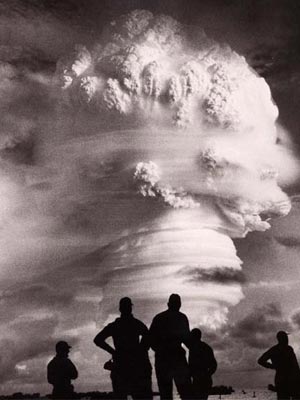 For much of the past two decades, the issue of nuclear disarmament had faded from public view.
Sporadic progress had been made since Ronald Reagan and Mikhail Gorbachev signed the 1991 Strategic Arms Reduction Treaty (START), but as international relations professor Amitai Etzioni argued in a recent article in the World Policy Journal, “While there have been deals aplenty, recent action toward these goals (reduction and elimination of nuclear arms) has been wanting….The hope that nuclear abolition would follow the original Reagan-Gorbachev arrangement lost much of its appeal after the collapse of the Soviet Union.” Etzioni noted that while some reductions in arsenals continued even during George W. Bush’s administration, “dealing with American and Russian weapons lost any sense of urgency.”
Last week’s announcement that the United States and Russia have reached agreements to reduce their nuclear arsenals and that President Obama and his Russian counterpart Dmitry Medvedev will meet in Prague on April 8 to sign to a new treaty that cuts the number of deployed nuclear weapons by 25 percent may change all that. The date of the signing is close to the anniversary of President Obama’s April 5, 2009 address in Prague on nuclear disarmament that has been described by John Isaacs, executive director of the Center for Arms Control and Nonproliferation, as “perhaps the most significant nuclear weapons speech since World War II” and “more important than President John F. Kennedy’s nuclear test ban speech back in the 1960s.”
In mid-January this year, the Bulletin of the Atomic Scientists moved the minute hand of its famous Doomsday Clock from five minutes to six minutes away from midnight, declaring that “we are poised to bend the arc of history toward a world free of nuclear weapons.”
“For the first time since atomic bombs were dropped in 1945, leaders of nuclear weapons states are cooperating to vastly reduce their arsenals and secure all nuclear bomb-making material,” the group said in a statement. “Indeed, we may be at a turning point, where major powers no longer see the value of nuclear weapons for war-fighting or even for deterrence.”
The scientists cited a number of factors, including the election of Barack Obama and a joint letter he and Medvedev issued on April 1, 2009, pledging nuclear weapons cuts and a readiness “to move beyond cold war mentalities”; the bipartisan disarmament drive led by former top US policy makers George Schultz, Henry Kissinger, William Perry, and Sam Nunn (their efforts included the recent documentary film, “Nuclear Tipping Point,” produced by the Nuclear Security Project); and growing participation in the public debate by “a range of civic and religious leaders, including evangelicals, on the role of nuclear weapons in national security.”
Religious groups have been involved in the public conversation about nuclear arms since the first atomic bombs were dropped by the United States on the Japanese cities of Nagasaki and Hiroshima. On August 20, 1945, just days after the bombings, Protestant leaders, most of whom were associated with the Federal Council of Churches, the precursor body of the National Council of Churches, issued a statement expressing their “unmitigated condemnation” of the horrific attacks.
Less than a year later, the Federal Council’s Calhoun Commission, including Protestant theologians Reinhold Niebuhr and John C. Bennett, founders of the journal Christianity and Crisis, issued a more full-bodied report entitled “Atomic Warfare and the Christian Faith” and declared that “we have sinned grievously against the laws of God’” in using nuclear weapons. The report called on the United States to end any further atomic weapons production.
But as David Cortright, director of policy studies at the Kroc Institute for International Peace Studies at the University of Notre Dame, has pointed out recently, a very real ambivalence marked the churches’ response to the bomb. “As the Cold War intensified in the late 1940s, some of those who had greeted the bomb with horror now came to accept it as a necessary deterrent against godless communism and the perceived threat of totalitarian aggression,” he wrote in “Transcending Ambivalence: A History of Enjoying the Bomb,” published in the Spring 2009 issue of Yale Divinity School’s journal “Reflections.” The issue was dedicated to the subject of faith and the future of nuclear weapons.
In the 1980s, however, there was a resurgence of both religious and secular efforts to mobilize in support of nuclear disarmament and to push for an end to the arms race. Most notable were the nuclear freeze movement and the Roman Catholic bishops’ pastoral letter “The Challenge of Peace.” Evangelicals, too, were early opponents of the use of nuclear weapons, including Sojourners, the Christian social justice community, and, from the middle 1980s, the National Association of Evangelicals. More recently, evangelicals have organized the Two Futures Project, a movement of American Christians for the abolition of all nuclear weapons led by the Rev. Tyler Wigg-Stevenson.
The Catholic bishops’ 1983 letter, the product of a special moment in church history created by Vatican II, was significant in a number of ways, not least because it put the nation’s largest religious community squarely in the midst of the public debate over the Reagan administration’s nuclear arms policies. It also challenged the church’s own deep-seated anti-communism and was widely praised for what many regarded as the bishops’ nuanced approach to the nuclear weapons issue. In the letter, the bishops endorsed a “no-first-use” declaration by the United States and voiced support for a comprehensive test ban treaty, both of which continue to be sticky issues in current arms control debates. But they also supported continuing the core policy of deterrence even while making their approval “strictly conditional” and “a step on the way to progressive disarmament.”
Protestant denominations in the United States and international church bodies such as the World Council of Churches, however, pushed beyond the Catholic bishops and the idea of deterrence to hold up an abolitionist vision of a world without nuclear weapons. In 1986, the bishops of the United Methodist Church, for example, published their own pastoral statement, “In Defense of Creation,” which forthrightly rejected deterrence and said the doctrine “must no longer receive the church’s blessing.” Branches of what is now the Presbyterian Church USA also have a long history of opposition to the nuclear arms race, stretching back to 1946. In the 1980s, they endorsed a “Call to Halt the Nuclear Arms Race” and backed “a mutual freeze on the testing, production, and deployment of nuclear weapons.” Over the years, regular Presbyterian statements have continued to follow on arms control and disarmament issues.
As underscored by the Presbyterian statement, the renewed debate in the 1980s paralleled and supplemented developments in the secular arena, especially the nuclear freeze campaign led by the Committee for a SANE Nuclear Policy (now known as Peace Action) and other hybrid secular-religious peace groups.
On the international level, both the World Council of Churches and the Vatican, under a succession of popes, have been outspoken opponents of the arms race and any use of nuclear weapons. Pope John Paul II edged the Catholic Church close to pacifism, declaring there are next to no conditions in a nuclear age that justify nations going to war with each other.
While there had been sporadic arms agreements before, notably the important Nonproliferation Treaty of 1970 and the Strategic Arms Limitation Talks treaty (SALT II) agreement between President Jimmy Carter and Soviet leader Leonid Brezhnev, it was the mounting secular and religious pressures of the 1980s that created the framework for an accord between Reagan and Gorbachev calling for deep reductions in both US and Russian strategic arms. Their agreement resulted in the 1987 Intermediate Range Nuclear Forces Treaty and the subsequent Strategic Arms Reduction Treaty (START I), signed in 1991. A second arms reduction treaty, START II, was signed by George H.W. Bush and Boris Yeltsin in 1992, but it never officially entered into force when the Russians said they would no longer be bound by it after George W. Bush unilaterally withdrew the United States from the Anti-Ballistic Missile Treaty in 2002.
A proponent of nuclear disarmament since his days in the Senate, President Obama quickly made the issue of nuclear disarmament a very visible part of the administration’s agenda. This was most notable in the speech he gave in Prague on April 5, 2009, in which he stated “clearly and with conviction America’s commitment to seek the peace and security of a world without nuclear weapons.” He insisted he was not being naïve in holding up such a vision and acknowledged that it “will not be reached quickly—perhaps not in my lifetime,” but nevertheless with patience and persistence it was an achievable goal.
Obama followed the Prague speech with two other important acts. In July, he and Russian President Medvedev signed an agreement on the basic terms of a treaty to sharply reduce each country’s number of warheads and missiles. In September, he chaired a session of the United Nations Security Council that adopted a resolution to shore up the rules aimed at stopping the spread of nuclear weapons.
On December 5, 2009, the START I treaty quietly expired without a successor agreement in place, and in January, in his State of the Union address, Obama said the US was completing negotiations on what would be “the farthest-reaching arms control treaty in nearly two decades.” Under the terms of what is now being called New START, Russia and the US will cut their warheads to 1,550 on each side within seven years of a new treaty being signed.
But the difficulties presented by both the international negotiations needed to implement and enforce the agreements and the domestic political realities in the United States are not likely to quietly wither in the face of Obama’s soaring rhetoric or aspirations.
Senate approval of New START is expected to present challenges, although the administration says it hopes the deal with Russia will be ratified by the end of this year. As the Washington Post editorialized, “It’s hard to see how new treaties will bring about the disarmament of North Korea or stop Tehran’s centrifuges.” Other skeptical and critical voices are being heard from, some of them asking, as former correspondent William Beecher recently put it, why Obama keeps “waving the flag” of a world without nuclear weapons. “He’s well aware that nations make strategic decisions based on their perceived national self-interest,” Beecher has written. “With so much mistrust in the world, no member of the nuclear club is about to disarm when to do so would make the cheaters the strongest bullies on the block.”
At the moment, the Nuclear Posture Review (NPR), a key statement drawn up by every US administration setting out its basic nuclear doctrine, including the reasoning for retaining nuclear weapons and the circumstances in which they might be used, represents another slipped deadline. The NPR was due to be submitted to Congress on March 1, but a draft version was reportedly rejected by Obama as being merely a “tweaked” version of the Bush administration’s stance, rather than something that would reflect Obama’s nuclear-free aspirations and move much closer to a declaration of “no first use,” making clear the United States would not use nuclear weapons against a non-nuclear nation. The Boston Globe’s Bryan Bender wrote in January that the review “is shaping up to be a major showdown for Obama this year” and that the president was “taking on some of the most sacred cows of the nuclear program.”
“My understanding is that the president and vice president are unhappy with the draft that has been produced,’’ Joseph Cirincione, president of the Plowshares Fund, told the Guardian newspaper on February 28. “Nothing has been settled on the key issue: what is the use for nuclear weapons? This is an issue the president cares deeply about.”
As Obama himself said in his State of the Union address, “Even as we prosecute two wars, we’re also confronting perhaps the greatest danger to the American people—the threat of nuclear weapons. I’ve embraced the vision of John F. Kennedy and Ronald Reagan through a strategy that reverses the spread of these weapons and seeks a world without them. And at April’s nuclear security summit, we will bring 44 nations together here in Washington, DC behind a clear goal: securing all vulnerable nuclear materials around the world in four years, so that they never fall into the hands of terrorists.”
The tug-of- war inside the administration over the critical NPR comes as nuclear arms issues take center stage in the coming months. Along with the April 12-13 global nuclear security summit Obama alluded to, in May the United Nations will hold a conference to review the Nuclear Non-Proliferation Treaty, perhaps the toughest of issues as both Iran and North Korea press ahead with programs for developing their nuclear capabilities, and the nuclear powers are unable so far to come together on a comprehensive negotiating stance for either effort.
Obama is also expected to seek Senate ratification of the Comprehensive Test Ban Treaty (CTBT), which the United States has signed but not ratified. The Senate briefly took up the treaty in 1999 but rejected ratification. The Obama-orchestrated UN Security Council resolution in September 2009 called on all states to refrain from conducting nuclear test explosions and to ratify the CTBT.
For the most part, observes John Isaacs, members of Congress have been very quiet in response to the president on nuclear weapons issues. “The predominant sound from Washington, DC, from Congress, to the president’s proposals has been silence,” Isaacs said in December at the Carnegie Council for Ethics in International Affairs. “The sounds of silence are because nuclear weapons simply are not that popular, and that gives the president…a freer hand than he would have on some other issues.”
Popular or not, it is worth noting that according to a Religion & Ethics NewsWeekly-United Nations Foundation survey in October 2008, controlling nuclear weapons around the world was ranked as the most important US foreign policy priority by 80 percent of respondents. Among Catholics and white evangelicals the percentages were even higher at 82 percent and 86 percent, respectively.
Religious groups are continuing their pressure on Obama—and the rest of the globe—to move toward a nuclear-arms-free world. In February, the Catholic bishops from Hiroshima and Nagasaki, in an open letter to President Obama and the government of Japan, urged world leaders to “take a courageous step toward the total abolition of nuclear weapons and the realization of a world without wars.” In remarks prepared for a recent public forum organized by Georgetown University’s Woodstock Theological Center on “God and the Bomb: Deterrence, Disarmament, and Human Security,” international affairs professor Douglas Shaw observed that “for all the complexity of and disagreement about nuclear weapons, there are some things we know about them. We ought not to live comfortably behind the threat of killing millions of other human beings in an afternoon—because it is morally dubious at best and because it is an unreliable means to guarantee our security.” Woodstock will repeat the forum on April 13 at the Church of St. Ignatius Loyola in New York City.
“The moral end is clear: a world free of the threat of nuclear weapons,” Archbishop Edwin O’Brien of Baltimore, a member of the US Conference of Catholic Bishops committee on international justice and peace, told the Global Zero Summit in Paris in February. “This goal should guide our efforts. Every nuclear weapons system and every nuclear weapons policy should be judged by the ultimate goal of protecting human life and dignity and the related goal of ridding the world of these weapons in a mutually verifiable way.”
“The path to zero will be long and treacherous,” he added. “But humanity must walk this path with both care and courage to build a future free of the nuclear threat.”
David E. Anderson is senior editor for Religion News Service. He has also written for Religion & Ethics NewsWeekly on the war in Afghanistan and on God and empire.
Catholic Sexual Abuse Scandals
BOB ABERNETHY, anchor: New evidence came to light this week that raises questions about Pope Benedict XVI’s response to the abuse scandal. Documents surfaced that suggest the Benedict, before he became pope, may have been involved in protecting abusive priests. Meanwhile, Benedict issued a letter of apology to Irish Catholics that was read at Sunday Masses. He also accepted the resignation of an Irish bishop. But many lay people criticized the Pope for not taking stronger actions.
Joining us is Father Tom Reese, Senior Fellow at the Woodstock Theological Center at Georgetown University. Father Reese, welcome.
FATHER THOMAS REESE, SJ: Thank you.
ABERNETHY: The allegations just keep coming about sex abuse by some priests, about cover-ups by some bishops—in the US, now in Europe, all over Europe, reaching into the Vatican, maybe, too. You’ve served the church all your life. How do you react to all that?
REESE: Oh, it just turns my stomach. I mean this is such an awful thing first of all that happened to these children. I have sat and listened to their stories, and it scarred them for life, and it’s a terrible experience for them, and it’s gut-wrenching to listen to these stories and to hear what happened to them and how they were treated by the church. I think it’s terrible and, you know, even though it was only four percent of priests that were involved in abuse, all of us priests feel shame and sorrow that this happened to children in our churches.
ABERNETHY: You feel betrayal by those who were leading the church?
REESE: Well, you know, there’s a lot of anger out there, not just in the pews but also among the priests that these bishops who didn’t deal with this properly have just scarred the church and hurt the reputation of all priests, even good ones.
ABERNETHY: There are allegations, as you know so well, that before he was pope, Benedict presided over offices in Germany and in the Vatican that were, let’s say, less than fully responsive to some of the allegations and situations that they faced. What should Benedict do now?
REESE: Well, I think it’s clear that Benedict grew in his understanding of this crisis. Like many of the other bishops at the beginning, he didn’t understand it. He thought it was overblown. For example, at one time they said that only one percent of the priests were involved in it. Well, that was what one study said at that time, and we found it was four percent. But he grew in his understanding because he listened to what the US bishops had to say. He in fact got it quicker than other people in the Vatican. He got it quicker than John Paul II did. So I think that we can say in his favor that he grew in his understanding and responded to it better as time went on.
ABERNETHY: But when he sent the letter last weekend to the Irish bishops, yes, he apologized and apologized, but he also did not go nearly as far in terms of discipline as a lot of people wanted to see.
REESE: I think that’s true, and the difficulty is that I think that the pope needs to be on message. In that letter he said a lot of things. He said good things. He said he was sorry, he said that this was a terrible crime and sin, he acknowledged the fact that bishops didn’t respond adequately. Those were good things that he said.
ABERNETHY: So what should he do? What should the church do, learning from what the US experience was?
REESE: Well, I think that the European bishops really need to learn from the US experience. They need to put into place a zero-tolerance policy, which means that any priest that is involved in abuse is never going to be acting as a priest again. They need to cooperate with the police in reporting these accusations. They need to have a child protection program in parishes and churches, where people are trained. They need to apologize over and over and over again.
ABERNETHY: You’re talking about the European bishops, but what about Benedict himself?
REESE: Well, I think, you know, he needs to apologize also, just as he did when he came to the United States. You remember in that visit he apologized in the plane on the way over, he talked to the US bishops about this, he met with victims of abuse. He needs to do more of that.
ABERNETHY: And what about punishment?
REESE: I think that priests that are involved in abuse should be totally banned from any ministry into the future. I think that the mistake that the US bishops made that the European bishops should learn from is that it is necessary for some bishops to stand up and say, “I did this, I had bad advice, I made a mistake, I’m really sorry, but I take full responsibility and I resign.” I’m glad to see that some bishops in Ireland have done that.
ABERNETHY: And do you expect that?
REESE: I hope so. The mistake that the American bishops made and I’m afraid the European bishops will also make is that they’ll think that this is going to blow over in a couple months. It’s not. We are going to see thousands of cases come forward in Europe over the next three to five years, if it’s anything like what happened in the United States. They need to get ahead of this, they need to be transparent, they need to call on victims to come forward now and respond to them right away. Otherwise this crisis will just continue to fester.
ABERNETHY: Father Tom Reese, many thanks.
Thomas Reese Extended Interview
Watch more of our conversation with Father Thomas Reese, SJ, senior fellow at Georgetown University’s Woodstock Theological Center, on the Catholic Church, sexual abuse, divisions over health care reform, and questions about the church’s moral authority.
