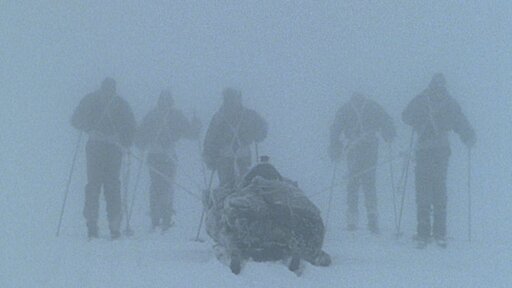
In March of 1912, a team of seasoned Antarctic explorers perished on their way back from the South Pole. Was it possible the explorers were blind-sided by conditions they could never have anticipated?
In 64 AD, Rome was the most magnificent city in the world. Then, in the early hours of July 19, fire broke out in the cook shops and cafés lining the Circus Maximus. Centuries later, questions linger. Was the fire an accident, or was it arson? Is Tacitus a reliable witness? Nero blamed the catastrophe on the Christians — is there any truth to his accusation?
In the aftermath of the Titanic, Canadian rescue ships recovered 328 bodies and buried dozens in unmarked graves. Today, scientific breakthroughs may help 3 families of missing passengers learn the true fate of their relatives.
In 1665, a British tailor opened a flea-infested shipment of fabric from London. In a matter of days, the tailor and much of the village were suffering the telltale signs of bubonic plague, the disease that wiped out a third of the European population. 350 years later, an American geneticist is delving into the reasons why some managed to survive the Black Death while others were not so lucky.
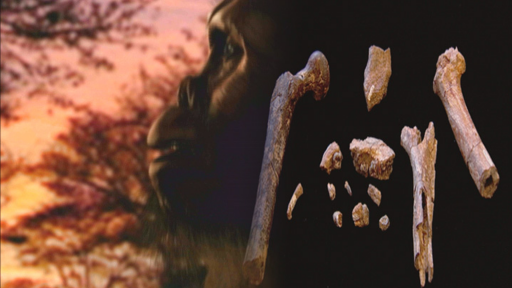
Explore the scientific mystery of human genesis through a close investigation of 13 fossils found in October 2000. The bones are the oldest hominid remains ever discovered — so old that they come from the time when the divergence of man and ape is thought to have occurred — and could be the blueprint for the first generation of the species that ultimately evolved into modern humans
In 1492, Christopher Columbus crossed the Atlantic in search of gold in the uncharted New World. But his ships brought back something entirely different: syphilis. But if the scourge really did originate in the Americas, what is the explanation for the discovery of a European who was racked with indisputable signs of the disease 150 years before Columbus set sail?
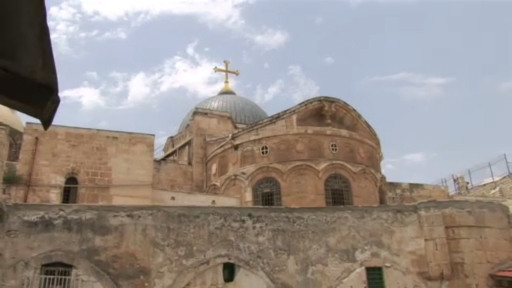
Reconstructing Christ’s final days, this episode traces the history and various incarnations of the tomb through the efforts of an Oxford professor who, with his wife, has been studying the site for 10 years. Is the very rock shelf on which Christ’s body was laid 2,000 years ago within the reach of modern science? Or will we always wonder?
In January 1879, one of the worst defeats of the Victorian era befell the British Army at Isandlwana in South Africa. Almost an entire battalion — 1,300 soldiers — were massacred by the Zulu. Now a team of experts has been assembled to tackle the mystery of how a so-called "primitive" tribe of warriors could defeat a highly-trained modern army.
Three years after setting foot on American shores, 440 of the original 500 Jamestown settlers had died. Why did deadly outbreaks strike just after the ships headed home? And is it a coincidence that the only map of the colony today belongs to Spain? Take a 21st-century look at the eerie the plight of these fated settlers.
In the shadow of Stonehenge, an ancient body has been found — stuffed into a shallow grave with its head separated from its body. Who was this man and how did he die? Using modern science and forensic techniques, archaeologist Mike Pitts attempts to solve this ancient murder mystery.
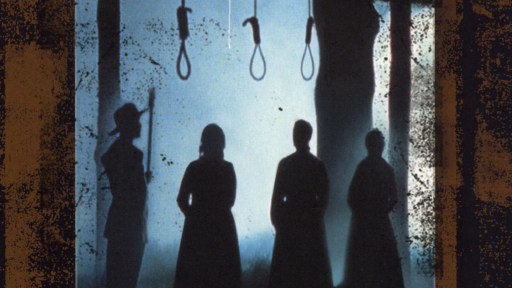
The trouble in Salem began during the cold, dark Massachusetts winter, in January of 1692. Eight young girls began to take ill, beginning with 9-year-old Elizabeth Parris and 11-year-old Abigail Williams. But theirs was a strange sickness.
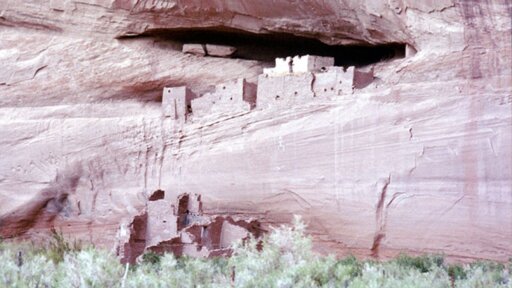
For 1000 years, the Anasazi — as the ancient Pueblo people are commonly called — flourished in what is now New Mexico. Yet around 1200 A.D., something brought their utopia to a sudden and mysterious end. What brought an end to this once-prosperous culture?
Why did the great airship Hindenburg explode? The accident that put an end to the golden age of airships is widely believed to have been caused by the ignition of nitrogen gas used for lift, but scientists set out to prove the Hindenburg's real flaw was only skin deep.
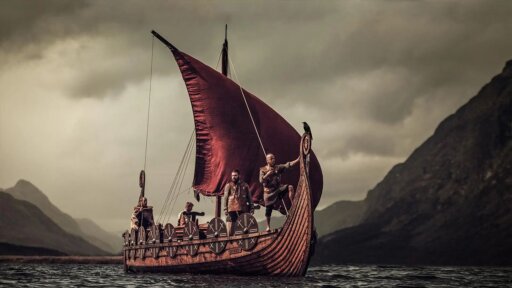
Civilization of legend and lore, the Vikings of Greenland left no clues to their sudden and mysterious disappearance. Or did they? On a desolate coast of Greenland, an international team of archeologists, forensic anthropologists, entomologists, and botanists sets out to investigate minute clues in a complex chain of events that may have led to the demise of a Viking colony.
For nearly a century, humans forgot their glorious past and huddled in a state of ignorance and fear. Scientists now believe that the early Dark Ages may have been triggered by an actual event that occurred around 535 A.D. At the center of a stunningly complex chain of events seems to be “a loud bang” – a volcanic explosion equal to “two thousand million Hiroshima size bombs.”