The Statue of Liberty: Her Origin and Meanings
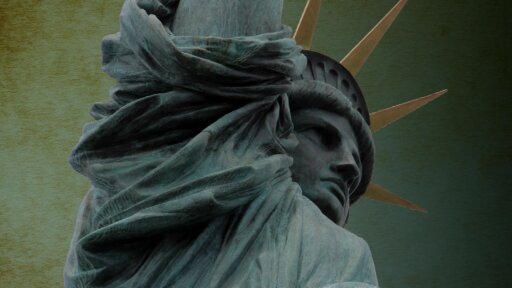
The Statue of Liberty in the New York City harbor is one of the United States’ most recognizable and famous landmarks. Yet when it was proposed in 1865, Americans were not sure they wanted this towering figure of a crowned woman, holding a torch high above her head.
The sculpture, a tribute to the American Revolution and democracy, was not born of American pride and patriotism. The Statue of Liberty was a gift to America from the people of France.
The French would pay for the statue, but America would have to fund the pedestal to place her on. The United States debated the merits and worth of funding that part of the Statue of Liberty for years, and could not imagine how iconic the Statue of Liberty would become, and how it its meaning would shift in time.
Why Did France Give America a Monument?
The State of Liberty is a top attraction within America’s National Park system, and it came to be through the vision of French intellectuals living in Paris. The occasion for the gift was to honor the 100th anniversary of the United States in 1876. A significant impetus in 1865 was the end of the American Civil War, which preserved America’s republican form of democracy and abolished slavery, which had been a glaring abomination and hypocrisy to the country’s founding ideals of equality and freedom. The intellectuals were part of the French Republican movement and wanted to express admiration for both America’s democracy and for President Lincoln, who had died from an assassin’s gunshot wound on April 15, 1865.
The Statue of Liberty was funded by French citizens, who were then living under the rule of Emperor Napoleon III. Napoleon had been elected as the first president of the Second French Republic in 1848 – France’s brief democratic form of government after the First French Republic (1792-1804). But just as Louis Napoleon’s four-year term was ending during a period of political turmoil, he overthrew the republic and declared himself emperor in 1852.
Whose Idea Was the Statue of Liberty?
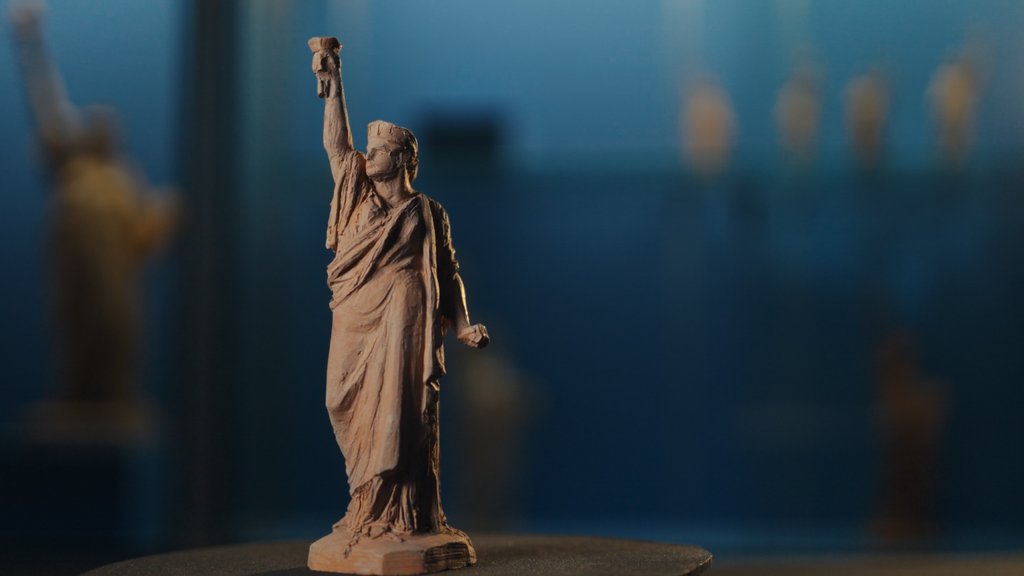
The Statue of Liberty was the vision of a core group of Frenchmen, including the professor of law Édouard René de Laboulaye and the sculptor Frederic Auguste Bartholdi. Laboulaye was a key figure in French republicanism – the effort to rid France of its monarchy under Emperor Napoleon III and become a democracy. Laboulaye greatly admired the United States, and wrote several books on it.
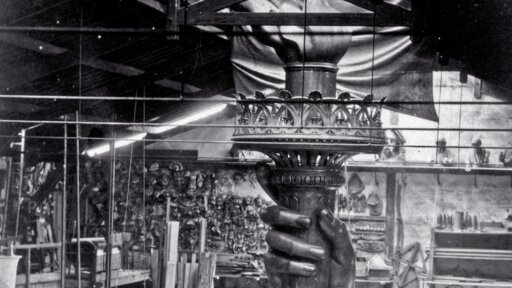
Bartholdi designd the sculpture and created it in a workshop in Paris.
What is the Meaning of The Statue of Liberty and its Symbols?
The Statue of Liberty’s copper and gold-leaf torch in her right hand embodied its formal name: “Liberty Enlightening the World.” Liberty meant freedom from the tyranny of non-elected rulers and enslavement, and the constitutional right to a democracy. In 1865, Europe was still ruled by hereditary monarchies.
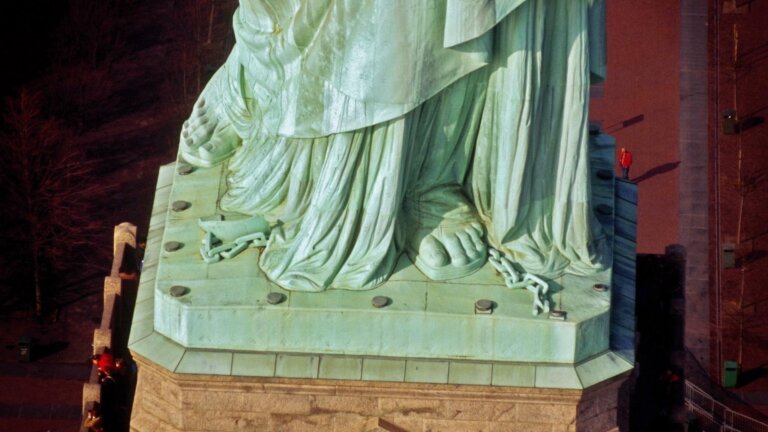
The original design of the colossal monument included a broken chain in Liberty’s left hand, but the sculptor Bartholdi eventually positioned the broken links more inconspicuously under her feet. To the French, the broken chain meant the hope for freedom from an unelected ruler. France had outlawed slavery in 1848, but in the U.S., the chains drew an immediate association with slavery, which was at the center of the Civil War that had just ended in 1865.
The Statue of Liberty’s left hand holds a tablet engraved with JULY IV MDCCLXXVI. The Roman numerals stand for July 4, 1776, the date the U.S. Delaration of Independence was signed.
The group of French intellectuals and artists who conceived of this gift to U.S. admired the American experiment, and hoped to return France to being a democratic republic as well. Less than 100 years prior, the French had contributed to the Americans’ revolutionary cause. French soldiers and generals had volunteered to fight alongside the patriots in the War of Independence against King George and Britain.
The French wanted the United States to succeed, because they looked to it as a model for their own country, which had seen its first and second attempts at democracy swept aside.
The Sculptor Who Promoted the Statue’s Adoption
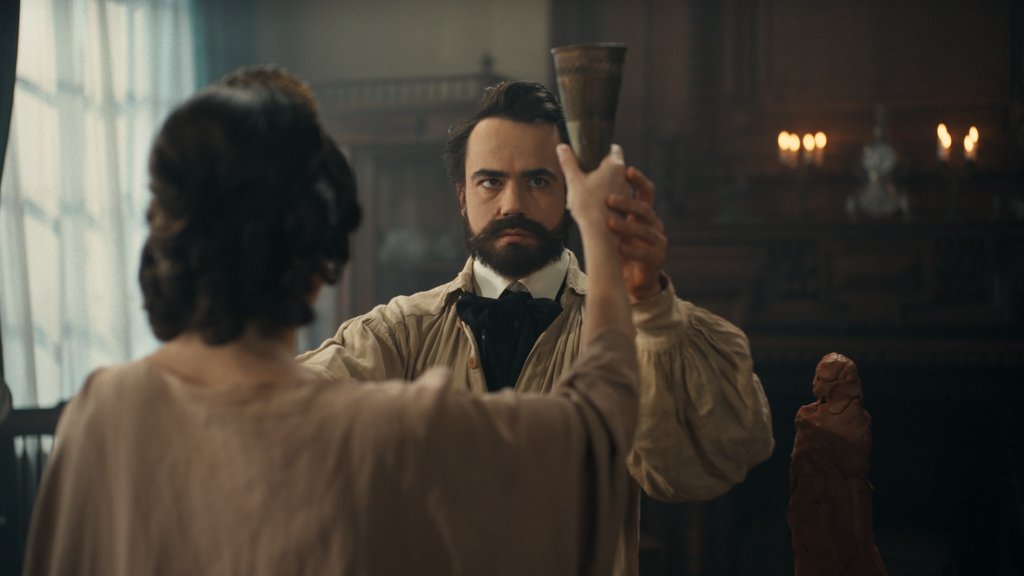
The Statue of Liberty had to be heavily promoted in the U.S. by its sculptor, Frederic Auguste Bartholdi, who arrived in New York City by ship in 1871 and saw than an island in its harbor would be a majestic site for it. But Bartholdi didn’t speak English and the artist struggled to gain American support for the project. All he needed was to convince Americans to fund and build a massive pedestal to hold his 151-foot statue. (The pedestal that was built is even taller than the statue at 154 feet.)
As he traveled the country, Bartholdi proposed the plan to every person he met, many of whom were socially influential, but only few showed interest. Most wealthy New Yorkers seemed unwilling to reach deep into their pockets. People in D.C. and Philadelphia that were supportive in spirit were reluctant to contribute to a statue would be erected in New York City.
Does the Statue of Liberty Represent Immigrants?

The French creators of the Statue of Liberty in the late 1880s never meant the monument to represent immigration to America. The symbolic role that the Statue of Liberty plays in American immigration came after it was built.
As it rose and after the Statue of Liberty’s ceremonial ribbon-cutting on October 28, 1886, countless immigrants arriving by ship in New York harbor would throng the decks to view the majestic and highly unsual monument. Newly arrived immigrants spent more time within sight of the statue starting January 1, 1892. That is when New York City moved its immigration processing center from Castle Garden in Lower Manhattan to Ellis Island, a short boat trip from Liberty Island. Over 12 million immigrants were processed on Ellis island until it closed on November 12, 1954.
The poem “The New Colossus” by Emma Lazarus also sparked the shift of the Statue of Liberty’s association with immigration. Lazarus donated her poem about the Statue of Liberty for a fundraising auction for its pedestal in 1883. It went to a private collector, but in 1901, Georgina Schuyler learned about the poem that gave the Statue of Liberty a human voice and welcomed the “poor, huddled masses” coming to America. Schuyler began a movement to associate “The New Colossus” with the Statue of Liberty, and in 1903 the poem was cast on a bronze plaque and placed on an inner wall of the statue’s pedestal.
Lazarus’ stanzas in “The New Colossus” include:
Here at our sea-washed, sunset gates shall stand
A mighty woman with a torch, whose flame
Is the imprisoned lightning, and her name
Mother of Exiles.
Read the full poem “The New Colossus” at the Poetry Foundation.
The stories of newcomers’ first few days in America near Lady Liberty were passed down generation to generation. The Statue of Liberty was declared a U.S. National Monument in 1924. It became part of the National Park System in 1933 and increasingly became a celebrated tourist attraction for both national and international visitors.
Many insights for this article come from Secrets of the Dead: Raising Lady Liberty, a co-production of GEDEON Programmes and The WNET Group in New York City for PBS, and from Edward Berenson’s book, “The Statue of Liberty: A Transatlanic Story.” Berenson is an NYU professor and is a featured expert in Raising Lady Liberty.
The episode reveals the origin and meaning of the Statue of Liberty, which has stoon in New York City harbor for nearly 150 years, welcoming millions who have come to start new lives. The Statue of Liberty is an enduring symbol of freedom and a metaphor for the American dream. With unseen documents and new sources, witness the story of how France and the United States came together to produce one of history’s greatest monuments. Raising Lady Liberty is featured as part of The WNET Group’s The Story of New York collection exploring the stories and history that built New York City and the extraordinary people who continue to inspire the future of this world hub.