Daley, the Last Boss (1922-1968)
(no website available)
Richard J. Daley, mayor of Chicago, and his climb up the political ladder.


Richard J. Daley was born on a street he would never leave and christened in the small church in which he would be buried. His climb up the political ladder to become Mayor was slow and methodical; in a job he coveted, he built a political machine that changed the nature of urban politics, but he was ill-equipped to cope with two great 20th century challenges: race and the war in Vietnam.
The Great Air Race of 1924 (1924)
(no website available)
The first around-the-world air race tested the abilities of man and machine.

The first around-the-world air race, sponsored by the Army Air Service to prove that the airplane had a commercial future, was the ultimate test of man and machine. Four pilots took off in single-engine, open-cockpit planes; 175 days later, two remaining pilots would land where they'd begun, in Seattle.

The Man Behind Hitler (1924-1945)
This portrait of Joseph Goebbels, delivered in words taken directly from his diaries, offers an insiderÍs view of the rise of the Nazi party.


A symbol of Nazi cruelty and a master of cynical propaganda, Joseph Goebbels was the mastermind behind Adolf Hitler's disturbing success.Goebbels, called the "genius of spin" and the "Reich-Liar-General," was a complicated man whose attitudes fluctuated between extremes of self-pity and grandiose excess. This program shows how Goebbels constantly reinvented himself through the years of his greatest success, and allows the man to speak for himself through the diaries he kept. Actor Kenneth Branagh reads the diary excerpts, revealing a chilling personality whose words justified racism, the Holocaust, and total war.Rare historical footage from German archives traces the path of the second most powerful man in Nazi Germany, exploring his initial attraction to the Nazi party, his adoration of Hitler, his wild extermination fantasies, and, ultimately, his tragic self-delusions and suicide in 1945.
Wild By Law (1924-1964)
(no website available)
Three men dedicate their lives to protect the shrinking wilderness.


For years there was no federal law to protect the shrinking wilderness from encroaching industry and tourism, until three men dedicated their lives to finding a remedy. Robert Marshall, Aldo Leopold, the prophet of the modern environmental movement, and Howard Zahniser struggled for decades to create a permanent system of federally protected wilderness areas. The fruit of their efforts, the Wilderness Act, passed in 1964.

The Lobotomist (1924-1968)
Little more than a decade after his rise to fame, Walter Freeman was decried as a monster, and his procedure was labeled one of the most barbaric mistakes of modern medicine.


In the early decades of the 20th century, before the development of psychiatric medications, there were few effective treatments for mental illness. For most patients, the last stop in their anguished journey was an overcrowded state asylum. An ambitious young neurologist named Walter Freeman advocated a more radical approach -- brain surgery to reduce the severity of psychotic symptoms.Despite mixed results, by the early 1940s, some fifty state asylums were performing lobotomies on their patients. The procedure was hailed as a miracle cure, Freeman himself a visionary who brought hope to the most desolate human beings.Yet only a decade later, the story would come full-circle again. Freeman would be decried as a moral monster, the lobotomy as one of the most barbaric mistakes ever perpetrated by mainstream medicine.
The World That Moses Built (1924-1968)
(no website available)
Robert Moses built some of the most ambitious public works ever conceived, and some of the most controversial.

From the late 1920s through the 1960s, Robert Moses held almost total power over the landscape of New York. He built bridges, highways, Jones Beach, Lincoln Center and the United Nations, some of the most ambitious public works ever conceived, and some of the most controversial.

Jimmy Carter (1924-2002)
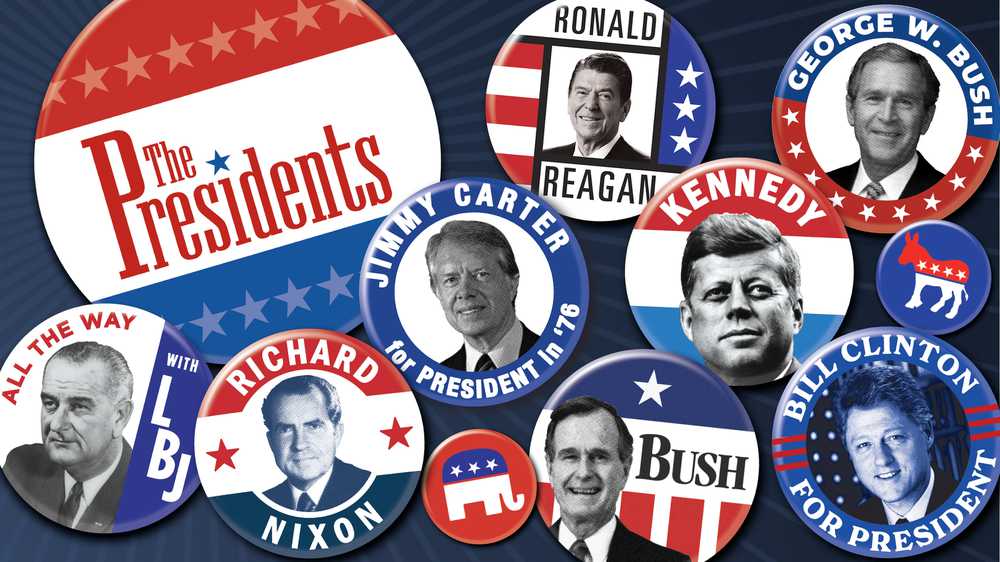
The story of an ambitious peanut farmer who rose to become America's thirty-ninth president. A failure in his single term in office, Carter turned to humanitarian work as an ex-president.
(Watch the program online on The Presidents Web site.)


Jimmy Carter traces the ascent of an ambitious country boy from a peanut farm in Plains, Georgia, to the Oval Office; examines the failings of Carter's political leadership in the turbulent 1970s; and explores the role religion played in his career. Carter ran for president as an outsider. He rode into power on the post-Watergate disaffection with Washington politics. But his inexperience resulted in an ineffectual and fractured administration. Inflation, recession, and a humbling hostage crisis blew his presidency dramatically off course. The crowning achievement of his one term in office, the Camp David Accords, which established a framework for peace in the Middle East, was the inspiration for his life after the White House. In the years since, Carter has recast himself as a giant of moral leadership. He has struggled to bring peace to war-torn countries; fought for the eradication of life-threatening diseases; and dedicated himself to housing America's poorest citizens. The film features interviews with many close to the Carter administration, including his wife Rosalynn, son Chip, Press Secretary Jody Powell and Vice President Walter Mondale.
Duke Ellington -- Reminiscing in Tempo (1925-1967)
(no website available)
The international star who created some of the most exciting music America had ever heard.

At a time when black and white musicians rarely performed together, when black musicians were exploited by record companies, Ellington was an international star. He made the Cotton Club his showcase for original jazz compositions, some of the most exiting music America had ever heard. Underscored with more than 40 Ellington pieces.

RFK (1925-1968)
Robert Francis Kennedy would almost certainly have been president if his violent death hadn't intervened. This probing and perceptive biography reassesses the remarkable and tragic life of the third Kennedy son, the boy Joe Sr. called the "runt."


Robert Francis Kennedy would almost certainly have been president if his violent death hadn't intervened. He was brave, claims one biographer, "precisely because he was fearful and self-doubting." This probing and perceptive biography reassesses the remarkable and tragic life of the third Kennedy son, the boy Joe Sr. called the "runt."Featuring extensive interviews with family members, friends, journalists, Washington insiders, and civil rights activists, the film chronicles the pivotal role RFK played in many of the major events of the 1960s -- the Cuban Missile Crisis , the civil rights movement , the war in Vietnam. The film looks closely at Kennedy's complicated relationships with some of the leading figures of his day, Martin Luther King and Lyndon B. Johnson among them. And it reveals much about his personal world, his role as family mediator, his involvement with Marilyn Monroe, and his overwhelming grief and guilt following the assassination of his older brother.