A Brilliant Madness
The story of Nobel Prize-winning mathematician John Nash.![]()
![]()
![]()
![]()
![]()

Fidel Castro
Castro's face with its trademark beard, has become an iconic image worldwide, yet the man himself remains an enigma to all but a few. Learn about the most resilient of leaders.![]()
![]()
![]()
![]()
![]()
On January 3, 1959, a column of victorious young rebels advanced along Cuba's main highway towards Havana. At the head of the column rode 33-year-old Fidel Castro Ruz. As he went by, a Cuban peasant turned to an American journalist, and said: "There he goes, the hope of a people."
Over the next few decades, by the force of his personality and the might of his Soviet benefactor, Castro turned himself and Cuba into significant players on the world stage. He did so while surviving the hostility of ten consecutive U.S. presidents, an invasion, several CIA assassination attempts and an economic embargo.
Castro's face with its trademark beard, has become an iconic image worldwide, yet the man himself remains an enigma to all but a few. Through interviews with relatives, childhood friends, fellow rebel leaders, Bay of Pigs veterans, human rights activists and journalists, American Experience: Fidel Castro constructs an intimate and revealing portrait of the most resilient of leaders.

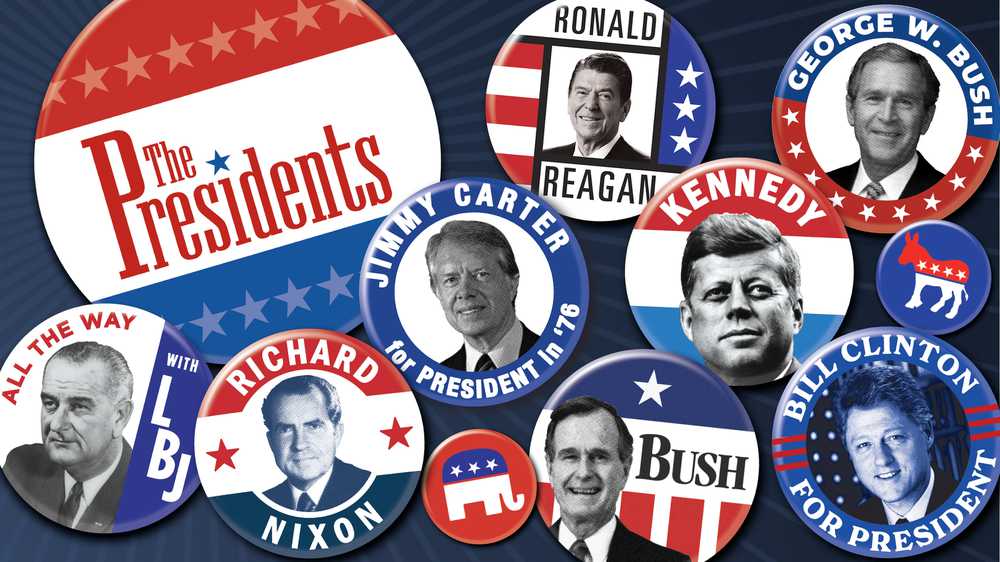
George H. W. Bush
A biography of the 41st U.S. president, from his service in World War II to his days in the Oval Office.
(Watch the program online on The Presidents Web site.)![]()
![]()
![]()
![]()
![]()

Hijacked
In September 1970, Palestinian militants seized five commercial aircraft, giving birth to a new era of terrorism.![]()
![]()
![]()
![]()
![]()
For more than 30 years it would be known as "the blackest day in aviation history." On September 6, 1970, members of the militant Palestinian group, the Popular Front for the Liberation of Palestine (P.F.L.P.), hijacked four commercial airplanes. They commandeered a fifth aircraft three days later. Wanting to attract attention to the Palestinian cause and secure the release of several of their comrades, the P.F.L.P. spectacularly blew up four of the planes.
Today the commanders who planned and carried out the attack resist comparison to the terrorists who masterminded the events of September 11, 2001: members of the P.F.L.P. were not religious extremists, but secular Marxist Leninists. And of the almost 600 passengers taken hostage, none were killed. And yet more than three decades later, it is clear that a connection exists between the two seminal events, that September 6, 1970 gave birth to a new era of terrorism. In telling this dramatic and complicated story, award-winning producer Ilan Ziv interviews leaders of the P.F.L.P., militants who carried out the attack, journalists who covered the hijackings, crew members and passengers. More than just recounting the events of those tense September days, this American Experience production examines how and when Middle East militants began to see civilians as legitimate pawns in their struggles for self-determination.
Love in the Cold War (no website available)
A family torn apart by political beliefs.![]()

Oswald's Ghost
A fresh look at President John F. Kennedys assassination, the publics reaction, and the government investigations that instead of calming fears lead to a widespread loss of trust in government institutions.![]()
![]()
![]()
![]()
![]()

Race for the Superbomb
The U.S. and the Soviet Union race to build the world's most powerful bomb.![]()
![]()
![]()

Race to the Moon
The historic journey of Apollo 8 captivated the world during a year marked by assassinations, riots, and war.![]()
![]()
![]()
![]()
![]()
On Christmas Eve 1968, one of the largest audiences in television history tuned in to an extraordinary sight: a live telecast of the moon's surface as seen from Apollo 8, the first manned space flight to leave Earth's gravitational pull and orbit the moon. The historic journey captivated people around the world; many welcomed a technological triumph in space after a year marked by assassinations, riots and war.
As this American Experience production reveals, however, the mission's success was far from assured. The Apollo 8 astronauts had just four months to prepare for the risky lunar orbit, and catastrophic failure would have brought a halt to America's goal of putting a man on the moon before the end of the decade.
With images and audio never before broadcast, this film recounts the flight many consider to be NASA's most daring and important. Interviews with Apollo 8 astronauts, their wives, mission control staff, and journalists take viewers inside the high-stakes space race of the late 1960s to reveal how a bold decision by NASA administrators put a struggling Apollo program back on track and allowed America to reach the moon before the Soviets.
Radio Bikini (no website available)
While the U.N. debated strategies for control of atomic energy, the U.S. Navy was preparing two highly-publicized nuclear tests.![]()

RFK
Robert Francis Kennedy would almost certainly have been president if his violent death hadn't intervened. This probing and perceptive biography reassesses the remarkable and tragic life of the third Kennedy son, the boy Joe Sr. called the "runt."![]()
![]()
![]()
![]()
![]()
Spy in the Sky (no website available)
The plane provided a high-tech peek behind the Iron Curtain.![]()

The Berlin Airlift
After the Soviet blockade of West Berlin, British and American pilots delivered food and fuel to the city's two million civilians and twenty thousand allied soldiers for nearly a year. Using re-enactments and personal stories of those who lived through t![]()
![]()
![]()
![]()
![]()

The Living Weapon
This film examines the international race to develop biological weapons in the 1940s and 1950s, revealing the scientific and technical challenges scientists faced and the moral dilemmas posed by their eventual success.![]()
![]()
![]()
![]()
![]()
The Satellite Sky (no website available)
A uniquely impressionistic history of the early years of the Space Race.![]()