Visit Your Local PBS Station PBS Home PBS Home Programs A-Z TV Schedules Watch Video Support PBS Shop PBS Search PBS
 
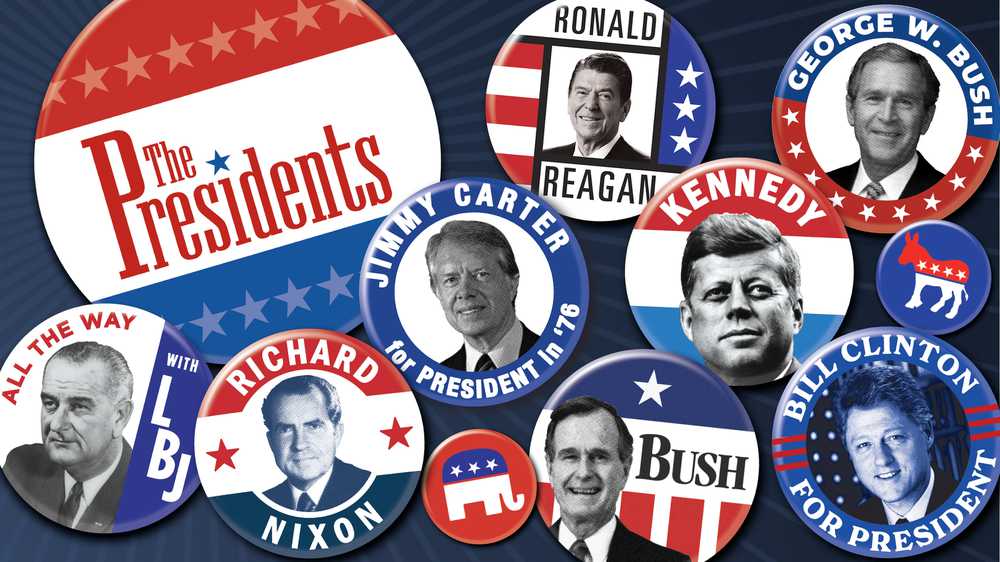
The Presidents Connect today's election issues with the past


tguide
Lyndon B. Johnson
Selected President
Lyndon B. Johnson
Overview
Early Career
Domestic Politics
Foreign Affairs
Presidential Politics
Legacy

Vote on the Issues
Primary Sources

Teacher's Guide
The Film & More

Purchase Video/DVD
Select a President

 
Program Summary  |  Discussion Questions  |  For the Classroom
Did You Know?  |  World Timeline  |  In "Quotes"

For The Classroom

Contents:  Activities  |  Take It Further  |  Who's Who  |  Terms to Know

Activities

Early Career -- Who Runs Congress?

LBJ spent most of his career in Congress, and held leadership positions in the Senate beginning in 1953. Using the program transcript and library sources, ask students to research the various positions LBJ held. Working in teams, have students make a chart outlining the roles and responsibilities of the Senate and House leaders, including the majority and minority leaders, whips, Speaker of the House, and President Pro Tempore of the Senate. The chart should include the people who held these positions in 1953 and those who hold them today. Using the charts, follow up with a class lesson on the process of how legislation goes through Congress and what is involved in getting a bill to become law. (Program References: Tape One/Hour One, Segments 2-5)

Presidential Politics -- Goldwater vs. Johnson Cartoon

Using the program transcript and other resources, have students create a political cartoon comparing and contrasting a particular issue from Barry Goldwater's and LBJ's platforms in the 1964 election. When the cartoons are completed, have students present their work to the class, explaining the meaning of the images they used. (Program References: Tape One/Hour Two, Segment 4)

Domestic Policy -- The New Deal in the Great Society

As preparation for the assignment, discuss with students what they think makes a "Great Society," and create a class definition. LBJ became a politician during the New Deal and was an enthusiastic supporter of FDR. Using materials on FDR; the program transcript; the Civil Rights Act, 1964; Executive Order 1126; speech on Equal Employment Opportunity; and the "Great Society" speech, 1964, have students write a report comparing the goals and programs of the Great Society to those of the New Deal. What problems were the two programs meant to address? How successful were they? How close to the visions of both FDR and LBJ is American society today? Why, despite efforts by leaders such as FDR and LBJ, is there still poverty and inequality in America? Why are so many of the programs begun by FDR and LBJ being challenged or dismantled today? As students share their reports with the class, allow students the opportunity to discuss their thoughts and reactions. (Program References: Tape One/Hour Two, Segment 3; Tape Two/Hour One, Segments 3-4, 6-7)

Foreign Policy -- A Meeting of Two Minds

One possible reason why LBJ was unable to negotiate with Ho Chi Minh was that he never managed to meet with the Vietnamese leader. Using the program transcript; the Tonkin Gulf Incident speech,1964; Johnson's Peace Without Conquest address, 1965; the White Paper on Vietnam, 1965; and other resources, have students choose a pivotal year (such as 1965) and write a dialogue for a scene in which Ho Chi Minh and Johnson meet and discuss the issues of Vietnam, laying out their respective goals for that country. Students might want to imagine a situation in which the two leaders come to an agreement that ends the war. (Program References: Tape Two/Hour One, Segments 2, 5; Tape Two/Hour Two, Segments 2-3)

Legacy -- LBJ In Retrospect

Lyndon Johnson achieved some of the most important reforms of this century, creating programs from which millions of Americans have benefited, such as VISTA, Medicare, and Medicaid. Yet because of his actions regarding the war in Vietnam, he is often regarded as a failure. What should his legacy be? Divide the class into pairs, with one student on each side of the question, Is LBJ's legacy positive or negative? Using materials such as Johnson's First Presidential Speech,1963; "We Shall Overcome" speech, 1965; the "Great Society" speech, 1964; and Johnson's Address to the Nation, 1968, have each student make a list of points that support his or her position. Have partners share their arguments with each other and come to a consensus about LBJ's legacy. Then bring the class together for a vote. (Program References: Tape One/Hour Two, Segments 1-4, Tape Two, entire)

The Era -- The 1960s Game

The 1960s was a colorful, violent, and tumultuous decade in our nation's history, and one we're still fascinated with. Have students work in small groups to create a set of 1960s "trivia" cards. Students should create at least 10 cards under the following categories: Politics, Music, World Events, Art and Literature, Science, and Society and Culture. Before work begins, have the class work together to determine a format for the cards so that they will be uniform. When the cards are completed, you might like to have students participate in a "Jeopardy-style" game or post the questions and answers on your class Web site. (Program References: Tape Two/Hour One, Segments 4, 6-7; Tape Two/Hour Two, Segments 1, 4-5)

Vote on the Issues -- Vote Now!

This interactive activity allows students to experience a presidential campaign "firsthand" through voting. Students may vote based on three issues that were part of the 1964 presidential campaign in which Johnson ran against the Republican Barry Goldwater. Those issues were: how to best deal with Communism abroad, what role the federal government should play in the conduct and welfare of individuals and businesses and what role the federal government should play in guaranteeing the rights of African Americans. After casting their ballots students will find out which presidential candidate they sided with and get a tally of the results of the actual election.

Take It Further

During this unit, students may be interested in doing the following activities related to Lyndon Johnson and his times:

Imagine you are a newspaper reporter and are visiting San Francisco in 1967 to write about the "Summer of Love." Create an outline that you might use for your article.

Read Norman Mailer's novel Armies of the Night about a famous peace demonstration in Washington, and write a review.

Choose a song by one of the bands of the mid-1960s, such as The Beatles, The Rolling Stones, The Jimi Hendrix Experience, The Who, or Jefferson Airplane. Create an original album cover that reflects one of the groups and the times.

Many members of the 1960s counterculture started their own idealized or "utopian" communities, called communes. Write a description of a utopian society you would like to live in. You may also want to research the history of utopias and compare the communes of the 1960s to other utopian experiments of the 19th and 20th centuries.

Write a "first-person" account of the 1968 Democratic National Convention in Chicago from the point of view of a young protester, a police officer, a newsperson, or a Republican or Democratic politician.

What would you have done if you were of draftable age in the mid-1960s? Imagine you have just received your draft notice and write a letter to your draft board or a family member explaining your decision.

Read the Autobiography of Malcolm X and select a passage that you find compelling. Write a reader's response.

Compare the Watts riots in 1965 to the Los Angeles riots in 1991. What economic and social conditions led to each riot? What was the same? What was different? How did the government (state and federal) respond in each case?

Write an obituary for Martin Luther King, Jr., or Robert F. Kennedy. You may want to compare your version to those written at the time.

Write a biographical sketch of Lady Bird Johnson, including her contributions to LBJ's presidency, her efforts for the country's beautification, and her life since LBJ's death.

Research two major memorials designed by Maya Lin -- the Vietnam Memorial and the Civil Rights Memorial. Then design your own version of one of these.

Read some of Garry Trudeau's early "Doonesbury" cartoons featuring scenes from the Vietnam War. Choose a favorite and have the class discuss it.

The National Organization for Women (NOW) began in 1966. What were its objectives then? What are its objectives now? How has the feminist movement changed since the mid-1960s?

Create a mini-glossary of terms coined in the 1960s, such as blackout, folk rock, hippie, supertanker. Choose a few to illustrate.

Rolling Stone magazine began in 1966. If you were the editor of the premiere issue, what articles would you assign?

Listen to the song "American Pie" by Don McLean, a song whose lyrics describe many of the events of the 1960s. Write your interpretation of the lyrics.

Choose your favorite "Star Trek" episode from the original TV series and explain how the themes reflected those of the 1960s.

Watch one or more of the following movies, which are set in the 1960s: Born on the Fourth of July, Coming Home, Forrest Gump, Malcolm X (starring Denzel Washington), Mississippi Burning, That Thing You Do. How accurately do these contemporary movies portray the era?

Read a book popular in the mid-1960s, such as Soul on Ice by Eldridge Cleaver, Siddhartha by Herman Hesse, The Hobbit by J.R.R. Tolkien, or Slaughterhouse 5 by Kurt Vonnegut. Describe why you think it was so widely read during that period.

Compare and contrast Franco Zeffirelli's 1966 movie Romeo and Juliet with the 1996 version, William Shakespeare's Romeo and Juliet. How are they reflective of their time? Which do you prefer and why?

Read a young adult novel set during the 1960s, such as Walter Dean Myer's Fallen Angels or Theresa Nelson's And One For All. Write a letter to the author telling him or her what you think of the book.

Watch a movie from the mid-1960s, such as 2001, A Man for All Seasons, Bonnie and Clyde, or A Hard Day's Night. What themes do they explore? Would a similar movie be made today? Why or why not?

Read the poetry of Imamu Amiri Baraka, Nikki Giovanni, or Sam Cornish. Choose a poem and write a response.

Who's Who

Have students choose one of the following individuals who influenced American life and society during Johnson's presidency, and present a short biography to the class highlighting the person's achievements. Students might also enjoy creating a poster or collage featuring their subject, which could include photos and drawings, a chronology of life events, and symbols representing the person's work. They may also choose to perform a song, recite poetry, or do an oral reading of a speech or an essay.

Muhammad Ali: prize fighter; born Cassius Clay

Julian Bond: civil rights and anti-war activist; first African American to be nominated for vice president

Stokely Carmichael: civil rights activist and leader of the Student Nonviolent Coordinating Committee (SNCC)

Cesar Chavez: activist who led the fight for migrant workers' rights

Eldridge Cleaver: leader of the Black Panthers

John Connally: governor of Texas, shot during JFK's assassination

Richard Daley: mayor of Chicago and political machine boss

Angela Davis: civil rights activist

Bob Dylan: singer-songwriter whose "electronic" performance in 1966 signified a shift in popular music

James Farmer: civil rights leader who founded the Congress of Racial Equality (CORE)

Jane Fonda: popular actress who became a Vietnam war protester

Indira Gandhi: prime minister of India

Barry Goldwater: Republican senator from Arizona and 1964 candidate for president

Ho Chi Minh: Communist leader of the North Vietnamese

Hubert Humphrey: LBJ's vice president

John F. Kennedy: 35th president of the United States

Robert F. Kennedy: former U.S. attorney general; brother of JFK; ran as potential Democratic candidate in the 1968 presidential primaries

Malcolm X: African American leader and activist

Martin Luther King, Jr.: civil rights leader

Thurgood Marshall: U.S. Supreme Court justice and civil rights activist

Eugene McCarthy: liberal Democratic presidential candidate in 1964

Robert McNamara: Kennedy's and Johnson's secretary of defense

Ralph Nader: consumer safety activist

Ngo Dinh Diem: president of South Vietnam

James Earl Ray: assassin of Martin Luther King, Jr.

Sirhan Sirhan: assassin of Robert F. Kennedy

Benjamin Spock: influential pediatrician and anti-Vietnam war protester

Gloria Steinem: journalist and feminist activist

Earl Warren: chief justice of the Supreme Court; chairman of the Warren Commission

Robert C. Weaver: head of the Department of Housing and Urban Development and the first African American Cabinet member

William Westmoreland: general and commander of U.S. forces in Vietnam

Terms to Know

Black Panthers: a militant African American political group active in the 1960s that promoted black pride and black power.

Civil Rights Act of 1964: based on legislation proposed by JFK, but passed through the efforts of LBJ, the bill made racial discrimination in the use of federal money and in public facilities illegal, provided for some voting rights protection, and established the Equal Employment Opportunity Commission to oversee fair hiring practices.

credibility gap: the term used to describe the difference between what the President told the public and what was really happening in Vietnam and elsewhere.

Great Society: the name for LBJ's sweeping reform programs designed to end poverty and inequality.

Medicaid: federally funded medical insurance for the poor under the age of 65.

Medicare: federally funded medical insurance for people over the age of 65.

Nation of Islam: a Muslim sect founded in 1930 in Michigan lead by Elijah Muhammad; also known as the Black Muslims.

SDS (Students for a Democratic Society): a radical student group that actively protested the war on college campuses.

Summer Freedom Project: a 1964 project in Mississippi in which civil rights workers attempted to register African Americans to vote. Three of these workers were murdered, and the outrage over their deaths helped to get the Civil Rights Bill of 1964 through Congress.

Tet Offensive: the surprise attack by the North Vietnamese on cities throughout South Vietnam during the Vietnamese New Year's celebration called Tet. Although the North Vietnamese were beaten back, the attack was perceived by the American public as a blow to the war effort.

Tonkin Gulf Resolution: legislation passed by Congress at the request of LBJ that gave the president the power to wage war without the consent of Congress. It takes its name from a body of water off the coast of North Vietnam where two American destroyers were reportedly attacked by North Vietnamese gunboats.

Viet Cong: Vietnamese communist guerilla forces, backed by North Vietnam, that fought in South Vietnam against the Americans and South Vietnamese.

Volunteers in Service to America (VISTA): part of the Great Society legislation, this was a domestic Peace Corps program, providing volunteers to work helping America's poor.

Voting Rights Act: federal law passed in 1965 that provided for federal registrars to be present at polls where African Americans were not being allowed to vote, and gave the registrars the power to enroll new voters.

War on Poverty: In his 1964 State of the Union speech, LBJ declared unconditional war on poverty in America. In 1964 Congress passed the bill in which he proposed the establishment of the Office of Economic Opportunity, in order to coordinate a series of antipoverty programs, including the Job Corps, VISTA, and Head Start.

Warren Commission: the group appointed to study JFK's assassination, chaired by Chief Justice Earl Warren. The commission concluded that Lee Harvey Oswald acted alone in the assassination and was not part of a larger conspiracy.


Major funding provided by the National
Endowment for the Humanities and the Corporation for Public Broadcasting

NEH Corporation for Public Broadcasting


Any views, findings, conclusions, or recommendations expressed in this Web site do not necessarily represent those of the National Endowment for the Humanities.