Visit Your Local PBS Station PBS Home PBS Home Programs A-Z TV Schedules Support PBS Shop PBS Search PBS
 
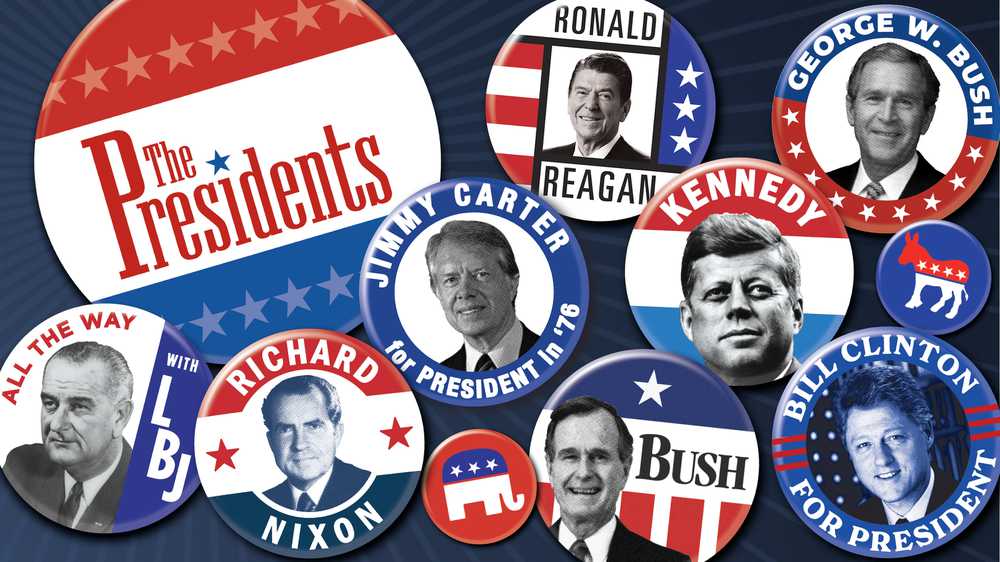
The Presidents Connect today's election issues with the past
George H. W. Bush George H. W. Bush -- 41st President; Term: 1989-1993; Political Party: Republican; First Lady: Barbara Pierce Bush; Vice President: J. Danforth Quayle

Full Web Site Available George H. W. Bush
Go to the Web Site

Highlights from the George H.W. Bush web site include:

  • step through Bush's decisions on taxes, the Gulf War, and Cold War diplomacy
  • watch a video about the 1988 presidential campaign, and footage of Bush skydiving
  • meet the extended Bush family in a photo and video gallery
  • access a timeline tracking the rise of one of America's best-known political families

Watch Full Biorgraphy

Overview
'A President is neither prince nor pope, and I don't seek a window on men's souls.' (1989)

Overview
Born: June 12, 1924; Milton, Massachusetts... Prior to winning the presidency, George Bush served as a U.S. congressman, ambassador to the United Nations, chairman of the Republican National Committee, chief of the U.S. Liaison Office to China, director of the C.I.A, and vice president under Ronald Reagan. Bush inherited some of the public goodwill felt for the Reagan administration -- and much of the growing skepticism. As the economy faltered and a recession set in, the supply-side economic policies of the 1980s were questioned and Bush was forced to break his promise of "no new taxes." Further damaging his chances for reelection was the impression that he was more concerned with world affairs than the problems vexing Main Street, USA.

The Era

  • Fall of the Berlin Wall (1989)
  • Valdez oil spill (1989)
  • Anita Hill v. Clarence Thomas (1991)
  • race riots in Los Angeles (1992)
  • Environmental summit held in Rio (1992)
  • Breakup of the Soviet Union (1991)
  • Domestic Policy
    Many of the domestic initiatives launched by the Bush administration pitted the president against a Congress under Democratic control. As the economy soured and the federal deficit soared, Bush was forced to renege on his "no new taxes" pledge of 1988. This action resulted in his losing support of hard-core conservatives and paved the way for a challenge from within his party during the 1992 election. Bush did enjoy some successes on the domestic front, particularly in his appointing of two justices to the Supreme Court, something the far more popular Reagan had been unable to do. In the end, Bush's domestic agenda was judged, by many, to lack vision and purpose. Indeed, as early as 1990, Bush's chief-of-staff John Sununu declared, "...there's not a single piece of legislation that needs to be passed in the next two years." With the economy growing at a meager 1% annually, and unemployment steadily rising, the public wanted to see more assertive action from the White House.

    Foreign Affairs
    It was in the area of foreign affairs that George Bush was most comfortable and most effective. His career up to the time of his election as president had allowed him to cultivate relationships with heads of state the world over. As commander-in-chief, Bush orchestrated military operations in Panama, Somalia, and most notably in the Persian Gulf. Operations Desert Shield and Desert Storm found Bush successfully marshaling an international coalition against Iraq. Elsewhere, it was on Bush's watch that the Soviet Union collapsed along with its satellite countries. In the aftermath, the Bush administration struggled to define what he had proclaimed to be a New World Order.

    Presidential Politics
    During the presidential elections of 1988 and 1992, George Bush sought to portray his opponents as being out of touch with the concerns of mainstream America. In 1988, sidebar issues such as flag-burning and the pledge of allegiance were used by the Bush camp to paint his Democratic opponent, Michael Dukakis, as too liberal. In 1992, Bush, facing an uphill battle due to a failing economy, questioned Bill Clinton's patriotism based on his actions during the Vietnam War. As the Republican party split off into various factions representing increasingly polarized opinions, candidates fought vigorously to capture the vote of "middle America."

    Printable version


    Produced by

    Major funding provided by the Alfred P. Sloan Foundation, the National
    Endowment for the Humanities, and the Corporation for Public Broadcasting
    Alfred P. Sloan Foundation Alfred P. Sloan Foundation Corporation for Public Broadcasting

    Major corporate funding provided by
    Liberty Mutual

    Additional Funding
    provided by


    Any views, findings, conclusions, or recommendations expressed in this Web site do not necessarily represent those of the National Endowment for the Humanities.

    Send link to a friend

    Shop PBS

    Podcasts

    Send us your feedback