Visit Your Local PBS Station PBS Home PBS Home Programs A-Z TV Schedules Watch Video Support PBS Shop PBS Search PBS
 
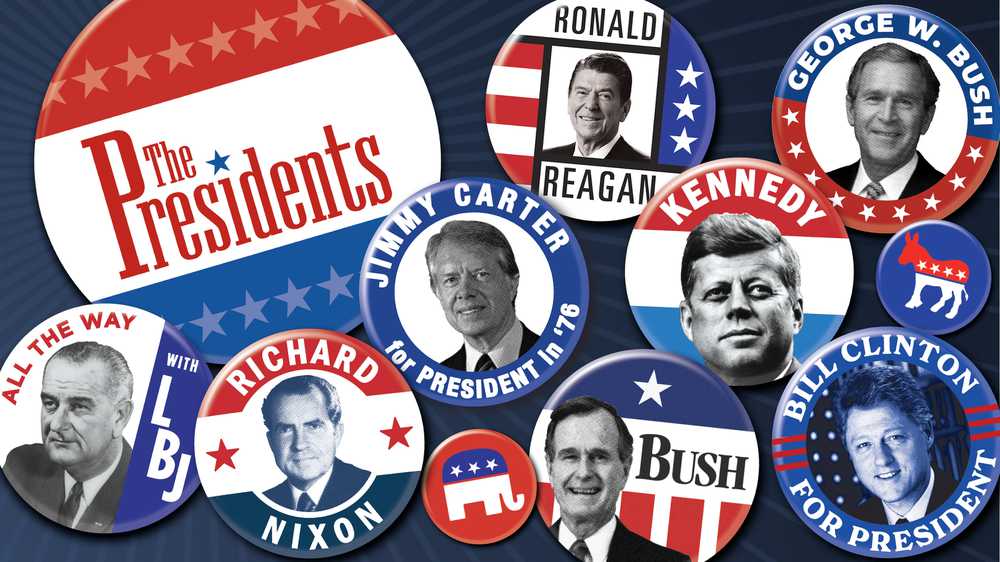
The Presidents Connect today's election issues with the past


Chapter:

Fiscal Restraint (10:44)
Carter brings simplicity and thrift to the White House. A Washington outsider, he alienates Congressional Democrats with his approach.
FDR
Truman
LBJ
Nixon

Now
Playing

Carter
Reagan
G H W Bush

Related Clips


REAGAN, Chapter 10

A Plan for Economic Recovery (10:13)
Reagan works to pass his economic package.
Watch Now

TRUMAN, Chapter 11

A Man of the People (10:27)
As president, Truman makes a show of energy and confidence. Americans warm to his straightforward manner.
Watch Now

LBJ, Chapter 16

Johnson's "Real Presidency" (8:44)
Johnson pushes his Great Society agenda in a legislative avalanche. Advisors — the "best and the brightest" — counsel him to escalate the war in Vietnam.
Watch Now

FDR, Chapter 16

Above All, Try Something (13:43)
Roosevelt uses experimental Federal policies to try to end the Depression. Eleanor advocates for the needy, redefining the role of First Lady.
Watch Now

GHW_BUSH, Chapter 17

The Tax Increase (9:23)
Bush supports two major domestic initiatives. Faced with budget troubles, he abandons Reagan's economic legacy and proposes raising taxes.
Watch Now

GHW_BUSH, Chapter 17

The Tax Increase (9:23)
Bush supports two major domestic initiatives. Faced with budget troubles, he abandons Reagan's economic legacy and proposes raising taxes.
Watch Now

Chapter 1

Introduction (5:56)
Part one of a biography of Jimmy Carter, the 39th president.
Watch Now

Chapter 2

Georgia Childhood (7:31)
Carter learns to value hard work on his familiy's peanut farm. He attends the U.S. Naval Academy.
Watch Now

Chapter 3

Naval Career (4:36)
Carter marries Rosalynn Smith and they have three sons. He rises quickly in the Navy, becoming senior officer of a nuclear submarine.
Watch Now

Chapter 4

Finding a Community (7:08)
When his father dies, Carter leaves the Navy. The Carters return to Plains to run the family business, and are thrust into the turmoil of Southern race relations.
Watch Now

Chapter 5

Politics and Integrity (8:19)
Carter challenges election fraud and wins a seat in the state senate. He becomes known for his integrity. In 1966 he narrowly loses the governor's race to a segregationist.
Watch Now

Chapter 6

A South Georgia Turtle (11:59)
Carter renews his Christian faith and opts to use politics to improve an unjust world. Elected governor of Georgia, he fights to streamline government.
Watch Now

Chapter 7

"Jimmy Who?" (11:11)
Post-Watergate, Carter runs a grassroots presidential campaign with themes of honesty and trust. Though unknown, he emerges as the frontrunner.
Watch Now

Chapter 8

The Right Message at the Right Time (10:08)
Jimmy Carter, supported by his colorful Georgia family, wins the 1976 election to become president.
Watch Now

Chapter 9

Fiscal Restraint (10:44)
Carter brings simplicity and thrift to the White House. A Washington outsider, he alienates Congressional Democrats with his approach.
Watch Now

Chapter 10

The Lance Affair (4:53)
Carter's budget director, Bert Lance, is accused of financial improprieties at his Georgia bank. The president's approval rating plummets.
Watch Now

Chapter 11

Credits (3:48)
Production credits for part one of the television program.
Watch Now

Chapter 12

Introduction (4:34)
Part two of a biography of Jimmy Carter, the 39th president.
Watch Now

Chapter 13

Champion for Human Rights (7:31)
Carter's foreign policy opposes torture and imprisonment without due process. Yet the U.S. continues to support the oppressive Shah of Iran.
Watch Now

Chapter 14

Full Partnership (5:58)
Rosalynn Carter establishes her role. Amy Carter is the first child to live in the White House in decades. The president tackles inflation but loses popularity.
Watch Now

Chapter 15

The Camp David Accords (11:51)
Jimmy Carter negotiates a historic peace agreement between Egyptian president Anwar Sadat and Israeli prime minister Menachem Begin.
Watch Now

Chapter 16

Soul Searching (13:28)
Despite foreign policy achievements, Carter loses support at home, where the American economy is in serious trouble.
Watch Now

Chapter 17

Hostages (12:39)
U.S. Embassy employees are taken hostage in Iran after a fundamentalist Islamic revolution. A military rescue mission fails.
Watch Now

Chapter 18

The 1980 Presidential Election (7:26)
Carter survives a brutal primary fight against Ted Kennedy to be defeated by Ronald Reagan.
Watch Now

Chapter 19

The Peacemaker (13:28)
Carter creates a new model for the post-presidency, working for peace and human rights.
Watch Now

Chapter 20

Credits (3:48)
Production credits for part two of the television program.
Watch Now

  • CARTER: Chapter 1
  • CARTER: Chapter 2
  • CARTER: Chapter 3
  • CARTER: Chapter 4
  • CARTER: Chapter 5
  • CARTER: Chapter 6
  • CARTER: Chapter 7
  • CARTER: Chapter 8
  • CARTER: Chapter 9
  • CARTER: Chapter 10
  • CARTER: Chapter 11
  • CARTER: Chapter 12
  • CARTER: Chapter 13
  • CARTER: Chapter 14
  • CARTER: Chapter 15
  • CARTER: Chapter 16
  • CARTER: Chapter 17
  • CARTER: Chapter 18
  • CARTER: Chapter 19
  • CARTER: Chapter 20
Choose a format

Choose a Video Format

Quicktime | Windows Media

Download a free player
QuickTime | Windows Media

Related Links


CARTER
Learn more about Jimmy Carter.

A Significant Senator
His biographer describes Ted Kennedy's political style.

Thomas P. "Tip" O'Neill
The Speaker of the House was often at odds with Carter.

Purchase Videos & DVDs

• See Comments

Loading comments...

You must log in to submit a comment. If you don't have an account at American Experience, you will need to register to comment. It's fast and easy to do!

Post a Comment (Limit 5000 Characters)

• View Transcripts •


Walter Cronkite (archival): ...this was not planned, this was not scheduled, and whether this is Carter's surprise for his inaugural, by golly, Bob...How 'bout that...

Narrator: The morning of January 20, 1977, Jimmy Carter surprised the nation.

Chip Carter: I remember I was out there walking. And you could hear Walter Cronkite over the loudspeaker saying, "The president is walking down the street!" It was a major moment of the Carter presidency symbolically. It was great theater.

Dan Carter: Here was this tremendous breath of fresh air. He was going to bring something new to Washington. Bring new people and new ideas.

Carter (archival): Our commitment to human rights must be absolute. Our laws, fair. Our natural beauty, preserved...

John Farrell: I was so different from what had come before. People were looking for something that was simple, something that was pure. And it just struck a cord in the American people.

Carter (archival): ... more is not necessarily better. But even our great nation has its limits ...

Hendrik Hertzberg: Jimmy Carter was exactly what the American people always say they want: above politics, determined to do the right thing regardless of political consequences, a simple person who doesn't lie, a modest man, not somebody with a lot of imperial pretenses. That's what people say they want. And that's what they got with Jimmy Carter.

Narrator: The Carter team arrived in Washington full of confidence, ready to take on the Washington insiders they had run against.

Pat Caddell: I felt like the advance wave of the German army arriving in Paris in 1940. I mean, this is a Democratic city. And they were terrified. I mean, terrified. You could feel it in the air.

John Farrell: They did not have a lot in common with the national political party. They did not have a lot in common with the Congress. They were a very close-knit band of brothers. And they were intensely loyal to Jimmy Carter. And they were pretty cocky guys as well.

Jody Powell, Press Secretary: There was clearly some degree of suspicion and -- maybe and a little bit of resentment that, "Here come these folks riding in here that didn't really pay their dues. They're not us. They're not our kind of folks." And all of a sudden they're in the White House, and "We'll show them that this town is tougher than they think."

Elizabeth Drew: His top people had no experience in Washington. And they were sort of contemptuous of Washington. Well, it's one thing to sort of run against Washington, but you have to live there and you have to govern there, and you have to work with the people who are there. And it really doesn't get you anywhere to have this attitude if you want to get anything done.

Pat Caddell: You get things done by power. You get power from having public support. My argument was that in order to maintain power we would have to reinforce constantly the message of what we were doing.

Carter (archival): Good evening. Tomorrow it will be two weeks since I became president...

Narrator: On February 2, Carter addressed the nation in a fireside chat on energy. The country had been through an oil scare in 1973. To head off a new crisis, Carter appealed directly to Americans to rally around a new program.

Carter (archival): All of us must learn to waste less energy. Simply by keeping our thermostats, for instance, at 65 degrees in the daytime and 55 degrees at night, we can save half the current shortage of natural gas. ... If we learn to live thriftily and remember the importance of helping our neighbors, then we can find ways to adjust.

Narrator: Carter lead by example. He curtailed the use of limousines, cancelled magazine subscriptions, unplugged television sets and put the presidential yacht Sequoia on the auction block.

Walter Mondale: He turned off the air conditioners, and it was so hot in the White House, people would come in there ... [laughs] It was unbelievable. It would be a hundred above in there.

Narrator: To save on staff overtime, all White House functions would end at midnight. No hard liquor would be served.

Hendrik Hertzberg: Jimmy Carter is a Low Church Protestant, where it's a sin not to have a hard wooden bench to sit on in church. And he brought that simplicity to the White House.

Dan Rostenkowski, U.S. Congressman: We were all invited down to the White House every other Tuesday. We walked into the private dining room on the first floor just off the East Room. We looked at the table and there were these little finger-tip cookies, and ... Tip O'Neill looked at me and he said, "What's this?" And I said, "Well, I guess that's breakfast." So the president walked in and shook hands with everybody. And O'Neill looked at the president and he says, "Mr. President, you know, we won the election."

Narrator: Carter presented his agenda to the Speaker of the House Tip O'Neill. Energy was Carter's number one priority, but it was competing with his long list of other legislation -- bills on hospital cost containment, urban policy, ethics in government.

O'Neill: ...you've brought enough for four years work...

Narrator: There was nothing in the package to grease the wheels of government. When Carter struck from his budget nineteen multi-million dollar water projects that had been approved by President Ford, congressmen were furious.

Elizabeth Drew: He was absolutely right to take it on, these sorts of boondoggles and unnecessary, really pork-barrel things. But he didn't know how to take it on. You have to build political capital, you have to build alliances, you have to make deals.

Bert Lance: The quid pro quo was not in him. If you came to him and said, "Look, we can get so-and-so to vote for us," he would turn a deaf ear.

Narrator: "He never understood how the system worked," Tip O'Neill would later complain. "And although this was out of character for Jimmy Carter, he didn't want to learn about it either."

Dan Carter: If your job is to find the public good, to arrive at what the public good is and then to articulate it, and then you become the voice of the people. And when you do that, it becomes very difficult to compromise.

Dan Rostenkowski: On one occasion when I was talking to President Carter I said, "Mr. President, you know, I've had three presidents before you and I'll have several after you... I'm telling you, from the vantage point of what I see in the legislative process, you will be able to do and what you won't be able to do. Now, you can accept that or not accept it." But Carter's attitude was members of the House and Senate are bad guys.

John Farrell: Carter put O'Neill and the others like him in the same category with the corrupt Georgia court house pols that he had been fighting for much of his life -- the same kind of back-scratching, featherbedding pol worrying about the next election, worrying about their public opinion polls, coming in and not doing what was right.

Doug Brinkley: Often he wouldn't return phone calls of leading Senators. There was a kind of an abrasive attitude he had towards them. He never showed them the respect. So they all eventually got bitter and turned on him.

Dan Carter: Even if he had had a personality transplant. And he had spent three hours a night playing poker with Tip O'Neill, I don't think that would have made the difference. I mean, he was faced with an extraordinarily difficult set of circumstances, which in part sprang not only from the political situation, but from his, the lack of a connection between his own views, and those of his party.

Narrator: "There will no new programs implemented unless [they] are compatible with my goal of having a balanced budget by the end of my first term," he pledged. But liberal Democrats, eager to resume the social agenda of Lyndon Johnson's Great Society, would not back away.

Stuart Eizenstat, Domestic Policy Adviser: There had been an eight-year period when there had been no Democratic president. There were a lot of pent-up and legitimate desires by constituency groups for more investment in a whole range of programs. Although he sympathized with much of it, all of his instincts were to cut budgets, reduce the deficit dramatically. But he was always under pressure from the left to have more spending.

Narrator: At a breakfast meeting Carter berated the congressional Democratic leadership for adding $61 billion dollars in new programs to his budget. "The Democratic Party needs to remove the stigma of unjustified spending," he said. "Mr. President," Tip O'Neill reminded Carter, "the Democrats are the champions of the poor and the indigent."

Peter Bourne: Carter thought that big social programs and large amounts of federal spending would bankrupt the country. He could see, I think, very clearly the way the world was going and that that old era had to be phased out.

Elizabeth Drew: Carter, looking back, was being very long-sighted in saying, you know, "We just don't have an open-ended, never-ending amount of money to spend. We have to get things in balance."


Major funding provided by the National
Endowment for the Humanities and the Corporation for Public Broadcasting

NEH Corporation for Public Broadcasting


Any views, findings, conclusions, or recommendations expressed in this Web site do not necessarily represent those of the National Endowment for the Humanities.