Visit Your Local PBS Station PBS Home PBS Home Programs A-Z TV Schedules Watch Video Support PBS Shop PBS Search PBS
 
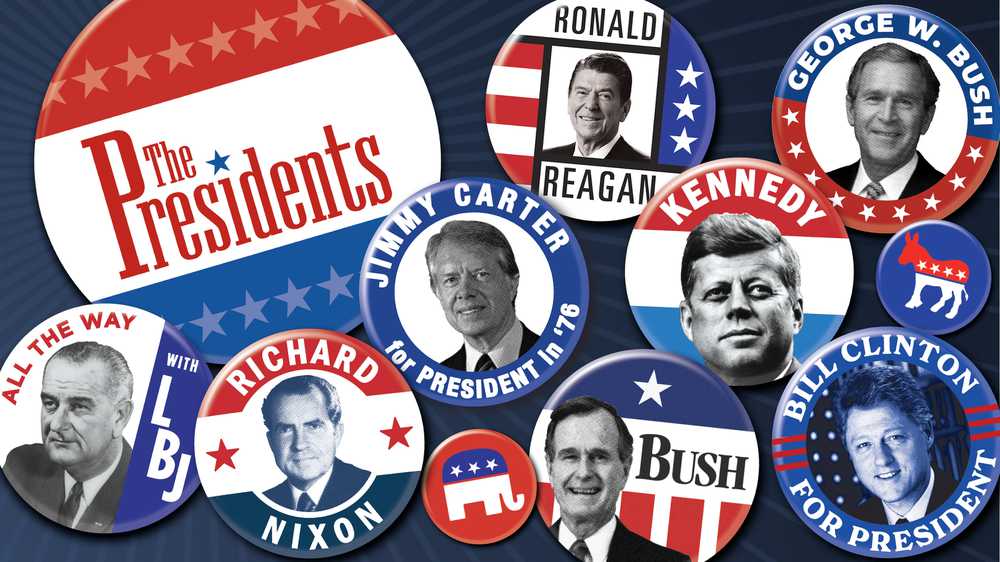
The Presidents Connect today's election issues with the past


Chapter:

Champion for Human Rights (7:31)
Carter's foreign policy opposes torture and imprisonment without due process. Yet the U.S. continues to support the oppressive Shah of Iran.
FDR
Truman
LBJ
Nixon

Now
Playing

Carter
Reagan
G H W Bush

Related Clips


REAGAN, Chapter 18

Peace Through Strength (6:26)
Reagan broadly states his anti-Soviet "crusade for freedom," but works quietly with the Soviets on human rights issues.
Watch Now

TRUMAN, Chapter 22

American Power (6:50)
Truman establishes the Marshall Plan and prepares the country for a new kind of war -- the Cold War.
Watch Now

TRUMAN, Chapter 23

A Stand for Human Rights (11:21)
Before the election of 1948, Truman boldly calls for civil rights for African Americans and for Israel to be recognized.
Watch Now

LBJ, Chapter 18

Voting Rights for African Americans (10:41)
Civil rights protesters force Johnson's hand on voting rights for African Americans. Their cause is helped by national media coverage of brutal police attacks.
Watch Now

GHW_BUSH, Chapter 15

Aggression Will Not Stand (7:28)
After Iraq invades oil-rich Kuwait, Bush launches Operation Desert Shield to protect Saudi Arabia, and reaches out to foreign leaders for their support.
Watch Now

Chapter 1

Introduction (5:56)
Part one of a biography of Jimmy Carter, the 39th president.
Watch Now

Chapter 2

Georgia Childhood (7:31)
Carter learns to value hard work on his familiy's peanut farm. He attends the U.S. Naval Academy.
Watch Now

Chapter 3

Naval Career (4:36)
Carter marries Rosalynn Smith and they have three sons. He rises quickly in the Navy, becoming senior officer of a nuclear submarine.
Watch Now

Chapter 4

Finding a Community (7:08)
When his father dies, Carter leaves the Navy. The Carters return to Plains to run the family business, and are thrust into the turmoil of Southern race relations.
Watch Now

Chapter 5

Politics and Integrity (8:19)
Carter challenges election fraud and wins a seat in the state senate. He becomes known for his integrity. In 1966 he narrowly loses the governor's race to a segregationist.
Watch Now

Chapter 6

A South Georgia Turtle (11:59)
Carter renews his Christian faith and opts to use politics to improve an unjust world. Elected governor of Georgia, he fights to streamline government.
Watch Now

Chapter 7

"Jimmy Who?" (11:11)
Post-Watergate, Carter runs a grassroots presidential campaign with themes of honesty and trust. Though unknown, he emerges as the frontrunner.
Watch Now

Chapter 8

The Right Message at the Right Time (10:08)
Jimmy Carter, supported by his colorful Georgia family, wins the 1976 election to become president.
Watch Now

Chapter 9

Fiscal Restraint (10:44)
Carter brings simplicity and thrift to the White House. A Washington outsider, he alienates Congressional Democrats with his approach.
Watch Now

Chapter 10

The Lance Affair (4:53)
Carter's budget director, Bert Lance, is accused of financial improprieties at his Georgia bank. The president's approval rating plummets.
Watch Now

Chapter 11

Credits (3:48)
Production credits for part one of the television program.
Watch Now

Chapter 12

Introduction (4:34)
Part two of a biography of Jimmy Carter, the 39th president.
Watch Now

Chapter 13

Champion for Human Rights (7:31)
Carter's foreign policy opposes torture and imprisonment without due process. Yet the U.S. continues to support the oppressive Shah of Iran.
Watch Now

Chapter 14

Full Partnership (5:58)
Rosalynn Carter establishes her role. Amy Carter is the first child to live in the White House in decades. The president tackles inflation but loses popularity.
Watch Now

Chapter 15

The Camp David Accords (11:51)
Jimmy Carter negotiates a historic peace agreement between Egyptian president Anwar Sadat and Israeli prime minister Menachem Begin.
Watch Now

Chapter 16

Soul Searching (13:28)
Despite foreign policy achievements, Carter loses support at home, where the American economy is in serious trouble.
Watch Now

Chapter 17

Hostages (12:39)
U.S. Embassy employees are taken hostage in Iran after a fundamentalist Islamic revolution. A military rescue mission fails.
Watch Now

Chapter 18

The 1980 Presidential Election (7:26)
Carter survives a brutal primary fight against Ted Kennedy to be defeated by Ronald Reagan.
Watch Now

Chapter 19

The Peacemaker (13:28)
Carter creates a new model for the post-presidency, working for peace and human rights.
Watch Now

Chapter 20

Credits (3:48)
Production credits for part two of the television program.
Watch Now

  • CARTER: Chapter 1
  • CARTER: Chapter 2
  • CARTER: Chapter 3
  • CARTER: Chapter 4
  • CARTER: Chapter 5
  • CARTER: Chapter 6
  • CARTER: Chapter 7
  • CARTER: Chapter 8
  • CARTER: Chapter 9
  • CARTER: Chapter 10
  • CARTER: Chapter 11
  • CARTER: Chapter 12
  • CARTER: Chapter 13
  • CARTER: Chapter 14
  • CARTER: Chapter 15
  • CARTER: Chapter 16
  • CARTER: Chapter 17
  • CARTER: Chapter 18
  • CARTER: Chapter 19
  • CARTER: Chapter 20
Choose a format

Choose a Video Format

Quicktime | Windows Media

Download a free player
QuickTime | Windows Media

Related Links


CARTER
Learn more about Jimmy Carter.

The History of the Panama Canal
Carter's treaties handed over control of the canal.

The Hostage Crisis
Events in Iran would lead to Carter's biggest defeat.

Purchase Videos & DVDs

• See Comments

Loading comments...

You must log in to submit a comment. If you don't have an account at American Experience, you will need to register to comment. It's fast and easy to do!

Post a Comment (Limit 5000 Characters)

• View Transcripts •


Title Card: Part Two: Hostage

Narrator: On May 22, 1977, before the graduating class of the University of Notre Dame, President Jimmy Carter unveiled a new foreign policy for the United States.

Carter: Being confident of our own future, we are now free of that inordinate fear of Communism ...

Narrator: Carter had come to office with no experience in foreign affairs, but was determined to make his mark. In his first year alone, he met more than 40 heads of state. Resumed talks on diplomatic relations with China and with the Soviet Union on arms control. He launched a new peace process in the Middle East, and signed a new canal treaty with Panama, transferring, after 75 years, ownership of the canal to the Panamanians. But it was a principle straight from his heart that would redefine America's role in the world.

Carter: We have reaffirmed America's commitment to human rights as a fundamental tenet of our foreign policy.

Gaddis Smith, Diplomatic Historian: That was his greatest speech standing up for our own values, and expecting, that the world would appreciate that, and that we would be (he didn't used this phrase, but it's an old phrase in American history) like the beacon on the hill, the beacon of freedom and liberty and democracy.

Betty Glad: He will be remembered for putting on the agenda hereafter the whole issue of human rights. We now assume that the goal of a state is not only to protect its national security interests. It has an obligation to try to deal with human suffering where it has the ability to do that.

Carter: I feel very deeply that when people are put in prison without trials, and tortured and deprived of basic human rights that the president of the United States ought to have a right to express displeasure and to do something about it.

Walter Mondale: His idea is that every child is a child of God. And based on his faith entitled to the stature and respect and the rights of what that means.

Narrator: Initially, human rights was applied aggressively to friend and foe. Carter asked Congress to withhold military and economic assistance from Latin American dictators -- in Chile, Argentina, Nicaragua -- and decried their human rights violations. Cold warriors complained Carter was undermining American allies, paving the way for Soviet backed guerrilla movements to seize power. But they applauded when in an open letter to Soviet physicist Andrei Sakharov, Carter promised to seek the release of political prisoners held in Soviet jails.

Doug Brinkley: The human rights campaign was charging the Soviet Union with abuse of its own citizens. And they did not like that at all. And we now know, now that the Cold War archives are open, and from looking at Havel, in Czechoslovakia, or Lech Walesa in Poland, that it was the Carter's human rights policy that gave heart to the underground resistance movement.

Narrator: But the biggest challenge to Carter's human rights policy would come in the Middle East.

Carter: Iran, because of the great leadership of the Shah, is an island of stability in one of the more troubled areas in the world.

Narrator: Carter was aware of the brutality of Iran's secret police and of 2500 political prisoners held in Iran's jails. But the Shah, installed to the throne in a U.S. backed coup in 1953, had long been a trusted ally. New Years' Eve 1977, in Teheran, Carter reaffirmed America's support.

Gaddis Smith: Strategic considerations trumped human rights in Iran, because the perception of the United States was first that Iran was a secure source of oil (and it certainly was an important source of oil), that it had one of the most powerful military establishments in the world, which was nonsense, but the Shah was saying he was going to have the second most powerful Navy. Iran, of course, bordered on the Soviet Union.

Betty Glad: There are circumstances where you have to have a situational morality. You cannot go in with the notion this is an absolute value, we're going to push it all the time.

Carter : I would like to offer a toast at this time, to the great leaders of Iran, the Shah and the Shahvanu, and to the people of Iran, and to the world peace that we hope together we can help to bring ...

Narrator: One week after Carter's visit, anti-Shah demonstrations broke out. When Iranian secret police fired on the demonstrators and killed several students, religious leaders called the Shah's government anti-Islamic.

Elizabeth Drew: Iran was a very complicated situation. And the Shah was very useful to us. At the same time, something else was going on, something very powerful was going on in Iran. And as I recall, we kind of missed it.

Zbigniew Brzezinski, National Security Advisor: We knew there was some resentment, and we knew somewhat of the history of the country, but we were not conscious, nor were we informed, of the intensity of the feelings.


Major funding provided by the National
Endowment for the Humanities and the Corporation for Public Broadcasting

NEH Corporation for Public Broadcasting


Any views, findings, conclusions, or recommendations expressed in this Web site do not necessarily represent those of the National Endowment for the Humanities.