Chapter:
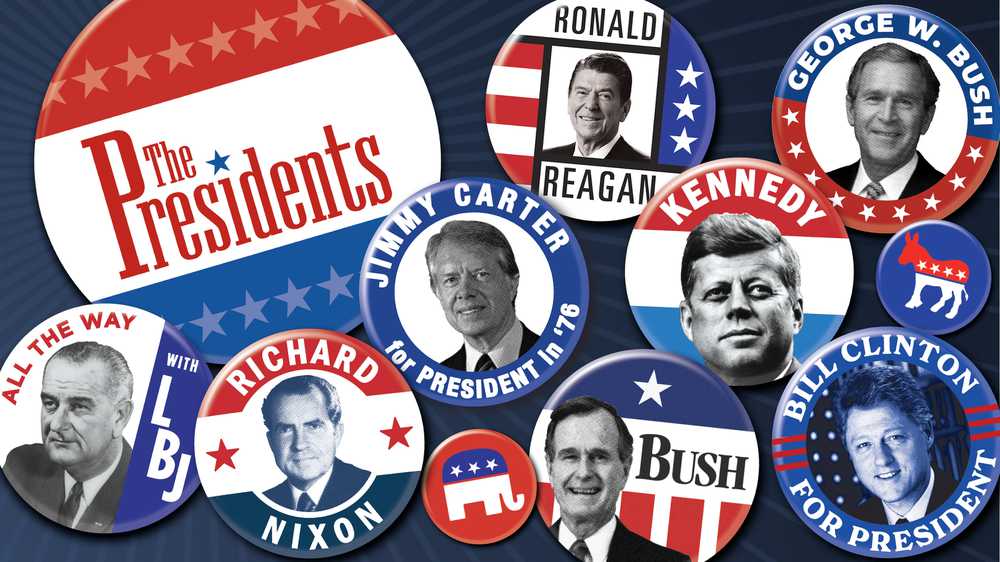
Despite foreign policy achievements, Carter loses support at home, where the American economy is in serious trouble.
Related Clips

REAGAN, Chapter 12
Reaganomics (11:17)
Dramatic rises in unemployment, inflation, and homelessness signal the failure of Reagan's economic program.
Watch Now
GHW_BUSH, Chapter 19
The Perfect Storm (13:01)
Beset by critics, questions about Iraq, and a sluggish economy, Bush loses his high approval rating.
Watch Now
LBJ, Chapter 22
A Miasma of Trouble (15:14)
Johnson struggles to keep his dream of the Great Society alive while the country spins out of control.
Watch Now
NIXON, Chapter 19
Constitutional Crisis (8:19)
Nixon refuses to comply with subpoenas. His vice president, charged with tax evasion, resigns. Nixon's attorney general refuses to fire the special Watergate prosecutor, and many call for Nixon's impeachment.
Watch Now
Related Links

CARTER
Learn more about Jimmy Carter.
Riots in Florida
Simmering racial tensions explode in 1980.
A Crisis of Confidence
Learn how Carter's "malaise" speech backfired.
• See Comments •
You must log in to submit a comment. If you don't have an account at American Experience, you will need to register to comment. It's fast and easy to do!
Post a Comment (Limit 5000 Characters)
• View Transcripts •
Narrator: At home President Carter's leadership was in question. On the world stage he kept piling up accomplishments. In January 1979, he received Chinese Vice-Premier Deng Xiaoping in Washington to celebrate the establishment of formal relations between the United States and China. In June, he met Soviet Premier Leonid Brezhnev in Vienna, to sign the SALT II Arms Control Agreement. From there, it was on to Tokyo for a major economic Summit.
Pat Caddell: The country is having this terrible domestic problem and the president is somewhere out on the other side of the world. And it's not for a couple of days -- for weeks. And I remember getting on the phone and saying you people got to come home now.
Narrator: In one year, the American economy had spun out of control. Gasoline prices had more than doubled, mortgage rates pushed 20 percent. Unemployment kept on rising.
BERT LANCE, Former Budget Director: There were just so many forces at work When inflation becomes rampant interest rates are high, and the business cycle is turning against you, it becomes almost impossible.
Narrator: Of all the problems facing the nation, most Americans now agreed, inflation was the most urgent. In the summer of '79, fueled by rising oil prices, it surged to 14 percent.
ROGER WILKINS: Inflation makes you doubt the future. When you have inflation you don't see as much building going on. You don't see as much investment going on. You don't see as much hiring going on. People weren't seeing their savings growing and as a matter of fact people were terrified that inflation would impoverish them in their old age.
Narrator: Carter acted decisively. To reduce the budget deficit and bring inflation under control he cut into social programs. "New realities," explained the White House, "must temper our nation's commitment to the poor."
PETER BOURNE: It stirred up a hornet's nest of opposition from the Ted Kennedy people, from the traditional FDR coalition. They were very, very angry.
Narrator: African American leaders felt betrayed, and vowed to wage an all-out fight on what they called, "Carter's immoral, unjust and inequitable budget cuts."
ROGER WILKINS: The leader who most encapsulated the goals that I wanted was Martin King, at the end of his life, saying to the country, we have to do something about poor Americans. We're the richest country on the face of the Earth, and we've got to do something. Every time I vote for a Democrat I want that Democrat to have Martin's spirit about poverty in his soul. Jimmy Carter ran away from that.
Narrator: Across America, frustration was reaching a breaking point. In Levittown, Pennsylvania, truckers barricaded expressways to protest high fuel prices, setting off riots, which left 100 injured and led to more than 170 arrests.
PAT CADDELL: I thought in '79 was we were really headed down the tubes. I now thought we were in deep, deep trouble and I thought the president was becoming irrelevant.
Narrator: Polls showed Carter falling behind Ted Kennedy as the preferred candidate among Democratic voters, and even losing trial heats to the likely Republican nominee, Ronald Reagan.
Voices of people on the street: "I don't think he has control of the situation. I think he's a very religious man, a very nice man, but I just don't think he's capable of the job." "...a lot of people think he's shaky, you know, and I'm one of them, I think he's kind of shaky." "I think he's a real floundering leader, I don't see him as a leader, and I don't look to him for leadership."
Narrator: President Carter's approval rating was 25 percent, lower than President Richard Nixon's at the time of Watergate.
"It all seems to be falling down around me in the White House," he told a friend, "I don't know what to do."
WALTER MONDALE: I think he was losing some of that essential nerve that he has in such abundance. Just for a brief moment there it was really ... I was heartsick and I felt so sorry for him.
Narrator: Carter groped for a way to reassert his leadership. One adviser suggested that he give a major speech on energy, and put the full blame of the economic crisis on the high price of Middle East oil.
STUART EIZENSTAT: When we drew the outlines up he was really quite disgusted. This is just more of the same. It doesn't address the basic problems. People will see this as pabulum. We need something more.
ROSALYNN CARTER: Jimmy had made several speeches on energy. He was trying to impress upon people the fact they needed to conserve and it just seemed to be going nowhere with the public. And so he just said I'm not going to make the speech.
HENDRIK HERTZBERG: So he got on a conference call with his senior staff, and the way he put it -- very pungently -- was, "I just don't want to bullshit the American people."
Narrator: Carter retreated to Camp David. For the next ten days businessmen, labor leaders, governors, pop psychologists and clergy were called to the mountaintop to participate in one of the most extraordinary episodes of presidential soul searching in American history.
HENDRIK HERTZBERG: Basically this was a kind of a self-psychoanalysis by Carter and the administration. He sat up there and listened to the most scalding critiques of his presidency.
Narrator: "They told me that I seemed bogged down in details, Carter wrote. "That the public acknowledged my intelligence and integrity, but doubted my capacity to follow through with a strong enough thrust to succeed."
Within Carter's own staff a fierce debate raged over what had gone wrong and what President Carter should say to the American people. Carter's pollster argued the president should address a subject deeper than energy or the economy -- that there was a crisis of the American spirit.
PAT CADDELL: The first time, we actually got numbers where people no longer believed that the future of America was going to be as good as it was now. Never in the history of American polling had that ever existed. That Americans ever if they believed it ever evidenced would say, "Oh, my children are have it worse than I am. The country is going to get worse. We already had our heyday. And that really shook me, because it was so anti, so anti-American.
STUART EIZENSTAT: I made the point, and Mondale made the point, that if there was a problem with the American spirit, it was because of the underlying problems of inflation and energy not because there was something wrong with the American people.
WALTER MONDALE: I argued that there were real problems in America that were not mysterious, that were not rooted in some kind of national psychosis or breakdown, that there were real gas lines, there was real inflation, that people were worried in their real lives about keeping their jobs.
PAT CADDELL: The vice president of the United States was looking at me, basically accused me of being insane. So, you had this real division. And then Jimmy Carter ended it by saying, uh, and, and this moment I'll never forget it. He ends the thing saying, he said, I just wanted to hear what you all said. I've decided. I'm going to do everything that Pat said.
Carter: Good evening. This is a special night for me.
Narrator: On July 15 after a ten day retreat, Jimmy Carter descended from the mountains of Maryland to deliver the most controversial speech of his administration.
Carter: I want to speak to you first tonight about a subject even more serious than energy or inflation. I want to talk to you right now about a fundamental threat to American democracy. The threat is nearly invisible in ordinary ways. It is a crisis of confidence. It is a crisis that strikes at the very heart and soul and spirit of our national will.
HENDRIK HERTZBERG: The speech was more like a sermon than a political speech. And it had the themes of confession, redemption and sacrifice. And he was bringing the American people into this spiritual process that he had been through, and presenting them with an opportunity for redemption as well as redeeming himself.
Carter: In a nation that was proud of hard work, strong families, close-knit communities and our faith in God, too many of us now tend to worship self-indulgence and consumption. Human identity is no longer defined by what one does but by what one owns ...
JOHN A. FARRELL, Journalist: The speech unfairly was labeled "the malaise speech," because it talked about the fact that the country was in a difficult situation, which it was. But, Americans don't always want their public leaders to come to them and say, "Hey, we're in a bunch of trouble."
ROGER WILKINS: When your leadership is demonstrably weaker than it should be you don't then point at the people and say, "It's your problem." If you want the people to move, you move them the way Roosevelt moved them, or you exhort them the way Kennedy or Johnson exhorted them. You don't say, it's your fault.
DOUGLAS BRINKLEY: The op-ed pieces started spinning out saying there's nothing wrong with the American people. We're a great people. Maybe the problem's in the White House. Maybe we need new leadership to guide us. It boomeranged on him.
JODY POWELL: If you make a bold stroke like that you do have to think about how do you follow it up? What is day three and day four and day four look like. How do you translate that into additional steps? And we botched that.
Narrator: To give the impression of a fresh start, Carter asked his entire Cabinet to submit their resignation. Five were accepted.
JOHN FARRELL: By firing the Cabinet the way he did Carter just telegraphed to the country that he wasn't up for the job. It was a sign of panic. It looked like this was a president who was thrashing about looking for other people to blame.
Narrator: Carter's approval rating dropped even lower.
"After all the Camp David meetings, the dramatic speech on July 15, and the Cabinet firings, he is back where he began, one analyst wrote, "a chief executive rejected by his ultimate constituency, the American people."
Narrator: That fall, the liberal wing of the Democratic Party finally broke with the president, throwing its support behind Ted Kennedy. The Senator from Massachusetts would wage a brutal campaign for the Democratic nomination. For Jimmy Carter, nothing seemed to be going right.
He collapsed while running a 10-kilometer race. It was taken as a sign of weakness.
He became the butt of jokes when a story broke that he'd been attacked by a giant rabbit while fishing in Georgia.
Even the Carter family, once thought fun and colorful, was becoming a liability. Billy was investigated for accepting a bribe from the Libyan government.
Furious, Carter distanced himself from Billy. "I have no control ... over my brother and he has no control over me," he said.