Visit Your Local PBS Station PBS Home PBS Home Programs A-Z TV Schedules Watch Video Support PBS Shop PBS Search PBS
 
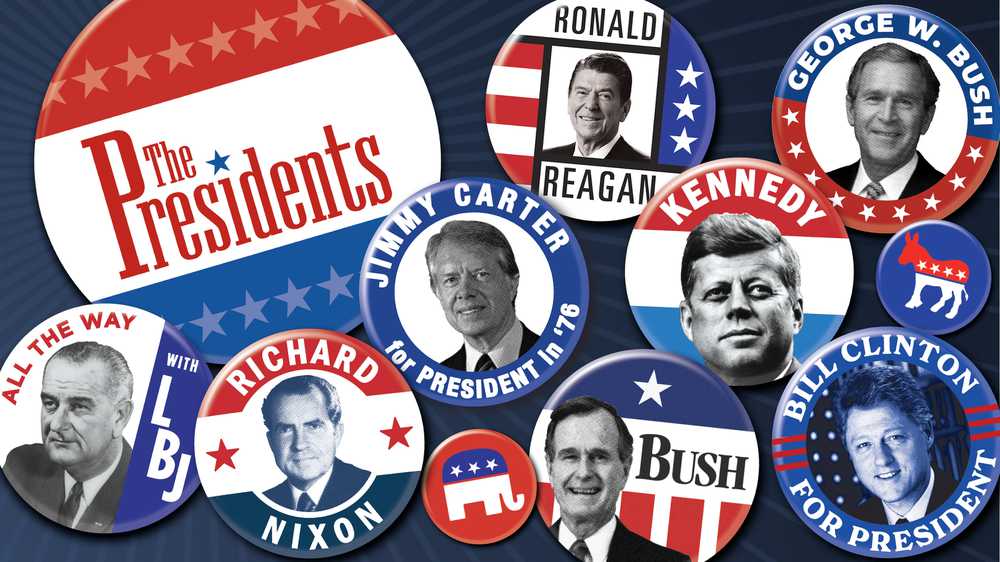
The Presidents Connect today's election issues with the past


Chapter:

The Peacemaker (13:28)
Carter creates a new model for the post-presidency, working for peace and human rights.
FDR
Truman
LBJ
Nixon

Now
Playing

Carter
Reagan
G H W Bush

Related Clips


GHW_BUSH, Chapter 22

Ceiling and Visibility Unlimited (7:00)
In his post-presidency, Bush sees two sons elected as governors, then one, George W. Bush, elected president. As history considers his legacy, he finds peace.
Watch Now

LBJ, Chapter 26

The Post Presidency (5:38)
Depressed, Johnson retires to his Texas ranch. He suffers a fatal heart attack just days before peace talks end the Vietnam War.
Watch Now

REAGAN, Chapter 28

Into the Sunset (6:28)
Ronald Reagan retires to his California ranch. He will be diagnosed with Alzheimer's disease.
Watch Now

TRUMAN, Chapter 31

The Last Years (9:06)
With the lowest popularity rating in history, Truman decides not to seek re-election. He retires to Independence, Missouri.
Watch Now

NIXON, Chapter 21

The Judgment of History (6:32)
Nixon resigns from office. His successor Gerald Ford grants him a full pardon, but over 70 others are convicted of crimes.
Watch Now

Chapter 1

Introduction (5:56)
Part one of a biography of Jimmy Carter, the 39th president.
Watch Now

Chapter 2

Georgia Childhood (7:31)
Carter learns to value hard work on his familiy's peanut farm. He attends the U.S. Naval Academy.
Watch Now

Chapter 3

Naval Career (4:36)
Carter marries Rosalynn Smith and they have three sons. He rises quickly in the Navy, becoming senior officer of a nuclear submarine.
Watch Now

Chapter 4

Finding a Community (7:08)
When his father dies, Carter leaves the Navy. The Carters return to Plains to run the family business, and are thrust into the turmoil of Southern race relations.
Watch Now

Chapter 5

Politics and Integrity (8:19)
Carter challenges election fraud and wins a seat in the state senate. He becomes known for his integrity. In 1966 he narrowly loses the governor's race to a segregationist.
Watch Now

Chapter 6

A South Georgia Turtle (11:59)
Carter renews his Christian faith and opts to use politics to improve an unjust world. Elected governor of Georgia, he fights to streamline government.
Watch Now

Chapter 7

"Jimmy Who?" (11:11)
Post-Watergate, Carter runs a grassroots presidential campaign with themes of honesty and trust. Though unknown, he emerges as the frontrunner.
Watch Now

Chapter 8

The Right Message at the Right Time (10:08)
Jimmy Carter, supported by his colorful Georgia family, wins the 1976 election to become president.
Watch Now

Chapter 9

Fiscal Restraint (10:44)
Carter brings simplicity and thrift to the White House. A Washington outsider, he alienates Congressional Democrats with his approach.
Watch Now

Chapter 10

The Lance Affair (4:53)
Carter's budget director, Bert Lance, is accused of financial improprieties at his Georgia bank. The president's approval rating plummets.
Watch Now

Chapter 11

Credits (3:48)
Production credits for part one of the television program.
Watch Now

Chapter 12

Introduction (4:34)
Part two of a biography of Jimmy Carter, the 39th president.
Watch Now

Chapter 13

Champion for Human Rights (7:31)
Carter's foreign policy opposes torture and imprisonment without due process. Yet the U.S. continues to support the oppressive Shah of Iran.
Watch Now

Chapter 14

Full Partnership (5:58)
Rosalynn Carter establishes her role. Amy Carter is the first child to live in the White House in decades. The president tackles inflation but loses popularity.
Watch Now

Chapter 15

The Camp David Accords (11:51)
Jimmy Carter negotiates a historic peace agreement between Egyptian president Anwar Sadat and Israeli prime minister Menachem Begin.
Watch Now

Chapter 16

Soul Searching (13:28)
Despite foreign policy achievements, Carter loses support at home, where the American economy is in serious trouble.
Watch Now

Chapter 17

Hostages (12:39)
U.S. Embassy employees are taken hostage in Iran after a fundamentalist Islamic revolution. A military rescue mission fails.
Watch Now

Chapter 18

The 1980 Presidential Election (7:26)
Carter survives a brutal primary fight against Ted Kennedy to be defeated by Ronald Reagan.
Watch Now

Chapter 19

The Peacemaker (13:28)
Carter creates a new model for the post-presidency, working for peace and human rights.
Watch Now

Chapter 20

Credits (3:48)
Production credits for part two of the television program.
Watch Now

  • CARTER: Chapter 1
  • CARTER: Chapter 2
  • CARTER: Chapter 3
  • CARTER: Chapter 4
  • CARTER: Chapter 5
  • CARTER: Chapter 6
  • CARTER: Chapter 7
  • CARTER: Chapter 8
  • CARTER: Chapter 9
  • CARTER: Chapter 10
  • CARTER: Chapter 11
  • CARTER: Chapter 12
  • CARTER: Chapter 13
  • CARTER: Chapter 14
  • CARTER: Chapter 15
  • CARTER: Chapter 16
  • CARTER: Chapter 17
  • CARTER: Chapter 18
  • CARTER: Chapter 19
  • CARTER: Chapter 20
Choose a format

Choose a Video Format

Quicktime | Windows Media

Download a free player
QuickTime | Windows Media

Related Links


CARTER
Learn more about Jimmy Carter.

Disease Eradication
Learn about Carter's efforts in Africa.

Carter Family Photo Album
Browse photographs of Carter and his family.

Purchase Videos & DVDs

• See Comments

Loading comments...

You must log in to submit a comment. If you don't have an account at American Experience, you will need to register to comment. It's fast and easy to do!

Post a Comment (Limit 5000 Characters)

• View Transcripts •


Narrator: January 20, 1981, three thousand people gathered at the old train depot in Plains to welcome the Carters home.

BETTY POPE, Friend: There was a sea of umbrellas, out there in the public, standing in the cold and the rain, waiting for him. And it was a bittersweet day.

CHIP CARTER, Son: I think they reacted just like anybody else would, that had just been rejected by 200 million people. It was one of the toughest times they've ever been through, I think.

ROSALYNN CARTER: He really was better than I was when we came home because I was so depressed about it that he was always trying to prop me up.

Narrator : The Carters faced trying times -- not only had their dreams been shattered, but the business they had spent a lifetime to build was more than a million dollars in debt.

BETTY POPE: There were some hard days that followed. They were withdrawn. They just wanted to go home and rest and make things better. They needed a healing time.

Narrator: Carter was only fifty-six, was already labeled "a has been," "a shooting star with not even a tail left to fizzle."

HENDRIK HERTZBERG: The things that they had once loved about him, his piety and his simplicity and his kind of moral goodness, they now despised as weakness and-and moral superiority. They just couldn't stand him.

JAMES LANEY: It wasn't just that he was unpopular. People avoided him. This is hard to say and hard to believe today, people didn't want to associate with him.

Narrator: "It seemed astounding," Rosalynn observed, "that after years of ... important events and decisions ... the most important thing could be whether the brick walk we were building from our house to the street was crooked or straight ... "

CHIP CARTER: Dad had a woodworking shop and spent quite a lot of hours out there, working with a piece of lumber. He can make a piece of lumber sing. And a lot of it's just because of the meticulous care that he puts into everything he's done.

DAN T. CARTER, Historian: If there was ever an individual who the maxim of "an idle mind is the devil's workshop," Carter would perfectly exemplify that. He's one of these people who simply never rests, and never has, I think. So the question was not whether he was going to do something after he left the White House. The question was what was he going to do.

Narrator: The Carters settled in to write their memoirs, and to make plans to build a presidential library. But Carter had little enthusiasm for building what he called "a monument to myself."

ROSALYNN CARTER: One night I woke up and Jimmy was sitting straight up in the bed. This is after we'd been home about a year. And I said, "What's the matter?" I thought he was sick because he always sleeps all night, even in the White House. He can turn things off and go to sleep. And he said, "I know what we can do at the library. We can have a place to resolve conflicts." And so that was the germ of the idea for what became the Carter Center.

Narrator: Inspired by his success in the Camp David Accords, Carter envisioned a place where he could host world leaders and mediate civil wars and political disputes.

At a cost of 28 million dollars, the Carter Center would span 35 acres, include an arboretum, a lake, and room enough for a staff of more then a hundred.

JAMES LANEY: When he set up the Carter Center, he shared with me his vision and I thought, oh, no, that's so grandiose. Frankly, I was embarrassed for him. He was at the nadir of popularity.

ANDREW YOUNG, U.N. Ambassador: Jimmy Carter was told that it would be impossible for him to get into the Naval Academy. He was told that it would be impossible for him to get elected governor. And when he announced for the presidency, even the Atlanta Constitution had a headline saying, "Jimmy is running for what?" So all of his life, he had done the impossible. And this was just another challenge.

Narrator: Carter's political resurrection began unexpectedly with a quiet act. Just a few miles from Plains, building houses for the poor through an organization called Habitat for Humanity.

DOUGLAS BRINKLEY: Carter became surprised at the success of Habitat. He loves to build. He's a carpenter; it's his hobby. So, it fit naturally to his own inclination. Then he started getting great press.

Narrator: In the summer of 1984, when he and Rosalynn led a busload of Georgians to New York City to rebuild a tenement on the Lower East Side, it was front page news in The New York Times.

DOUGLAS BRINKLEY: It was in stark contrast to kind of the so called greed decade of the 80's to see somebody not looking to make big speaking fees, not looking to sit on corporate boards. It's just something about an ex-president being so humble, in blue jeans, with a hammer, sleeping in cots and building houses for the poor. It's an image seared on our imagination.

ANDREW YOUNG: When you're there as a private citizen, and when you're there because of your faith, there's something nice and fresh and humble about that. And it's a language people understand.

Narrator: Four years after his humiliating defeat, the image of Jimmy Carter the failed president, was giving way to Jimmy Carter, the committed Christian in the service of the poor.

Reagan: So it is when we dedicate this center Mr. President we dedicate an institution that testifies as does your life itself to the goodness of God and to the blessings he bestows upon those who do their best to walk with him.

Narrator: In 1986, at the inauguration of the Carter Center, President Reagan expressed the growing respect many now felt for the man they had once rejected.

Through the Carter Center, Jimmy Carter would launch his new career as an elder statesman, monitoring elections throughout the world.

Carter: I examined the documents myself in the presence of election officials. They were patently counterfeit. They had nothing to do with the ...

Narrator: His prestige restored he returned to the role that had given meaning to his presidency: peacemaker.

JAMES LANEY: Carter has a profound, almost innate commitment to peace. It's in his bones. He really believes Theodore Roosevelt's adage that one should walk softly and carry a big stick. But don't be afraid to walk into the lion's den. And he does that. He's done it repeatedly.

Narrator: In Haiti, Carter convinced military strongman Raoul Cedras to step down in favor of the democratically elected president, Jean Bertrand Aristide.

DOUGLAS BRINKLEY: Carter believes that there's goodness in all people. And that even the biggest sinner, today's brutal dictator can take Christ into their heart and be born again tomorrow. They can be saved.

CARTER: We are very glad to be back in Haiti. A country obviously dedicated to peace, human rights and democracy.

DOUGLAS BRINKLEY: So even Cedras who was considered a brutal thug by the U.S. government, Carter felt that he could appeal to his sense of what is right and what is wrong. This caused Carter a lot of criticism, coddling dictators around the world.

Narrator: In May 2002, Jimmy Carter went to Cuba -- the first American president to visit the island in over 40 years.

Carter: In Spanish

Narrator: In an address broadcast throughout Cuba, he defied President George W. Bush, by calling for an end to the decades old U.S. trade Embargo.

Carter: In Spanish

Carter: (answering question) I don't know what's going to happen with ...

But he also challenged Cuban President Fidel Castro to institute democratic reforms.

Carter: I think it would be very good if your officials would decide to publish the entire document and let there be a free and open debate in Cuba.

Narrator: In his travels throughout the world, Carter has championed the cause of the poor and disenfranchised

DAN CARTER: He speaks, often eloquently and angrily, about the growing gap between rich and poor, and black and white. This very cautious and conservative, fiscally responsible president -- you hear him sometimes now and you think we've got the last socialist in America.

Narrator: With the Carter Center, the president and Mrs. Carter have created programs to fight disease -- river blindness, guinea worm -- and alleviate hunger.

CHIP CARTER: They have so much to give, and they feel like so many people depend on them. And they'll come in and see somebody that has nothing, and think, "Hey, I can change that life."

HENDRIK HERTZBERG: Being a good post-president doesn't retrospectively make you a better president. What a post-presidency can do though is to illuminate which aspects of a president's character were real and which were phony. All of his strengths -- perseverance, dedication, integrity, those have all turned out to be very, very real.

BERT LANCE: He never lied to the American people. He kept the peace. He brought the hostages home without loss of life. All the things he said he was going to do. It was a time when we needed that sort of person as president, that people could put some faith and trust in.

DOUGLAS BRINKLEY: What was Carter? He never had a kind of nutshell program. He had no interest in either the new deal tradition of Franklin Roosevelt, or the New Frontier tradition of John Kennedy, or the Great Society of Lyndon Johnson. He never crystallized a great agenda of what he wanted to do. He simply tackled issues as they confronted him one by one by one.

ROSALYNN CARTER: We have not had time to look back and regret things, although I still the country would be better off if Jimmy had been president for another term. But then if he had been president for another term, we might not have had the Carter Center.

WALTER MONDALE: He's been at it full-time, around the clock, with that same dedication, that same laser-like concentration, until finally now the American people are seeing all of this happen, and people say, "Hey, here's a really good man."

HENDRIK HERTZBERG: I think history is going to look at him in a kindlier light than his contemporaries did. His values, his devotion to peace and human rights, keep on resonating in a way that his failures and weaknesses don't.


Major funding provided by the National
Endowment for the Humanities and the Corporation for Public Broadcasting

NEH Corporation for Public Broadcasting


Any views, findings, conclusions, or recommendations expressed in this Web site do not necessarily represent those of the National Endowment for the Humanities.