Visit Your Local PBS Station PBS Home PBS Home Programs A-Z TV Schedules Watch Video Support PBS Shop PBS Search PBS
 
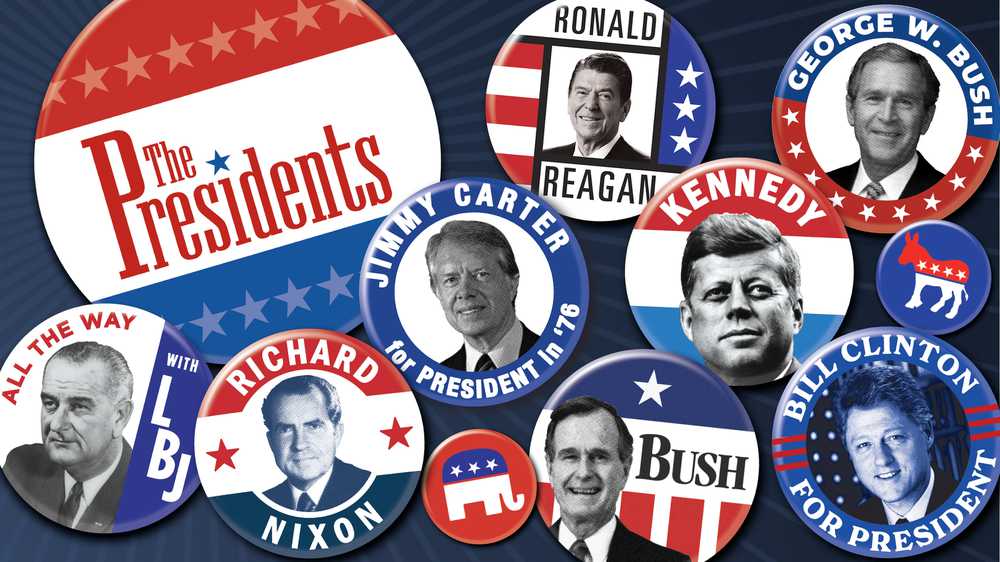
The Presidents Connect today's election issues with the past


Chapter:

Introduction (5:06)
Part one of a biography of Franklin D. Roosevelt, the 32nd president.

Now
Playing

FDR
Truman
LBJ
Nixon
Carter
Reagan
G H W Bush

Related Clips


Watch here for related video from this and other Presidential biographies.

Chapter 1

CreditsHead credits for part one of the television program.
Watch Now

Chapter 2

Introduction (5:06)
Part one of a biography of Franklin D. Roosevelt, the 32nd president.
Watch Now

Chapter 3

The Center of the World (11:41)
Born to wealth and privilege, Roosevelt is sent to boarding school, then attends Harvard University.
Watch Now

Chapter 4

Eleanor is an Angel (13:17)
Roosevelt marries his distant cousin Eleanor, the niece of his hero Theodore Roosevelt. They move next door to his mother in New York.
Watch Now

Chapter 5

A Secret Ambition (12:32)
Roosevelt enters New York politics and finds an advisor in reporter Louis Howe.
Watch Now

Chapter 6

Rebellion (12:32)
Roosevelt becomes assistant secretary of the Navy. In Washington, he jeopardizes his job and his marriage. Eleanor develops her own political interests.
Watch Now

Chapter 7

Polio Strikes (11:37)
Roosevelt contracts polio and loses the use of his legs.
Watch Now

Chapter 8

Denial (10:52)
Roosevelt escapes to a Florida houseboat, the Larocco. Eleanor tends to his political interests but also develops independence.
Watch Now

Chapter 9

Recovery (10:49)
Roosevelt finds purpose in Warm Springs, Georgia, where he creates an innovative polio treatment center.
Watch Now

Chapter 10

The Return (7:25)
After learning to appear to be walking, Roosevelt returns to politics and is elected governor of New York.
Watch Now

Chapter 11

Government's Duty (6:28)
Governor Roosevelt's bold Depression relief programs position him to challenge President Herbert Hoover.
Watch Now

Chapter 12

A Better Day (5:31)
As the Depression worsens, Roosevelt is elected president and promises "a new deal for the forgotten man."
Watch Now

Chapter 13

CreditsProduction credits for part one of the television program.
Watch Now

Chapter 14

CreditsPart two of a biography of Franklin D. Roosevelt, the 32nd president.
Watch Now

Chapter 15

An Electrifying Leader (9:10)
Roosevelt inspires the Depression-ravaged nation at his inauguration, saying, "...the only thing we have to fear is fear itself."
Watch Now

Chapter 16

Above All, Try Something (13:43)
Roosevelt uses experimental Federal policies to try to end the Depression. Eleanor advocates for the needy, redefining the role of First Lady.
Watch Now

Chapter 17

Hard Times (8:05)
With no economic recovery in sight, Roosevelt's relief programs meet opposition.
Watch Now

Chapter 18

Loving and Hating FDR (10:35)
Roosevelt's New Deal draws the ire of the rich, but devotion from ordinary citizens.
Watch Now

Chapter 19

Reelection and Controversy (11:13)
Roosevelt wins the 1936 election. Overconfident, he makes the mistake of trying to reshape the Supreme Court.
Watch Now

Chapter 20

The Fascist Threat (13:54)
The U.S. maintains its isolationism as German, Italian, and Japanese armies seize territory on three continents.
Watch Now

Chapter 21

The Juggler (15:25)
Roosevelt and Winston Churchill create Lend-Lease, a plan to help Great Britain fight the Germans, despite Congressional isolationism.
Watch Now

Chapter 22

America Goes to War (13:12)
Provoking an incident with a German U-boat, FDR leads the U.S. into World War II. The Japanese attack the U.S. fleet at Pearl Harbor.
Watch Now

Chapter 23

The Allies Wage War (13:36)
With Americans fighting the Germans in North Africa, Roosevelt and Churchill plan an invasion of continental Europe.
Watch Now

Chapter 24

D-Day (6:05)
The Allies cross the English Channel to attack the Germans in northern France. Roosevelt's health falters.
Watch Now

Chapter 25

Coming to an End (10:48)
Lonely and unwell, Roosevelt seeks out an old flame. After his reelection, he meets Stalin and Churchill at Yalta to discuss the postwar world.
Watch Now

Chapter 26

Laid to Rest (9:14)
After Roosevelt dies, mourners line the tracks to see his funeral train. The man who inspired them with his optimism is buried at his childhood home.
Watch Now

Chapter 27

CreditsProduction credits for part two of the television program.
Watch Now

  • FDR: Chapter 1
  • FDR: Chapter 2
  • FDR: Chapter 3
  • FDR: Chapter 4
  • FDR: Chapter 5
  • FDR: Chapter 6
  • FDR: Chapter 7
  • FDR: Chapter 8
  • FDR: Chapter 9
  • FDR: Chapter 10
  • FDR: Chapter 11
  • FDR: Chapter 12
  • FDR: Chapter 13
  • FDR: Chapter 14
  • FDR: Chapter 15
  • FDR: Chapter 16
  • FDR: Chapter 17
  • FDR: Chapter 18
  • FDR: Chapter 19
  • FDR: Chapter 20
  • FDR: Chapter 21
  • FDR: Chapter 22
  • FDR: Chapter 23
  • FDR: Chapter 24
  • FDR: Chapter 25
  • FDR: Chapter 26
  • FDR: Chapter 27
Choose a format

Choose a Video Format

Quicktime | Windows Media

Download a free player
QuickTime | Windows Media

Related Links


FDR
Learn more about Franklin D. Roosevelt.

Purchase Videos & DVDs

• See Comments

Loading comments...

You must log in to submit a comment. If you don't have an account at American Experience, you will need to register to comment. It's fast and easy to do!

Post a Comment (Limit 5000 Characters)

• View Transcripts •


Transcript: Chapter 02

Narrator: "All that is within me," Franklin Roosevelt once wrote, "cries out to go back to my home on the Hudson River." Hyde Park was the center of the world.

Radio Newscaster (archival): We interrupt this program to bring you a special news bulletin from CBS World News. A press association has just announced that President Roosevelt is dead. The president died of a cerebral hemorrhage. All we know so far is that the president died at Warm Springs in Georgia.

Narrator: On April 13, 1945, the funeral train headed north. In the last car lay the body of the president of the United States. Franklin Delano Roosevelt had led Americans through the great Depression and the greatest war in history. Now, along railroad tracks from Georgia to New York, they gathered to say goodbye.

Geoffrey Ward, Biographer: A whole generation of Americans had grown up knowing no other president. He was a presence in their living rooms. He'd called them "my friends." He'd been at the helm through the two worst crises of this century. And to have him suddenly gone was an overwhelming shock.

Robert Fulton Copeland, Warm Springs Resident: The boss man come into the field and he throwed up his hand. I was flying a tractor. He said, "Mr. Roosevelt died today." I said, "What?" He said, "Mr. Roosevelt died today." I just set there. I just set there astonished. I felt like I had one of the closest brothers I ever had.

Eli Ginzberg, FDR Administrator: It was the single greatest feeling of loss, disorientation, uncertainty and the sense that the whole world was now without the one man that it needed.

David Ginsburg, FDR Administration: This was a man of great ebullience. He was a man of constant cheer. He was a man of laughter. He had the feeling of life. There was vitality. This was a country in despair, and he brought us all together.

Narrator: He was the man with the big, easy smile, the infectious sense of humor.

Reporter (archival): Mr. President, how soon are you coming back?

President Franklin Roosevelt (archival): Just as soon as Congress will let me.

Narrator: He loved conversation, company and good times.

President Franklin Roosevelt (archival): Last year I nearly killed a photographer. All ready?

Narrator: This was how Americans saw Franklin Roosevelt. This was the man they trusted so much they elected him president four times.

Alistair Cooke, Journalist: People just idolized him. The most astounding thing was the pictures of Roosevelt you saw everywhere. Bus stations, libraries, barbershops, homes -- there were pictures of Roosevelt. And the entire country decided he was the savior.

President Franklin Roosevelt (archival): We face the future with confidence and with courage. We are Americans.

Narrator: Never before Roosevelt had Americans felt that government would take care of them, protect their homes and their farms, guarantee their savings accounts, promise them security in sickness and old age. But the president who championed the common man was not like most Americans.

back to top


Major funding provided by the National
Endowment for the Humanities and the Corporation for Public Broadcasting

NEH Corporation for Public Broadcasting


Any views, findings, conclusions, or recommendations expressed in this Web site do not necessarily represent those of the National Endowment for the Humanities.