Visit Your Local PBS Station PBS Home PBS Home Programs A-Z TV Schedules Support PBS Shop PBS Search PBS
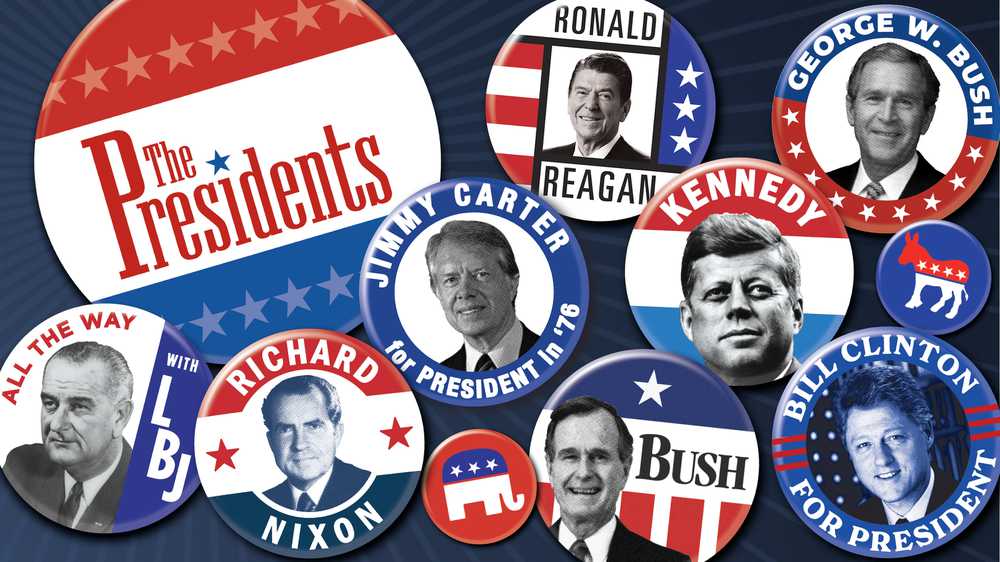
The Presidents Connect today's election issues with the past


Chapter:

Coming to an End (10:48)
Lonely and unwell, Roosevelt seeks out an old flame. After his reelection, he meets Stalin and Churchill at Yalta to discuss the postwar world.

Now
Playing

FDR
Truman
LBJ
Nixon
Carter
Reagan
G H W Bush

Related Clips


FDR, Chapter 6

Rebellion (12:32)
Roosevelt becomes assistant secretary of the Navy. In Washington, he jeopardizes his job and his marriage. Eleanor develops her own political interests.
Watch Now

TRUMAN, Chapter 14

Nuclear Diplomacy (7:06)
Truman takes a tougher stance at Potsdam after receiving news of a successful atomic bomb test in New Mexico.
Watch Now

REAGAN, Chapter 24

Summit at Reykjavik (10:44)
Reagan and Gorbachev reach for the abolition of nuclear weapons. Though their talks fail, they are a breakthrough.
Watch Now

NIXON, Chapter 15

To the Summit (7:44)
Nixon achieves foreign policy successes in China and the Soviet Union. Burglars working for Nixon's re-election committee break into the Watergate offices of the Democratic National Committee.
Watch Now

Chapter 1

CreditsHead credits for part one of the television program.
Watch Now

Chapter 2

Introduction (5:06)
Part one of a biography of Franklin D. Roosevelt, the 32nd president.
Watch Now

Chapter 3

The Center of the World (11:41)
Born to wealth and privilege, Roosevelt is sent to boarding school, then attends Harvard University.
Watch Now

Chapter 4

Eleanor is an Angel (13:17)
Roosevelt marries his distant cousin Eleanor, the niece of his hero Theodore Roosevelt. They move next door to his mother in New York.
Watch Now

Chapter 5

A Secret Ambition (12:32)
Roosevelt enters New York politics and finds an advisor in reporter Louis Howe.
Watch Now

Chapter 6

Rebellion (12:32)
Roosevelt becomes assistant secretary of the Navy. In Washington, he jeopardizes his job and his marriage. Eleanor develops her own political interests.
Watch Now

Chapter 7

Polio Strikes (11:37)
Roosevelt contracts polio and loses the use of his legs.
Watch Now

Chapter 8

Denial (10:52)
Roosevelt escapes to a Florida houseboat, the Larocco. Eleanor tends to his political interests but also develops independence.
Watch Now

Chapter 9

Recovery (10:49)
Roosevelt finds purpose in Warm Springs, Georgia, where he creates an innovative polio treatment center.
Watch Now

Chapter 10

The Return (7:25)
After learning to appear to be walking, Roosevelt returns to politics and is elected governor of New York.
Watch Now

Chapter 11

Government's Duty (6:28)
Governor Roosevelt's bold Depression relief programs position him to challenge President Herbert Hoover.
Watch Now

Chapter 12

A Better Day (5:31)
As the Depression worsens, Roosevelt is elected president and promises "a new deal for the forgotten man."
Watch Now

Chapter 13

CreditsProduction credits for part one of the television program.
Watch Now

Chapter 14

CreditsPart two of a biography of Franklin D. Roosevelt, the 32nd president.
Watch Now

Chapter 15

An Electrifying Leader (9:10)
Roosevelt inspires the Depression-ravaged nation at his inauguration, saying, "...the only thing we have to fear is fear itself."
Watch Now

Chapter 16

Above All, Try Something (13:43)
Roosevelt uses experimental Federal policies to try to end the Depression. Eleanor advocates for the needy, redefining the role of First Lady.
Watch Now

Chapter 17

Hard Times (8:05)
With no economic recovery in sight, Roosevelt's relief programs meet opposition.
Watch Now

Chapter 18

Loving and Hating FDR (10:35)
Roosevelt's New Deal draws the ire of the rich, but devotion from ordinary citizens.
Watch Now

Chapter 19

Reelection and Controversy (11:13)
Roosevelt wins the 1936 election. Overconfident, he makes the mistake of trying to reshape the Supreme Court.
Watch Now

Chapter 20

The Fascist Threat (13:54)
The U.S. maintains its isolationism as German, Italian, and Japanese armies seize territory on three continents.
Watch Now

Chapter 21

The Juggler (15:25)
Roosevelt and Winston Churchill create Lend-Lease, a plan to help Great Britain fight the Germans, despite Congressional isolationism.
Watch Now

Chapter 22

America Goes to War (13:12)
Provoking an incident with a German U-boat, FDR leads the U.S. into World War II. The Japanese attack the U.S. fleet at Pearl Harbor.
Watch Now

Chapter 23

The Allies Wage War (13:36)
With Americans fighting the Germans in North Africa, Roosevelt and Churchill plan an invasion of continental Europe.
Watch Now

Chapter 24

D-Day (6:05)
The Allies cross the English Channel to attack the Germans in northern France. Roosevelt's health falters.
Watch Now

Chapter 25

Coming to an End (10:48)
Lonely and unwell, Roosevelt seeks out an old flame. After his reelection, he meets Stalin and Churchill at Yalta to discuss the postwar world.
Watch Now

Chapter 26

Laid to Rest (9:14)
After Roosevelt dies, mourners line the tracks to see his funeral train. The man who inspired them with his optimism is buried at his childhood home.
Watch Now

Chapter 27

CreditsProduction credits for part two of the television program.
Watch Now

  • FDR: Chapter 1
  • FDR: Chapter 2
  • FDR: Chapter 3
  • FDR: Chapter 4
  • FDR: Chapter 5
  • FDR: Chapter 6
  • FDR: Chapter 7
  • FDR: Chapter 8
  • FDR: Chapter 9
  • FDR: Chapter 10
  • FDR: Chapter 11
  • FDR: Chapter 12
  • FDR: Chapter 13
  • FDR: Chapter 14
  • FDR: Chapter 15
  • FDR: Chapter 16
  • FDR: Chapter 17
  • FDR: Chapter 18
  • FDR: Chapter 19
  • FDR: Chapter 20
  • FDR: Chapter 21
  • FDR: Chapter 22
  • FDR: Chapter 23
  • FDR: Chapter 24
  • FDR: Chapter 25
  • FDR: Chapter 26
  • FDR: Chapter 27
Choose a format

Choose a Video Format

Quicktime | Windows Media

Download a free player
QuickTime | Windows Media

Related Links


FDR
Learn more about Franklin D. Roosevelt.

Battle of the Bulge
Hitler's final gambit led to the war's biggest and bloodiest battle.

Victory in the Pacific
American and Japanese firsthand accounts of the war.

Purchase Videos & DVDs

• See Comments

Loading comments...

You must log in to submit a comment. If you don't have an account at American Experience, you will need to register to comment. It's fast and easy to do!

Post a Comment (Limit 5000 Characters)

• View Transcripts •


Transcript: Chapter 25

Narrator: A quarter of a century earlier, Roosevelt had fallen in love with his wife's social secretary, Lucy Mercer. When Eleanor discovered the romance, Roosevelt promised never to see her again. Not long after, Lucy married a wealthy Southerner Winthrop Rutherford.

Doris Kearns Goodwin: In April of 1944, after Roosevelt had been diagnosed with congestive heart failure, he was sent to Bernard Baruch's plantation to recover. And it happened that the month before, Lucy's husband, Winthrop Rutherford, had died. So Lucy came to have lunch with Roosevelt. It was a reminder to him of what it was like when he was young before his polio, what it was like before his body was giving way, as it now was because of his heart condition, and he just felt some need somehow to see her more often. And the only person he could trust with that terrible task of arranging Lucy's visits when Eleanor was away was his daughter Anna.

Curtis Roosevelt: My mother realized that she was getting in perhaps over her head with a divided loyalty, because she certainly realized if she'd called up my grandmother and said, "Pa wants to invite Lucy Mercer for supper, okay?"-- she knew very well what the-- "What?" So it was done in secret.

Doris Kearns Goodwin: Lucy would come to Washington. She came six different times in 1944 and 1945, and according to the usher's diaries, Roosevelt would go and pick her up in Georgetown. It would say in the diary, "President motors to Georgetown to pick up Mrs. Rutherford," which seems to me almost, again, a memory of a courtship.

No one has to pick up a person to come to the White House -- they will come on their own accord -- but I think he wanted to go and be in the car alone with her, bring her back to the White House. And then I imagine it just as an easy dinner, they talked about the past, he told her what was going on during the day.

Curtis Roosevelt: It was just a kind of casual, funny conversation that FDR found relaxing, that nobody was asking him to do something, nobody was trying to influence him of one opinion or another.

Eleanor Roosevelt, Niece: To feel the warmth and love of someone -- that's what human beings live for. I think that's what made him carry on. It helped.

Narrator: In the fall of 1944 Roosevelt campaigned for president for the fourth time. The mood in America was changing. The Allies had already liberated Paris and had begun to recapture the islands they had lost in the Pacific.

In a cold, drenching rain, he campaigned through the streets of New York City. Hurricane winds blew just off the coastline. He rode in an open car, baring himself to the elements. He was determined to persuade American voters and whispering journalists that he was not a sick man. In Brooklyn at Ebbets Field, home of the Dodgers, he turned on the old Roosevelt charm.

President Franklin Roosevelt: You know, I come from the State of New York and I've got to make a terrible confession to you. I come from the State of New York and I practiced law in New York City, but I have never been in Ebbets Field before. I've rooted for the Dodgers, and I hope to come back here someday and see them play.

Alistair Cooke: He still looked a boisterous, buoyant character, but of course he was in terrible shape, because he was already very sick. See, we didn't know that. It was the beginning of the-- and then, of course, the decline through the winter was very bad indeed.

Narrator: In January 1945 Franklin Roosevelt took the oath of office for a fourth time.

President Franklin Roosevelt: I, Franklin Delano Roosevelt, do solemnly swear that I will faithfully execute the office of president of the United States.

Narrator: Twelve years before, he had told a desperate people that they had nothing to fear but fear itself. Now, weak and frail, he still spoke with the same confident optimism.

President Franklin Roosevelt: Things in life will not always run smoothly. Sometimes we will be rising toward the heights, then all will seem to reverse itself and start downward. The great fact to remember is that the trend of civilization itself is forever upward, that a line drawn through the middle of the peaks and the valleys of the centuries always has an upward trend.

Narrator: The war was drawing to a close. Berlin lay in ruins, devastated by Allied bombs. Tokyo, too, was burning from bombs dropped by American B-29's. Just two days after the inauguration, Roosevelt traveled to Yalta, a Soviet city on the Black Sea. There he met with Churchill and Stalin for the last time.

Robert Dallek: It's crystal clear to all of them that the war in Europe is coming to an end. It may not end in a month or even three months, but it's clear that Nazi Germany is now going to be defeated and that they are going to have to sort out what the post-war world and post-war Europe is going to look like.

Narrator: Roosevelt, Churchill and Stalin had been united in their struggle against Hitler, but now, with Nazi Germany crumbling, the Alliance was threatening to come apart. Stalin demanded control of Poland after the war. Roosevelt convinced him to agree to free elections there, but had few illusions the Russian leader would keep his word.

Robert Dallek: What Roosevelt believed was that Stalin and the Soviets had the power and the influence to control Eastern Europe at the end of the war. They were there with millions of men. They were there with a huge -- a vast army and the notion that we were going to go into Eastern Europe to drive them out, I think, is utter nonsense.

Narrator: "I didn't say the agreement was good," Roosevelt told an aide. "I said it was the best I could do." Two days after his return from Yalta, Roosevelt went before Congress to report to the American people.

President Franklin Roosevelt: Yes, I returned from the trip refreshed and inspired. The Roosevelts are not, as you may suspect, averse to travel. We seem to thrive on it.

George Elsey: When he returned from Yalta, he wasn't even able to stand up in the Congress, but gave his speech sitting down, which was extraordinary for him. He would never-- had never before been willing to admit a weakness.

President Franklin Roosevelt: I hope that you will pardon me for an unusual posture of sitting down during the presentation of what I want to say. I know that you will realize that it makes it a lot easier for me in not having to carry about 10 pounds of steel around on the bottom of my legs, and also because of the fact that I have just completed a 14,000-mile trip.

Narrator: This was the only time in his long career that FDR publicly acknowledged that he was crippled. The president needed to rest. On Good Friday, March 30, 1945, he retreated to Warm Springs, Georgia.

Doris Kearns Goodwin: And there was something about the simplicity of the place and the pleasures that seemed to bring him back a little bit and allow him to feel perhaps that he had gathered up enough strength to go back to Washington for the final push, but of course, it was not to be that way.

H. Stuart Raper, M.D., Medical Director, Warm Springs Foundation: On the Easter -- the last Easter, you might say -- he came to church. And as he went in, we turned and looked at each other and shook our heads. He looked horrible. He had lost weight. He had lost that smile. He had lost his interest in life and it was very obvious to anybody that he was a sick, sick man.

back to top

 
About the SeriesPodcastsFor TeachersCreditsFeedback
Support PBS Programming
 

Produced by

WGBH

Major funding provided by the Alfred P. Sloan Foundation, the National
Endowment for the Humanities, and the Corporation for Public Broadcasting
Alfred P. Sloan Foundation National Endowment for the Humanities Corporation for Public Broadcasting

Major corporate funding provided by
Liberty Mutual

Additional Funding
provided by
Viewers Like You


Any views, findings, conclusions, or recommendations expressed in this Web site do not necessarily represent those of the National Endowment for the Humanities.

Send link to a friend

Shop PBS

Podcasts

Send us your feedback