Visit Your Local PBS Station PBS Home PBS Home Programs A-Z TV Schedules Watch Video Support PBS Shop PBS Search PBS
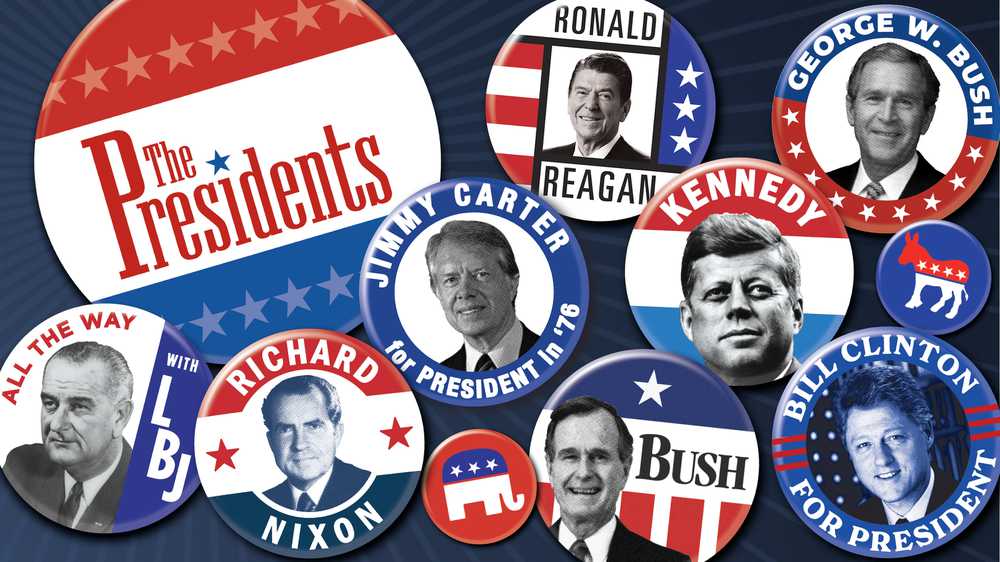
The Presidents Connect today's election issues with the past


Chapter:

Goldwater Republican (11:29)
Bush positions himself to the right and wins election to Congress in 1966. He votes for fair housing, outraging his most conservative constituents.
FDR
Truman
LBJ
Nixon
Carter
Reagan

Now
Playing

G H W Bush

Related Clips


REAGAN, Chapter 5

Political Apprenticeship (9:26)
Reagan hones his speaking skills as a television host and spokesman for General Electric. He becomes known for his conservative views.
Watch Now

LBJ, Chapter 12

Gulf of Tonkin (9:11)
Johnson claims that North Vietnam has attacked a U.S. destroyer. He uses the incident as the basis for expanding the war against North Vietnam.
Watch Now

LBJ, Chapter 9

The Civil Rights Act of 1964 (10:49)
Johnson waits out the longest Senate filibuster in history to achieve the bill that makes racial segregation illegal.
Watch Now

LBJ, Chapter 8

Johnson and the Kennedy Administration (5:16)
President Johnson determines to fulfill Kennedy's programs.
Watch Now

TRUMAN, Chapter 23

A Stand for Human Rights (11:21)
Before the election of 1948, Truman boldly calls for civil rights for African Americans and for Israel to be recognized.
Watch Now

Chapter 1

Introduction (4:03)
Part one of a biography of George H.W. Bush, the 41st president.
Watch Now

Chapter 2

Combat Pilot (9:26)
Born into wealth, Bush volunteers as a combat pilot in World War II. He marries Barbara Pierce in 1945.
Watch Now

Chapter 3

West Texas (6:44)
Bush attends Yale, starts a family, and rejects a Wall Street career to become an oil wildcatter. The Bushes lose a young daughter to leukemia.
Watch Now

Chapter 4

A New Republican Party (9:25)
Financially secure, Bush enters Texas politics. To build the Republican Party, he welcomes ideological radicals and segregationists.
Watch Now

Chapter 5

Goldwater Republican (11:29)
Bush positions himself to the right and wins election to Congress in 1966. He votes for fair housing, outraging his most conservative constituents.
Watch Now

Chapter 6

The Personal Touch (9:25)
After a failed Senate bid, Bush is appointed Ambassador to the United Nations. He cultivates friendships with U.S. allies and opponents alike.
Watch Now

Chapter 7

Keeping the Republican Faith (6:29)
President Richard Nixon recruits Bush to lead the Republican National Committee, just as the Watergate scandal is about to break.
Watch Now

Chapter 8

A Race Horse Under Wraps (11:18)
Bush serves as ambassador to China, then CIA director. In the 1980 election, he becomes Ronald Reagan's running mate.
Watch Now

Chapter 9

Vice President (9:17)
Loyal to Reagan, Bush weathers the Iran-Contra affair and launches a second bid for president in 1988, trying to emerge from Reagan's shadow.
Watch Now

Chapter 10

The 1988 CampaignBush runs a vigorous -- some say negative -- race against Michael Dukakis and wins. He pledges to continue Reagan's conservative policies.
Watch Now

Chapter 11

A Kindler, Gentler Leader (8:15)
Bush distances himself from Reagan's legacy. He tackles a savings and loan bailout and the end of Communism in Eastern Europe.
Watch Now

Chapter 12

A New World Order (13:30)
Bush convinces Soviet leader Mikhail Gorbachev to allow reunified Germany to join the NATO alliance. Iraqi dictator Saddam Hussein invades Kuwait, provoking a crisis.
Watch Now

Chapter 13

CreditsProduction credits for part one of the television program.
Watch Now

Chapter 14

Introduction (2:47)
Part two of a biography of George H.W. Bush, the 41st president.
Watch Now

Chapter 15

Aggression Will Not Stand (7:28)
After Iraq invades oil-rich Kuwait, Bush launches Operation Desert Shield to protect Saudi Arabia, and reaches out to foreign leaders for their support.
Watch Now

Chapter 16

Challenging Totalitarianism (8:17)
During the Iraq crisis, Bush vacations at his family's home in Maine. He leads the U.S. toward a war that some fear could become World War III.
Watch Now

Chapter 17

The Tax Increase (9:23)
Bush supports two major domestic initiatives. Faced with budget troubles, he abandons Reagan's economic legacy and proposes raising taxes.
Watch Now

Chapter 18

Desert Storm (9:08)
The U.S. and coalition forces go to war in the Persian Gulf, expelling Iraq from Kuwait in just three days. They stop short of invading Iraq.
Watch Now

Chapter 19

The Perfect Storm (13:01)
Beset by critics, questions about Iraq, and a sluggish economy, Bush loses his high approval rating.
Watch Now

Chapter 20

Not Conservative Enough (9:27)
Bush runs for a second term. Challengers Pat Buchanan and Texas billionaire Ross Perot, running as an independent, reveal a split among Republicans.
Watch Now

Chapter 21

It's the Economy (10:54)
Bush, perceived as out of touch, loses the election to Democrat Bill Clinton. Conservative third party candidate Ross Perot takes 19 percent of the vote.
Watch Now

Chapter 22

Ceiling and Visibility Unlimited (7:00)
In his post-presidency, Bush sees two sons elected as governors, then one, George W. Bush, elected president. As history considers his legacy, he finds peace.
Watch Now

Chapter 23

CreditsProduction credits for part two of the television program.
Watch Now

Related Links


GHW_BUSH
Learn more about George H. W. Bush.

Oswald's Ghost
The Kennedy assassination and its impact on the nation.

Vietnam
The costs and consequences of a controversial war.

Purchase Videos & DVDs

• See Comments

Loading comments...

You must log in to submit a comment. If you don't have an account at American Experience, you will need to register to comment. It's fast and easy to do!

Post a Comment (Limit 5000 Characters)

• View Transcripts •


Transcript: Chapter 05

Barry Goldwater (archival): Those who do not care for our cause we don't expert to enter our ranks in any case.

Narrator: The champion of Americans who had flocked to the Sun Belt in the 1950s, Senator Barry Goldwater of Arizona led a sagebrush insurgency in 1964 against the Eastern establishment. He ran against big government, the New Deal, labor unions, and liberal or "Rockefeller" Republicans. Everything Prescott Bush represented, Goldwater saw as a threat to individual freedom.

Barry Goldwater (archival): I would remind you that extremism in defense of liberty is no vice.

Narrator: Prescott Bush tried to keep Goldwater off the ticket. George Bush ran for U.S. Senate, embraced Goldwater, and begged his father to keep quiet. After winning the first Republican primary in Texas history, Bush tried to unseat liberal Democratic Senator Ralph Yarborough. It was a bold move for someone who had only been a county party chairman.

George H. W. Bush (archival): Ralph Yarborough is the darling of the AFL-CIO bosses, and the committee on political education... I'd like my children to be able to pray in school if they want to. And I'd like that right to be a part of our constitution.

Campaign film narrator: Young George, the oldest Bush boy, is a college freshman. He spent his entire summer working at Bush headquarters, assembling campaign materials, answering phones and sweeping up too... We think George Bush is quite a man. A real American. A real Republican. A responsible conservative.

Narrator: Bush ran to the right. He denounced the United Nations, and pledged to vote against Kennedy on civil rights. Like Barry Goldwater, he argued federal enforcement of civil rights was a violation of states' rights.

Richard Viguerie: George Bush was anxious to launch his political career. And there was a fervor in the Republican Party for conservative principles in those days, and that was not his ideology but he felt that in order to get elected, I will go along, I won't try to convert people to my belief, I will flow with them.

NarratorOn November 22, 1963, a Houston Chronicle poll showed Goldwater leading President John Kennedy by 50,000 votes. Kennedy came to Dallas to gain support and to heal a rift between liberal and conservative Democrats in Texas. Kennedy's assassination that day completely changed the political landscape.

Shirley Green, Texas Republican: After the assassination, it was awfully uphill. Not that anybody gave up, I must say, starting with him. It was a real, real vigorous contest, because he inspired so many new people to come to the Republican side.

Narrator: Although Bush got 200,000 more votes in the state than Barry Goldwater, more than any Republican ever had, Texans voted the ticket led by their native son, the new President, Lyndon Johnson. Bush was trounced. He was also haunted by some of the far right positions he had taken, especially his pledge to vote against the Civil Rights Act of 1964.

Marjorie Arsht: And George Bush wrote me a letter saying that he was so troubled about this vote, because he didn't want his children or anyone to consider that he was voting against integration.

Narrator Two years later, George Bush ran for Congress from a Houston district more moderate than Texas as a whole. He was elected handily, the first Republican Congressman from Houston since Reconstruction. One issue he faced was about to explode. African Americans took to the streets in 1967 demanding that the civil rights movement include fair housing.

Lyndon Johnson (archival): I am asking Congress to bar discrimination in housing and to secure very basic rights for every citizen of this land. I am doing it for one reason because it is right. And I am doing it in the name of millions of Americans, both white and Negro, who object to treating their fellow citizens one way on the battlefield and another way in the country that they're fighting to defend.

Narrator: In 1967 President Johnson proposed to ban racial discrimination in housing. His Fair Housing bill came to the floor for a vote on April 10th. Once again the race issue would force George Bush to take a stand.

George H. W. Bush (archival): You got to wrestle with your conscience. You got to listen to people. It doesn't come so easy to me that this is right and that's wrong. It's never that simple. The tough votes are the ones you agonize over and then you do what you think is right.

Narrator: Bush did not vote as a Goldwater Republican. He supported Lyndon Johnson. Many in his district were outraged.

Doro Bush Koch: Dad got a lot of death threats. People called up on the phone. Velma Johnson, an African American staff member in my dad's office, picked up the phone, and the person on the other end was rambling and screaming ugly, nasty things. Tears were streaming down her face. My dad grabbed the phone from her and said, "I don't know who this is. This is George Bush. Don't you ever call here again and treat anyone on my staff like that again."

Marjorie Arsht: He was threatened and denounced, and vilified for having betrayed his political constituents. And there was one woman who had been a big supporter of George's. And she wrote him a letter and said that she felt that she'd been violated, and that he would never be welcome in her house again.

Robert Mosbacher, political supporter: Mainline Republicans in those days were against open housing. And they were absolutely convinced that they were against him, would never vote for him, would vote for recall. I offered to talk to some of his main money backers, because a lot of them were furious at him. And he said, "No, no. Just get them together and I'll talk to them."

Narrator: Bush prepared to meet not just his funders but the rank and file.

Chase Untermeyer, Congressional intern: He said that he was going to face a angry crowd and that he was being fitted for iron underpants for whatever they might decide to do when they had him on the griddle.

Narrator: On April 17, 1968, Congressman Bush addressed a hostile audience of 400 at Houston's Memorial High School.

Peter Roussel: There were boos, hisses. It was ugly. There was sheet lightning in that auditorium that night. They were out to get George Bush. They were unhappy with George Bush. It was not a pretty scene.

Marjorie Arsht: I thought my heart would just really stop. I was so afraid of what might happen. People said he ought to be killed.

Peter Roussel: Once all the hubbub died down, he defended his vote on that piece of legislation.

Narrator: "Your representative owes you not only his industry, but his judgment," Bush told his audience, quoting 18th century philosopher Edmund Burke, "and he betrays instead of serving you, if he sacrifices his judgment to your opinion. I voted from conviction," he explained, "not out of intimidation or fear but because of a feeling deep in my heart that this was the right thing for me to do." Earlier that year, Bush had visited U.S. troops fighting in Vietnam.

Herbert Parmet: When he went to Vietnam in 1968, he came back with a very strong sense of outrage that although blacks were so prominent in the American military, and so prominent among those who were giving their lives, that they were treated so poorly in this country.

Narrator: Now, Bush asked his audience, "How would you feel about a black American veteran of Vietnam returning home, only to be denied the freedom that we, as white Americans, enjoyed? Somehow it seems fundamental that a man should not have a door slammed in his face because he is a Negro or speaks with a Latin American accent."

Peter Roussel: And I'll tell you by the time that speech was over, the atmosphere in that auditorium had changed considerably. It had transformed.

Marjorie Arsht: It was one of the few times I ever saw a few words completely transform an audience. It was probably one of the most dramatic incidents in all of George's public life, including when he was president.

Narrator: Tonight I got on this plane," Bush wrote a friend, "and this older lady came up to me. She said, "I'm a conservative Democrat from the district, but I'm proud, and will always vote for you now," and suddenly somehow I felt that maybe it would all be OK -- and I started to cry -- with the poor lady embarrassed to death." More than 20 years later, Bush would write, "I can truthfully say that nothing I've experienced in public life, before or since, has measured up to the feeling I had when I went home that night." Once in office, George Bush tended to follow his conscience. That night in 1968 he put his political future at risk. It worked. He would not always be that lucky.


Major funding provided by the National
Endowment for the Humanities and the Corporation for Public Broadcasting

NEH Corporation for Public Broadcasting


Any views, findings, conclusions, or recommendations expressed in this Web site do not necessarily represent those of the National Endowment for the Humanities.