Visit Your Local PBS Station PBS Home PBS Home Programs A-Z TV Schedules Watch Video Support PBS Shop PBS Search PBS
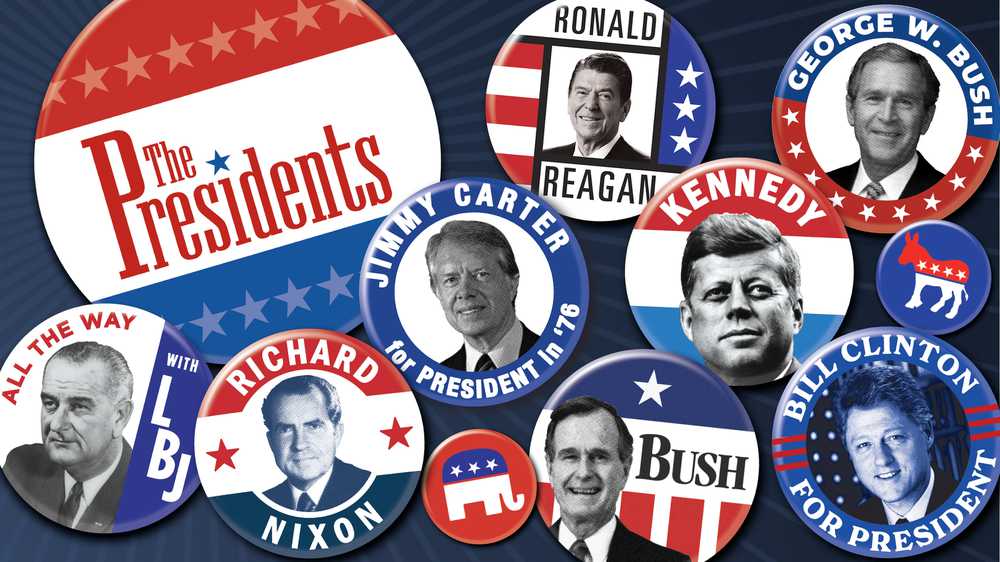
The Presidents Connect today's election issues with the past


Chapter:

Aggression Will Not Stand (7:28)
After Iraq invades oil-rich Kuwait, Bush launches Operation Desert Shield to protect Saudi Arabia, and reaches out to foreign leaders for their support.
FDR
Truman
LBJ
Nixon
Carter
Reagan

Now
Playing

G H W Bush

Related Clips


Watch here for related video from this and other Presidential biographies.

Chapter 1

Introduction (4:03)
Part one of a biography of George H.W. Bush, the 41st president.
Watch Now

Chapter 2

Combat Pilot (9:26)
Born into wealth, Bush volunteers as a combat pilot in World War II. He marries Barbara Pierce in 1945.
Watch Now

Chapter 3

West Texas (6:44)
Bush attends Yale, starts a family, and rejects a Wall Street career to become an oil wildcatter. The Bushes lose a young daughter to leukemia.
Watch Now

Chapter 4

A New Republican Party (9:25)
Financially secure, Bush enters Texas politics. To build the Republican Party, he welcomes ideological radicals and segregationists.
Watch Now

Chapter 5

Goldwater Republican (11:29)
Bush positions himself to the right and wins election to Congress in 1966. He votes for fair housing, outraging his most conservative constituents.
Watch Now

Chapter 6

The Personal Touch (9:25)
After a failed Senate bid, Bush is appointed Ambassador to the United Nations. He cultivates friendships with U.S. allies and opponents alike.
Watch Now

Chapter 7

Keeping the Republican Faith (6:29)
President Richard Nixon recruits Bush to lead the Republican National Committee, just as the Watergate scandal is about to break.
Watch Now

Chapter 8

A Race Horse Under Wraps (11:18)
Bush serves as ambassador to China, then CIA director. In the 1980 election, he becomes Ronald Reagan's running mate.
Watch Now

Chapter 9

Vice President (9:17)
Loyal to Reagan, Bush weathers the Iran-Contra affair and launches a second bid for president in 1988, trying to emerge from Reagan's shadow.
Watch Now

Chapter 10

The 1988 CampaignBush runs a vigorous -- some say negative -- race against Michael Dukakis and wins. He pledges to continue Reagan's conservative policies.
Watch Now

Chapter 11

A Kindler, Gentler Leader (8:15)
Bush distances himself from Reagan's legacy. He tackles a savings and loan bailout and the end of Communism in Eastern Europe.
Watch Now

Chapter 12

A New World Order (13:30)
Bush convinces Soviet leader Mikhail Gorbachev to allow reunified Germany to join the NATO alliance. Iraqi dictator Saddam Hussein invades Kuwait, provoking a crisis.
Watch Now

Chapter 13

CreditsProduction credits for part one of the television program.
Watch Now

Chapter 14

Introduction (2:47)
Part two of a biography of George H.W. Bush, the 41st president.
Watch Now

Chapter 15

Aggression Will Not Stand (7:28)
After Iraq invades oil-rich Kuwait, Bush launches Operation Desert Shield to protect Saudi Arabia, and reaches out to foreign leaders for their support.
Watch Now

Chapter 16

Challenging Totalitarianism (8:17)
During the Iraq crisis, Bush vacations at his family's home in Maine. He leads the U.S. toward a war that some fear could become World War III.
Watch Now

Chapter 17

The Tax Increase (9:23)
Bush supports two major domestic initiatives. Faced with budget troubles, he abandons Reagan's economic legacy and proposes raising taxes.
Watch Now

Chapter 18

Desert Storm (9:08)
The U.S. and coalition forces go to war in the Persian Gulf, expelling Iraq from Kuwait in just three days. They stop short of invading Iraq.
Watch Now

Chapter 19

The Perfect Storm (13:01)
Beset by critics, questions about Iraq, and a sluggish economy, Bush loses his high approval rating.
Watch Now

Chapter 20

Not Conservative Enough (9:27)
Bush runs for a second term. Challengers Pat Buchanan and Texas billionaire Ross Perot, running as an independent, reveal a split among Republicans.
Watch Now

Chapter 21

It's the Economy (10:54)
Bush, perceived as out of touch, loses the election to Democrat Bill Clinton. Conservative third party candidate Ross Perot takes 19 percent of the vote.
Watch Now

Chapter 22

Ceiling and Visibility Unlimited (7:00)
In his post-presidency, Bush sees two sons elected as governors, then one, George W. Bush, elected president. As history considers his legacy, he finds peace.
Watch Now

Chapter 23

CreditsProduction credits for part two of the television program.
Watch Now

Related Links


GHW_BUSH
Learn more about George H. W. Bush.

Purchase Videos & DVDs

• See Comments

Loading comments...

You must log in to submit a comment. If you don't have an account at American Experience, you will need to register to comment. It's fast and easy to do!

Post a Comment (Limit 5000 Characters)

• View Transcripts •


Transcript: Chapter 15

Narrator: On August 1, 1990, Bush's national security advisor informed him that Iraq's Saddam Hussein had invaded neighboring Kuwait in a dispute over oil. Iraq had the fourth largest army in the world.

Brent Scowcroft, National Security Advisor: Well it's interesting, I told him about it at night, and we scheduled an NSC meeting for early in the morning before he left for Aspen. It wasn't a decision meeting. But the-the sort of mood in the meeting was: Well, it's a fait accompli. It's taken place. We can't do much about it. It's halfway around the world. And sort of: How do we adjust to it?

Reporter (archival): Mr. President, do you contemplate intervention as one of your options?

George H. W. Bush (archival): Yes, Helen. We are not discussing intervention. I would not discuss any military options. Even if we'd agreed upon them. But one of the things I want to do at this meeting is hear from our Secretary of Defense, our chairman and others. But I'm not contemplating such actions.

Brent Scowcroft: And so when we got on the plane I said, "Mr. President, I was very disturbed at that meeting." And he said, "What do you mean?" And I said, "The next meeting we have when we get back, would you let me speak out first and say what the importance of this was?" And he said, "Why don't I do it?" And I said, "No, because if you do it at the outset, you'll stifle debate. And you want to- you want to have the debate." But right at the beginning, he made it quite clear, while he didn't say so that early, that this was an unacceptable action.

Narrator: At a conference in Colorado, Bush met an old ally.

Margaret Thatcher, British Prime Minister: George Bush just said to me, "Margaret, what is your view?" And so indeed, I told him that aggressors must be stopped, not only stopped but they must be thrown out. An aggressor cannot gain from his aggression. He must be thrown out. But really by that time, I thought in my mind that we must throw him out so decisively that he could never do that again.

George H. W. Bush (archival): We find his behavior intolerable in this instance, and so do the rest of the United Nations countries that met last night. And reaction from around the world is unanimous in being condemnatory.

Narrator: Secretary of State James Baker was in Moscow with a new ally. For the first time since 1945, the U.S. and the Soviet Union lined up on the same side of an international crisis.

James A. Baker, III, Secretary of State: We met at the airport in Moscow and that to me is when the Cold War really ended, when you had the American Secretary of State and the Foreign Minister of the Soviet Union standing shoulder to shoulder in condemning the action of a Soviet client state, and even agreeing, I think at that time, to put an arms embargo on Iraq.

Narrator: Bush had asked the United Nations to impose economic sanctions on Iraq. At a weekend meeting at Camp David, he decided to offer to send U.S. forces to Saudi Arabia to protect its oil fields. When he returned to Washington, he had made another decision.

Doro Bush Koch, daughter: I watched Dad get out of the helicopter, and there was this smoldering intensity to him. He knew that he needed to kick Saddam out of Kuwait, and I don't think he knew at that point exactly how he was going to do it. But there was this sort of focused, intense demeanor that was very different.

George H. W. Bush (archival): This will not stand. This will not stand, this aggression against Kuwait. I've got to go. I have to go to work.

Timothy Naftali, biographer: Bush led with his gut, with his instincts...He was an emotive, an emotional, an intuitive, instinctive leader, much more emotional than people thought.

Brent Scowcroft: I was surprised that he spoke out that quickly. His mind had been made up that one way or another, the Iraqis had to leave Kuwait.

Colin Powell, Chairman Joint Chiefs of Staff: Now, that statement, "This will not stand," doesn't translate into how we're going to make it not stand. Is it going to be sanctions? Is it going to be UN coalition action? Is it going to be unilateral U.S. action? And what exactly is it we're going to do?

Narrator: Bush dispatched Secretary of Defense Dick Cheney to Saudi Arabia to convince the Saudis to accept American forces. Despite warnings the U.S. forces would sully the Muslim holy land, the king accepted the U.S. offer. Osama bin Ladin, the 33-year old Islamic fundamentalist who issued the warning, was placed under confinement. The force to protect Saudi Arabia was called Desert Shield.

George H. W. Bush (archival): At my direction elements of the 82nd Airborne division as well as key units of the United States Air force are arriving today to take up defensive positions in Saudi Arabia. To assume Iraq will not attack again would be unwise and unrealistic. If history teaches us anything it is that we must resist aggression or it will destroy our freedoms. Appeasement does not work. As was the case in the 1930s, we see in Saddam Hussein an aggressive dictator threatening his neighbors.

Narrator: Bush's international contacts from his days at the United Nations, the CIA and eight years as vice president were vast. He put his Rolodex to work and talked to 29 heads of state in the first week.

Brent Scowcroft: He has enormous people skills. He likes to reach out and to talk to people and understand where they're coming from, what they think, what their problems are. And he used to pick up the phone and call foreign leaders, sometimes on specific issues, but frequently not with anything in mind. Just "How are you? How are you getting along?" and so on.

Condoleezza Rice, Soviet expert, National Security Council: I had studied political science. This wasn't what Presidents of the United States did. What a waste of time, Presidents of the United States! I realized that what he was doing was building relationships. He was very attentive to building relationships before you had to ask someone to do something hard.


Major funding provided by the National
Endowment for the Humanities and the Corporation for Public Broadcasting

NEH Corporation for Public Broadcasting


Any views, findings, conclusions, or recommendations expressed in this Web site do not necessarily represent those of the National Endowment for the Humanities.