Chapter:
Bush supports two major domestic initiatives. Faced with budget troubles, he abandons Reagan's economic legacy and proposes raising taxes.
Related Clips

FDR, Chapter 18
Loving and Hating FDR (10:35)
Roosevelt's New Deal draws the ire of the rich, but devotion from ordinary citizens.
Watch Now
TRUMAN, Chapter 19
The Post War Economy (10:59)
Truman faces domestic challenges. He takes a tough stance against striking railroad workers.
Watch Now
LBJ, Chapter 11
The Great Society (9:01)
Reaching back to his populist roots, Johnson declares war on poverty.
Watch Now
LBJ, Chapter 16
Johnson's "Real Presidency" (8:44)
Johnson pushes his Great Society agenda in a legislative avalanche. Advisors — the "best and the brightest" — counsel him to escalate the war in Vietnam.
Watch Now
REAGAN, Chapter 10
A Plan for Economic Recovery (10:13)
Reagan works to pass his economic package.
Watch Now
REAGAN, Chapter 12
Reaganomics (11:17)
Dramatic rises in unemployment, inflation, and homelessness signal the failure of Reagan's economic program.
Watch Now
REAGAN, Chapter 20
Morning in America (9:11)
America's economy has improved and national confidence is renewed. Reagan wins a second term in a landslide.
Watch Now
Related Links

GHW_BUSH
Learn more about George H. W. Bush.
Reagan's Economic Blueprint
A 1981 speech defines Reaganomics.
State of the Union, 1983
Reagan discusses the budget deficit.
• See Comments •
You must log in to submit a comment. If you don't have an account at American Experience, you will need to register to comment. It's fast and easy to do!
Post a Comment (Limit 5000 Characters)
• View Transcripts •
Transcript: Chapter 17
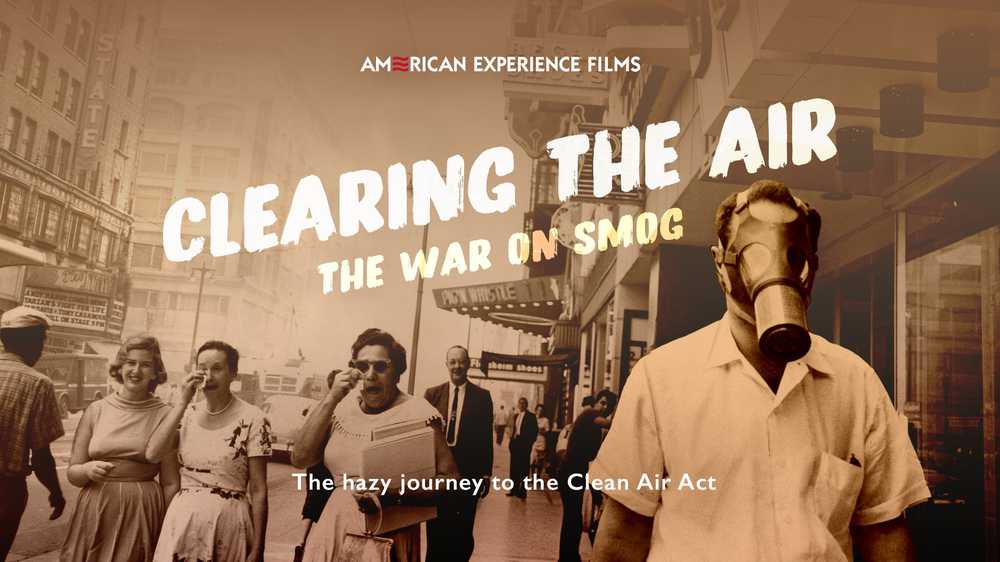
Narrator: In his domestic policy, Bush had also done what he thought was right regardless of the political costs, or, his critics charged, the cost to tax payers. Bush had signed legislation to help Americans with disabilities and initiated plans to clean up America's polluted air.
Senator George Mitchell, Senate Majority Leader: During President Reagan's term, we did try to revise and improve on the Clean Air Act, but President Reagan was adamantly opposed to it and we couldn't get any traction. When President Bush took office, he said he wanted clean air legislation. That completely changed the dynamic. The debate changed from "will there be a Clean Air Bill?" to "what will be in the Clean Air Bill?"
Narrator: These programs would be costly. Bush was already committed to solve the savings and loan banking crisis he had inherited from Reagan at a cost of $125 billion. All these commitments exacerbated a growing budget deficit.
Richard Darman, budget director: At that time, revenues were around 19% of gross domestic product and spending was around 23% so there was a gap of 4 or 5%. And it was projected to stay that way for a long time and then start rising as the baby boom generation would retire. And everybody agreed that that would be unsustainable. The argument was, what to do about it.
Narrator: Bush considered breaking his campaign pledge not to raise taxes. This "could mean a one term Presidency," he confided to his diary, "but it's that important for the country."
Richard Darman: He knew there was enormous political risk, and he was prepared to pay the price for what he thought was the right thing to do in the circumstances.
Senator George Mitchell: Dick Darman, a very smart fellow, came to see me several times, and he suggested that we have a high level negotiation, from which he said a tax increase would emerge. I said, "Well, how's it going to emerge?" And he said, "Well, it'll just emerge." And I remember he made a fluttering motion with his hands. Well, we were very suspicious because at about the same time, the President's Chief of Staff, Governor Sununu, said, "Well, if there's any negotiations, in the negotiations the Democrats will propose tax increases and the president will say no." So it was kind of a mixed message.
John Sununu, Chief of Staff: I am not as much of a gentleman as the president is, when it comes to hardball politics. I would have made sure that the country knew that the taxes were Mitchell taxes and Foley taxes, not Bush taxes.
Narrator: At a meeting on June 26, 1990, of top Senate and House leaders from both parties, the Democrats agreed to spending cuts and Republicans agreed to raise taxes.
George H. W. Bush (archival): Read my lips "no new taxes".
Narrator: George Bush began to pay the price of his dramatic campaign promise.
Reporter (archival): Aren't some voters going to feel you broke your promise, Sir?
George H. W. Bush (archival): When the budget negotiators meet tomorrow, they'll begin discussing what this means for he average family -- whether it's higher taxes on gasoline, liquor, inheritance, or on the wealthy. And whether Social Security increases and farm subsidies are cut.
Richard Viguerie, conservative activist: I think he betrayed the Reagan revolution in many ways, by new government programs, greatly increased government spending. But the most visible break with Reagan was the "no new taxes," and it'll be one of his legacies that he will have to carry always, that he-he lied and betrayed, because he didn't raise taxes kicking and screaming. He seemed to be very comfortable doing it.
Nicholas Brady, Treasury Secretary If you thought the problem had to be addressed, and you go back and look at how the economy was at that point in time, and you look at the problems that were out there (savings and loan, Third World debt, and a burgeoning deficit), you say, well, I guess we got to deal with it, the cards as they're dealt.
Narrator After three months of bargaining, the budget negotiators had a deal. The bipartisan team was ready to announce it. Everyone, including the Republican whip Newt Gingrich, a movement conservative, seemed to be on board.
John Sununu: I had contacted Gingrich to make sure he was comfortable. He said he wasn't thrilled with it but he would support it. We had touched base with everybody that was part of the team, and gotten their agreement that even though they weren't thrilled with it, they would support it.
Narrator: As he had for the Persian Gulf crisis, Bush forged a coalition, this one a bipartisan team of quarreling politicians.
George H. W. (archival): The bipartisan leaders and I have reached agreement on the Federal Budget. Over five years, it would reduce the projected deficit by $500 billion; that is half a trillion dollars.
Narrator: One key player on the team never made it to the Rose Garden. Newt Gingrich had bolted.
Newt Gingrich (archival): I have to look at this as an independent member of Congress, as an independent member of the Republican leadership, and I have to say as an independent person, is this something I can go home in good conscience and say, "This is the best we could do for the next five years, and I can defend it"? My personal belief is no.
Narration: Bush was holding his international coalition together. He failed to hold his own party together. When Democratic Senator Richard Russell failed to support Lyndon Johnson on the Vietnam War in 1963, LBJ faced him down.
Richard Norton Smith: Lyndon Johnson in that situation would have said, "Do what I want or I'll cut off your balls." It's hard to imagine George Bush threatening anyone. And it is in some ways a sad commentary on the office of the presidency itself, that that is deemed a weakness, a shortcoming.
Narrator: When Bush realized his budget agreement was going nowhere, he appealed to the American people.
George H. W. Bush (archival): I ask you to take this initiative: Tell your Congressmen and Senators you support this deficit reduction agreement.
Newt Gingrich (archival): In my district as of a few minutes ago, we had 775 phone calls today, 83 percent against the agreement. And a group of eight economists, seven of whom served in the Reagan administration, came out and said this particular agreement would not be good for the American economy.
Narrator: Newt Gingrich may well have advanced Reagan's cause. George Bush may well have saved Reagan's reputation.
Timothy Naftali: Had Bush not cleaned up the savings and loan mess, had he not cleaned up the budget problem by breaking his "no new taxes" pledge and raising taxes, Ronald Reagan would be associated with an economic collapse in the United States. Instead, because George Bush was willing to give Americans strong medicine, Bush gave Reagan a different legacy.
Narrator: Only two days after the president's appeal, the House voted the budget agreement down. Sixty percent of House Republicans followed Gingrich in what one reporter called a "collective nervous breakdown" in the GOP. Gingrich's revolt launched him on a path to become Speaker of the House. It also gave the majority Democrats their way on the budget bill. Bush was forced to sign a bill that raised not the gasoline tax he and Republicans had favored but an income tax on the rich.
Senator George Mitchell: What we were trying to do was to pass a budget that was good for the country, that didn't involve us taking the political rap for the difficult part of it. And in that sense, we were able to accomplish that.
Richard Norton Smith: George Bush said what he had to say to win the 1988 election, and consequently paid an enormous price. So how do you weigh, in the scales of history, his performance? The fact that in a rather craven way, he did what his political advisors said was necessary to win; or, once he had won, he in effect put his presidency at risk by doing what his conscience and his calculations told him was necessary. There's the Faustian bargain of George Bush's presidency.