Visit Your Local PBS Station PBS Home PBS Home Programs A-Z TV Schedules Watch Video Support PBS Shop PBS Search PBS
 
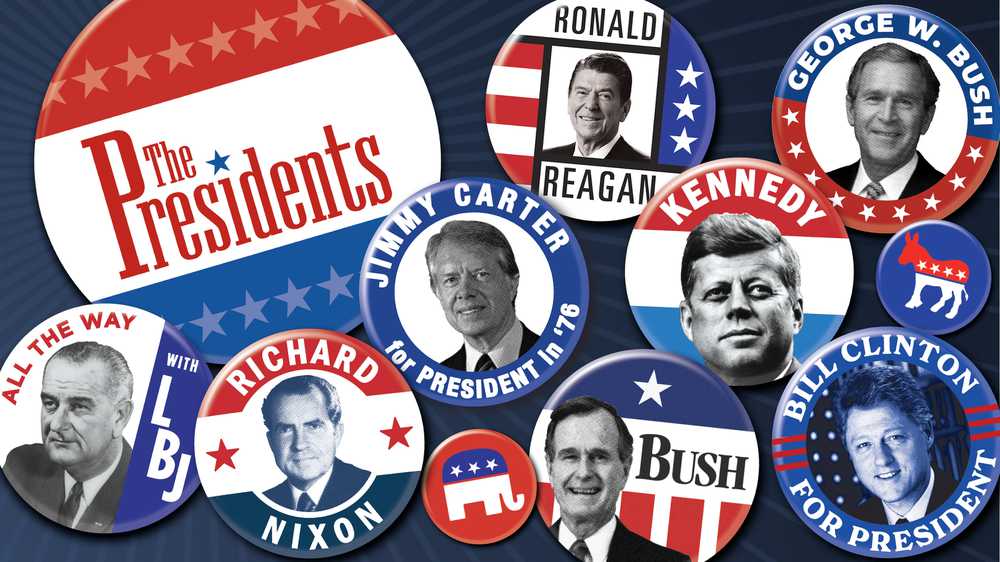
The Presidents Connect today's election issues with the past


Chapter:

Desert Storm (9:08)
The U.S. and coalition forces go to war in the Persian Gulf, expelling Iraq from Kuwait in just three days. They stop short of invading Iraq.
FDR
Truman
LBJ
Nixon
Carter
Reagan

Now
Playing

G H W Bush

Related Clips


TRUMAN, Chapter 15

Hiroshima and Nagasaki (7:32)
The U.S. drops atomic bombs on two Japanese cities. The Japanese surrender and World War II ends.
Watch Now

FDR, Chapter 25

Coming to an End (10:48)
Lonely and unwell, Roosevelt seeks out an old flame. After his reelection, he meets Stalin and Churchill at Yalta to discuss the postwar world.
Watch Now

TRUMAN, Chapter 29

Under Pressure (6:22)
Truman persists with a "limited war." Pressure on him grows intense as casualties mount and U.S. troops are repelled by Chinese forces.
Watch Now

LBJ, Chapter 23

No Surrender (6:22)
The war in Vietnam looks unwinnable. Johnson's advisors counsel him to improve the public's view of the war. ,
Watch Now

Chapter 1

Introduction (4:03)
Part one of a biography of George H.W. Bush, the 41st president.
Watch Now

Chapter 2

Combat Pilot (9:26)
Born into wealth, Bush volunteers as a combat pilot in World War II. He marries Barbara Pierce in 1945.
Watch Now

Chapter 3

West Texas (6:44)
Bush attends Yale, starts a family, and rejects a Wall Street career to become an oil wildcatter. The Bushes lose a young daughter to leukemia.
Watch Now

Chapter 4

A New Republican Party (9:25)
Financially secure, Bush enters Texas politics. To build the Republican Party, he welcomes ideological radicals and segregationists.
Watch Now

Chapter 5

Goldwater Republican (11:29)
Bush positions himself to the right and wins election to Congress in 1966. He votes for fair housing, outraging his most conservative constituents.
Watch Now

Chapter 6

The Personal Touch (9:25)
After a failed Senate bid, Bush is appointed Ambassador to the United Nations. He cultivates friendships with U.S. allies and opponents alike.
Watch Now

Chapter 7

Keeping the Republican Faith (6:29)
President Richard Nixon recruits Bush to lead the Republican National Committee, just as the Watergate scandal is about to break.
Watch Now

Chapter 8

A Race Horse Under Wraps (11:18)
Bush serves as ambassador to China, then CIA director. In the 1980 election, he becomes Ronald Reagan's running mate.
Watch Now

Chapter 9

Vice President (9:17)
Loyal to Reagan, Bush weathers the Iran-Contra affair and launches a second bid for president in 1988, trying to emerge from Reagan's shadow.
Watch Now

Chapter 10

The 1988 CampaignBush runs a vigorous -- some say negative -- race against Michael Dukakis and wins. He pledges to continue Reagan's conservative policies.
Watch Now

Chapter 11

A Kindler, Gentler Leader (8:15)
Bush distances himself from Reagan's legacy. He tackles a savings and loan bailout and the end of Communism in Eastern Europe.
Watch Now

Chapter 12

A New World Order (13:30)
Bush convinces Soviet leader Mikhail Gorbachev to allow reunified Germany to join the NATO alliance. Iraqi dictator Saddam Hussein invades Kuwait, provoking a crisis.
Watch Now

Chapter 13

CreditsProduction credits for part one of the television program.
Watch Now

Chapter 14

Introduction (2:47)
Part two of a biography of George H.W. Bush, the 41st president.
Watch Now

Chapter 15

Aggression Will Not Stand (7:28)
After Iraq invades oil-rich Kuwait, Bush launches Operation Desert Shield to protect Saudi Arabia, and reaches out to foreign leaders for their support.
Watch Now

Chapter 16

Challenging Totalitarianism (8:17)
During the Iraq crisis, Bush vacations at his family's home in Maine. He leads the U.S. toward a war that some fear could become World War III.
Watch Now

Chapter 17

The Tax Increase (9:23)
Bush supports two major domestic initiatives. Faced with budget troubles, he abandons Reagan's economic legacy and proposes raising taxes.
Watch Now

Chapter 18

Desert Storm (9:08)
The U.S. and coalition forces go to war in the Persian Gulf, expelling Iraq from Kuwait in just three days. They stop short of invading Iraq.
Watch Now

Chapter 19

The Perfect Storm (13:01)
Beset by critics, questions about Iraq, and a sluggish economy, Bush loses his high approval rating.
Watch Now

Chapter 20

Not Conservative Enough (9:27)
Bush runs for a second term. Challengers Pat Buchanan and Texas billionaire Ross Perot, running as an independent, reveal a split among Republicans.
Watch Now

Chapter 21

It's the Economy (10:54)
Bush, perceived as out of touch, loses the election to Democrat Bill Clinton. Conservative third party candidate Ross Perot takes 19 percent of the vote.
Watch Now

Chapter 22

Ceiling and Visibility Unlimited (7:00)
In his post-presidency, Bush sees two sons elected as governors, then one, George W. Bush, elected president. As history considers his legacy, he finds peace.
Watch Now

Chapter 23

CreditsProduction credits for part two of the television program.
Watch Now

  • GHW_BUSH: Chapter 1
  • GHW_BUSH: Chapter 2
  • GHW_BUSH: Chapter 3
  • GHW_BUSH: Chapter 4
  • GHW_BUSH: Chapter 5
  • GHW_BUSH: Chapter 6
  • GHW_BUSH: Chapter 7
  • GHW_BUSH: Chapter 8
  • GHW_BUSH: Chapter 9
  • GHW_BUSH: Chapter 10
  • GHW_BUSH: Chapter 11
  • GHW_BUSH: Chapter 12
  • GHW_BUSH: Chapter 13
  • GHW_BUSH: Chapter 14
  • GHW_BUSH: Chapter 15
  • GHW_BUSH: Chapter 16
  • GHW_BUSH: Chapter 17
  • GHW_BUSH: Chapter 18
  • GHW_BUSH: Chapter 19
  • GHW_BUSH: Chapter 20
  • GHW_BUSH: Chapter 21
  • GHW_BUSH: Chapter 22
  • GHW_BUSH: Chapter 23
Choose a format

Choose a Video Format

Quicktime | Windows Media

Download a free player
QuickTime | Windows Media

Related Links


GHW_BUSH
Learn more about George H. W. Bush.

The Purpose of the United Nations
President Truman explains the need to combat aggression.

The Purpose of the United Nations
President Truman explains the need to combat aggression.

The Persian Gulf War
Read more about the conflict.

The Persian Gulf War
Read more about the conflict.

Purchase Videos & DVDs

• See Comments

Loading comments...

You must log in to submit a comment. If you don't have an account at American Experience, you will need to register to comment. It's fast and easy to do!

Post a Comment (Limit 5000 Characters)

• View Transcripts •


Transcript: Chapter 18

Narrator: Congress cut a deal with Bush on the deficit but still balked on the use of force in Iraq. It would be easier to get Congressional support, Bush concluded, if the United Nations were on his side. On Nov. 29, Secretary Baker made his case for the use of "all necessary means" to evict Iraq from Kuwait if it did not withdraw by January 15, 1991.

James A. Baker, III (archival): The result of the voting is as follows. Twelve votes in favor. Two votes against. One abstention. The draft resolution has been adopted as Resolution 678-1990.

James A. Baker, III: That UN vote was very important. But if you ask me whether we would have done it without the vote, we probably would have, because we felt we had the constitutional authority and power to do so. But it was really important to try and get the rest of the world behind us.

Narrator: After the UN backed the use of force, Secretary Baker made his case to a reluctant Congress.

Senator Paul Sarbanes (archival): It seems to me that you have placed us on a course to war. Now this buildup now of the force almost takes you irresistibly down the path of going to war.

James A. Baker, III (archival): Politically, Mr. Chairman, we must stand for American leadership, not because we seek it but simply because no one else can do the job. And we did not stand united for forty years to bring the Cold War to a peaceful end in order to make the world safe for the likes of Saddam Hussein.

Narrator: Congress was still resisting when Secretary Baker met with Iraq's foreign minister in a final attempt at diplomacy.

James A. Baker, III (archival): Ladies and gentlemen, in over six hours, I heard nothing that suggested to me any Iraqi flexibility whatsoever on complying with the United Nations Security Council resolutions.

Narrator: Only then, on January 12, 1991 did Congress narrowly approve the use of force to evict Saddam Hussein from Kuwait.

James A. Baker, III: And how did we finally win a vote in the House and the Senate when we were a Republican administration with a Democratic Congress? We won a vote because we went out and we got the rest of the world to support us. So we could go to a Senator and we could say, "Senator, you mean you're not going to support the President of the United States but the president of Ethiopia is going to support him?" And it was very, very effective.

Doro Bush Koch: It was a snowy weekend at Camp David. A lot of the kids were there and the idea was for Dad's friends to sort of take his mind off a little bit of what was going on, but of course his mind was on it every minute.

Willard "Spike" Heminway, friend: Barbara called up and said "the President needs some comic relief," if you want to put it that way. "Come on up to Camp David." He said, "Spike, let's take a walk around the perimeter. I've got to get out and get some air," and we started to walk around, and then he looked over at one of the military police over there who guard Camp David, and he had tears in his eyes, and he said, "Spike, those are the kids I've got to send to war, and I don't want to do it, but I have to do it."

Narrator: That weekend President Bush called Congressional leaders to thank those who voted for the war for their votes, to thank those who voted against it for their consideration.

George H. W. Bush (archival): Just 2 hours ago Allied air forces began an attack on military targets in Iraq and Kuwait.

Narrator: At 9pm on January 16, 1991, President Bush announced the start of the Gulf War.

George H. W. Bush (archival): These attacks continue as I speak. Ground forces are not engaged. Five months ago Saddam Hussein started this cruel war against Kuwait. Tonight, the battle has been joined.

Narrator: For 38 days the U.S. Air Force led the battle, now called Desert Storm. Then the coalition launched a ground assault. Coalition forces quickly evicted the Iraqi army from Kuwait. They crushed forty-six Iraqi divisions. Much of the elite Republican guard escaped back to Baghdad. Others were caught on what became known as the "Highway of Death." Bush chose to stop the slaughter. He ended the war after four days. The ground offensive became known as the 100-hour war.

Despite warnings of a blood bath, the death toll among Americans would number 303, with fewer than 500 wounded. Yet Saddam Hussein remained in power.

James A. Baker, III: Well, the war was stopped because all the President's political and military advisors told him that he had achieved the war aims that were laid out. We had achieved what the UN Security Council resolution asked us to do and authorized us to do, that is, kick Iraq out of Kuwait. And every one of the President's advisors advised him that it was time to end it.

Brent Scowcroft: We did not know what would happen if we went on into Baghdad. It would have been simple to do. But we would have been occupiers in a hostile land. Our troops would have been sniped at and so on. And we had no exit plan. How do you get out once you've occupied the country?

Colin Powell: Another consideration that we took into account, as a military matter, is we did not want to totally destroy the Iraqi army. And you can guess why: Iran. We did not want Iraq laying prostrate before Iran. And so it was always our intention to leave Saddam Hussein with enough of an army that it would not be a threat to his neighbors anymore, but it would not leave him totally vulnerable to Iranian misadventure, keeping in mind that that Iraq-Iran War had only ended three years earlier.

Brent Scowcroft: We were trying to set a pattern for behavior in the post-Cold War world. We were operating under a UN mandate. If we said, "Okay, we've fulfilled the mandate but now we want to go on and do some more," that's a bad precedent to set for people relying on the United States to do what the UN mandates and not further.

George H. W. Bush (archival): For the sake of our principles, for the sake of the Kuwaiti people. We stood our ground. Because the world would not look the other way. Ambassador al-Sabah, tonight Kuwait is free.

Narrator: This was the high point of the Bush presidency. His approval ratings were at 89%, at the time, the highest in the history of presidential polling.

Morgan Freeman (archival): Mr. President, you set down ideals and standards that because they were carried on...

Narrator: A few days later Bush attended a tribute to President Lincoln at the Ford Theater where he was shot.

Morgan Freeman (archival): If they could stand where I stand where I stand now, their message would be overwhelmingly simple, Thank you Mr. President. And thank you, Mr. President.


Major funding provided by the National
Endowment for the Humanities and the Corporation for Public Broadcasting

NEH Corporation for Public Broadcasting


Any views, findings, conclusions, or recommendations expressed in this Web site do not necessarily represent those of the National Endowment for the Humanities.