Visit Your Local PBS Station PBS Home PBS Home Programs A-Z TV Schedules Watch Video Support PBS Shop PBS Search PBS
 
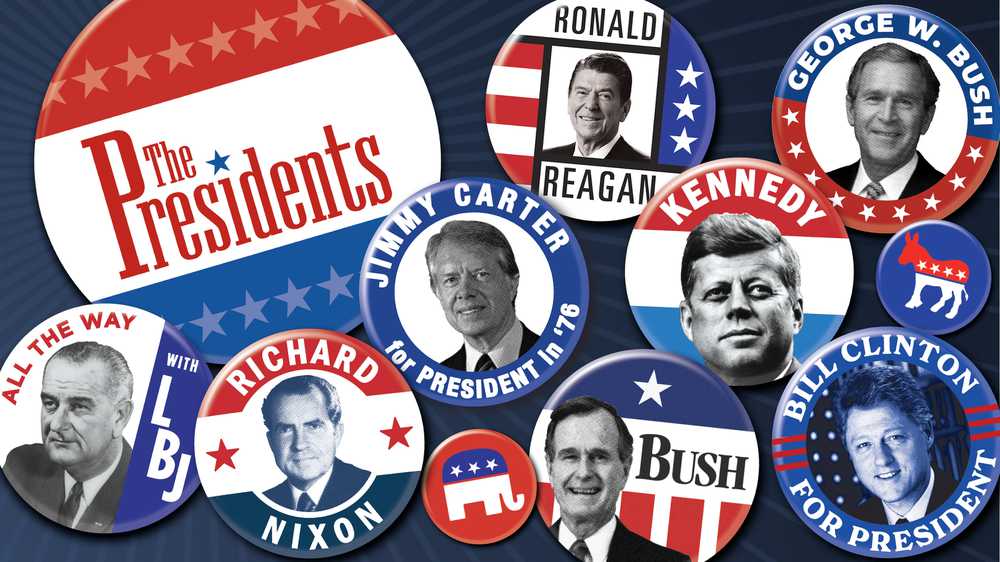
The Presidents Connect today's election issues with the past


Chapter:

The Senate Campaign of 1948 (12:30)
Johnson runs a flamboyant campaign in a tough race. He wins the seat, dogged by rumors of fraud.
FDR
Truman

Now
Playing

LBJ
Nixon
Carter
Reagan
G H W Bush

Related Clips


NIXON, Chapter 5

The Pink Lady (3:52)
Implying that his opponent Helen Gahagan Douglas is a Communist, Nixon wins a seat in the Senate in 1950.
Watch Now

REAGAN, Chapter 4

Communists in Hollywood (9:43)
Reagan, an active anti-Communist, ends his first marriage. He meets and marries actress Nancy Davis.
Watch Now

TRUMAN, Chapter 24

The Conventions (6:41)
Despite Democrats' misgivings, President Truman is nominated at a dispirited Democratic Convention.
Watch Now

Chapter 1

Introduction (4:35)
Part one of a biography of Lyndon B. Johnson, the 36th president.
Watch Now

Chapter 2

A Politician from Birth (7:57)
Johnson grows up in poor, rural Texas hill country. Campaigning on a New Deal platform, he wins a seat in the U.S. House of Representatives.
Watch Now

Chapter 3

In Washington (11:11)
Johnson networks in Washington and Texas. He loses a Senate bid and learns hard lessons in the dark side of politics.
Watch Now

Chapter 4

The Senate Campaign of 1948 (12:30)
Johnson runs a flamboyant campaign in a tough race. He wins the seat, dogged by rumors of fraud.
Watch Now

Chapter 5

In the Senate (9:00)
Johnson becomes a power broker, developing a bargaining style known as "the Johnson treatment."
Watch Now

Chapter 6

The Civil Rights Act of 1957 (6:47)
Setting the stage for a presidential run, Johnson builds consensus to protect African Americans' voting rights.
Watch Now

Chapter 7

Johnson Becomes Vice President (9:09)
Johnson loses the 1960 Democratic nomination but is named Senator John Kennedy's running mate. He becomes president in 1963 after Kennedy is shot.
Watch Now

Chapter 8

Johnson and the Kennedy Administration (5:16)
President Johnson determines to fulfill Kennedy's programs.
Watch Now

Chapter 9

The Civil Rights Act of 1964 (10:49)
Johnson waits out the longest Senate filibuster in history to achieve the bill that makes racial segregation illegal.
Watch Now

Chapter 10

Prelude to War (6:48)
Following Robert McNamara's advice, Johnson okays covert commando attacks against North Vietnam to stop Communism.
Watch Now

Chapter 11

The Great Society (9:01)
Reaching back to his populist roots, Johnson declares war on poverty.
Watch Now

Chapter 12

Gulf of Tonkin (9:11)
Johnson claims that North Vietnam has attacked a U.S. destroyer. He uses the incident as the basis for expanding the war against North Vietnam.
Watch Now

Chapter 13

Landslide Victory (9:42)
Johnson defeats Barry Goldwater, winning the presidency by an unprecedented majority.
Watch Now

Chapter 14

Credits (3:00)
Production credits for part one of the television program.
Watch Now

Chapter 15

Introduction (3:40)
Part two of a biography of Lyndon B. Johnson, the 36th president.
Watch Now

Chapter 16

Johnson's "Real Presidency" (8:44)
Johnson pushes his Great Society agenda in a legislative avalanche. Advisors — the "best and the brightest" — counsel him to escalate the war in Vietnam.
Watch Now

Chapter 17

Negotiations (7:10)
The consummate political bargainer hopes to broker a deal with North Vietnamese leader Ho Chi Minh.
Watch Now

Chapter 18

Voting Rights for African Americans (10:41)
Civil rights protesters force Johnson's hand on voting rights for African Americans. Their cause is helped by national media coverage of brutal police attacks.
Watch Now

Chapter 19

The Decision to Expand the War (12:25)
Although defending South Vietnam now appears it will require many years and sacrificed American lives, Johnson decides to expand the war.
Watch Now

Chapter 20

Black Power (10:15)
Johnson's social aid programs bring about positive change, but some see his efforts as too little, too late. Urban riots erupt across the nation.
Watch Now

Chapter 21

Questioning the War (9:05)
As Americans watch the Vietnam War in their living rooms, support for it wavers.
Watch Now

Chapter 22

A Miasma of Trouble (15:14)
Johnson struggles to keep his dream of the Great Society alive while the country spins out of control.
Watch Now

Chapter 23

No Surrender (6:22)
The war in Vietnam looks unwinnable. Johnson's advisors counsel him to improve the public's view of the war. ,
Watch Now

Chapter 24

The Tet Offensive (10:11)
The North Vietnamese bombing of South Vietnam over the Tet holiday becomes a turning point in the war.
Watch Now

Chapter 25

A Continuous Nightmare (12:04)
Johnson decides not to run for re-election. His legislation has carried New Deal liberalism to its peak, but the war in Vietnam has defeated him.
Watch Now

Chapter 26

The Post Presidency (5:38)
Depressed, Johnson retires to his Texas ranch. He suffers a fatal heart attack just days before peace talks end the Vietnam War.
Watch Now

Chapter 27

Credits (3:01)
Production credits for part two of the television program.
Watch Now

  • LBJ: Chapter 1
  • LBJ: Chapter 2
  • LBJ: Chapter 3
  • LBJ: Chapter 4
  • LBJ: Chapter 5
  • LBJ: Chapter 6
  • LBJ: Chapter 7
  • LBJ: Chapter 8
  • LBJ: Chapter 9
  • LBJ: Chapter 10
  • LBJ: Chapter 11
  • LBJ: Chapter 12
  • LBJ: Chapter 13
  • LBJ: Chapter 14
  • LBJ: Chapter 15
  • LBJ: Chapter 16
  • LBJ: Chapter 17
  • LBJ: Chapter 18
  • LBJ: Chapter 19
  • LBJ: Chapter 20
  • LBJ: Chapter 21
  • LBJ: Chapter 22
  • LBJ: Chapter 23
  • LBJ: Chapter 24
  • LBJ: Chapter 25
  • LBJ: Chapter 26
  • LBJ: Chapter 27
Choose a format

Choose a Video Format

Quicktime | Windows Media

Download a free player
QuickTime | Windows Media

Related Links


LBJ
Learn more about Lyndon B. Johnson.

The Start of the Cold War
Communism and capitalism face off.

Race for the Superbomb
The superpowers build the world's most powerful weapon.

Purchase Videos & DVDs

• See Comments

Loading comments...

You must log in to submit a comment. If you don't have an account at American Experience, you will need to register to comment. It's fast and easy to do!

Post a Comment (Limit 5000 Characters)

• View Transcripts •


Transcript: Chapter 04

Narrator: Johnson was not prepared for defeat and he was never more miserable. "I felt terribly rejected and I began to think about leaving politics and going home to make money," he said, but he couldn't bring himself to quit. He bought a house and established the basis for his own personal fortune. Lady Bird bought a small Austin radio station. After nearly 10 years of marriage, their first daughter was born. Three years later, they would have another girl.

But politically, Johnson languished. The House of Representatives was too small a stage. Along with Southern congressmen, he voted against civil rights and told his liberal friends, "You can't be a statesman if you don't get elected." Finally, after seven restless years, Johnson seized a chance to run for the Senate. It would be a campaign that would haunt him for the rest of his political life.

Mrs. Johnson: And this time, his opponent was Coke Stevenson, also a governor and a very formidable man.

Narrator: Coke Stevenson was a self-made man, tight-fisted with the budget and immensely popular. His most ardent admirers called him "Mr. Texas."

John Connally: Well, the polls clearly showed that Coke Stevenson, starting out, had almost a 2-1 lead over Johnson. It was an almost insurmountable lead and most people thought that Johnson couldn't win it.

Homer Dean: He told us and John Connally told us and anybody that had been to a county fair and a goat-roping and knew anything about Texas politics knew that this was make-or-break for Lyndon Johnson.

Robert Dallek: By 1948, Johnson had become a master at Texas politics. They'd run these shows, these extravaganzas in these small towns and the band and the music and maybe giving a savings bond or a barbecue, beer and some kind of watermelons or something like that. Well, this was all part of traditional Texas hoopla and Johnson didn't miss a beat there. He understood that was an essential part of it.

Narrator: Meanwhile, Coke Stevenson was so popular and so well known that he campaigned from small town to small town the old-fashioned way, but not Lyndon Johnson. In a headlong, five-week helicopter campaign, Johnson crisscrossed the state, made 370 landings and lost 27 pounds. In one day alone, he spoke to 15,000 people.

Rep. James Pickle: And I'll tell you, if you'd go into a little town and say, "Lyndon Johnson's coming to town and he'll be here at 2 o'clock and he'll land on his helicopter," everybody in town would want to see that. They'd kind of laugh about it, but they didn't want to miss it.

Narrator: They called him the "Johnson City Windmill." Texans never saw anything like it.

Rep. James Pickle: But it was dramatic. Can you imagine, a little small town that never had a helicopter come or never seen one much? No television in those days, you see. They'd fly in over a little town and circle a couple of times and he'd get on the P.A. system and say, "This is Lyndon Johnson. I'm going to land in just a minute and I want to shake every hand down there." People looked up there and they'd kind of laugh and giggle, but their mouth would be open and they'd say, "Is this really happening? Yeah."

Ava Cox, LBJ's Cousin: He would say, "This is Lyndon Johnson, your congressman. How do you think things are running? All right, Ed, what about the crop out there? Do you have a good crop this year?" And he'd come over here and he'd call one's name. "Well, all right, Sid Hyde, how's the cattle business doing today?" "Olin, how's the car business coming on?" Little Olin jumped and looked around. He wasn't expecting that to be called out.

Rep. James Pickle: When he'd land, he'd bank the helicopter over and he'd circle around over the field and throw his Stetson hat out over the crowd. Now, that was dramatic and he had about a four-beaver hat, you know. That was a good one. And when he did it, those of us on the ground who were part of the crew, our job was to go get that hat. We had to reclaim that hat and if we didn't get it, we'd catch "Hail, Columbia" from the boss then.

And he'd say, "Do you know how much that hat cost me? Do you know how much? Have you been in to buy a Stetson hat lately?" We'd say no, of course, we wouldn't 'cause we didn't dare wear a hat like it. He said, "That's coming out of my pocket. You get that hat when we throw it out," and we'd have to go get that hat.

Usually we could get it, but if you got it recovered by a little 10-year-old boy, it was pretty hard to run up and say, "Son, give me that hat," and take it away from him. So it wasn't always pleasant.

Narrator: Johnson had begun his political life as a Franklin Roosevelt liberal, but in 1948, he ran against the unions, supported big business and spoke out strongly against civil rights. The oil boom had made Texas wealthy and conservative and as Texas changed, so had Lyndon Johnson.

Ronnie Dugger: Well, you had an authentic conservative -- Stevenson -- running against a New Deal liberal -- Johnson -- who has concealed his colors. Lyndon presented himself as more anti-union than Coke Stevenson. Now, what kind of sense does that make to you in terms of who Lyndon really was? None. There's no sense to it except, of course, the absolutely unqualified opportunism of a successful politician of this particular mold. He out-righted the most conservative figure in Texas politics at that time.

Robert Dallek: Some people have tended to idealize Coke Stevenson and see him as a kind of old-fashioned Texas cowboy and man of great integrity. In fact, Coke Stevenson was a terribly reactionary man. First of all, on civil rights, in 1942, a black Texan was lynched in Texarkana and Stevenson gave very little public response against this. And when he was asked privately about it, his comment was -- "You know," he said, "these Negroes sometimes do things which provoke whites to such violence."

And when the 1944 Supreme Court decision was handed down, asserting that blacks had the right to vote in Democratic primaries, Stevenson called it "a threat to our security and safety." He was fiercely anti-civil rights and a racist and a segregationist of the first order.

Narrator: The race was so close there was no way to call it. The lead seesawed back and forth.

John Connally: I said, "I think you're going to win it." He said, "No, I think we've lost it." And I said, "No, it's going to be the reversal of 1941."

Narrator: Three days after the polls closed, the votes were still coming in and Stevenson led by a handful. It looked as if Stevenson would be the new senator from Texas. But Johnson remembered 1941. He was not about to lose again. The election now hinged on the "Duke of Duval County," George Parr, the man who controlled the votes in South Texas.

John Connally: George Parr controlled that county and those people voted the way he wanted them to vote, no question about that, none whatever. Now, the candidates had nothing to do with it.

Lewis Gould: In the nature of things, you don't write down, "Bought these votes yesterday afternoon at 4 o'clock," but obviously, there was some understanding between the Johnson people and the political bosses in South Texas.

Robert Dallek: Earlier, when Coke Stevenson ran for governor, he had also been the recipient of the favor of the bosses because he had paid them. In one of his races, George Parr, the "Duke of Duval County," had given Stevenson a vote of 3,310 to 17. Is it conceivable that such a lopsided margin would have been given to any candidate for any office?

Narrator: In the tiny South Texas town of Alice six days after the polls had closed, 202 additional votes were reported from Precinct Box 13. When they were counted, all but two were for Lyndon Johnson. When the signatures of the 202 new voters were examined, some say the names were all written in the same ink and listed in alphabetical order.

Homer Dean: I did not notice that they were in alphabetical order, although some of the people who saw it testified later that that had happened.

Narrator: Homer Dean was a 29-year-old attorney working in the Johnson campaign when Coke Stevenson arrived in Alice and demanded to see the voting list locked in the vault of the Texas State Bank. Dean is one of the few people who actually saw the disputed names.

Homer Dean: Well, it did look to me like there had been a change in ink and it looked like 200 or 202 or 203 names had been added to the poll list in a different ink by a different hand. Mr. Stevenson was an outraged man that felt like the election had been stolen from him and he felt like what he'd just seen was evidence of that.

Narrator: Stevenson challenged the election at the Texas State Democratic Convention. It was no use. The Johnson forces were too powerful. When it was all over Precinct Box Number 13 made the difference. Johnson won by 87 votes, but the question of a stolen election remained.

Ronnie Dugger: You cannot make the statement, on the facts, that Johnson stole the election. I think you can say it was stolen for him -- that's true -- but did he order it done? I never could find a John Connally down there doing it.

John Connally: I wasn't within 200 miles of him. I was in Austin, Texas a battery of telephones, calling all over the State of Texas. I didn't know anything about it and that's the truth of the matter.

Ronnie Dugger: If Homer Dean knew it was stolen, you don't find Homer Dean saying he stole it.

Homer Dean: I didn't then and don't now think that Johnson directly participated in it. He received the benefit of it, but I don't think he directed it or even knew about it when it was happening.

Ronnie Dugger: You see, it just gets away from you.

Narrator: Nineteen years later, Ronnie Dugger met in the White House with President Lyndon Johnson and asked him about the election of 1948.

Ronnie Dugger: One night, up in his bedroom, he started laughing and he seemed to wonder if he could find something and he said he was going back into Bird's bedroom, which was next door. And he rummaged around in a closet. I think I could hear him rummaging around in the closet. And he came in with this photograph of these five guys in front of this old car with Box 13 balanced on the hood of it.

I looked at him and grinned and he grinned back, but he wouldn't explain it to me. I asked him, well, who were these guys and why did they have Box 13 on the hood of this car? What did it mean? And he just -- nothing. He wouldn't say. As we'd say in Texas, he wouldn't say nothing.' So there it is -- history turning on a mystery.

Narrator: It was 1949 and Texas had a new freshman senator. They called him "Landslide Lyndon."

Lewis Gould: It cast a shadow of illegitimacy over the rest of his political career that he never escaped. -- the idea of "Landslide Lyndon," 87 votes, that there were skeletons in his closet, that he was a wheeler-dealer, that there was always something kind of flawed about his title both to being senator and to being president.


Major funding provided by the National
Endowment for the Humanities and the Corporation for Public Broadcasting

NEH Corporation for Public Broadcasting


Any views, findings, conclusions, or recommendations expressed in this Web site do not necessarily represent those of the National Endowment for the Humanities.