Visit Your Local PBS Station PBS Home PBS Home Programs A-Z TV Schedules Watch Video Support PBS Shop PBS Search PBS
 
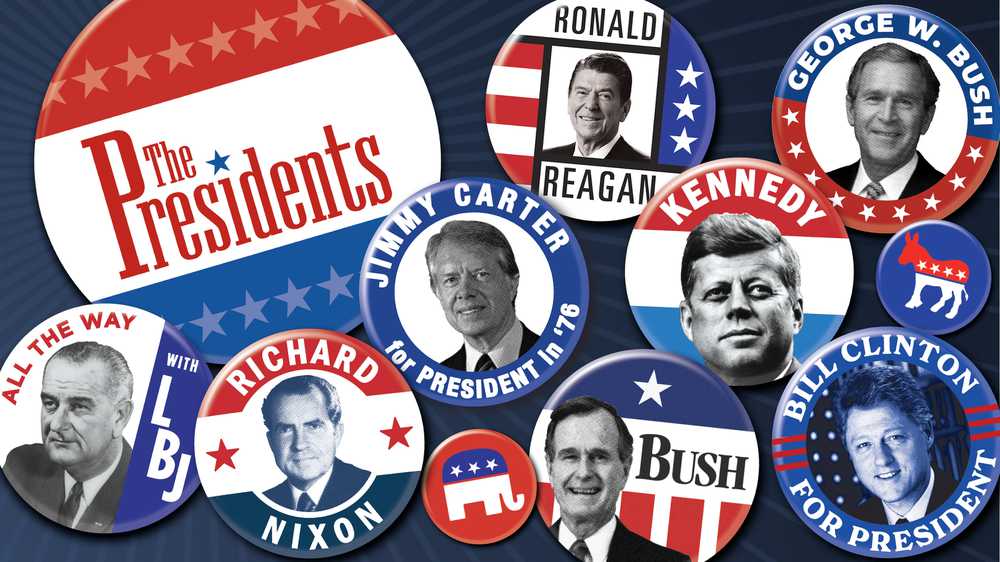
The Presidents Connect today's election issues with the past


Chapter:

The Great Society (9:01)
Reaching back to his populist roots, Johnson declares war on poverty.
FDR
Truman

Now
Playing

LBJ
Nixon
Carter
Reagan
G H W Bush

Related Clips


FDR, Chapter 16

Above All, Try Something (13:43)
Roosevelt uses experimental Federal policies to try to end the Depression. Eleanor advocates for the needy, redefining the role of First Lady.
Watch Now

TRUMAN, Chapter 19

The Post War Economy (10:59)
Truman faces domestic challenges. He takes a tough stance against striking railroad workers.
Watch Now

LBJ, Chapter 2

A Politician from Birth (7:57)
Johnson grows up in poor, rural Texas hill country. Campaigning on a New Deal platform, he wins a seat in the U.S. House of Representatives.
Watch Now

REAGAN, Chapter 10

A Plan for Economic Recovery (10:13)
Reagan works to pass his economic package.
Watch Now

Chapter 1

Introduction (4:35)
Part one of a biography of Lyndon B. Johnson, the 36th president.
Watch Now

Chapter 2

A Politician from Birth (7:57)
Johnson grows up in poor, rural Texas hill country. Campaigning on a New Deal platform, he wins a seat in the U.S. House of Representatives.
Watch Now

Chapter 3

In Washington (11:11)
Johnson networks in Washington and Texas. He loses a Senate bid and learns hard lessons in the dark side of politics.
Watch Now

Chapter 4

The Senate Campaign of 1948 (12:30)
Johnson runs a flamboyant campaign in a tough race. He wins the seat, dogged by rumors of fraud.
Watch Now

Chapter 5

In the Senate (9:00)
Johnson becomes a power broker, developing a bargaining style known as "the Johnson treatment."
Watch Now

Chapter 6

The Civil Rights Act of 1957 (6:47)
Setting the stage for a presidential run, Johnson builds consensus to protect African Americans' voting rights.
Watch Now

Chapter 7

Johnson Becomes Vice President (9:09)
Johnson loses the 1960 Democratic nomination but is named Senator John Kennedy's running mate. He becomes president in 1963 after Kennedy is shot.
Watch Now

Chapter 8

Johnson and the Kennedy Administration (5:16)
President Johnson determines to fulfill Kennedy's programs.
Watch Now

Chapter 9

The Civil Rights Act of 1964 (10:49)
Johnson waits out the longest Senate filibuster in history to achieve the bill that makes racial segregation illegal.
Watch Now

Chapter 10

Prelude to War (6:48)
Following Robert McNamara's advice, Johnson okays covert commando attacks against North Vietnam to stop Communism.
Watch Now

Chapter 11

The Great Society (9:01)
Reaching back to his populist roots, Johnson declares war on poverty.
Watch Now

Chapter 12

Gulf of Tonkin (9:11)
Johnson claims that North Vietnam has attacked a U.S. destroyer. He uses the incident as the basis for expanding the war against North Vietnam.
Watch Now

Chapter 13

Landslide Victory (9:42)
Johnson defeats Barry Goldwater, winning the presidency by an unprecedented majority.
Watch Now

Chapter 14

Credits (3:00)
Production credits for part one of the television program.
Watch Now

Chapter 15

Introduction (3:40)
Part two of a biography of Lyndon B. Johnson, the 36th president.
Watch Now

Chapter 16

Johnson's "Real Presidency" (8:44)
Johnson pushes his Great Society agenda in a legislative avalanche. Advisors — the "best and the brightest" — counsel him to escalate the war in Vietnam.
Watch Now

Chapter 17

Negotiations (7:10)
The consummate political bargainer hopes to broker a deal with North Vietnamese leader Ho Chi Minh.
Watch Now

Chapter 18

Voting Rights for African Americans (10:41)
Civil rights protesters force Johnson's hand on voting rights for African Americans. Their cause is helped by national media coverage of brutal police attacks.
Watch Now

Chapter 19

The Decision to Expand the War (12:25)
Although defending South Vietnam now appears it will require many years and sacrificed American lives, Johnson decides to expand the war.
Watch Now

Chapter 20

Black Power (10:15)
Johnson's social aid programs bring about positive change, but some see his efforts as too little, too late. Urban riots erupt across the nation.
Watch Now

Chapter 21

Questioning the War (9:05)
As Americans watch the Vietnam War in their living rooms, support for it wavers.
Watch Now

Chapter 22

A Miasma of Trouble (15:14)
Johnson struggles to keep his dream of the Great Society alive while the country spins out of control.
Watch Now

Chapter 23

No Surrender (6:22)
The war in Vietnam looks unwinnable. Johnson's advisors counsel him to improve the public's view of the war. ,
Watch Now

Chapter 24

The Tet Offensive (10:11)
The North Vietnamese bombing of South Vietnam over the Tet holiday becomes a turning point in the war.
Watch Now

Chapter 25

A Continuous Nightmare (12:04)
Johnson decides not to run for re-election. His legislation has carried New Deal liberalism to its peak, but the war in Vietnam has defeated him.
Watch Now

Chapter 26

The Post Presidency (5:38)
Depressed, Johnson retires to his Texas ranch. He suffers a fatal heart attack just days before peace talks end the Vietnam War.
Watch Now

Chapter 27

Credits (3:01)
Production credits for part two of the television program.
Watch Now

  • LBJ: Chapter 1
  • LBJ: Chapter 2
  • LBJ: Chapter 3
  • LBJ: Chapter 4
  • LBJ: Chapter 5
  • LBJ: Chapter 6
  • LBJ: Chapter 7
  • LBJ: Chapter 8
  • LBJ: Chapter 9
  • LBJ: Chapter 10
  • LBJ: Chapter 11
  • LBJ: Chapter 12
  • LBJ: Chapter 13
  • LBJ: Chapter 14
  • LBJ: Chapter 15
  • LBJ: Chapter 16
  • LBJ: Chapter 17
  • LBJ: Chapter 18
  • LBJ: Chapter 19
  • LBJ: Chapter 20
  • LBJ: Chapter 21
  • LBJ: Chapter 22
  • LBJ: Chapter 23
  • LBJ: Chapter 24
  • LBJ: Chapter 25
  • LBJ: Chapter 26
  • LBJ: Chapter 27
Choose a format

Choose a Video Format

Quicktime | Windows Media

Download a free player
QuickTime | Windows Media

Related Links


LBJ
Learn more about Lyndon B. Johnson.

Poor People's Campaign
A "nonviolent army of the poor" fights poverty.

The Great Society Speech, 1964
Listen to LBJ's vision for a better America.

Purchase Videos & DVDs

• See Comments

Loading comments...

You must log in to submit a comment. If you don't have an account at American Experience, you will need to register to comment. It's fast and easy to do!

Post a Comment (Limit 5000 Characters)

• View Transcripts •


Transcript: Chapter 11

President Johnson: And this Administration today, here and now, declares unconditional war on poverty in America.

Narrator: The war against poverty was the war that Johnson really wanted to fight. In his first State of the Union address, he reached back to the populism of his father and grandfather. He took a Kennedy anti-poverty proposal and made it his own.

President Johnson: It will not be a short or easy struggle, but we shall not rest until that war is won. The richest nation on Earth can afford to win it. We cannot afford to lose it.

Narrator: When Lyndon Johnson became president, 35 million Americans were living below the poverty line in the most affluent country in the world.

S. Douglas Cater: And I said, "But they don't vote. They don't have any organized lobbies. How in the world are you going to get any substantial legislation on poverty? Jack Kennedy couldn't. How are you going to do it?" He leaned back and he said -- and these words are engraved on my memory. He said, "I don't know whether I'll pass a single law or get a single dollar appropriated, but before I'm through, no community in America is going to be able to ignore the poverty in its midst."

Narrator: Johnson now turned to the Director of the Peace Corps, Sargent Shriver.

Sargent Shriver, Peace Corps Director: One Saturday morning, he called me up and said that his radio show, which he had every Saturday, was going to go on in a couple of hours and he wanted to announce on that show that I was going to be the new head of the War Against Poverty or the head of the new War Against Poverty.

I said, "Well, Mr. President, really, you know, I haven't had a chance to speak to my wife. I haven't had a chance to talk to any of the people in my office. I don't know what they'll think about it in the Peace Corps. Couldn't you just postpone that? Frankly, I would rather talk to you about it next week." He said, "Well now, Sargent," he said, "you know, the truth is we've got to get on with that War Against Poverty, so please talk to Eunice now, just talk to her now and I'll call you back.

So I put the phone down. I couldn't believe my ears. The next thing you know, the phone rang again and there was the president on it. He said, "Well, what have you decided?" And I had decided -- I said, "Well, Mr. President, it would really be much better for me and my family if we could just talk about this next Monday or Tuesday and see what -- I'll have a better idea of what you want me to do and I'm afraid that if you announce that I'm the head of the War on Poverty, people will ask me what I'm going to do about it and I don't know. And that would be a source of embarrassment to me and maybe not so good for you."

He said, "Well, Sarge," he said, "you know, I have this radio program. It's going on in about an hour," he said, "Let me call you back." So he called me back about 20 minutes later and in a very low voice, a confidential-sounding voice, he said, "Now, listen," he said, "I'm going to announce you and I can't speak about it loud because I have the whole Cabinet here with me, but you just have to understand, Sargent, this is your president speaking and I'm going to announce you as the head of the War Against Poverty." Boom. I turned to my wife and I said, "Looks as if I'm going be the new head of the War Against Poverty."

Sargent Shriver: President Johnson's program on poverty is distinguished in at least four ways.

Narrator: In six short weeks, Johnson had come up with his package, but he would let Shriver worry about the details.

Sargent Shriver: He didn't have to tell me what he desired. I knew what he desired. He wanted to get going big and he wanted to get going with success. He didn't have to tell me that.

Narrator: Johnson crisscrossed the country, appealing for support for his anti-poverty legislation. Poverty in America had been invisible. Johnson put it on the front pages.

President Johnson: Our first objective is to free 30 million Americans from the prison or poverty. Can you help us free these Americans? And if you can let me hear your voices!

Narrator: For Johnson, it was a return to his political past, the old battle cries of the New Deal coming alive again.

Donald Malafronte, Aide to Mayor of Newark: He was the last soldier in the New Deal war, the final expression of everything which had gone on with those boys -- government as mother, father, smothering Lyndon Johnson's big arms around you, "I love you, I want you to do better."

President Johnson: Do something we can be proud of. Help the weak and the meek and lift them up and help them dream and give them an education where they can make their own way instead of having to live off the bounty of our generosity.

Ronnie Dugger: Most people don't actively care about people they don't know, people who are suffering. It's hard for us to remember those people. Lyndon never really forgot them, I think. I really think he never did.

Robert Dallek: His vision was of helping the disadvantaged to help themselves. His hope was that you give them education, you give them opportunity, you give them the chance to come into the mainstream of American middle class economic life and that's as thoroughly American as apple pie.

President Johnson: We have a right to expect a job to provide food for our families, a roof over their head, clothes for their body and with your help and with God's help, we will have it in America! Thank you.

Narrator: Johnson would make war on poverty and there would be no casualties. Everyone would be a winner, even big business.

Ronnie Dugger: He would tell business people, "Listen, we've got a very abundant country. We've got the resources to help these people who are right at the bottom. For God's sakes, don't you understand that your interest," in effect, he was arguing, "Your interest as a business leader is the welfare state, because you keep everything stable?"

It must have been a very appealing argument to a corporate executive who is not the right of Attila the Hun that in a civilized country with such abundance as we have -- astounding abundance compared to the rest of the world -- you can afford to be liberal with the poor.

Sargent Shriver: We were a generation of people who had been in World War II, so when a War Against Poverty was launched, it was typical of all of us at that time to think of this war, the War Against Poverty, in terms just like the war against Hitler. We were accustomed to thinking in terms of the United States being able to do big things. America bestrode the world like a Colossus. There was nothing in the world equal to the United States of America.

Narrator: The War on Poverty was just part of Johnson's program for the country. Few anticipated that this coarse and abrasive Texan would propose a series of laws to enrich daily life for all Americans. He called his vision, "The Great Society."

President Johnson: The Great Society is a place where every child can find knowledge to enrich his mind and to enlarge his talent. It is a place where leisure is a welcome chance to build and reflect, not a feared cause of boredom and restlessness. It is a place where the city of man serves not only the needs of the body and the demands of commerce, but the desire for beauty and the hunger for community.

Narrator: It was an inflated rhetoric, the kind American leaders seldom use anymore. As one aide described it, "What he meant was a full stomach, yes, but a fuller life, too."

President Johnson: It is a place where men are more concerned with the quality of their goals than the quantity of their goods.

Narrator: His aspirations were enormous. He wanted to do something for everyone. He wanted to be the best father Americans ever had.

But in 1964, Johnson still thought of himself as standing in John Kennedy's shadow. He hated that he was merely an accidental president. He wanted to be elected president in his own right. The Republican Party was going to make it easy.


Major funding provided by the National
Endowment for the Humanities and the Corporation for Public Broadcasting

NEH Corporation for Public Broadcasting


Any views, findings, conclusions, or recommendations expressed in this Web site do not necessarily represent those of the National Endowment for the Humanities.