Visit Your Local PBS Station PBS Home PBS Home Programs A-Z TV Schedules Watch Video Support PBS Shop PBS Search PBS
 
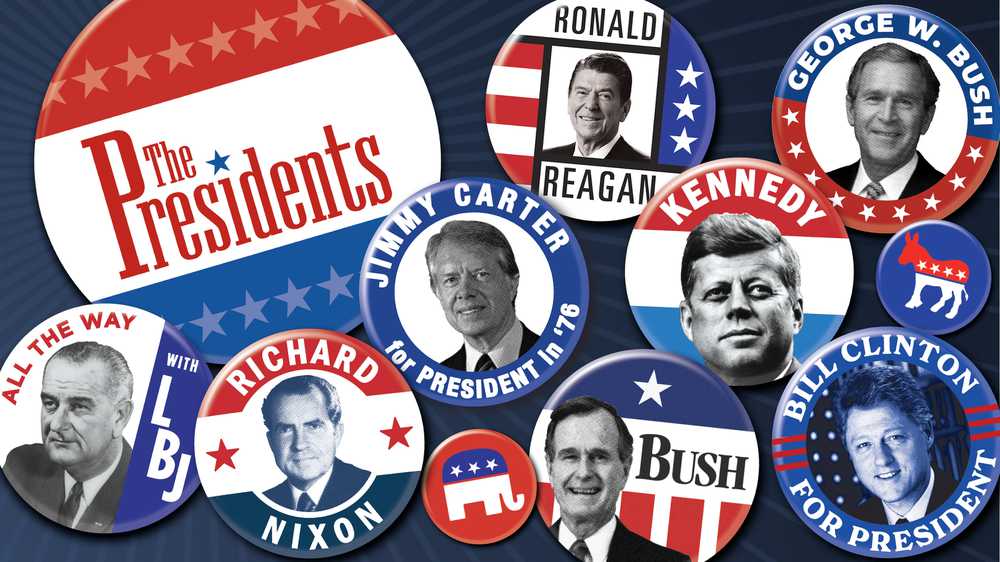
The Presidents Connect today's election issues with the past


Chapter:

Landslide Victory (9:42)
Johnson defeats Barry Goldwater, winning the presidency by an unprecedented majority.
FDR
Truman

Now
Playing

LBJ
Nixon
Carter
Reagan
G H W Bush

Related Clips


LBJ, Chapter 10

Prelude to War (6:48)
Following Robert McNamara's advice, Johnson okays covert commando attacks against North Vietnam to stop Communism.
Watch Now

FDR, Chapter 19

Reelection and Controversy (11:13)
Roosevelt wins the 1936 election. Overconfident, he makes the mistake of trying to reshape the Supreme Court.
Watch Now

REAGAN, Chapter 20

Morning in America (9:11)
America's economy has improved and national confidence is renewed. Reagan wins a second term in a landslide.
Watch Now

Chapter 1

Introduction (4:35)
Part one of a biography of Lyndon B. Johnson, the 36th president.
Watch Now

Chapter 2

A Politician from Birth (7:57)
Johnson grows up in poor, rural Texas hill country. Campaigning on a New Deal platform, he wins a seat in the U.S. House of Representatives.
Watch Now

Chapter 3

In Washington (11:11)
Johnson networks in Washington and Texas. He loses a Senate bid and learns hard lessons in the dark side of politics.
Watch Now

Chapter 4

The Senate Campaign of 1948 (12:30)
Johnson runs a flamboyant campaign in a tough race. He wins the seat, dogged by rumors of fraud.
Watch Now

Chapter 5

In the Senate (9:00)
Johnson becomes a power broker, developing a bargaining style known as "the Johnson treatment."
Watch Now

Chapter 6

The Civil Rights Act of 1957 (6:47)
Setting the stage for a presidential run, Johnson builds consensus to protect African Americans' voting rights.
Watch Now

Chapter 7

Johnson Becomes Vice President (9:09)
Johnson loses the 1960 Democratic nomination but is named Senator John Kennedy's running mate. He becomes president in 1963 after Kennedy is shot.
Watch Now

Chapter 8

Johnson and the Kennedy Administration (5:16)
President Johnson determines to fulfill Kennedy's programs.
Watch Now

Chapter 9

The Civil Rights Act of 1964 (10:49)
Johnson waits out the longest Senate filibuster in history to achieve the bill that makes racial segregation illegal.
Watch Now

Chapter 10

Prelude to War (6:48)
Following Robert McNamara's advice, Johnson okays covert commando attacks against North Vietnam to stop Communism.
Watch Now

Chapter 11

The Great Society (9:01)
Reaching back to his populist roots, Johnson declares war on poverty.
Watch Now

Chapter 12

Gulf of Tonkin (9:11)
Johnson claims that North Vietnam has attacked a U.S. destroyer. He uses the incident as the basis for expanding the war against North Vietnam.
Watch Now

Chapter 13

Landslide Victory (9:42)
Johnson defeats Barry Goldwater, winning the presidency by an unprecedented majority.
Watch Now

Chapter 14

Credits (3:00)
Production credits for part one of the television program.
Watch Now

Chapter 15

Introduction (3:40)
Part two of a biography of Lyndon B. Johnson, the 36th president.
Watch Now

Chapter 16

Johnson's "Real Presidency" (8:44)
Johnson pushes his Great Society agenda in a legislative avalanche. Advisors — the "best and the brightest" — counsel him to escalate the war in Vietnam.
Watch Now

Chapter 17

Negotiations (7:10)
The consummate political bargainer hopes to broker a deal with North Vietnamese leader Ho Chi Minh.
Watch Now

Chapter 18

Voting Rights for African Americans (10:41)
Civil rights protesters force Johnson's hand on voting rights for African Americans. Their cause is helped by national media coverage of brutal police attacks.
Watch Now

Chapter 19

The Decision to Expand the War (12:25)
Although defending South Vietnam now appears it will require many years and sacrificed American lives, Johnson decides to expand the war.
Watch Now

Chapter 20

Black Power (10:15)
Johnson's social aid programs bring about positive change, but some see his efforts as too little, too late. Urban riots erupt across the nation.
Watch Now

Chapter 21

Questioning the War (9:05)
As Americans watch the Vietnam War in their living rooms, support for it wavers.
Watch Now

Chapter 22

A Miasma of Trouble (15:14)
Johnson struggles to keep his dream of the Great Society alive while the country spins out of control.
Watch Now

Chapter 23

No Surrender (6:22)
The war in Vietnam looks unwinnable. Johnson's advisors counsel him to improve the public's view of the war. ,
Watch Now

Chapter 24

The Tet Offensive (10:11)
The North Vietnamese bombing of South Vietnam over the Tet holiday becomes a turning point in the war.
Watch Now

Chapter 25

A Continuous Nightmare (12:04)
Johnson decides not to run for re-election. His legislation has carried New Deal liberalism to its peak, but the war in Vietnam has defeated him.
Watch Now

Chapter 26

The Post Presidency (5:38)
Depressed, Johnson retires to his Texas ranch. He suffers a fatal heart attack just days before peace talks end the Vietnam War.
Watch Now

Chapter 27

Credits (3:01)
Production credits for part two of the television program.
Watch Now

  • LBJ: Chapter 1
  • LBJ: Chapter 2
  • LBJ: Chapter 3
  • LBJ: Chapter 4
  • LBJ: Chapter 5
  • LBJ: Chapter 6
  • LBJ: Chapter 7
  • LBJ: Chapter 8
  • LBJ: Chapter 9
  • LBJ: Chapter 10
  • LBJ: Chapter 11
  • LBJ: Chapter 12
  • LBJ: Chapter 13
  • LBJ: Chapter 14
  • LBJ: Chapter 15
  • LBJ: Chapter 16
  • LBJ: Chapter 17
  • LBJ: Chapter 18
  • LBJ: Chapter 19
  • LBJ: Chapter 20
  • LBJ: Chapter 21
  • LBJ: Chapter 22
  • LBJ: Chapter 23
  • LBJ: Chapter 24
  • LBJ: Chapter 25
  • LBJ: Chapter 26
  • LBJ: Chapter 27
Choose a format

Choose a Video Format

Quicktime | Windows Media

Download a free player
QuickTime | Windows Media

Related Links


LBJ
Learn more about Lyndon B. Johnson.

The Election of 1964
Vote on the hot issues of this election.

Controversy at the Democratic Convention
Mississippi delegates upset the convention process.

Purchase Videos & DVDs

• See Comments

Loading comments...

You must log in to submit a comment. If you don't have an account at American Experience, you will need to register to comment. It's fast and easy to do!

Post a Comment (Limit 5000 Characters)

• View Transcripts •


Transcript: Chapter 13

Narrator: Just three weeks after Johnson signed the Tonkin Gulf resolution, the Democratic Party held its nominating convention in Atlantic City.

Nicholas Katzenbach, Attorney General: One has to remember that the candidate running against Lyndon Johnson was Barry Goldwater and I've always thought that the Tonkin Gulf resolution was essentially an election resolution. It was aimed at Goldwater and aimed at the right wing. I think most of the Democratic senators in Congress thought that. It was designed to show that Lyndon Johnson was prepared to be as tough as anybody could be and therefore take some of the wind out of the sails of the right-wing candidate.

President Johnson: My fellow Americans, I accept your nomination.

Narrator: When he won his race for the Senate with a tainted 87 votes, he was dogged by the nickname "Landslide Lyndon." When the murder of a beloved president put him in the White House, he was scorned as an accidental president. In November of 1964, Lyndon Johnson wanted a victory to wash all those memories away.

President Johnson: I ask the American people for a mandate, not just to keep things going. I ask the American people for a mandate to begin. Let us be on our way.

Narrator: From the beginning, Johnson was far ahead and the lead inspired him. He excited the crowds and relished their ardor. "Look at them," he would say, "Just look at them." Here, in the faces of millions of Americans was the love and affection he was always seeking.

Doris Kearns Goodwin: The great majority felt that Lyndon Johnson was safe, secure. Everybody was with Lyndon Johnson except for, as he could say, "the kooks," who were with Goldwater. Johnson, I'm not sure, could ever accept that there was a group out there that wasn't going to like him. He wanted to win over everybody if he possibly could.

Elizabeth Wickenden, LBJ Family Friend: Underneath it all, he was very insecure, easily hurt or affronted. Whenever he ran for office, he broke out in spots. He had a kind of psychological eczema that he got.

Roger Wilkins: I was in the White House one day and Johnson put his arm around me and said, "We need all the help we can get. I've got -- I need New York. You know people in New York. You were raised up in Michigan. How he knew I was raised in Michigan, I'll never know. "I want your help in Michigan and what other states do you know?"

So, later, I talked to a guy, a Texan whom I knew who was close to Johnson and I described this and I said, "Craig," I said, "He's way ahead." I said, "The polls show he's going to destroy Goldwater, so what's he doing this with me for? What does he want?" And Craig looked at me and said, "He wants it all."

Narrator: Johnson painted his Republican rival as insensitive to the needs of minorities and the poor. It wasn't hard to make the charges stick.

Senator Goldwater: Minority groups run this country and just face up to it.

Dr. Martin Luther King, Jr.: Well, I must honestly say, I don't see how any Negro or white person with self-respect can vote for Mr. Goldwater.

Ronald Reagan: [1964 Republican Party Campaign Commercial] I'm Ronald Reagan. Every American should hear what Barry Goldwater really has to say, not what a bunch of distorters of the truth would have you believe.

Senator Goldwater: This country, my friends, must always maintain such superiority of strength, such devastating strike-back power --

Narrator: Goldwater frightened many Americans with talk about using nuclear weapons.

Senator Goldwater: The Communists would be creating suicide for themselves and their society if they pushed the button.

Child: [1964 Lyndon Johnson Campaign Commercial] One, two, three --

Narrator: The Johnson staff devised a commercial that captured everybody's nightmare.

Child: -- four, five, six, seven --

Narrator: It was so controversial they ran it only one time.

Child: -- eight, nine --

Countdown Announcer:/b> Ten, nine, eight, seven, six, five, four, three, two, one, zero.

President Johnson: These are the stakes -- to make a world in which all of God's children can live or to go into the darkness. We must either love each other or we must die.

Commercial Announcer: Vote for President Johnson on November 3. The stakes are too high for you to stay home.

Narrator: Johnson presented himself as the peace candidate. He promised he would never send American boys to fight in Vietnam. He never wanted Vietnam to become a campaign issue. "If you have a mother-in-law with only one eye and she has it in the center of her forehead," he said, "you don't keep her in the living room."

On the day of the election, Johnson waited, he said, "for the moment that I have spent my whole life getting ready for."

Doris Kearns Goodwin: He couldn't take any pleasure, obviously, out of becoming president because John Kennedy had died, but now, suddenly, as he saw it, he could picture, he would tell me, everybody going into the voting booth, pulling the lever or writing an X for him and I think he really meant, "They love me."

Lewis Gould: It wasn't enough to defeat Goldwater by a huge landslide. He couldn't understand if it had been 90 percent to 10 percent why those other 10 percent hadn't been persuaded.

Narrator: "Millions and millions of people," he would later say, "each marking my name on their ballot. Each wanted me as their president. For the first time in all my life, I truly felt loved by the American people."

Throughout the campaign, Johnson had kept Americans ignorant about Vietnam, but behind closed doors, he and his advisers had been making decisions that would lead the nation deeper and deeper into war.

James Thomson: I was present at the meeting in August '64 with the secretaries of state, defense and other with the president, in which the president issued marching orders for what they should be doing while he was out campaigning. What he wanted to have available for him when he returned -- victorious, we hoped -- was as wide a range of options as to how Vietnam should be coped with as possible.

Daniel Ellsberg: Do we have to escalate the war? Do we have to attack North Vietnam? Do we have to send troops? Can this regime in Saigon hold itself together, not totally collapse, not defect en masse? Can we avoid defeat in Vietnam another week, another month? Can we hold Vietnam together without enlarging the war enormously, till the election?

President Johnson: I, Lyndon Baines Johnson, do solemnly swear that I will faithfully execute the office of the president of the United States.

Narrator: It was an unprecedented victory -- presidency by more votes than any man ever before; the Congress by an overwhelming majority and, with political power, an opportunity to do great things.

No longer a scorned and frustrated vice president, no longer an accidental president, Lyndon Johnson was now one of the most popular presidents of the century. On the night of his inaugural gala, Johnson told his guests, "Don't stay up late. We're on our way to the Great Society."

On January 20, 1965, there was no hint that Johnson's Great Society was about to be overwhelmed by a full-scale land war in Asia, that Lyndon Johnson had already sown the seeds of his own destruction.


Major funding provided by the National
Endowment for the Humanities and the Corporation for Public Broadcasting

NEH Corporation for Public Broadcasting


Any views, findings, conclusions, or recommendations expressed in this Web site do not necessarily represent those of the National Endowment for the Humanities.