Visit Your Local PBS Station PBS Home PBS Home Programs A-Z TV Schedules Watch Video Support PBS Shop PBS Search PBS
 
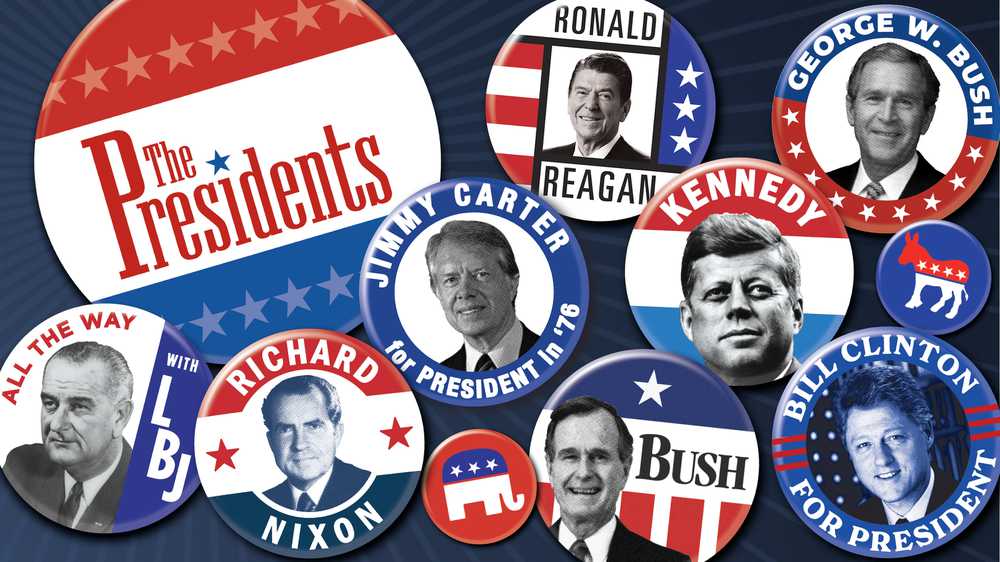
The Presidents Connect today's election issues with the past


Chapter:

Negotiations (7:10)
The consummate political bargainer hopes to broker a deal with North Vietnamese leader Ho Chi Minh.
FDR
Truman

Now
Playing

LBJ
Nixon
Carter
Reagan
G H W Bush

Related Clips


TRUMAN, Chapter 22

American Power (6:50)
Truman establishes the Marshall Plan and prepares the country for a new kind of war -- the Cold War.
Watch Now

FDR, Chapter 21

The Juggler (15:25)
Roosevelt and Winston Churchill create Lend-Lease, a plan to help Great Britain fight the Germans, despite Congressional isolationism.
Watch Now

TRUMAN, Chapter 8

Truman Proves Himself (9:07)
Truman works hard to understand the workings of the Senate and finds sucess.
Watch Now

LBJ, Chapter 5

In the Senate (9:00)
Johnson becomes a power broker, developing a bargaining style known as "the Johnson treatment."
Watch Now

Chapter 1

Introduction (4:35)
Part one of a biography of Lyndon B. Johnson, the 36th president.
Watch Now

Chapter 2

A Politician from Birth (7:57)
Johnson grows up in poor, rural Texas hill country. Campaigning on a New Deal platform, he wins a seat in the U.S. House of Representatives.
Watch Now

Chapter 3

In Washington (11:11)
Johnson networks in Washington and Texas. He loses a Senate bid and learns hard lessons in the dark side of politics.
Watch Now

Chapter 4

The Senate Campaign of 1948 (12:30)
Johnson runs a flamboyant campaign in a tough race. He wins the seat, dogged by rumors of fraud.
Watch Now

Chapter 5

In the Senate (9:00)
Johnson becomes a power broker, developing a bargaining style known as "the Johnson treatment."
Watch Now

Chapter 6

The Civil Rights Act of 1957 (6:47)
Setting the stage for a presidential run, Johnson builds consensus to protect African Americans' voting rights.
Watch Now

Chapter 7

Johnson Becomes Vice President (9:09)
Johnson loses the 1960 Democratic nomination but is named Senator John Kennedy's running mate. He becomes president in 1963 after Kennedy is shot.
Watch Now

Chapter 8

Johnson and the Kennedy Administration (5:16)
President Johnson determines to fulfill Kennedy's programs.
Watch Now

Chapter 9

The Civil Rights Act of 1964 (10:49)
Johnson waits out the longest Senate filibuster in history to achieve the bill that makes racial segregation illegal.
Watch Now

Chapter 10

Prelude to War (6:48)
Following Robert McNamara's advice, Johnson okays covert commando attacks against North Vietnam to stop Communism.
Watch Now

Chapter 11

The Great Society (9:01)
Reaching back to his populist roots, Johnson declares war on poverty.
Watch Now

Chapter 12

Gulf of Tonkin (9:11)
Johnson claims that North Vietnam has attacked a U.S. destroyer. He uses the incident as the basis for expanding the war against North Vietnam.
Watch Now

Chapter 13

Landslide Victory (9:42)
Johnson defeats Barry Goldwater, winning the presidency by an unprecedented majority.
Watch Now

Chapter 14

Credits (3:00)
Production credits for part one of the television program.
Watch Now

Chapter 15

Introduction (3:40)
Part two of a biography of Lyndon B. Johnson, the 36th president.
Watch Now

Chapter 16

Johnson's "Real Presidency" (8:44)
Johnson pushes his Great Society agenda in a legislative avalanche. Advisors — the "best and the brightest" — counsel him to escalate the war in Vietnam.
Watch Now

Chapter 17

Negotiations (7:10)
The consummate political bargainer hopes to broker a deal with North Vietnamese leader Ho Chi Minh.
Watch Now

Chapter 18

Voting Rights for African Americans (10:41)
Civil rights protesters force Johnson's hand on voting rights for African Americans. Their cause is helped by national media coverage of brutal police attacks.
Watch Now

Chapter 19

The Decision to Expand the War (12:25)
Although defending South Vietnam now appears it will require many years and sacrificed American lives, Johnson decides to expand the war.
Watch Now

Chapter 20

Black Power (10:15)
Johnson's social aid programs bring about positive change, but some see his efforts as too little, too late. Urban riots erupt across the nation.
Watch Now

Chapter 21

Questioning the War (9:05)
As Americans watch the Vietnam War in their living rooms, support for it wavers.
Watch Now

Chapter 22

A Miasma of Trouble (15:14)
Johnson struggles to keep his dream of the Great Society alive while the country spins out of control.
Watch Now

Chapter 23

No Surrender (6:22)
The war in Vietnam looks unwinnable. Johnson's advisors counsel him to improve the public's view of the war. ,
Watch Now

Chapter 24

The Tet Offensive (10:11)
The North Vietnamese bombing of South Vietnam over the Tet holiday becomes a turning point in the war.
Watch Now

Chapter 25

A Continuous Nightmare (12:04)
Johnson decides not to run for re-election. His legislation has carried New Deal liberalism to its peak, but the war in Vietnam has defeated him.
Watch Now

Chapter 26

The Post Presidency (5:38)
Depressed, Johnson retires to his Texas ranch. He suffers a fatal heart attack just days before peace talks end the Vietnam War.
Watch Now

Chapter 27

Credits (3:01)
Production credits for part two of the television program.
Watch Now

  • LBJ: Chapter 1
  • LBJ: Chapter 2
  • LBJ: Chapter 3
  • LBJ: Chapter 4
  • LBJ: Chapter 5
  • LBJ: Chapter 6
  • LBJ: Chapter 7
  • LBJ: Chapter 8
  • LBJ: Chapter 9
  • LBJ: Chapter 10
  • LBJ: Chapter 11
  • LBJ: Chapter 12
  • LBJ: Chapter 13
  • LBJ: Chapter 14
  • LBJ: Chapter 15
  • LBJ: Chapter 16
  • LBJ: Chapter 17
  • LBJ: Chapter 18
  • LBJ: Chapter 19
  • LBJ: Chapter 20
  • LBJ: Chapter 21
  • LBJ: Chapter 22
  • LBJ: Chapter 23
  • LBJ: Chapter 24
  • LBJ: Chapter 25
  • LBJ: Chapter 26
  • LBJ: Chapter 27
Choose a format

Choose a Video Format

Quicktime | Windows Media

Download a free player
QuickTime | Windows Media

Related Links


LBJ
Learn more about Lyndon B. Johnson.

"Peace Without Conquest," 1965
LBJ's first major speech on the war.

Space Race Diary
A Soviet general's private notes.

Purchase Videos & DVDs

• See Comments

Loading comments...

You must log in to submit a comment. If you don't have an account at American Experience, you will need to register to comment. It's fast and easy to do!

Post a Comment (Limit 5000 Characters)

• View Transcripts •


Transcript: Chapter 17

President Johnson: I have had but one objective -- to be the president of all the people; not just the rich, not just the well fed, not just the fortunate, but president of all of America.

John Connally: He was inordinately proud of all this legislation he passed. Well, I mean, he kept a scorecard in his pocket -- had a sheet of paper and he listed all the legislation he'd passed. He was extremely proud of it.

S. Douglass Cater, Special Assistant to the President: He wanted to do good things, he wanted to do great things, and he had grown up in a system of government which was the American system, in which you did things by wheeling and dealing and trading. This was the way you did it.

Jack Valenti: Well, I'm not sure that the government works this way anymore, but when I was in the White House, the president assigned me certain senators and congressmen "to handle."

And every now and then, Everett Dirksen would call -- he was the Republican leader -- and he said, "Jack," you know, he had a voice that was like honey dripping over metal tiles; he'd say, "Jack, I want to see the boss later on today, and maybe we could have a drink and talk about a few things." And I'd say, "Yes, sir, Senator. The president will see you at six o'clock. How's that?" "Yes, that'd be fine."

And then he'd rise in the Senate at about three o'clock in the afternoon and accuse Johnson of every crime that the most depraved mind could be capable of committing, and then at six o'clock he'd show up, and I'd go up with him to the second floor of the mansion, and we'd sit and talk. And the president would say, "Everett, I wouldn't talk about a cur dog the way you did me in the Senate." "Well," he said, "Mr. President, you know I vow to tell the truth, so I had no choice." And then they would laugh, and then they would recount some old, long-fought battles.

And then, finally, the president would say, "Now, Everett, I've got to have three Republican votes, and you know who they are. I got to have those votes, Everett, and I don't want any beating around the bush about it." And Dirksen would say, "Well, Mr. President," he said, "I happen to have here some names of some likely nominees to the Federal Power Commission and the Federal Communications Commission and a few other commissions." And the president would say, "Well, give their names to Valenti here. We'll check them out with the FBI, see if they're fit to serve their country." And they'd have another drink. And there was no summary of the meeting given. Each of them knew that Johnson was going to get three Republican votes, and Dirksen knew that he was going to get three nominees to commissions. I don't know if they teach that in Government 101 in any of the schools, but it worked. The president got done what he needed to have done, but the telephone was his Excalibur, it was his sword, and no congressman was too much of a rookie to be called, nor too powerful a one to be importuned.

S. Douglass Cater: One morning at five a.m., he woke up a senator and said, "Hi! What are you doing?" And he said, "Oh, nothing, Mr. President, just lying here, hoping you'd call."

Richard Goodwin, Presidential Speechwriter: If a congressman wasn't home, he'd talk to the wife, and if the wife wasn't home, he'd talk to the children and tell them to tell their daddy to support the president.

John Connally: Part of his demeanor, part of his whole life was that he felt he could convert anybody, that he could convert an enemy into a friend, that he was -- he would work at it assiduously, to court, and to convert, someone who disliked him into being a friend and a disciple. And many times, it worked.

Narrator: But Johnson couldn't use those same tactics with Ho Chi Minh. Johnson thought the war would be like a filibuster, as he said -- enormous resistance at first, then a steady whittling away, then Ho hurrying to get it over with.

Larry Berman: Ho Chi Minh was a revolutionary. Johnson didn't understand that. He didn't understand revolutionaries. A revolutionary in the United States Senate is very different than someone like Ho Chi Minh. He didn't understand the history of the Vietnamese people, the Vietnamese culture.

Narrator: Johnson thought he could force Ho Chi Minh to bargain. "I saw our bombs as political resources for negotiating peace," he said. But Ho couldn't be pushed. Their positions were irreconcilable. He called the Americans "invaders." Johnson called North Vietnam the aggressor, waging war on a peaceful neighbor. Johnson wanted two countries, a North and a South Vietnam. Ho wanted one.

Larry Berman: Ho Chi Minh and the Communists had no intention whatsoever of ever allowing a peace treaty to separate their country. Time was on their side. They could certainly wait out Lyndon Johnson. He understood Ho Chi Minh to be like any other political adversary who he could broker with, he could deal with, that Ho Chi Minh had a price and he would find that price.

President Johnson: Well, what do the people of North Vietnam want? Food for their hunger, health for their bodies. I will ask the Congress to join in a billion-dollar American investment to replace despair with hope, and terror with progress.

Narrator: Johnson would bully and bargain. On April 7, he offered Ho what sounded like a Great Society program.

President Johnson: The vast Mekong River can provide food and water and power on a scale to dwarf even our own TVA. The wonders of modern medicine can be spread through villages where thousands die every year. Schools can be established to train people with skills ...

Jack Valenti: I remember one time I trailed him into his office, and he leaned back in his chair and put his hand on his head like this, and he said, "Oh, God, how can we get out of this war?" He said, "If I could just sit in a room with Ho Chi Minh and talk to him, I think we could cut a deal."


Major funding provided by the National
Endowment for the Humanities and the Corporation for Public Broadcasting

NEH Corporation for Public Broadcasting


Any views, findings, conclusions, or recommendations expressed in this Web site do not necessarily represent those of the National Endowment for the Humanities.