Visit Your Local PBS Station PBS Home PBS Home Programs A-Z TV Schedules Watch Video Support PBS Shop PBS Search PBS
 
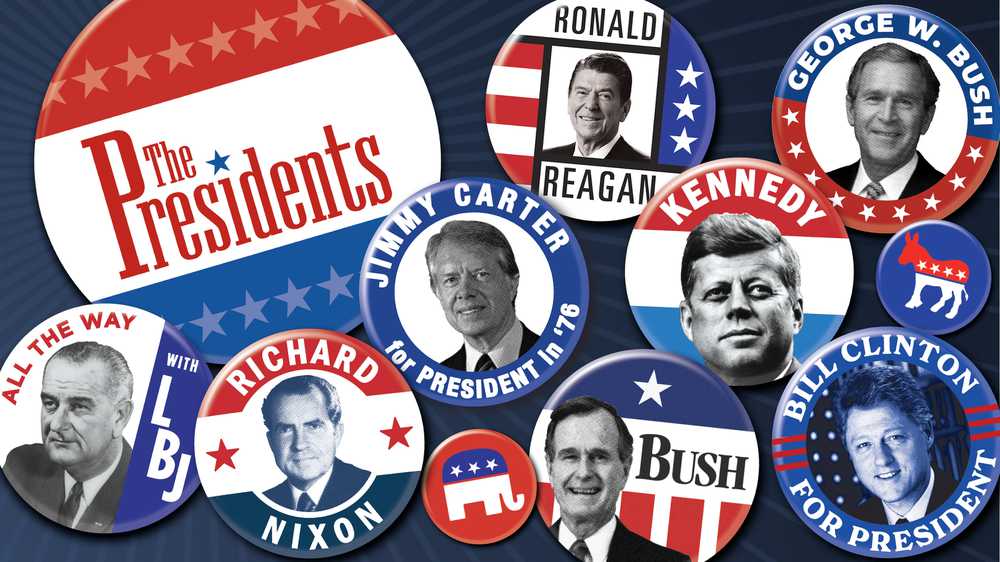
The Presidents Connect today's election issues with the past


Chapter:

No Surrender (6:22)
The war in Vietnam looks unwinnable. Johnson's advisors counsel him to improve the public's view of the war. ,
FDR
Truman

Now
Playing

LBJ
Nixon
Carter
Reagan
G H W Bush

Related Clips


Watch here for related video from this and other Presidential biographies.

Chapter 1

Introduction (4:35)
Part one of a biography of Lyndon B. Johnson, the 36th president.
Watch Now

Chapter 2

A Politician from Birth (7:57)
Johnson grows up in poor, rural Texas hill country. Campaigning on a New Deal platform, he wins a seat in the U.S. House of Representatives.
Watch Now

Chapter 3

In Washington (11:11)
Johnson networks in Washington and Texas. He loses a Senate bid and learns hard lessons in the dark side of politics.
Watch Now

Chapter 4

The Senate Campaign of 1948 (12:30)
Johnson runs a flamboyant campaign in a tough race. He wins the seat, dogged by rumors of fraud.
Watch Now

Chapter 5

In the Senate (9:00)
Johnson becomes a power broker, developing a bargaining style known as "the Johnson treatment."
Watch Now

Chapter 6

The Civil Rights Act of 1957 (6:47)
Setting the stage for a presidential run, Johnson builds consensus to protect African Americans' voting rights.
Watch Now

Chapter 7

Johnson Becomes Vice President (9:09)
Johnson loses the 1960 Democratic nomination but is named Senator John Kennedy's running mate. He becomes president in 1963 after Kennedy is shot.
Watch Now

Chapter 8

Johnson and the Kennedy Administration (5:16)
President Johnson determines to fulfill Kennedy's programs.
Watch Now

Chapter 9

The Civil Rights Act of 1964 (10:49)
Johnson waits out the longest Senate filibuster in history to achieve the bill that makes racial segregation illegal.
Watch Now

Chapter 10

Prelude to War (6:48)
Following Robert McNamara's advice, Johnson okays covert commando attacks against North Vietnam to stop Communism.
Watch Now

Chapter 11

The Great Society (9:01)
Reaching back to his populist roots, Johnson declares war on poverty.
Watch Now

Chapter 12

Gulf of Tonkin (9:11)
Johnson claims that North Vietnam has attacked a U.S. destroyer. He uses the incident as the basis for expanding the war against North Vietnam.
Watch Now

Chapter 13

Landslide Victory (9:42)
Johnson defeats Barry Goldwater, winning the presidency by an unprecedented majority.
Watch Now

Chapter 14

Credits (3:00)
Production credits for part one of the television program.
Watch Now

Chapter 15

Introduction (3:40)
Part two of a biography of Lyndon B. Johnson, the 36th president.
Watch Now

Chapter 16

Johnson's "Real Presidency" (8:44)
Johnson pushes his Great Society agenda in a legislative avalanche. Advisors — the "best and the brightest" — counsel him to escalate the war in Vietnam.
Watch Now

Chapter 17

Negotiations (7:10)
The consummate political bargainer hopes to broker a deal with North Vietnamese leader Ho Chi Minh.
Watch Now

Chapter 18

Voting Rights for African Americans (10:41)
Civil rights protesters force Johnson's hand on voting rights for African Americans. Their cause is helped by national media coverage of brutal police attacks.
Watch Now

Chapter 19

The Decision to Expand the War (12:25)
Although defending South Vietnam now appears it will require many years and sacrificed American lives, Johnson decides to expand the war.
Watch Now

Chapter 20

Black Power (10:15)
Johnson's social aid programs bring about positive change, but some see his efforts as too little, too late. Urban riots erupt across the nation.
Watch Now

Chapter 21

Questioning the War (9:05)
As Americans watch the Vietnam War in their living rooms, support for it wavers.
Watch Now

Chapter 22

A Miasma of Trouble (15:14)
Johnson struggles to keep his dream of the Great Society alive while the country spins out of control.
Watch Now

Chapter 23

No Surrender (6:22)
The war in Vietnam looks unwinnable. Johnson's advisors counsel him to improve the public's view of the war. ,
Watch Now

Chapter 24

The Tet Offensive (10:11)
The North Vietnamese bombing of South Vietnam over the Tet holiday becomes a turning point in the war.
Watch Now

Chapter 25

A Continuous Nightmare (12:04)
Johnson decides not to run for re-election. His legislation has carried New Deal liberalism to its peak, but the war in Vietnam has defeated him.
Watch Now

Chapter 26

The Post Presidency (5:38)
Depressed, Johnson retires to his Texas ranch. He suffers a fatal heart attack just days before peace talks end the Vietnam War.
Watch Now

Chapter 27

Credits (3:01)
Production credits for part two of the television program.
Watch Now

  • LBJ: Chapter 1
  • LBJ: Chapter 2
  • LBJ: Chapter 3
  • LBJ: Chapter 4
  • LBJ: Chapter 5
  • LBJ: Chapter 6
  • LBJ: Chapter 7
  • LBJ: Chapter 8
  • LBJ: Chapter 9
  • LBJ: Chapter 10
  • LBJ: Chapter 11
  • LBJ: Chapter 12
  • LBJ: Chapter 13
  • LBJ: Chapter 14
  • LBJ: Chapter 15
  • LBJ: Chapter 16
  • LBJ: Chapter 17
  • LBJ: Chapter 18
  • LBJ: Chapter 19
  • LBJ: Chapter 20
  • LBJ: Chapter 21
  • LBJ: Chapter 22
  • LBJ: Chapter 23
  • LBJ: Chapter 24
  • LBJ: Chapter 25
  • LBJ: Chapter 26
  • LBJ: Chapter 27
Choose a format

Choose a Video Format

Quicktime | Windows Media

Download a free player
QuickTime | Windows Media

Related Links


LBJ
Learn more about Lyndon B. Johnson.

Two Days in October
Soldiers, protesters, and Vietnam.

George Kennan
Meet an architect of U.S. Cold War strategies.

Purchase Videos & DVDs

• See Comments

Loading comments...

You must log in to submit a comment. If you don't have an account at American Experience, you will need to register to comment. It's fast and easy to do!

Post a Comment (Limit 5000 Characters)

• View Transcripts •


Transcript: Chapter 23

Narrator: The raids over North Vietnam continued until more tons of bombs were dropped on Vietnam than had been dropped during all of World War II. Still, Ho resisted. "Hanoi and other cities may be destroyed," Ho told his countrymen, "but the Vietnamese people will not be intimidated."

James Thomson: The Vietnamese, had we bombed them to the Stone Age, would have gone back into the jungle, waited us out. They knew something that we also knew but didn't acknowledge, and that was that someday we would go home and they could come back and rebuild what we had destroyed.

Sec. Rusk: I think I made two mistakes in judgment. One was that I underestimated the tenacity of the North Vietnamese, and I think I overestimated the patience of the American people.

Narrator: By the end of 1967, a grim sense of siege was settling over the White House. The president dug in. He had spent a lifetime climbing to the pinnacle of power; his whole political life now hung on only one issue -- Vietnam.

Clark Clifford: He decided to call in the men whom he respected most. They became known as "the Wise Men." There were about ten of them. If you put the total service, those men must have had two hundred and fifty to three hundred years of government service.

Narrator: These were the architects of American foreign policy -- Dean Acheson, John McCloy, Averell Harriman. "Contain Communism, don't let it spread" had been their advice to every president since Truman.

William P. Bundy: The picture that was given to them was that we are making slow, grinding progress and we thought we could see, at some point, a break, with the other side really starting to really weaken and go downhill.

Narrator: Dean Acheson said later, "I told him he was wholly right on Vietnam, that he had no choice except to press on."

Clark Clifford: They voted unanimously for him to go on with his course. He was greatly comforted by that.

William P. Bundy: The advice they gave was, "Look, the country doesn't see it the way you're describing it. You've got to develop a way to make your assessments of the situation more credible."

George Ball: Well, they gave him perfectly silly advice. They were sensible people, and why they were so silly, I don't know. Their main advice was, "Well, you ought to improve your public relations." Well, after the meeting, I spoke to Dean Acheson and John Coles and Arthur Dean, and I said, "You old bastards, you ought to be ashamed of yourselves. You're like a lot of vultures sitting on the fence and sending the young men out to die." And I walked out of the room.

Narrator: Johnson had expanded the war in secret. Now he set out to sell it to the American people.

President Johnson: We are making progress. We are pleased with the results that we're getting. I think we're moving more like this and I think they're moving more like this, instead of straight up and straight down.

Narrator: He called home the commander of U.S. forces in Vietnam, General William Westmoreland, for a round of well-publicized meetings and press conferences.

Gen. William Westmoreland: The enemy is being progressively weakened. The Vietnamese armed forces and the government as a whole is being strengthened.

Lee Williams, Aide to Senator Fulbright: The glowing reports always came back from the Pentagon. "Hey, just a little more! We're winning this war, it's almost over, we can see the light at the end of the tunnel."

Narrator: In the middle of December, with reporters and television cameras in tow, the president took off across the Pacific. Johnson was inspired by the photo opportunity, but he was also moved by America's fighting men. "We're not going to yield," he told them, "and we're not going to shimmy."

President Johnson: The enemy is not beaten, but he knows that he had met his master in the field. He is trying to buy time, hoping that our nation ... that our nation's will does not match his will.

Narrator: After just a few hours in Vietnam, the president was on his way to Pakistan and then Rome. It was like a campaign tour of old. Johnson paid a surprise visit to the Vatican, where he assured Pope Paul VI of his desire for peace. His Holiness presented the president with a fourteenth-century painting. The president reciprocated with a foot-high plastic bust of himself.

The twenty-seven-thousand-mile, four-day journey had buoyed Johnson's hopes. He wanted desperately to believe that America had turned the corner in Vietnam, that there was light at the end of the tunnel.

Clark Clifford: And then Tet came. Tet, to me, was the roof falling in.


Major funding provided by the National
Endowment for the Humanities and the Corporation for Public Broadcasting

NEH Corporation for Public Broadcasting


Any views, findings, conclusions, or recommendations expressed in this Web site do not necessarily represent those of the National Endowment for the Humanities.