Visit Your Local PBS Station PBS Home PBS Home Programs A-Z TV Schedules Watch Video Support PBS Shop PBS Search PBS
 
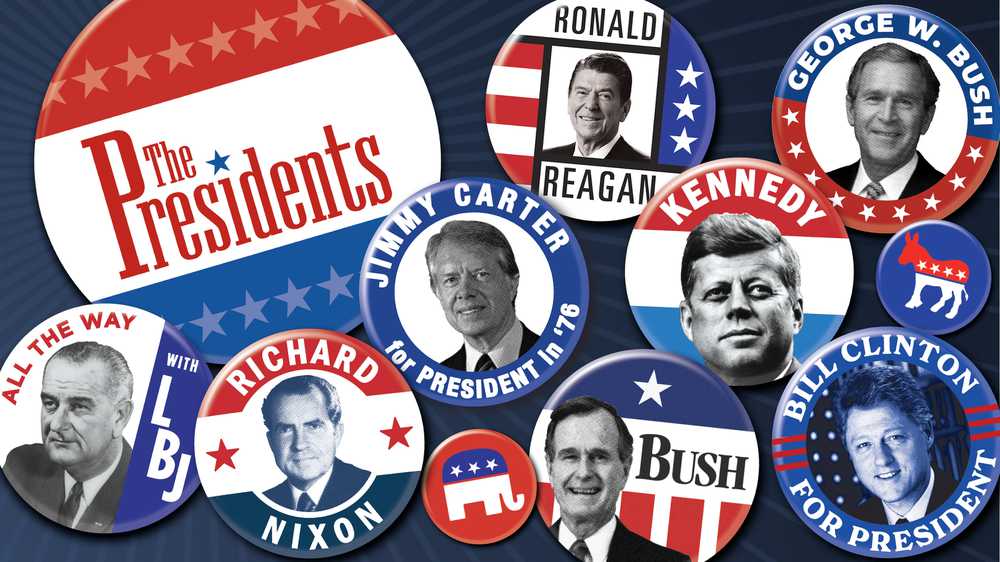
The Presidents Connect today's election issues with the past


Chapter:

Reaganomics (11:17)
Dramatic rises in unemployment, inflation, and homelessness signal the failure of Reagan's economic program.
FDR
Truman
LBJ
Nixon
Carter

Now
Playing

Reagan
G H W Bush

Related Clips


TRUMAN, Chapter 27

The Korean War (5:29)
U.S. troops in Korea retreat until Douglas MacArthur's surprise attack on Inchon forces the North Koreans to pull back to the 38th Parallel.
Watch Now

TRUMAN, Chapter 31

The Last Years (9:06)
With the lowest popularity rating in history, Truman decides not to seek re-election. He retires to Independence, Missouri.
Watch Now

CARTER, Chapter 15

The Camp David Accords (11:51)
Jimmy Carter negotiates a historic peace agreement between Egyptian president Anwar Sadat and Israeli prime minister Menachem Begin.
Watch Now

LBJ, Chapter 18

Voting Rights for African Americans (10:41)
Civil rights protesters force Johnson's hand on voting rights for African Americans. Their cause is helped by national media coverage of brutal police attacks.
Watch Now

NIXON, Chapter 16

The Fall (9:36)
Nixon is re-elected in a landslide while the investigation into Watergate burglaries begins. After Nixon orders intensive bombing in Vietnam, peace talks lead to a cease-fire.
Watch Now

Chapter 1

Introduction (5:50)
Part one of a biography of Ronald Reagan, the 40th president.
Watch Now

Chapter 2

The Lifeguard (11:21)
Ronald Reagan grows up in a small town and works as a lifeguard on the Rock River.
Watch Now

Chapter 3

Actor (8:39)
Starting out in radio and sportscasting, Reagan moves to California to pursue an acting career.
Watch Now

Chapter 4

Communists in Hollywood (9:43)
Reagan, an active anti-Communist, ends his first marriage. He meets and marries actress Nancy Davis.
Watch Now

Chapter 5

Political Apprenticeship (9:26)
Reagan hones his speaking skills as a television host and spokesman for General Electric. He becomes known for his conservative views.
Watch Now

Chapter 6

The First Campaign (6:03)
Incumbent California governor Pat Brown underestimates his opponent Ronald Reagan's appeal. Reagan cultivates a heroic cowboy image.
Watch Now

Chapter 7

Governor and National Figure (12:37)
Reagan gains political confidence in two terms as governor of California.
Watch Now

Chapter 8

A Surprising Presidential Bid (7:56)
Ronald Reagan campaigns for but loses the Republican nomination for president in 1976.
Watch Now

Chapter 9

Landslide Victory (7:34)
Ronald Reagan defeats incumbent Jimmy Carter and is elected president in 1980.
Watch Now

Chapter 10

A Plan for Economic Recovery (10:13)
Reagan works to pass his economic package.
Watch Now

Chapter 11

Assassination Attempt (10:54)
Reagan is seriously wounded in an assassination attempt. Congress enacts his conservative economic agenda.
Watch Now

Chapter 12

Reaganomics (11:17)
Dramatic rises in unemployment, inflation, and homelessness signal the failure of Reagan's economic program.
Watch Now

Chapter 13

CreditsProduction credits for part one of the television program.
Watch Now

Chapter 14

Introduction (2:26)
Part two of a biography of Ronald Reagan, the 40th president.
Watch Now

Chapter 15

Battle on Two Fronts (11:53)
As the recession deepens, Reagan dramatically increases military spending in his crusade against Communism.
Watch Now

Chapter 16

The Nuclear Freeze Movement (7:07)
Demonstrators, including Reagan's daughter, protest his plan to increase nuclear weapons.
Watch Now

Chapter 17

The Strategic Defense Initiative (8:03)
Reagan promotes his plan for a missile defense system.
Watch Now

Chapter 18

Peace Through Strength (6:26)
Reagan broadly states his anti-Soviet "crusade for freedom," but works quietly with the Soviets on human rights issues.
Watch Now

Chapter 19

Missile Deployment in Europe (12:02)
In a controversial speech, Reagan calls the Soviet Union an "evil empire." Some fear the arms race will end in nuclear Armageddon.
Watch Now

Chapter 20

Morning in America (9:11)
America's economy has improved and national confidence is renewed. Reagan wins a second term in a landslide.
Watch Now

Chapter 21

Transitions (10:40)
Reagan loses his oldest advisers. Mikhail Gorbachev becomes the new Soviet leader, and Reagan embarks on a fateful secret course with Iran.
Watch Now

Chapter 22

Personal Diplomacy (10:55)
Reagan and Gorbachev summit in Geneva. Reagan refuses to make concessions on SDI.
Watch Now

Chapter 23

Reagan's Changing Role (5:37)
Despite successes both symbolic and real, Reagan becomes less engaged as president.
Watch Now

Chapter 24

Summit at Reykjavik (10:44)
Reagan and Gorbachev reach for the abolition of nuclear weapons. Though their talks fail, they are a breakthrough.
Watch Now

Chapter 25

The Iran-Contra Crisis (14:11)
The government's secret arms-for-hostages dealings with Iran are uncovered. Reagan learns that his staff has diverted profits to support the anti-Communist Contras in Nicaragua.
Watch Now

Chapter 26

Highs and Lows (11:50)
Americans forgive Reagan for Iran-Contra. The stock market crashes, the gap between rich and poor grows and the AIDS epidemic hits. The U.S. and U.S.S.R. sign a historic weapons treaty.
Watch Now

Chapter 27

The End of the Cold War (10:32)
After his lifelong crusade, Reagan witnesses Communism's demise in Eastern Europe, Afghanistan, Nicaragua and the Soviet Union.
Watch Now

Chapter 28

Into the Sunset (6:28)
Ronald Reagan retires to his California ranch. He will be diagnosed with Alzheimer's disease.
Watch Now

Chapter 29

CreditsProduction credits for part two of the television program.
Watch Now

  • REAGAN: Chapter 1
  • REAGAN: Chapter 2
  • REAGAN: Chapter 3
  • REAGAN: Chapter 4
  • REAGAN: Chapter 5
  • REAGAN: Chapter 6
  • REAGAN: Chapter 7
  • REAGAN: Chapter 8
  • REAGAN: Chapter 9
  • REAGAN: Chapter 10
  • REAGAN: Chapter 11
  • REAGAN: Chapter 12
  • REAGAN: Chapter 13
  • REAGAN: Chapter 14
  • REAGAN: Chapter 15
  • REAGAN: Chapter 16
  • REAGAN: Chapter 17
  • REAGAN: Chapter 18
  • REAGAN: Chapter 19
  • REAGAN: Chapter 20
  • REAGAN: Chapter 21
  • REAGAN: Chapter 22
  • REAGAN: Chapter 23
  • REAGAN: Chapter 24
  • REAGAN: Chapter 25
  • REAGAN: Chapter 26
  • REAGAN: Chapter 27
  • REAGAN: Chapter 28
  • REAGAN: Chapter 29
Choose a format

Choose a Video Format

Quicktime | Windows Media

Download a free player
QuickTime | Windows Media

Related Links


REAGAN
Learn more about Ronald Reagan.

Nuclear Stockpiles and Tests
Explore U.S. and Soviet nuclear arsenals.

The 1982 Recession
The worst economic downturn since the Depression.

Purchase Videos & DVDs

• See Comments

Loading comments...

You must log in to submit a comment. If you don't have an account at American Experience, you will need to register to comment. It's fast and easy to do!

Post a Comment (Limit 5000 Characters)

• View Transcripts •


Transcript: Chapter 12

Narrator: That fall, budget director David Stockman told Reagan he would have to cut deep into defense spending -- the keystone of his anti-Soviet policy -- and social security if he wanted a balanced budget.

Darman: When he was presented with the question of whether he would reduce the rate of growth of defense, he decided not to and concluded that though he didn't want the deficit, the country would tolerate it if the economy were strong.

Caspar Weinberger, Secretary of Defense: He always phrased it this way -- if it were a question of balancing the budget or regaining strong military capabilities, he'd always opt for the latter. And he never, never wavered in that.

Cannon: He had a chance to tackle entitlements, he had a chance to break Social Security costs and he wasn't willing to do it because he would have forfeited his most precious asset, his popularity, to do it. And he wasn't willing to do that.

Narrator: Those were fateful decisions. Reagan would never again have as good an opportunity to adjust his budget and avoid the ballooning deficits of the decade ahead. That year, the economy took a downward turn.

By November, blue-collar workers, who had voted for Ronald Reagan, were losing their jobs. Inflation had prompted the Federal Reserve Board to increase interest rates. Reagan was forced to admit that the nation was headed into a recession.

Reporter: Mr. President, your secretary of the treasury Donald Regan, yesterday gave a rather pessimistic view of the nation's economy. I think he called it a "real downer" that we were facing. Do you share his pessimistic view of the economy? Are we in for a real downer in your opinion?

Reagan: Well now, I don't know what his definitions is of a "real downer." I think that we're going to have some hard times for the next few months. I think we're going to see a pickup in the economy, and I think that Don Regan believes this also, in spring or latest early summer.

Narrator: That spring, when the president vacationed at the home of actress Claudette Colbert, there were no signs of improvement.

Reagan who had seen himself as coming to America's rescue began to be cast as callous and insensitive; "splashing ... in the lap of luxury, while Americans go hungry," one reporter wrote. But the press reserved its harshest criticism for the first lady, calling attention to her designer dresses, her lavish entertainment, her millionaire friends and her new White House china, failing to note that it had been donated.

The extravagance of the Reagan White House added to the perception of insensitivity -- a perception Reagan bitterly resented.

Morris: His invariable line when the subject of poverty and homelessness was raised was I know about, all about the Depression because I was out hitchhiking across the landscape looking for work in the depths of the Depression. I know about poverty. Actually it was just a matter of a couple of weeks. He got a job very quickly and from January 1933 onward never had to look anywhere for a salary check.

Ron Reagan: If you wanted something done by my father, if you wanted him to move a certain way on a certain policy, what you had to do was humanize it, bring him a person that's afflicted by some problem or another, and all of a sudden then it becomes very real to him.

Deaver: He would have three or four checks, personal checks in the top drawer of his desk, in the Oval Office and he was always running out of those checks because he was writing checks to people. I went in there one time and he had written a check to some woman who was on welfare. And the next month he got his bank statement. Well, you know, the bank statement had these checks and her check wasn't in it. So, he called her on the phone and said you know, you haven't cashed that check. She said, "Oh no, I framed it." He said, "Well, my God, I sent you that money so you'd have some money to eat. I'll send you another check, you keep that one framed and cash this one."

Matthews: Simply because he becomes aware of one person's plight and responds to it as human beings doesn't really solve the problem. I mean he's basically responsible for the economic management of the United States and he has to deal with that responsibility, not simply as an individual citizen.

Narrator: As the recession deepened through 1982, its effects were felt across America. Farmers were driven off their land by high interest rates. In the cities, homelessness became a scandal.

Thousands of businesses failed. Unemployment reached its highest level since the Great Depression.

"I prayed a lot during this period," Reagan wrote, "not only for the country and people who were out of work, but for help and guidance in doing the right thing."

Narrator: Pressure on Reagan to change course mounted. His program now derided as "Reaganomics,"-- had not only failed to produce growth, but was leading the nation into fiscal disaster.

"We are really in trouble," Reagan confided to his diary. "Our projections are out the window ... We look at two hundred billion dollar deficits if we can't pull off some miracles."

Even true believers were disillusioned. David Stockman, tired of arguing for cuts now urged the president to raise taxes.

"Reagan," wrote columnists Evans and Novak "was having to fight two thirds of his administration to save his economic program."

Smith: There are very few conventional politicians who would have stuck it out as he did. But he came to office imbued with a conviction that less government and lower taxes would resolve the pervasive sickness of the American economy. And what he saw in 1982 as, was the fever that was about to break.

Narrator: Reagan stayed the course. "I believed the economic recovery would work," he wrote, "because I had faith in those tax cuts and faith in the American people." But the American people were losing faith in Ronald Reagan.

Man: He'd better read the papers a little better, go down to the unemployment office and see all the people standing there, getting unemployment benefits -- those that can get them and those that have ran out of them and so forth. The president himself hasn't got the message yet.

Second Man: I don't like to turn to welfare, but if that's what is going to take to get by until this current economic situation is through that's what we'll have to do.

Third Man: I think the American dream is in the past. It's long gone.

Crowds: What do we want? Jobs. When do you want them? Now.

Narrator: On November 2, in critical mid-term elections, voters would pass judgment on Ronald Reagan and his conservative program. Reagan watched as the American people gave a vote of no confidence by throwing twenty-six Republicans out of the House. The political disaster his staff had feared was upon him.

Helen Thomas: With 11.6 million people out of work would you be willing to have some cutbacks in defense spending to help these people who are out of work?

Lou Cannon: Have you ruled out the possibility that would modify in anyway your call for an increased defense budget maybe just for this one year?

Narrator: Ronald Reagan had vowed to fight Communism. Now his defense build-up -- the chief weapon in his anti-Soviet crusade -- was coming under attack.

In what might have been the largest peacetime gathering in American history, nearly one million people rallied in Central Park to call for a freeze in nuclear weapons production.

Protester: All of us want to live and we want life for our children and our grandchildren.

Narrator: Two years into his presidency the talk in Washington was of chaos and disarray.

"The question no longer is whether Reagan has failed," wrote a conservative analyst, "but the magnitude and ramifications of his failure."

By January 1983, Reagan's approval rating had plummeted to 35 percent. Her husband, Nancy confided to a reporter, might not seek a second term.

Richard Wirthlin, Pollster: I brought him the bad news that his job rating was low and he was very serious for a moment and then he smiled and he then reached over and patted me on the arm and said, I know just what I can do about it. I'll go out and get shot again.

Narrator: If Reagan's presidency failed, his crusade to protect America from big government, begun in 1964 would fail with it. His crusade to save the world from Communism, begun in 1946 would fail too. Ronald Reagan had come to office to rescue America. Now he was the one in need of rescue.

back to top


Major funding provided by the National
Endowment for the Humanities and the Corporation for Public Broadcasting

NEH Corporation for Public Broadcasting


Any views, findings, conclusions, or recommendations expressed in this Web site do not necessarily represent those of the National Endowment for the Humanities.