Visit Your Local PBS Station PBS Home PBS Home Programs A-Z TV Schedules Watch Video Support PBS Shop PBS Search PBS
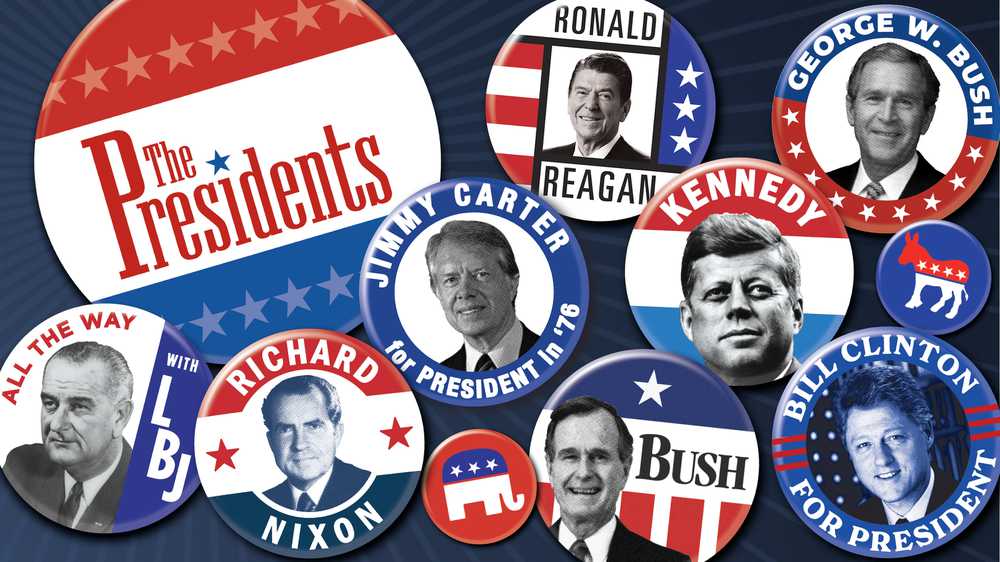
The Presidents Connect today's election issues with the past


Chapter:

Reagan's Changing Role (5:37)
Despite successes both symbolic and real, Reagan becomes less engaged as president.
FDR
Truman
LBJ
Nixon
Carter

Now
Playing

Reagan
G H W Bush

Related Clips


FDR, Chapter 21

The Juggler (15:25)
Roosevelt and Winston Churchill create Lend-Lease, a plan to help Great Britain fight the Germans, despite Congressional isolationism.
Watch Now

REAGAN, Chapter 15

Battle on Two Fronts (11:53)
As the recession deepens, Reagan dramatically increases military spending in his crusade against Communism.
Watch Now

TRUMAN, Chapter 21

The Truman Doctrine (9:04)
As the Soviets control Eastern Europe, Truman acts to stop Communism in Greece and Turkey.
Watch Now

TRUMAN, Chapter 22

American Power (6:50)
Truman establishes the Marshall Plan and prepares the country for a new kind of war -- the Cold War.
Watch Now

CARTER, Chapter 12

Introduction (4:34)
Part two of a biography of Jimmy Carter, the 39th president.
Watch Now

LBJ, Chapter 12

Gulf of Tonkin (9:11)
Johnson claims that North Vietnam has attacked a U.S. destroyer. He uses the incident as the basis for expanding the war against North Vietnam.
Watch Now

Chapter 1

Introduction (5:50)
Part one of a biography of Ronald Reagan, the 40th president.
Watch Now

Chapter 2

The Lifeguard (11:21)
Ronald Reagan grows up in a small town and works as a lifeguard on the Rock River.
Watch Now

Chapter 3

Actor (8:39)
Starting out in radio and sportscasting, Reagan moves to California to pursue an acting career.
Watch Now

Chapter 4

Communists in Hollywood (9:43)
Reagan, an active anti-Communist, ends his first marriage. He meets and marries actress Nancy Davis.
Watch Now

Chapter 5

Political Apprenticeship (9:26)
Reagan hones his speaking skills as a television host and spokesman for General Electric. He becomes known for his conservative views.
Watch Now

Chapter 6

The First Campaign (6:03)
Incumbent California governor Pat Brown underestimates his opponent Ronald Reagan's appeal. Reagan cultivates a heroic cowboy image.
Watch Now

Chapter 7

Governor and National Figure (12:37)
Reagan gains political confidence in two terms as governor of California.
Watch Now

Chapter 8

A Surprising Presidential Bid (7:56)
Ronald Reagan campaigns for but loses the Republican nomination for president in 1976.
Watch Now

Chapter 9

Landslide Victory (7:34)
Ronald Reagan defeats incumbent Jimmy Carter and is elected president in 1980.
Watch Now

Chapter 10

A Plan for Economic Recovery (10:13)
Reagan works to pass his economic package.
Watch Now

Chapter 11

Assassination Attempt (10:54)
Reagan is seriously wounded in an assassination attempt. Congress enacts his conservative economic agenda.
Watch Now

Chapter 12

Reaganomics (11:17)
Dramatic rises in unemployment, inflation, and homelessness signal the failure of Reagan's economic program.
Watch Now

Chapter 13

CreditsProduction credits for part one of the television program.
Watch Now

Chapter 14

Introduction (2:26)
Part two of a biography of Ronald Reagan, the 40th president.
Watch Now

Chapter 15

Battle on Two Fronts (11:53)
As the recession deepens, Reagan dramatically increases military spending in his crusade against Communism.
Watch Now

Chapter 16

The Nuclear Freeze Movement (7:07)
Demonstrators, including Reagan's daughter, protest his plan to increase nuclear weapons.
Watch Now

Chapter 17

The Strategic Defense Initiative (8:03)
Reagan promotes his plan for a missile defense system.
Watch Now

Chapter 18

Peace Through Strength (6:26)
Reagan broadly states his anti-Soviet "crusade for freedom," but works quietly with the Soviets on human rights issues.
Watch Now

Chapter 19

Missile Deployment in Europe (12:02)
In a controversial speech, Reagan calls the Soviet Union an "evil empire." Some fear the arms race will end in nuclear Armageddon.
Watch Now

Chapter 20

Morning in America (9:11)
America's economy has improved and national confidence is renewed. Reagan wins a second term in a landslide.
Watch Now

Chapter 21

Transitions (10:40)
Reagan loses his oldest advisers. Mikhail Gorbachev becomes the new Soviet leader, and Reagan embarks on a fateful secret course with Iran.
Watch Now

Chapter 22

Personal Diplomacy (10:55)
Reagan and Gorbachev summit in Geneva. Reagan refuses to make concessions on SDI.
Watch Now

Chapter 23

Reagan's Changing Role (5:37)
Despite successes both symbolic and real, Reagan becomes less engaged as president.
Watch Now

Chapter 24

Summit at Reykjavik (10:44)
Reagan and Gorbachev reach for the abolition of nuclear weapons. Though their talks fail, they are a breakthrough.
Watch Now

Chapter 25

The Iran-Contra Crisis (14:11)
The government's secret arms-for-hostages dealings with Iran are uncovered. Reagan learns that his staff has diverted profits to support the anti-Communist Contras in Nicaragua.
Watch Now

Chapter 26

Highs and Lows (11:50)
Americans forgive Reagan for Iran-Contra. The stock market crashes, the gap between rich and poor grows and the AIDS epidemic hits. The U.S. and U.S.S.R. sign a historic weapons treaty.
Watch Now

Chapter 27

The End of the Cold War (10:32)
After his lifelong crusade, Reagan witnesses Communism's demise in Eastern Europe, Afghanistan, Nicaragua and the Soviet Union.
Watch Now

Chapter 28

Into the Sunset (6:28)
Ronald Reagan retires to his California ranch. He will be diagnosed with Alzheimer's disease.
Watch Now

Chapter 29

CreditsProduction credits for part two of the television program.
Watch Now

Related Links


REAGAN
Learn more about Ronald Reagan.

Reagan Timeline
Trace the last three years of Reagan's presidency.

Share Your Views: Human Rights
What are the biggest injustices in the world today?

Purchase Videos & DVDs

• See Comments

Loading comments...

You must log in to submit a comment. If you don't have an account at American Experience, you will need to register to comment. It's fast and easy to do!

Post a Comment (Limit 5000 Characters)

• View Transcripts •


Transcript: Chapter 23

Narrator: Reagan's prestige hit its high on the Fourth of July 1986 as he stood on the decks of the John F. Kennedy and pushed a button which sent a laser a mile across New York harbor to light the refurbished symbol of the American promise.

Liberty Weekend was the centennial of the Statue of Liberty and Reagan showed what Time magazine called his "genius for American occasions" with the biggest fireworks display in American history.

Reagan: The things that unite us, America's past of which we are so proud, our hopes and aspirations for the future of the world and this much loved country. These things far outweigh what little divides us. Tonight we pledge ourselves to each other and to the cause of human freedom, the cause that has given light to this land and hope to the world.

Narrator: "Ronald Reagan has found the American sweet spot," Time wrote with wonder. "Reagan is a sort of masterpiece of American magic ... apparently one of the simplest creatures alive ... yet a character of ... complexities that connect him with the myths and powers of his country in an unprecedented way."

Reagan's successes were more than symbolic. That month in Poland the government gave in to one of his conditions for ending sanctions and freed political prisoners. Solidarity was alive. Reagan upped the ante in Afghanistan from harassing the Soviets to forcing them out. The rebels were about to realize the benefits of the Stinger missile.

In Nicaragua things were different. In 1984 Congress cut off funding for the Contras and made CIA support illegal. Reagan told his national security adviser Bud McFarlane: "We've got to find a way to keep doing this, Bud ... I want you to do whatever you have to do to help these people keep body and soul together. Do everything you can." On Liberty weekend, a year and a half into his second term, Reagan was the master of the ceremonial side of the presidency. But he was less and less engaged with his job.

Rollins: In the first term we had Baker and Deaver and Meese and Clark. They would brings things to the president, and they would fully engage in the discussion and the dialogue with him. Don Regan had a tendency to keep staff away from the president and basically have staff brief him and he would go into the president himself.

Maureen Reagan, Daughter: As time went on I sensed a discomfort in him. I knew that he was coming upstairs quieter at night where he used to come up with great stories about some decision that had been made and who was arguing what. Now, it was just, it was all just kind of quiet. And, we'd have to draw out of him, you know, kind of what happened during the day and there was a, there was just a kind of sadness about it. I mean, Ronald Reagan did not understand that his chief of staff thought he was prime minister -- he just didn't get it.

Morris: A good way of tracking how much a president is doing is looking at the papers that come through his hands and seeing how much they engage his attention. And in the first years of Reagan's presidency, he is constantly checking these points off, writing comments, thinking about them.

But as the years proceed you can see he is less and less interested. They just become check marks. Check marks. Check marks. He was saving his faculties as old men do for the really important, vital events.

back to top


Major funding provided by the National
Endowment for the Humanities and the Corporation for Public Broadcasting

NEH Corporation for Public Broadcasting


Any views, findings, conclusions, or recommendations expressed in this Web site do not necessarily represent those of the National Endowment for the Humanities.