Visit Your Local PBS Station PBS Home PBS Home Programs A-Z TV Schedules Watch Video Support PBS Shop PBS Search PBS
 
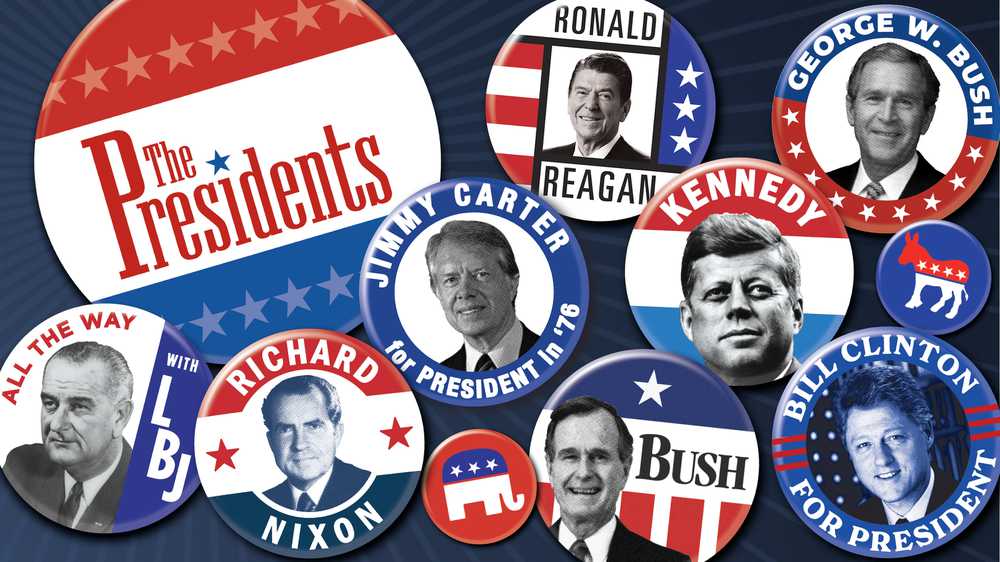
The Presidents Connect today's election issues with the past


Chapter:

Endgame in Japan (10:04)
After the war in Europe ends, Truman focuses on the bitter battle with Japan. Bess Truman is uncomfortable as first lady.
FDR

Now
Playing

Truman
LBJ
Nixon
Carter
Reagan
G H W Bush

Related Clips


FDR, Chapter 20

The Fascist Threat (13:54)
The U.S. maintains its isolationism as German, Italian, and Japanese armies seize territory on three continents.
Watch Now

TRUMAN, Chapter 13

On the World Stage (10:27)
Truman meets with Winston Churchill and Joseph Stalin to decide the fate of Europe. In New Mexico the atomic bomb is successfully tested.
Watch Now

TRUMAN, Chapter 14

Nuclear Diplomacy (7:06)
Truman takes a tougher stance at Potsdam after receiving news of a successful atomic bomb test in New Mexico.
Watch Now

TRUMAN, Chapter 15

Hiroshima and Nagasaki (7:32)
The U.S. drops atomic bombs on two Japanese cities. The Japanese surrender and World War II ends.
Watch Now

NIXON, Chapter 16

The Fall (9:36)
Nixon is re-elected in a landslide while the investigation into Watergate burglaries begins. After Nixon orders intensive bombing in Vietnam, peace talks lead to a cease-fire.
Watch Now

Chapter 1

Introduction (2:58)
Part one of a biography of Harry Truman, the 33rd president.
Watch Now

Chapter 2

Early Years (14:11)
Harry Truman grows up in Independence, Missouri. He gets his first taste of politics at the 1900 Democratic National Convention.
Watch Now

Chapter 3

The Family Farm (10:22)
After working office jobs in Kansas City, Truman returns to the family farm to help his father. He woos Elizabeth Wallace.
Watch Now

Chapter 4

Love and Death (10:23)
Bess Wallace rejects Truman. After his father dies, Truman leaves the farm to make his fortune, but fails in business.
Watch Now

Chapter 5

World War I (9:52)
Truman shows leadership as the captain of Battery D, fighting in World War I's bloodiest battles.
Watch Now

Chapter 6

Marriage and Politics (13:12)
After the war, Truman marries Bess Wallace and runs for public office.
Watch Now

Chapter 7

Senator Truman, (6:45)
With the help of Kansas City political boss Tom Pendergast, Truman wins a seat in the U.S. Senate.
Watch Now

Chapter 8

Truman Proves Himself (9:07)
Truman works hard to understand the workings of the Senate and finds sucess.
Watch Now

Chapter 9

The 1944 Election (11:21)
Truman becomes the Democrats' compromise choice for vice president.
Watch Now

Chapter 10

Vice President for 82 Days (5:25)
Roosevelt keeps Truman out of his inner circle. When the president dies, Truman is nervous and unprepared.
Watch Now

Chapter 11

A Man of the People (10:27)
As president, Truman makes a show of energy and confidence. Americans warm to his straightforward manner.
Watch Now

Chapter 12

Endgame in Japan (10:04)
After the war in Europe ends, Truman focuses on the bitter battle with Japan. Bess Truman is uncomfortable as first lady.
Watch Now

Chapter 13

On the World Stage (10:27)
Truman meets with Winston Churchill and Joseph Stalin to decide the fate of Europe. In New Mexico the atomic bomb is successfully tested.
Watch Now

Chapter 14

Nuclear Diplomacy (7:06)
Truman takes a tougher stance at Potsdam after receiving news of a successful atomic bomb test in New Mexico.
Watch Now

Chapter 15

Hiroshima and Nagasaki (7:32)
The U.S. drops atomic bombs on two Japanese cities. The Japanese surrender and World War II ends.
Watch Now

Chapter 16

CreditsProduction credits for part one of the television program.
Watch Now

Chapter 17

CreditsHead credits for part two of the television program.
Watch Now

Chapter 18

Introduction (2:16)
Part two of a biography of Harry Truman, the 33rd president.
Watch Now

Chapter 19

The Post War Economy (10:59)
Truman faces domestic challenges. He takes a tough stance against striking railroad workers.
Watch Now

Chapter 20

The Mid-Term Elections of 1946 (4:47)
The Republicans gain majorities in both houses of Congress.
Watch Now

Chapter 21

The Truman Doctrine (9:04)
As the Soviets control Eastern Europe, Truman acts to stop Communism in Greece and Turkey.
Watch Now

Chapter 22

American Power (6:50)
Truman establishes the Marshall Plan and prepares the country for a new kind of war -- the Cold War.
Watch Now

Chapter 23

A Stand for Human Rights (11:21)
Before the election of 1948, Truman boldly calls for civil rights for African Americans and for Israel to be recognized.
Watch Now

Chapter 24

The Conventions (6:41)
Despite Democrats' misgivings, President Truman is nominated at a dispirited Democratic Convention.
Watch Now

Chapter 25

Truman Defeats Dewey (9:47)
Taking his "New Deal" message on a whistlestop campaign across the country, Truman defeats New York governor Thomas Dewey.
Watch Now

Chapter 26

Fighting Communism (10:10)
Facing the Communist threat, Truman shows U.S. strength with an airlift to blockaded Berlin and air strikes and infantry in Korea.
Watch Now

Chapter 27

The Korean War (5:29)
U.S. troops in Korea retreat until Douglas MacArthur's surprise attack on Inchon forces the North Koreans to pull back to the 38th Parallel.
Watch Now

Chapter 28

Crossing the 38th Parallel (9:35)
MacArthur convinces Truman to fight the Chinese in Korea. Truman denies MacArthur's demand to use atomic weapons.
Watch Now

Chapter 29

Under Pressure (6:22)
Truman persists with a "limited war." Pressure on him grows intense as casualties mount and U.S. troops are repelled by Chinese forces.
Watch Now

Chapter 30

Dismissing MacArthur (6:58)
In a controversial move, Truman removes General Douglas MacArthur from his command for insubordination.
Watch Now

Chapter 31

The Last Years (9:06)
With the lowest popularity rating in history, Truman decides not to seek re-election. He retires to Independence, Missouri.
Watch Now

Chapter 32

CreditsProduction credits for part two of the television program.
Watch Now

  • TRUMAN: Chapter 1
  • TRUMAN: Chapter 2
  • TRUMAN: Chapter 3
  • TRUMAN: Chapter 4
  • TRUMAN: Chapter 5
  • TRUMAN: Chapter 6
  • TRUMAN: Chapter 7
  • TRUMAN: Chapter 8
  • TRUMAN: Chapter 9
  • TRUMAN: Chapter 10
  • TRUMAN: Chapter 11
  • TRUMAN: Chapter 12
  • TRUMAN: Chapter 13
  • TRUMAN: Chapter 14
  • TRUMAN: Chapter 15
  • TRUMAN: Chapter 16
  • TRUMAN: Chapter 17
  • TRUMAN: Chapter 18
  • TRUMAN: Chapter 19
  • TRUMAN: Chapter 20
  • TRUMAN: Chapter 21
  • TRUMAN: Chapter 22
  • TRUMAN: Chapter 23
  • TRUMAN: Chapter 24
  • TRUMAN: Chapter 25
  • TRUMAN: Chapter 26
  • TRUMAN: Chapter 27
  • TRUMAN: Chapter 28
  • TRUMAN: Chapter 29
  • TRUMAN: Chapter 30
  • TRUMAN: Chapter 31
  • TRUMAN: Chapter 32
Choose a format

Choose a Video Format

Quicktime | Windows Media

Download a free player
QuickTime | Windows Media

Related Links


TRUMAN
Learn more about Harry S. Truman.

Video Clips of the B-29
See the Superfortress in flight.

Video Clips of the B-29
See the Superfortress in flight.

Target Tokyo
Watch a government film about the bombing of Tokyo.

Target Tokyo
Watch a government film about the bombing of Tokyo.

Purchase Videos & DVDs

• See Comments

Loading comments...

You must log in to submit a comment. If you don't have an account at American Experience, you will need to register to comment. It's fast and easy to do!

Post a Comment (Limit 5000 Characters)

• View Transcripts •


Transcript: Chapter 12

NARRATOR: On May 8, Truman's 61st birthday, Nazi Germany surrendered. "Isn't that some birthday present?" he wrote his ninety-two year old mother. Now only Japan remained.

ARCHIVAL SOUND ON FILM OF TRUMAN: "The victory won in the West must now be won in the East. The whole world must be cleansed of the evil from which half the world has been freed."

NARRATOR: But Truman feared the Japanese would not surrender without a long and bloody struggle. Already they had been severely punished and yet showed no signs of yielding. While Truman was vice president, American B-29's had rained thousands of tons of bombs on the island nation. Five weeks before he took office, American planes dropped two thousand tons of napalm on Tokyo, burning sixteen square miles of the city to the ground. In a single day, 100,000 Japanese were killed.

BARTON BERNSTEIN, Historian: The fire-bombing raids prepares the way for even more devastating bombing. What has changed in the war is a redefinition of what is a legitimate target. A legitimate target is not simply a city, but people in the city who are primarily noncombatants in what is a redefined virtually total war. So that everybody becomes a target.

NARRATOR: The bombing destroyed nearly all of Japan's biggest cities and killed more than half a million civilians. Still, the Japanese fought on.

DAVID MCCULLOUGH: Truman knew they were defeated, they knew they were defeated. That really wasn't the question, the question was would they surrender.

NARRATOR: The battle for the island of Okinawa, 350 miles south of Japan, painted a bloody portrait for Truman of just how ferocious Japanese resistance could be. The fighting raged on for months. Ten thousand Americans were killed, 27,000 wounded. And entrenched in the jungles and caves of the island, more than 100,000 Japanese soldiers were burned or bombed to death rather than surrender.

ROBERT LIFTON: Okinawa was a bloody battle. One of the bloodiest battles of a vicious war. And Okinawa was an example of how much of a last ditch battle the Japanese could put up. And the kind of battle they might put up on their own islands in man-to-man combat. So Okinawa could be taken as an indicator that Japan needed dire measures to defeat it.

NARRATOR: On June 1, with the struggle for Okinawa reaching a climax, Truman received a report from a committee he had appointed to study the atomic bomb. The committee urged the president to use the weapon -- without warning. It did not recommend any alternatives.

BARTON BERNSTEIN: The use of the bomb was not a topic of debate. The issue was never should the bomb be used. For us, the bomb, whether we approve or not, is a question that should have been asked. For them living history forward and not backward, what's important to understand is that the use of the bomb was not a question; it was an answer.

DAVID MCCULLOUGH: If the weapon could stop the killing, then, it was felt, it had to be used. Was it right? Was it wrong? I don't think that was the issue. I think they saw it as necessary.

NARRATOR: Truman did not know that some of the scientists who had helped create the bomb were now actively attempting to limit its use. They advocated a demonstration bomb that would convince the Japanese to surrender. Their petitions never reached the president, but it is unlikely they could have changed his mind.

GEORGE ELSEY, Administrative Assistant to the President: I know of no occasion when President Truman ever spoke about doubts on using the bomb. All his advisors, without exception, recommended the use of the bomb just as soon as it was available. And he agreed with them.

NARRATOR: But the atomic bomb still remained untested. No one knew if it would work. June 18, Truman agreed to plans to invade Japan in early November. Tens of thousands of American soldiers were returning from the battlefields of Europe. For most, if the invasion went forward, it would be just weeks before they would sent back into battle. This time, fighting the Japanese.

DAVID MCCULLOUGH: We were going to invade the home islands. And the loss of life would be terrible. And for Truman whether it was going to be 20,000 lives or 100,000 lives was not really the question. The question was to stop the killing.

ALONZO HAMBY: Truman was one of the few presidents of the 20th century to have actually experienced wartime combat. He had seen corpses stacked up. He knew what war was like. He was very, very anxious to get World War II over with as quickly as possible.

NARRATOR: Only 30 days in office, Truman was still adjusting to the anxieties of being president, still telling his advisers that he didn't want the job. And Bess never wanted to be first lady. After just one month in the White House, Bess and Margaret went home to Independence.

DAVID MCCULLOUGH: Bess did not like living in the White House. She felt very uncomfortable, very ill-at-ease with all the fanfare and the attention of the press. Particularly when photographers pressed in around her, she would freeze and become kind of old stone face. And get an expression that looked as if her feet hurt. The spotlight, the limelight, did not appeal to Bess Truman ever. And she would return home to Independence as often as possible. Leaving the president feeling very alone, often desolate. It's hard for some people to understand what she was like and why the president was so devoted to her. But he adored her there's no question about that.

PAT HANNEGAN: I think she was a very shy person. Very ill-at-ease in that kind of an environment. When she was in the White House she used to have her old bridge club from Independence, Missouri, come up. And I think probably that's the only time she was really comfortable. It really was not a good niche for her. And I don't think she ever really enjoyed the public eye.

NARRATOR: Bess Truman's first public appearance confirmed her worst fears.

ARCHIVAL SOUND ON FILM: At the National Airport, ambulances with wings -- one each for Navy and Army. Ready to be christened by Mrs. Harry S. Truman, in her first public appearance. But Mrs. Truman is in for a surprise. ... Refusing to be rattled, the new First Lady joins in the crowd's laughter. By an oversight, the champagne bottle, unlike this one, hadn't been properly prepared -- etched to break the glass on impact. All's well that ends well.

NARRATOR: Truman smiled when he saw the newsreel, as did most of America, but Bess is said to have told her husband she wished she had swung the bottle at him.

back to top


Major funding provided by the National
Endowment for the Humanities and the Corporation for Public Broadcasting

NEH Corporation for Public Broadcasting


Any views, findings, conclusions, or recommendations expressed in this Web site do not necessarily represent those of the National Endowment for the Humanities.