 | ||||
| | | ||
       |  | |||
| ||||


 | |
|
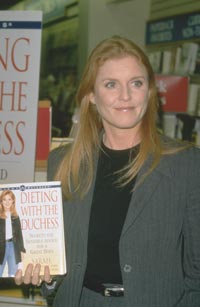
caption: Americans spend $40 billion a year on books, products, and programs designed to do one thing: help us lose weight. From Fergie to Atkins to Ornish, FRONTLINE examines the science behind today's most popular diets in "Diet Wars," airing Thursday, April 8, at 9 P.M. on PBS (check local listings). Image may only be used in editorial conjunction with the direct promotion of this film in North America. No other rights are granted. All rights reserved. Photo credit: © Corbis | |
| |
Thursday, April 8, at 9pm, 60 minutes
Americans spend $40 billion a year on books, products, and programs designed to do one thing: help us lose weight. From Atkins to Ornish and Weight Watchers to South Beach, today's dieters have a dizzying array of weight loss programs from which to choose--yet the underlying principles of these diets are often contradictory.
Is low fat better than low carb? Is Atkins the answer? And has the USDA food pyramid done more harm than good? In "Diet Wars," airing Thursday, April 8, at 9 P.M. on PBS (check local listings), FRONTLINE examines the great diet debate. Viewers follow FRONTLINE correspondent Steve Talbot, whose discovery that those "few extra pounds" have put him perilously close to the clinical definition of obesity prompts him to evaluate the myriad of diets now available to overweight Americans.
"America has become the fattest nation on earth," Talbot says. "About two-thirds of the American population is overweight, and of those, half are already obese. The diet industry is the visible sign of a looming public health problem."
How did America get so fat in recent years? "Diet Wars" offers a brief historical look back to the first half of the 20th century, when the biggest dietary concern was whether some Americans were getting enough to eat as opposed to too much. The documentary also pays a nostalgic visit to the plentiful, post-war 1950s, when Leave it to Beaver's Cleaver family typified millions of Americans who gathered around the dining room table each evening for a healthy, home-cooked meal.
(Talbot--who as a child portrayed Beaver's best friend, Gilbert, on the classic TV show--ruefully notes that while children were generally far more active back then, both he and "the Beav"--Jerry Mathers--have suffered weight problems as adults.)
"Diet Wars" explores the social, cultural, and dietary factors that have led to the fattening of America, while also examining how the medical and diet industries have responded to consumers' desire to lose weight. The documentary examines how concerns in the early 1960s that Americans were eating too much animal fat and cholesterol prompted doctors to begin recommending that patients reduce the amount of fat in their diets. The problem, some observers say, is that the low-fat recommendations failed to distinguish between the so-called "good fats"--unsaturated vegetable and fish oils--and the "bad fats"--saturated animal fats--associated with clogged arteries, heart disease, and other health problems.
"...Somehow, we got this notion that, 'Aha! If we take the fat out of foods we will be able to reduce the total caloric intake and people will be able to control their weight,'" says Tufts University Nutrition Professor Dr. Jeanne Goldberg. "And so industry got very busy making low-fat, reduced-fat, fat-free products...."
Soon, low-fat and fat-free products flooded the marketplace, as did high-profile low-fat diets like Pritikin and Ornish. In "Diet Wars," Talbot's search for the perfect diet takes him from a Weight Watchers pep rally--where spokeswoman Sarah "Fergie" Ferguson revs up the audience of faithful followers--to several low-fat diet centers, where proponents extol the virtues of their respective plans.
"The Pritikin Diet is basically a healthy diet. Pritikin didn't start as a weight loss program--it started as a way to reverse heart disease, high blood pressure, diabetes," says Dr. James Kenney, chief nutritionist of the Pritikin Longevity Center. "What makes eating healthy in America difficult is that most restaurant foods--particularly fast restaurant food--is designed to make people fat and sick."
So popular did the low-fat craze become that in 1992 the U.S. Department of Agriculture introduced its much-vaunted food pyramid guidelines that recommended Americans lay off the fat and load up on grains and cereals, which are carbohydrates.
But there was a problem. During the 1990s, despite the new guidelines and the glut of low-fat and fat-free products available, Americans got even fatter. While most experts agree that Americans' increasingly sedentary lifestyle and fondness for fast food contributed to the nation's growing girth, others postulate that the low-fat label misled consumers into believing that such products contained fewer calories, causing them to eat even more.
"The low-fat message was interpreted as if you had a product that was lower in fat it was good for you without thinking of calories," says Professor Marion Nestle of New York University's Department of Nutrition, Food Studies & Public Health. "The best example is the Snackwell phenomenon: Snackwell cookies were advertised as low-fat cookies but they had almost the same number of calories."
Nutritionists also note that in order to make products low-fat, companies had to replace the fat with something else--usually carbohydrates.
Enter Dr. Atkins and the low-carb diet craze currently sweeping the nation. Whereas low-fat diets like Pritikin and Ornish warned followers against eating high-fat foods like steak and eggs, Atkins followers avoided the carbohydrates that are the mainstay of a low-fat lifestyle.
And they began seeing impressive results. "I bought the book and I'm like, 'No way--I can't have bacon and eggs for breakfast...and prime rib and lose weight, it's not possible,'" says Lisa Sandonato, who lost 45 pounds in nine months on the Atkins diet. "Everything you've been told all your life about diets and things kind of turns on its head."
Not surprisingly, low-carb diets have come under attack by everyone from low-fat diet proponents to scientists and the media. In "Diet Wars," Talbot speaks with science journalist Gary Taubes, whose own six-week, twenty-pound weight loss on a low-carb diet prompted him to write an article for The New York Times Magazine that questioned whether the food pyramid was wrong and limiting carbohydrates was the way to go.
"I got crucified in a variety of publications," Taubes tells FRONTLINE. "A Washington Post reporter went after me, the Center for Science in the Public Interest went after me...because suddenly I turned around and said, 'Maybe low-fat diets don't work and maybe low-carbohydrate diets are the answer.'"
Taubes admits to being surprised by the ferocity with which his article was attacked. "People are more polarized on this than they are in politics," he says. "I'm stunned."
What most nutritionists and industry experts do agree on is the fact that America is facing an obesity problem of epidemic proportions.
"This is the public health issue of our generation," says Dr. James Hill, director of the University of Colorado's Center for Human Nutrition. "[When] you see 65 percent of Americans are overweight or obese, what amazes me is that anyone maintains a healthy weight in this environment."
"Diet Wars" is a FRONTLINE co-production with the Palfreman Film Group. The producer is Jon Palfreman. The correspondent is Steve Talbot.
FRONTLINE is produced by WGBH Boston and is broadcast nationwide on PBS.
Funding for FRONTLINE is provided through the support of PBS viewers. Additional support is provided by U.S. News & World Report.
FRONTLINE is closed-captioned for deaf and hard-of-hearing viewers.
FRONTLINE is a registered trademark of WGBH Educational Foundation.
The executive producer for FRONTLINE is David Fanning.
Press contacts:
Erin Martin Kane [erin_martin_kane@wgbh.org]
Chris Kelly [chris_kelly@wgbh.org]
(617) 300-3500
FRONTLINE XXII/April 2004
home » previous reports » watch online » about us » teacher center » newsletter » email FRONTLINE
privacy policy » wgbh » pbsi
web site copyright 1995-2014 WGBH educational foundation