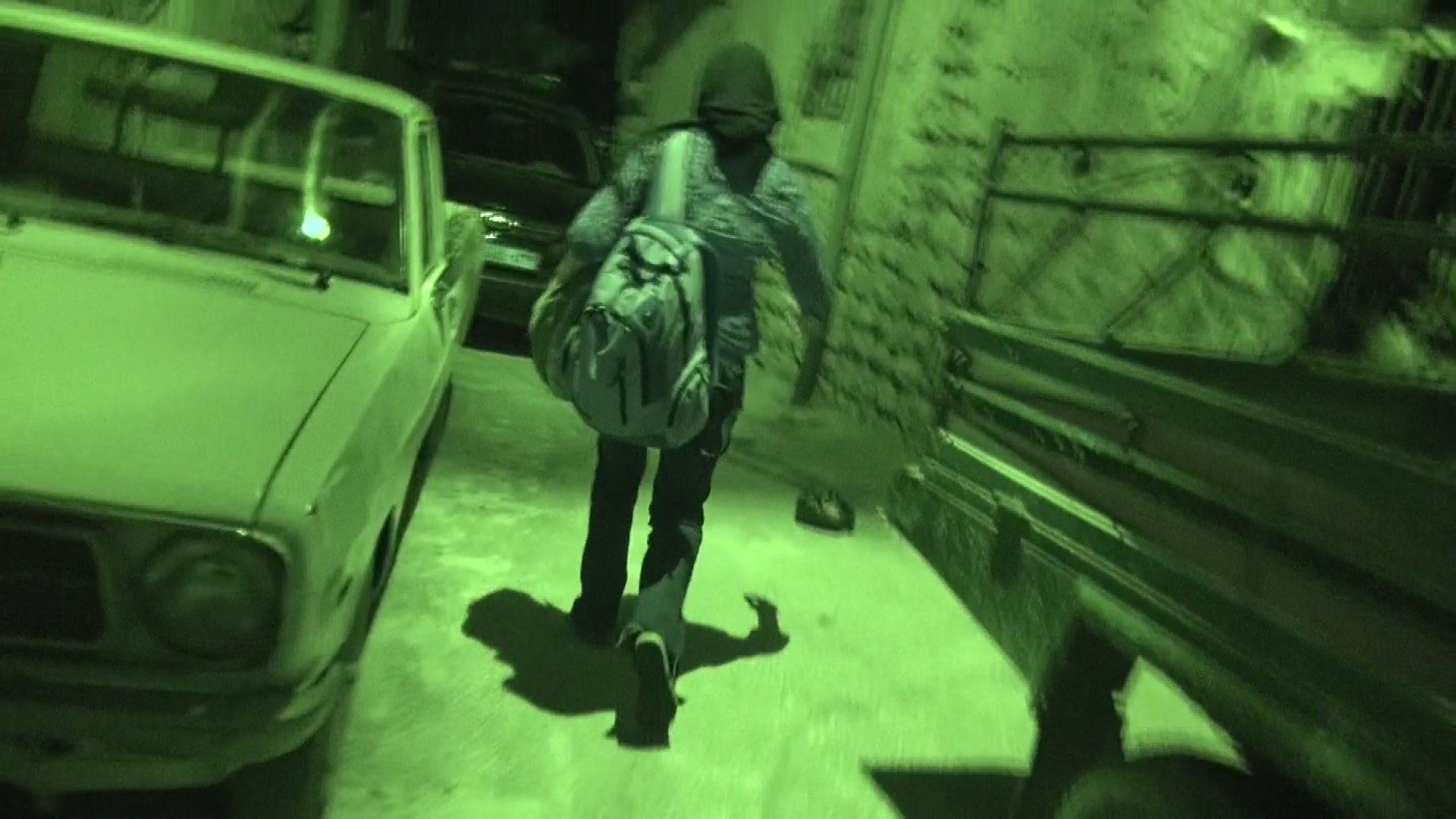
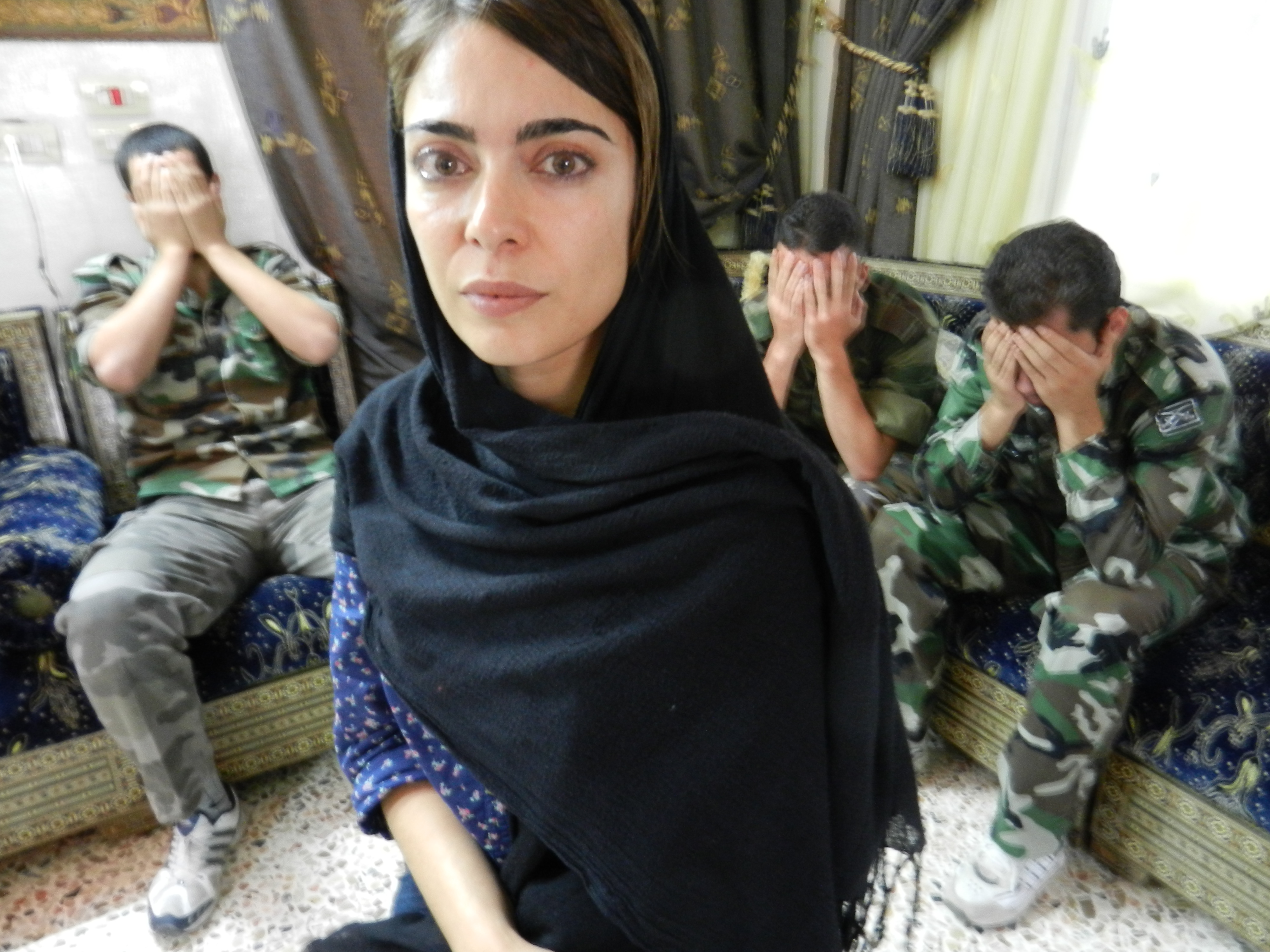
RAMITA NAVAI, Correspondent: [voice-over] I began my investigation in the capital, Damascus, in September. Traveling with my producer, who speaks Arabic, we entered the country posing as tourists.
[on camera] Careful. The cops.
[voice-over] I Before my trip, I’d spent weeks arranging access to opposition leaders inside Syria. I’d been given a local cell number to call. After using a code word, I was told to go to a location where my underground contact would be waiting. The plan was to travel 10 miles from Damascus to the town of Douma, into the midst of the uprising.
My contact was a young businessman. Like other opposition activists, he uses an alias. His is Abu Khaled.
[on camera] Abu Khaled is meeting with another activist now to see if the roads are safe and they can get us in. Abu Khaled’s also told us that at a funeral of a protester today, seven people were shot.
[voice-over] He said protests were happening along the road to Douma and he’d take me to see them. But there were army checkpoints everywhere. Abu Khaled used a network of lookouts to find the safest route.
[on camera] This happens every 5, 10 minutes or so— one of the cars guiding us in front will change and another car will join us.
[voice-over] The regime, Abu Khaled told me, feared the protests reaching downtown Damascus.
ABU KHALED: [subtitles] The protesters were gathering to march on Damascus. So the security forces flooded the area to prevent them.
PROTESTERS: [subtitles] [chanting] We’d rather die than live like this!
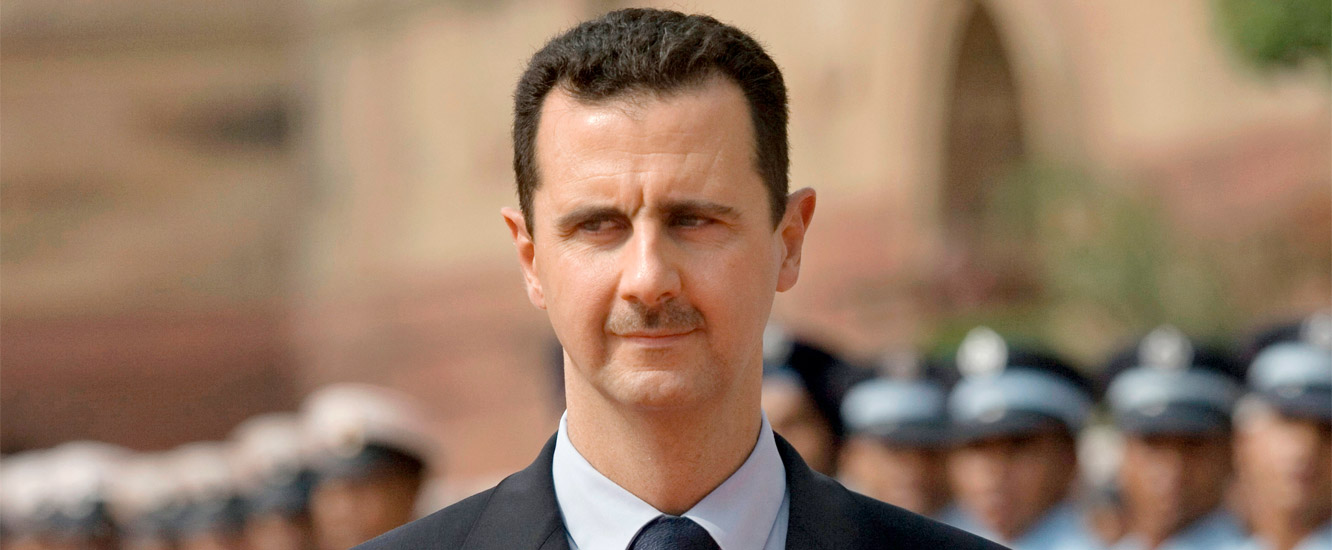
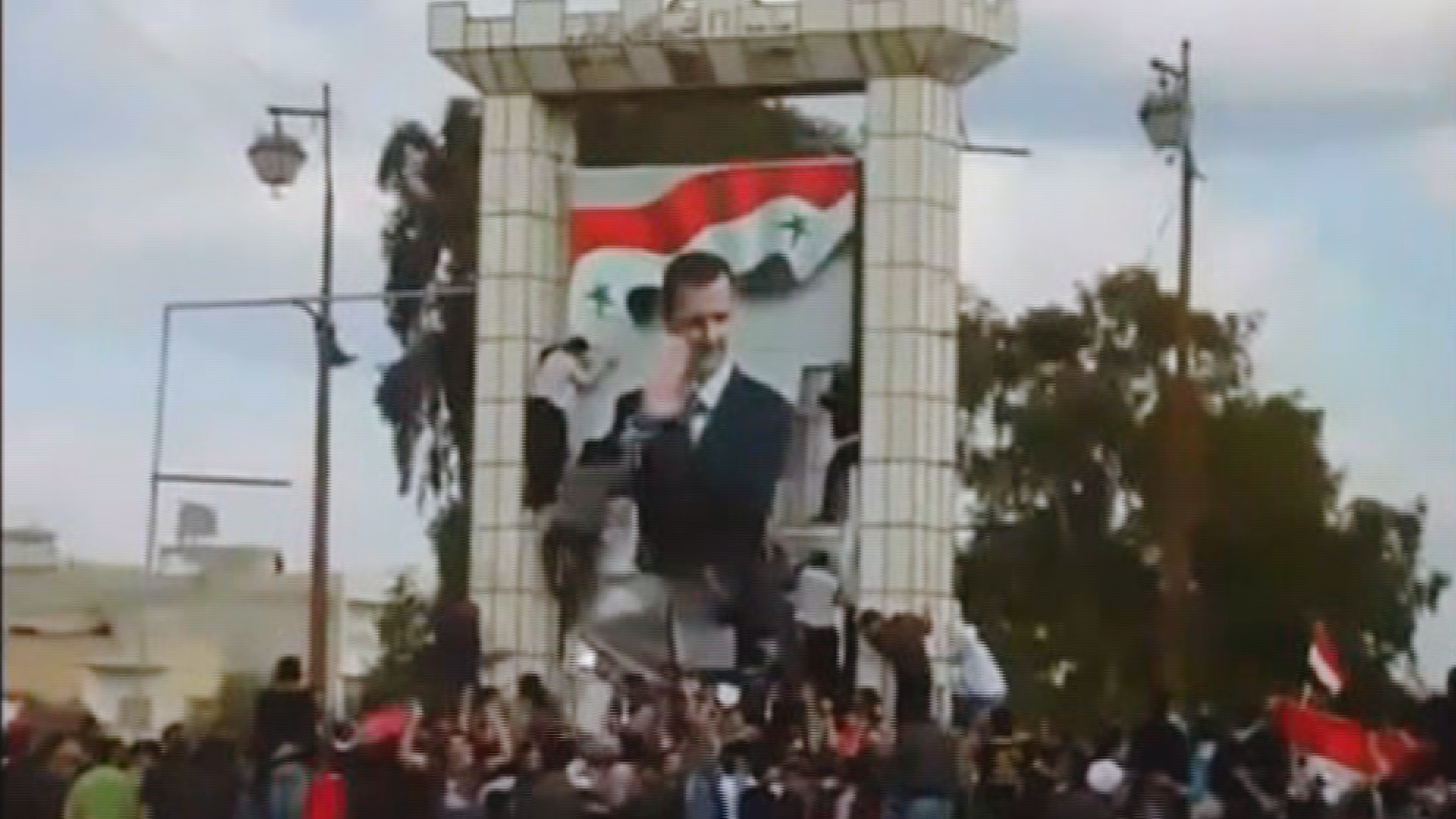
RAMITA NAVAI: The protesters considered Syria’s president, Bashar Al Assad, a tyrant.
PROTESTERS: [subtitles] [chanting] Only traitors kill their own people!
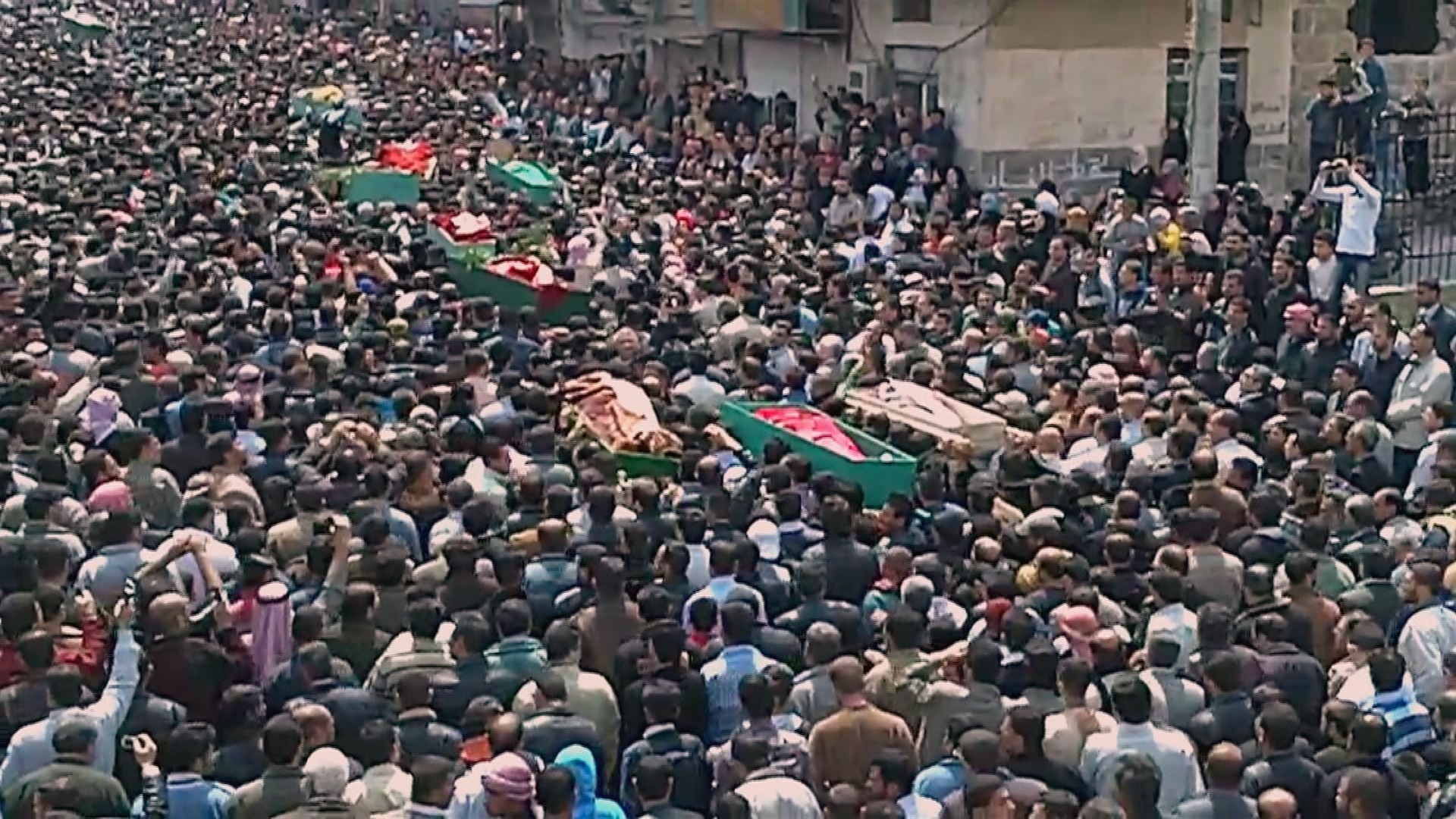
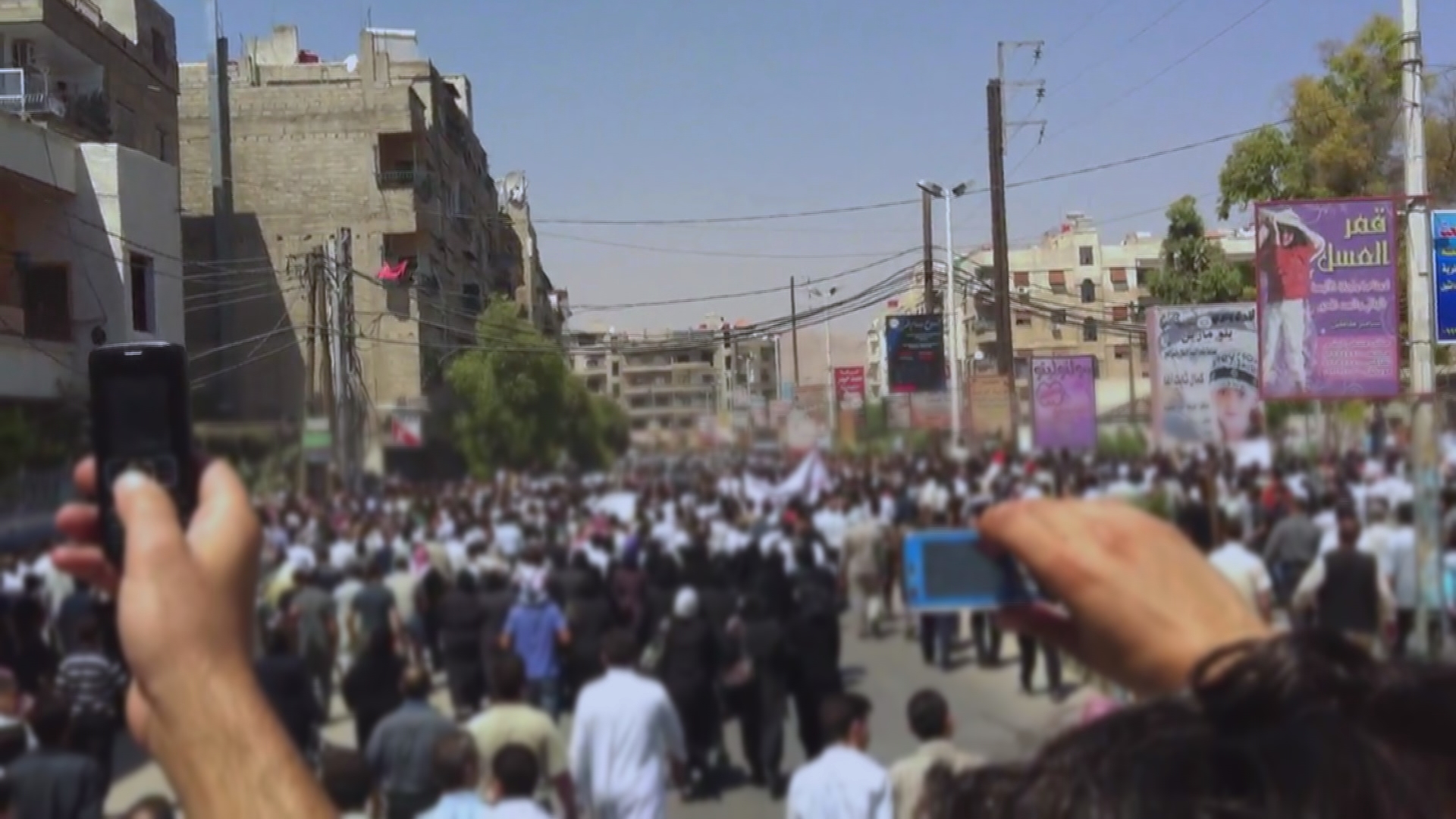
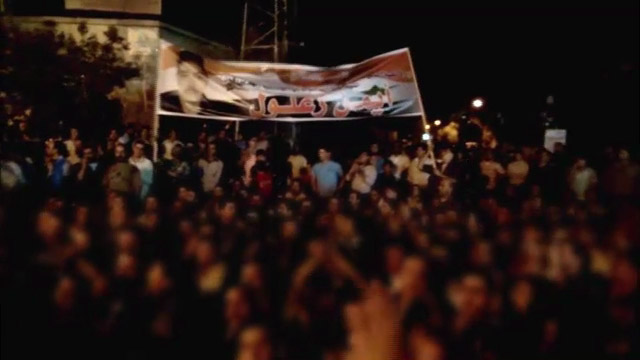
RAMITA NAVAI: Further along the road, we heard there was a funeral for a young protester who’d died in prison. We stopped to film. Abu Khaled said we had to be quick as there were government informants everywhere.
PROTESTER: [subtitles] We’ll use words to topple the regime!
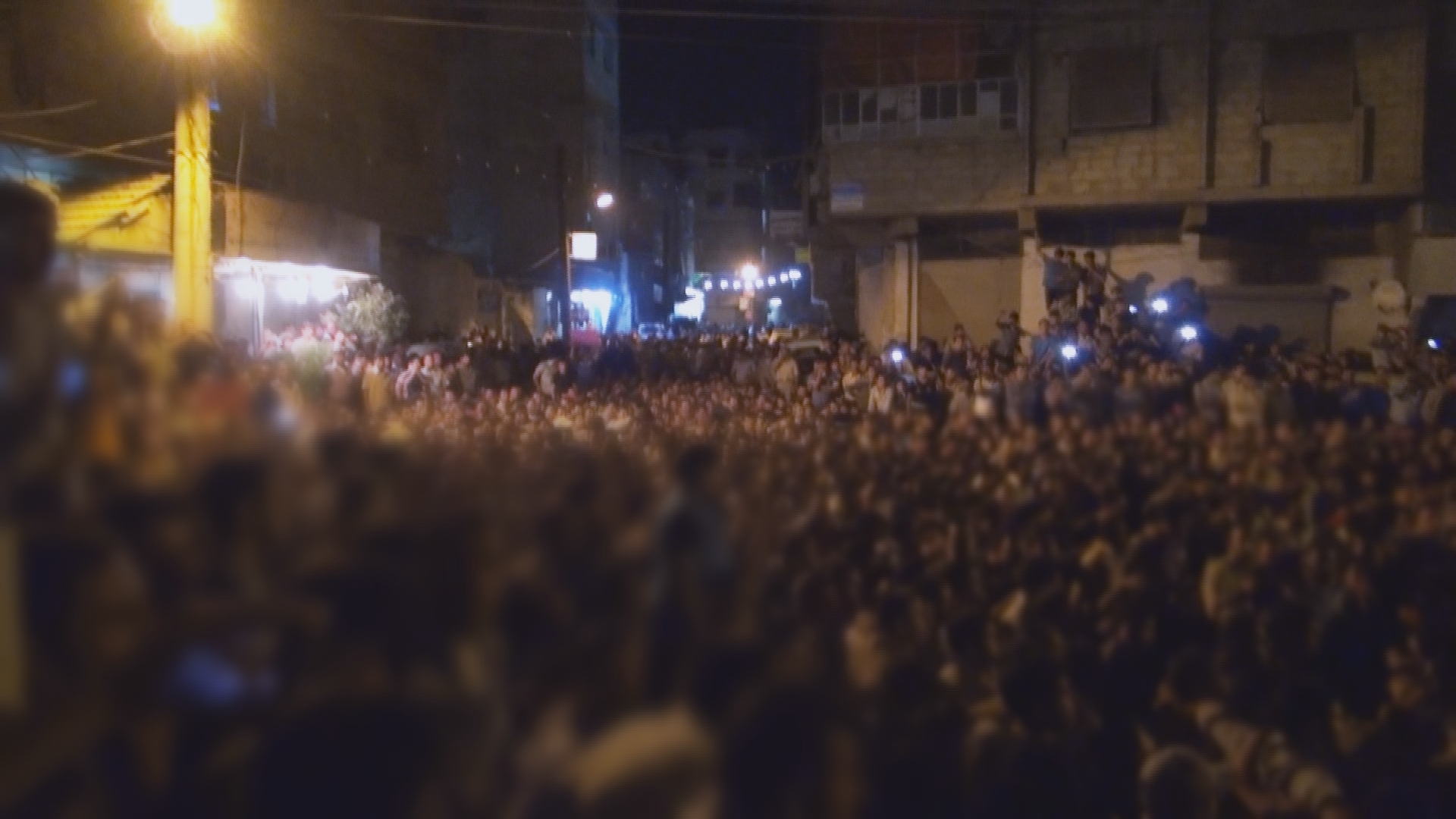
RAMITA NAVAI: [on camera] There are thousands of people at this funeral here, and they’re all chanting “Freedom! Freedom!”
[voice-over] The crowd was outside the cemetery where 22-year-old Ayman Zaghoul had just been buried. After being shot in the leg at a protest, he was arrested by the security forces. A week later, Ayman’s body was returned to his family. He had received no medical treatment and had been terribly tortured. One of his eyes had been gouged out.
Abu Khaled said we needed to leave. He told me nearly every day in towns like these, security forces shoot and kill protesters.
ABU KHALED: [subtitles] The people are living under constant siege. This area has been surrounded for more than three months. The regime is torturing us and killing our children.
RAMITA NAVAI: In the next town, 2,000 people had gathered to mourn the deaths of more protesters, including that of a 14-year-old boy. He’d been killed in nearby Douma.
ACTIVIST: [in English] They are singing a song about eyes shed tears for those martyrs who were killed, for the injured and for the freedom of Syria.
RAMITA NAVAI: [on camera] Every now and again, we get rained on by sweets, and this is people in their houses and apartments throwing sweets out at the protesters, showing their support.
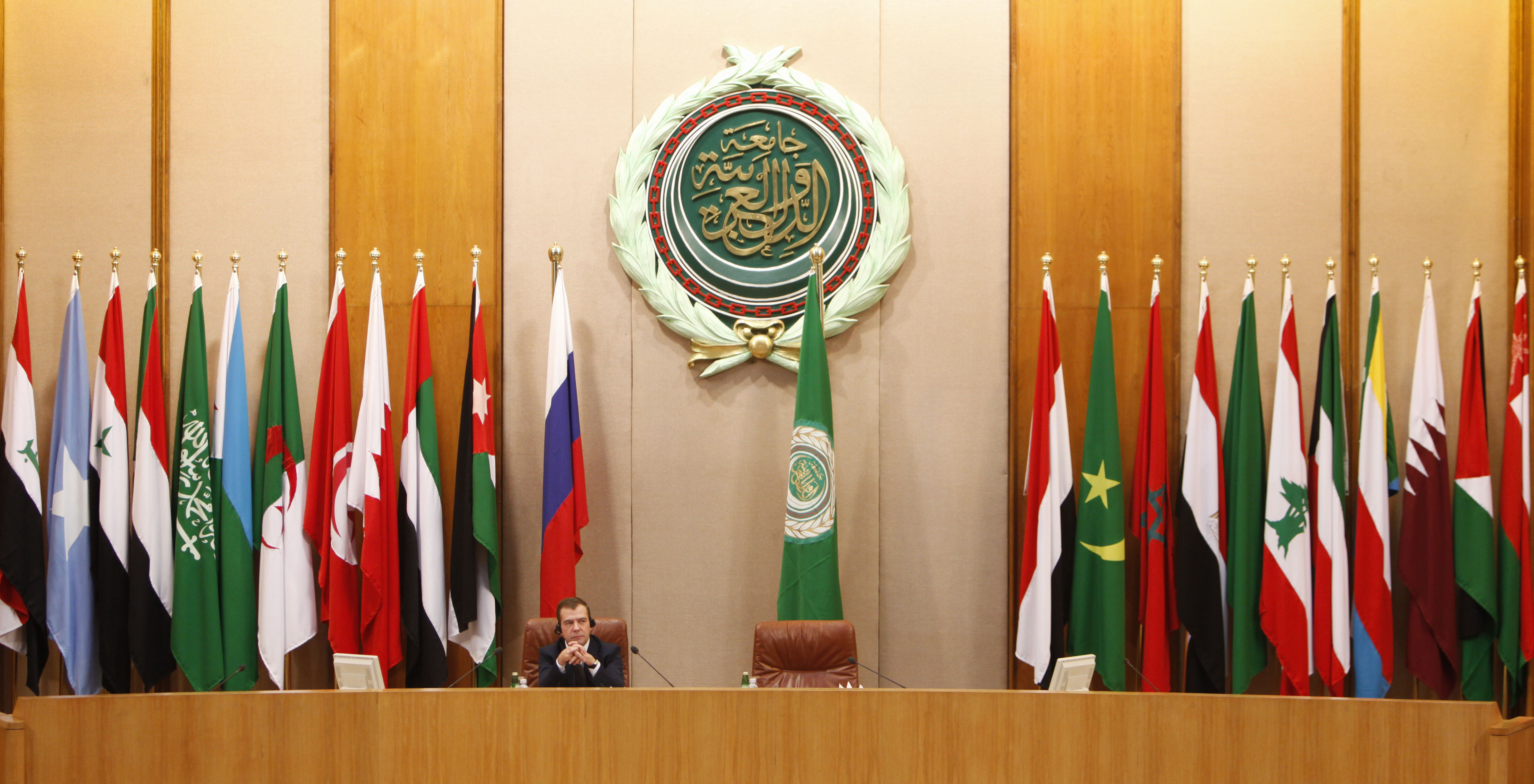
[voice-over] The protesters burned the Russian flag, angry at Russia for being one of the regime’s closest allies.
Abu Khaled thought we may have been spotted by informants. We had to leave immediately.
PROTESTERS: [subtitles] The people want the execution of the president!
RAMITA NAVAI: Finally, we arrived in Douma. I wanted to see where the 14-year-old boy had been shot.
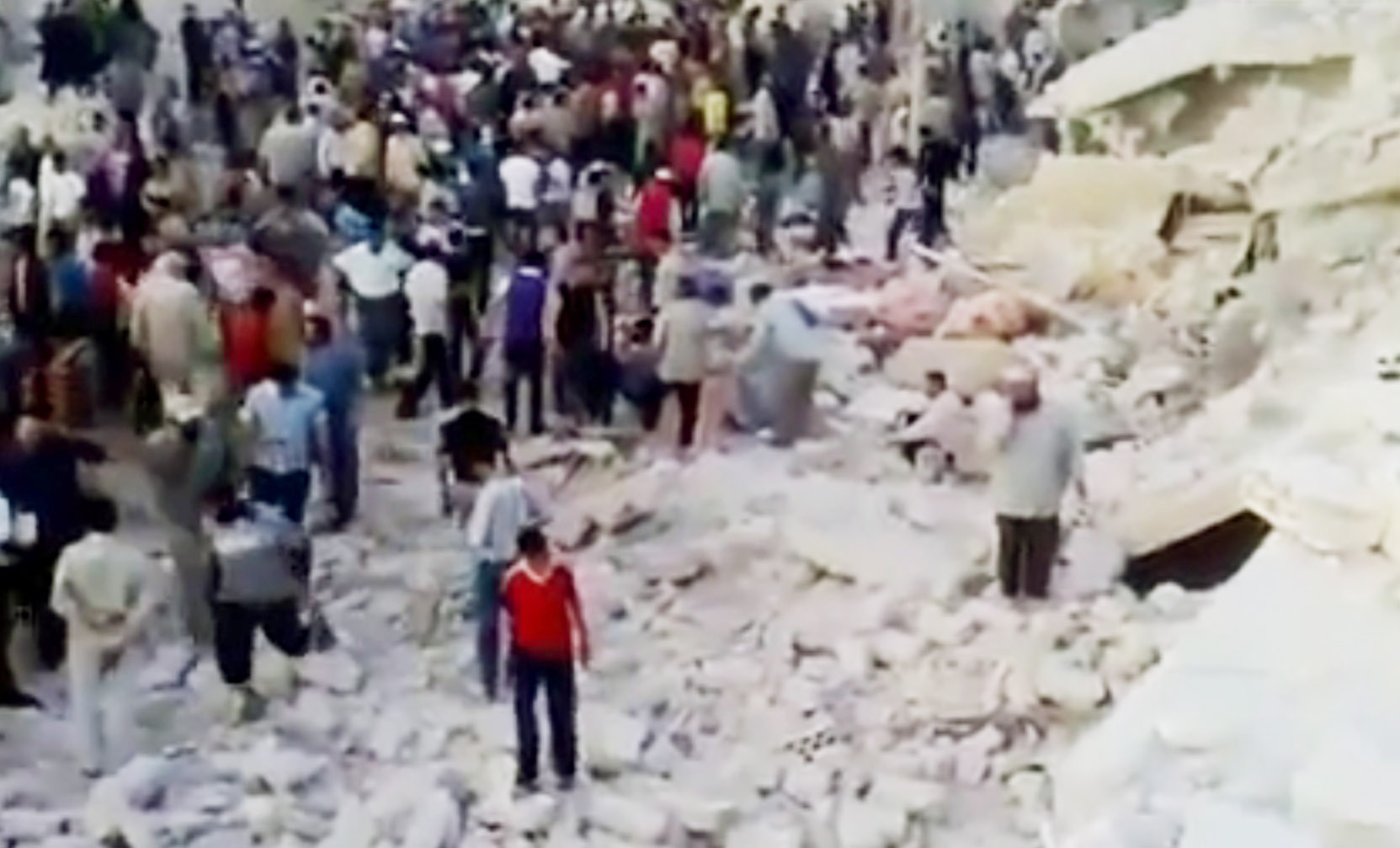
[on camera] The 14-year-old boy was killed at protest on Friday, and they’re taking us to the spot where he was killed. You can see the trail of blood. They said there was so much blood that they had to put sand on it to soak it up, and you can still see where the blood was. And here are the bullets— bullet there, bullet hole here, bullet hole here, bullet hole here. He poked his head around from this corner and they say a sniper shot him in the head.
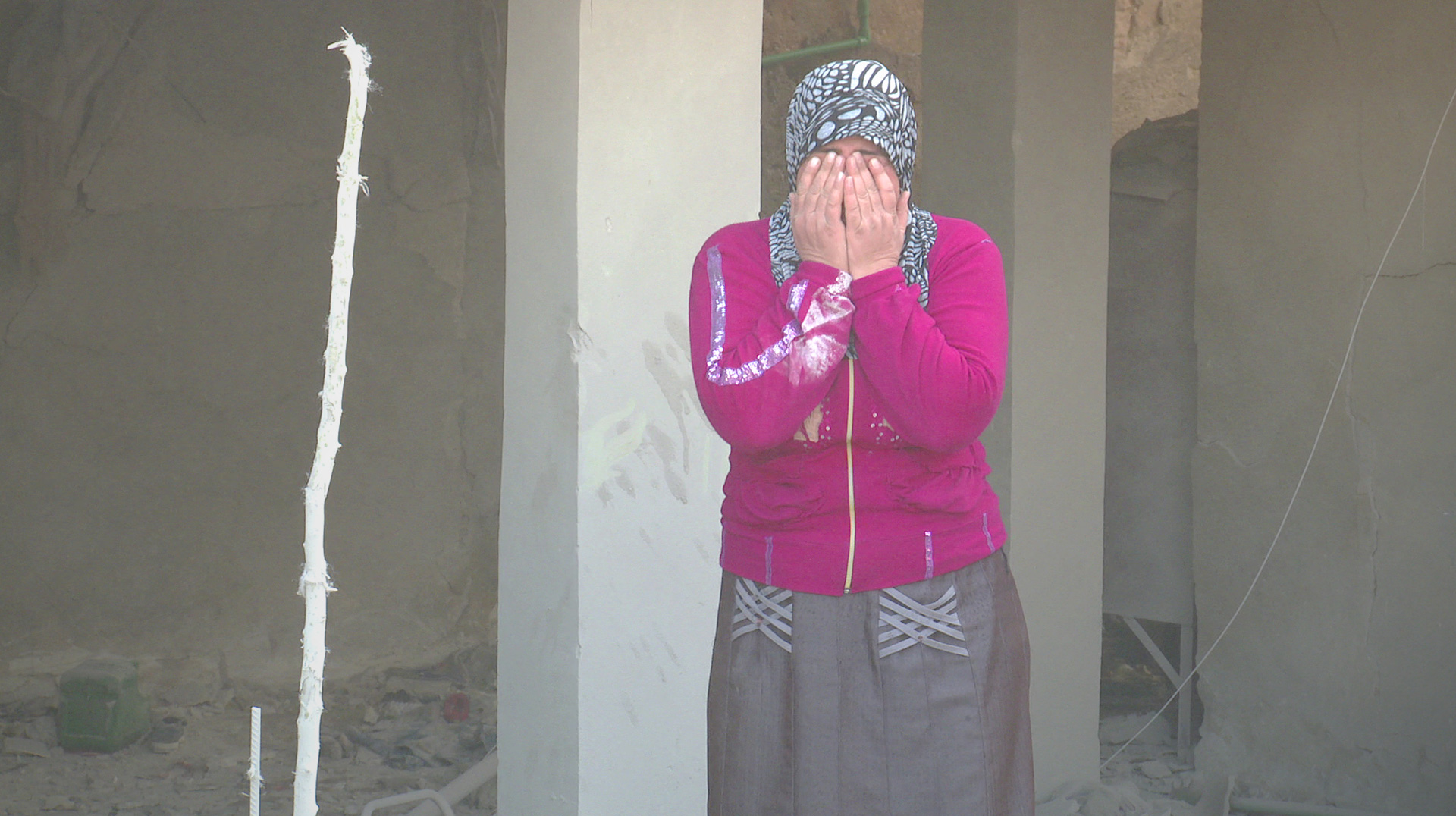
[voice-over] The boy’s father agreed to speak with me as long as I didn’t identify his family. He told me his son had been excited about going to a protest.
FATHER: [subtitles] He woke up and said, “Why didn’t you wake me up earlier?” He got dressed and raced out as fast as a rocket. Only 45 minutes after he had left, I got the news. My neighbor came and told me to go to the hospital right away.
RAMITA NAVAI: A protester filmed the wounded boy being taken for help.
FATHER: [subtitles] I raced to the hospital. He was already in the operating room. In the evening, he woke up and recognized us. Nine days after he was shot, he passed away.
This week, I’ve just been sitting and thinking about him, remembering every little thing about him. God have mercy on him.
[www.pbs.org: Ramita Navai’s reporting journey]
RAMITA NAVAI: The activists then took me to one of the hubs from where they organize the resistance movement. I met one of the leaders of the uprising, who uses the alias Abu Hazem. He’s known as a coordinator, or in Arabic, “tansiqiyat.” He showed me what had happened to his friend.
ABU HAZEM: [subtitles] This is a coordinator who worked with us. They tortured him horribly until he died.
RAMITA NAVAI: His name was Mohammed Bashir al Shami. He had been arrested just days before and interrogated for the names of fellow coordinators.
ABU HAZEM: [subtitles] I have the full post-mortem report here. Five bullet wounds to the body. He was hung upside down for more than two hours. He died hanging.
Our revolution needs sacrifices. And God willing, even if we’re down to one man, we’ll continue until the regime is overthrown.
RAMITA NAVAI: Abu Hazem has been collecting evidence of atrocities in the area. He had buried DVDs of the violence in his garden.
ABU HAZEM: [subtitles] Here I have footage from Douma. Our fear is that security forces will come and raid the house, because if they find these, we could get the death penalty.
RAMITA NAVAI: He hopes this evidence will one day be used to prosecute President Assad for war crimes. He wanted to show me video of an earlier incident that had provoked the revolt in Douma.
ABU HAZEM: [subtitles] They were at the mosque to pray for the martyrs who died on Friday, April 22, 2011.
RAMITA NAVAI: Hundreds had gathered outside the mosque to mourn the death of men killed at a protest. They were met with gunfire.
[on camera] So we’ve just seen the funeral procession taking place. They’re carrying two bodies. And the activists are pointing to the top of a building they say is the department for military security. They say the shooting’s coming from there and there are snipers on top of this building.
[voice-over] Abu Hazem keeps meticulous records of those killed, tortured and injured in Douma.
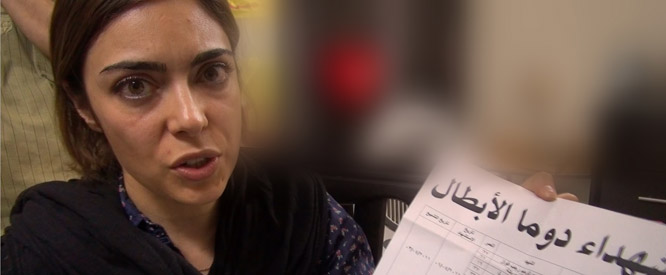
[on camera] Abu Hazem says that the man who owned the printing shop that was printing lists like this of dead protesters, and printing banners that are held up by the protesters, was killed by the authorities. Nobody is safe here.
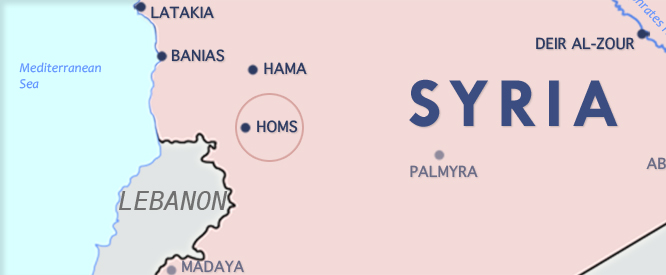
[voice-over] I’d been told we could meet three key activists on the run from the government. I was given instructions to go to the town of Madaya 30 miles northwest of Damascus.
[on camera] The activists have told us there may be two military checkpoints on the way and that soldiers have been searching cars and confiscating all laptops and cameras.
[voice-over] At each checkpoint we were searched, but our camera wasn’t discovered.
When I reached Madaya, I was rushed to the safe house where the activists were hiding. Just two hours later, the town was surrounded by the army. The activists were terrified.
[on camera] All of the activists we’re with are wanted men. They’ve had word that the army is here looking for them.
[voice-over] Like all the other activists I’d met, they used aliases for safety. Engineering graduate Abu Jaffar organizes demonstrations in Madaya, setting times, dates and locations.
ABU JAFFAR: [subtitles] The world knows Syria is a rich, beautiful, strategically located country. But the house of Assad, one family, has plundered everything and sucked the people’s blood dry.
RAMITA NAVAI: Syrians have established opposition groups across the country. The men were members of one of the biggest groups, the Syrian Revolution General Commission. Twenty-two-year-old law student Malek said Syrians were no longer willing to tolerate the one-party state.
MALEK: [subtitles] A person doesn’t have any freedom in any aspect of life here. Everything in Syria is controlled by the Ba’ath Party. They even control the person himself.
RAMITA NAVAI: President Assad belongs to the Alawite Muslim sect, a minority group in a mostly Sunni nation. But the men insisted the uprising wasn’t about religion, it was about democracy.
MALEK: [subtitles] We’re forbidden from entering into politics. We are like sheep and they are our shepherd.
RAMITA NAVAI: Malek explained how he became an activist. He’d been arrested by security forces at one of the first protests back in March.
MALEK: [subtitles] They covered my eyes and tied my hands behind me. Then the beating and swearing began. They started with the electric prod. They forced me to the ground. The scars from the electric shocks are still showing on my back.
RAMITA NAVAI: Malek’s six weeks in prison led him to join the opposition movement full-time. He and the other two men now move from safe house to safe house. Several times, they’d only just escaped arrest.
With Madaya surrounded, I had no option but to stay the night with them.
[on camera] It’s really hard to sleep when you know that a soldier can break down your door any minute. I’m constantly anxious and scared that we’re going to be tracked down. And this is just a fraction of what these guys go through as wanted dissidents. They’ve been living like this for the past five months.
[voice-over] For the next two days and nights, we were holed up in the safe house. Our food supplies started to run out. To get clean drinking water, Malek was forced to venture to a nearby spring.
We all watched news coming in from Arabic satellite channels on the protests and erupting violence. On the third morning, Abu Jaffar tried to find out the latest news on the militia and army.
[on camera] This is the first Internet login of the day, and he’s just checking in with all the other coordinators and activists around Syria to find out what the news is.
[voice-over] Activists from outside the town had posted footage of the armed forces entering Madaya.
ABU JAFFAR: [subtitles] These are the militia vehicles.
RAMITA NAVAI: [on camera] So now you can see some white pick-up trucks filled with— it looks like armed men, and he says that that’s Syria’s militia.
[voice-over] These militia gangs, locally called Shabiha, are Assad loyalists. The opposition accuses them of terrorizing their neighborhoods.
Three hours later, Abu Jaffar received a call from a lookout.
ABU JAFFAR: [subtitles] Where were they raiding?
RAMITA NAVAI: They confirmed the Shabiha were conducting violent house-to-house searches. The lookout warned they were kicking down doors on our street.
[on camera] Sounded like they were being knocked down right outside the flat.
WAEL DABBOUS: Get the door!
RAMITA NAVAI: —telling us to lock the door.
WAEL DABBOUS: Keep it.
RAMITA NAVAI: Yeah. Keep it in there.
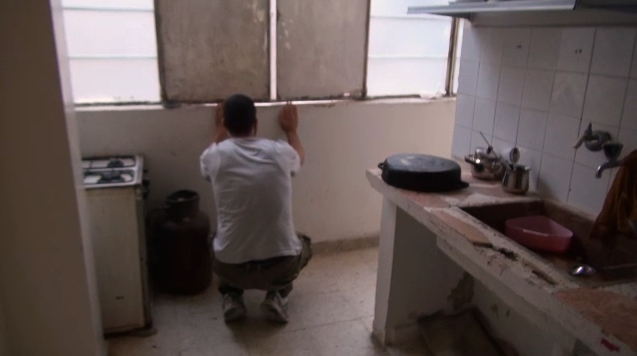
[voice-over] Malek, Mohammed and Abu Jaffar all hid in the attic. They told me not to hide, but to have my passport ready, to show that I wasn’t Syrian.
[on camera] We can now hear them right outside the door, so we’re putting the camera away.
[on camera] We hid our camera but used a cell phone to film. I could hear the screams from next door as the militia raided the house. A mother was pleading with them not to take her son.
MOTHER: [subtitles] My son!
RAMITA NAVAI: [voice-over] After six hours, I could no longer hear movement outside. A lookout had just called Abu Jaffar.
ABU JAFFAR: [subtitles] They entered the building next door, where someone we know lives. The women and children were crying, and they saw the boy and took him away.
MOHAMMED: [subtitles] We were terrified. If they had come up here and found us, they would have beaten us without mercy.
RAMITA NAVAI: We waited 12 more hours before we got definite news the militia had left.
[on camera] The coast is clear outside the safe house. The soldiers are gone. They think that the army’s retreating from the town, and so the guys are frantically packing everything up now.
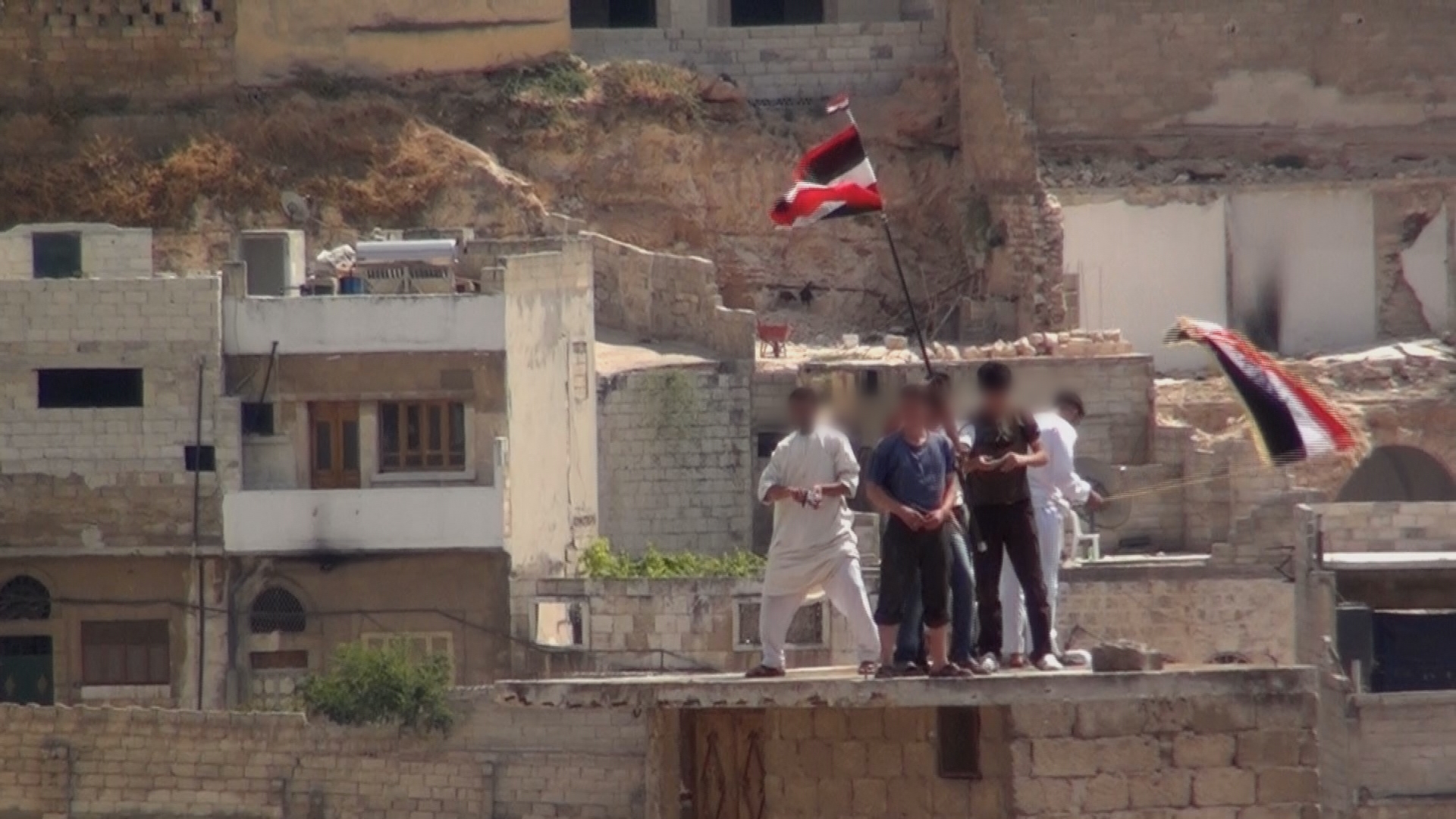
[on camera] We’d been trapped in the safe house for 72 hours. As I left, I saw the smashed windows next door. The militia had sprayed slogans on the walls.
ACTIVIST: [subtitles] Here it says, “God, Syria and Bashar, only!”
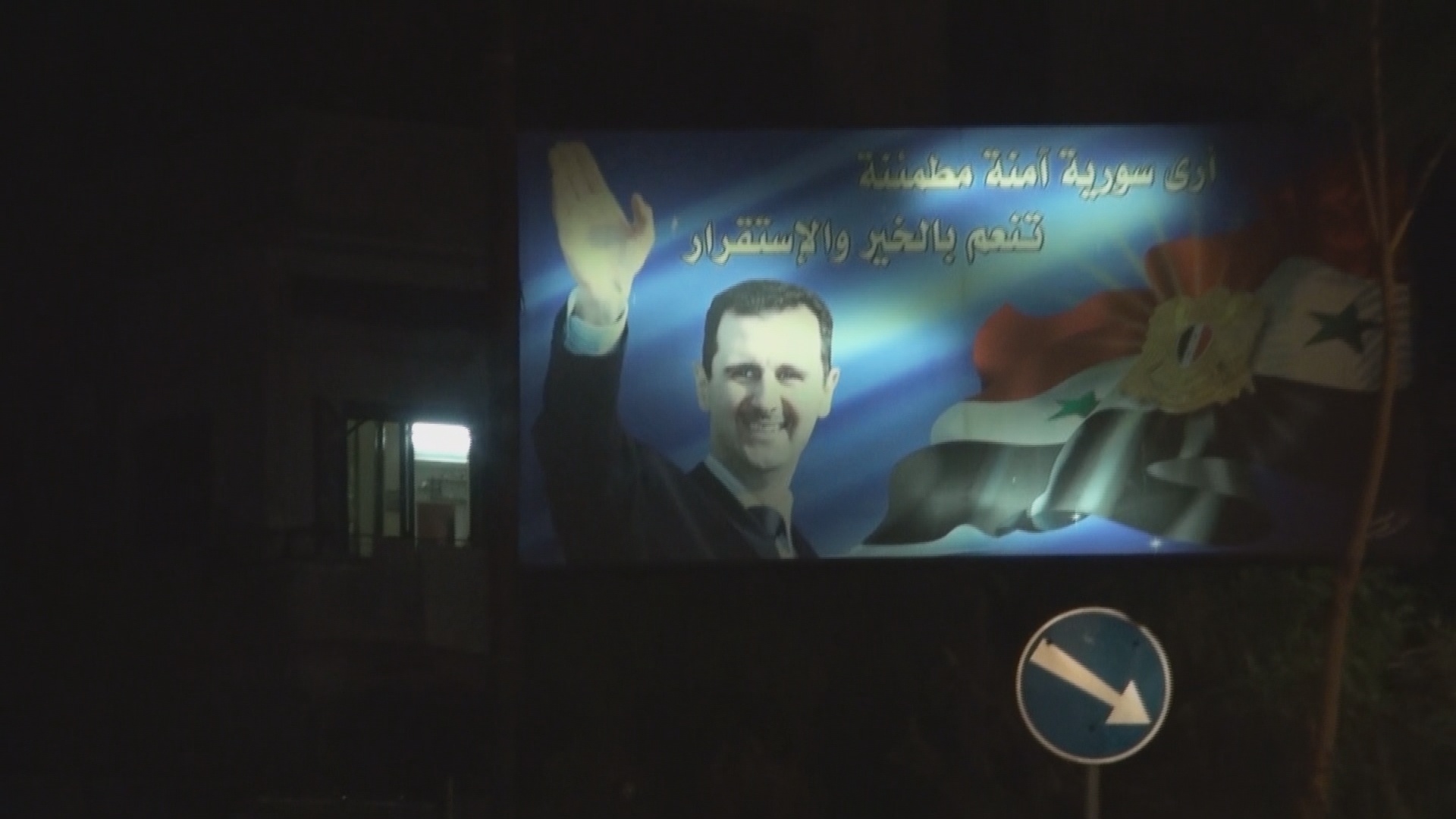
RAMITA NAVAI: There’s graffiti everywhere, on all the houses. The guys are pointing it out. And it says, “We love you, Bashar al Assad. We love you, our president.”
[voice-over] Before I left Madaya, one of the activists took me to his family’s home to see the aftermath of the raids.
ACTIVIST: [subtitles] They haven’t left anything untouched. They broke the furniture, all of it.
RAMITA NAVAI: Dozens of people had been arrested in the town.
The United Nations estimates more than 3,000 protesters have died. Thousands more have been badly injured. I was told it was no longer safe to take wounded protesters to public hospitals. Instead, secret hospitals have been set up in safe houses across the country.
In a location on the outskirts of Damascus, I met an opposition doctor. He spends every night tending to the injured.
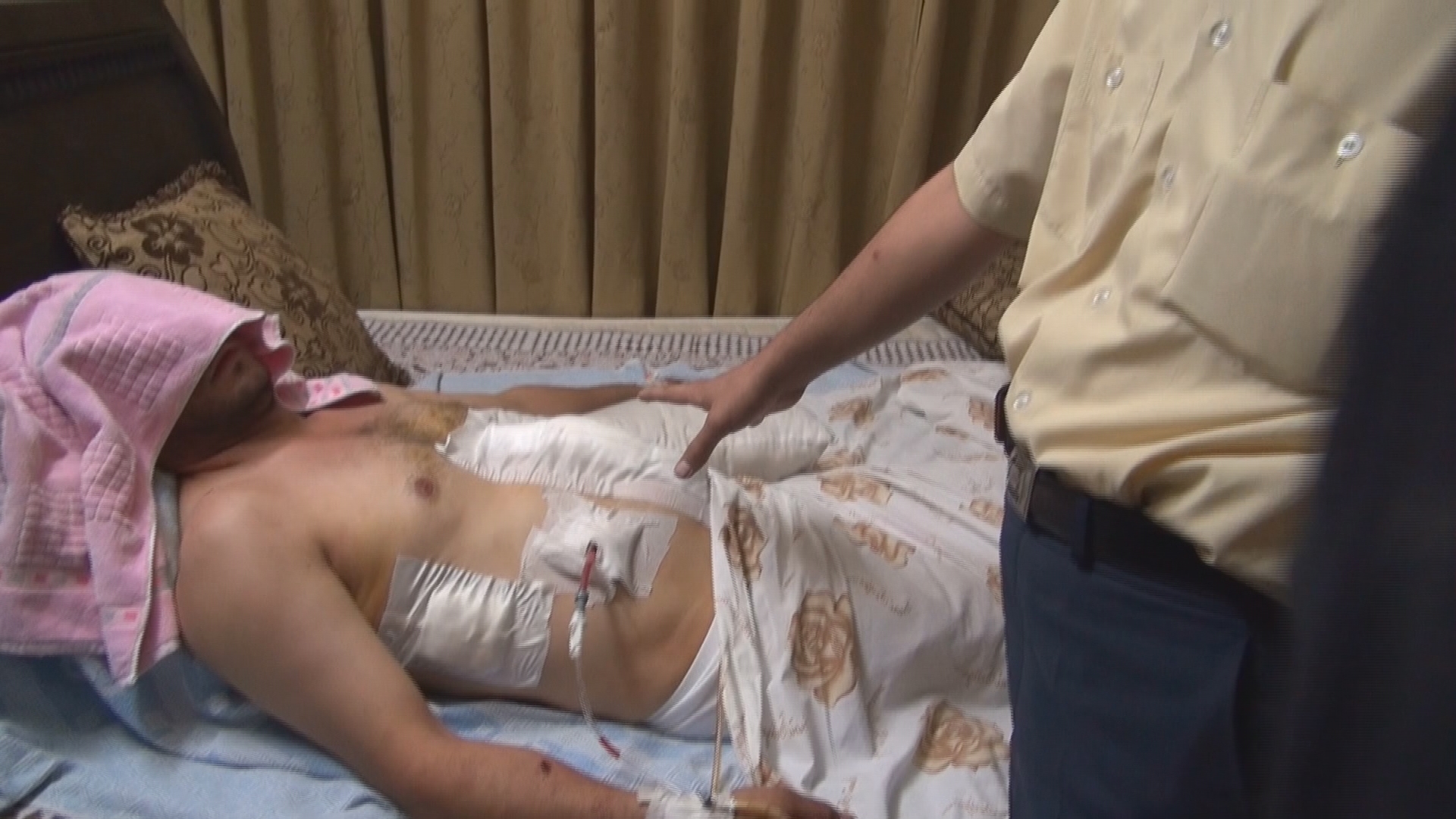
[on camera] The doctor says this man was shot three times. You can see this is a superficial wound here from where he was shot. The bullet’s still embedded in his vertebra. They haven’t been able to take it out.
[voice-over] The doctor told me government security forces raid hospitals in search of injured protesters.
PHYSICIAN: [subtitles] The wounded are being taken out of the hospital right after surgery, even before checking if their condition is stable or not, because wounded people are often abducted from hospitals. Taking injured people to the hospital is a big risk to their lives. We saw with our own eyes people with minor wounds beaten by security forces inside hospitals. Many doctors were arrested because they treated wounded protesters. Across Syria, doctors have been arrested and some have even been killed.
RAMITA NAVAI: He was scared. Ten of his fellow doctors had been arrested. Despite this, he continued to help all those he could.
To cope with the sheer number of casualties, activists have established a medical supply chain spread across dozens of locations.
[on camera] We have just been brought to another building near the secret hospital, and this is where they store the medical supplies and the equipment.
[voice-over] The activist in charge of coordinating the hospitals told me most of the medical supplies are smuggled in from Lebanon, Turkey and Jordan.
[on camera] Here there’s bandages. Over here, there’s a box of drugs, medicine, surgical scrub solution, doctor’s gown for operating. There’s even a heart monitor. And all of this has been hidden away in this warehouse because they’re so scared of being raided by the militia.
[voice-over] I was taken to another secret hospital. A man was treating his brother using improvised medical equipment.
[on camera] There’s a man lying in his bed in a safe house, and he’s very, very upset and bewildered.
[voice-over] Mohammed is a 36-year old father of three. His brother told us they’d been protesting together.
BROTHER: [subtitles] The security forces caught us by surprise and opened fire on us, killing five and injuring more than 30. We took them to the hospital, but the security forces had surrounded the town and were preventing doctors from entering. Mohammed bled for more than three hours.
RAMITA NAVAI: Because of the delay, Mohammed’s brain was starved of oxygen, causing brain damage.
Nearby, in another location, I met a 19-year-old student shot in the leg while protesting days earlier.
[on camera] Do you feel safe here?
WOUNDED STUDENT: [subtitles] Sometimes I am scared that the security forces will come to finish me off, to beat me or even shoot me. Even though I’m scared, even if they come and hurt me, it won’t stop me. I’ll still go out. As soon as I can walk well, I’ll definitely protest again.
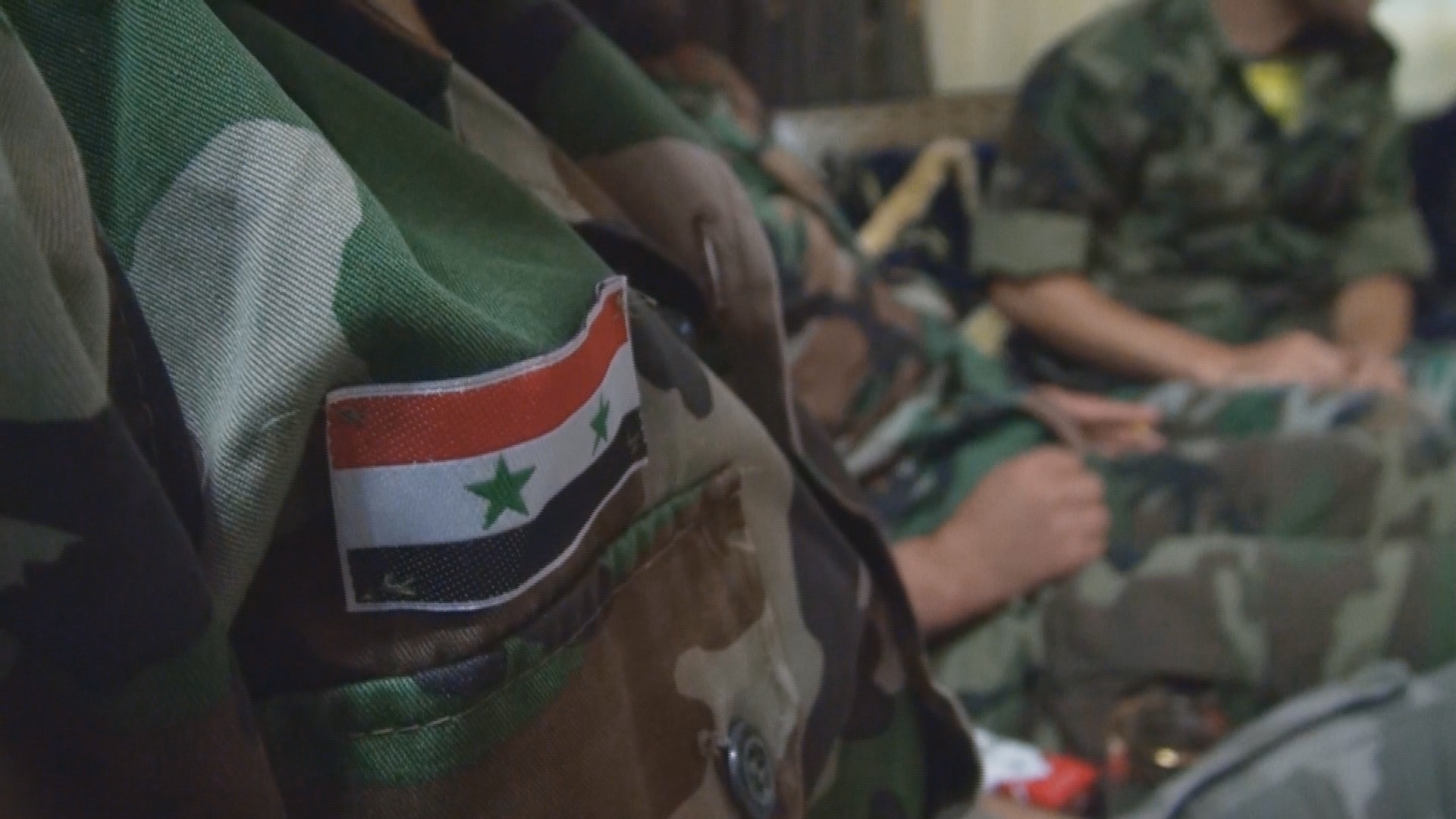
RAMITA NAVAI: [voice-over] I traveled to the countryside to meet some soldiers who had defected from the army. About 70 percent of the Syrian Army is made up of men who have been drafted. The opposition claims thousands of them are deserting. I met with four of the soldiers who are now on the run.
[on camera] He was stationed in Rif Damascus, the suburbs of Damascus. These two were stationed in Deraa in the south. And he was stationed in Tartous, which is on the coast in the north.
[voice-over] The men claimed they had deserted because they were forced to fire on protesters.
[on camera] What were your orders?
SOLDIER: [subtitles] At more than 40 demonstrations, the people came out and we were ordered to shoot. If we refused to shoot, the militia would shoot us. I don’t know if I killed anyone or not, but I was forced to shoot at protests, and a large number of innocent women and children died. A lot of people died.
RAMITA NAVAI: [voice-over] This man said he’d seen several other soldiers killed for disobeying orders.
SOLDIER: [subtitles] We stood at the front, and the militia and security forces, Assad’s gangs, were behind us. If we didn’t shoot at the protesters, they would kill us. I saw with my own eyes when my friend beside me refused to shoot at the protesters, he was shot in the head by a sniper.
RAMITA NAVAI: These soldiers, whose stories can’t be independently verified, claim many deserters are joining the revolution.
1st SOLDIER: [subtitles] We want to fight the regime. If we were given arms, we?d use them.
2nd SOLDIER: [subtitles] We wish we were armed.
RAMITA NAVAI: Some deserters have formed a group called the Free Syrian Army. They claim to be at least 10,000 strong and warn, without war, Assad will not fall. But they face security forces totaling more than 300,000.
The U.N. says nearly 200 children have now been killed. I was taken to meet one child caught up in a protest. His father said his 15-year-old son was lucky to have survived.
FATHER: [subtitles] I sent him to get bread. Fifteen minutes later, they told me my son had been shot.
RAMITA NAVAI: On his way to the shops, the boy had excitedly joined a demonstration. The security forces opened fire and he was shot in the head.
FATHER: [subtitles] His right side is paralyzed. And this was in his head. It was removed yesterday. He hasn’t been able to speak since. The doctor said he might not be able to speak for a year.
RAMITA NAVAI: [voice-over] The only way the boy can communicate is by raising his hand and blinking his eyes.
[on camera] Will you tell him I think he’s very brave.
FATHER: [subtitles] Son, she says you are brave.
RAMITA NAVAI: [voice-over] Back in Madaya, where I’d been trapped in the safe house, it was now the scene of major protests. Despite dozens of arrests, whole families were out on the streets protesting.
[on camera] They’re all shouting, “Freedom! Freedom!” There are some banners there that say, “Assad is a murderer.”
[voice-over] The opposition has been fueled with hope by Colonel Gadhafi’s recent demise in Libya. Despite the killings and torture, the people I met insist they will continue their fight to overthrow the regime. Their struggle may yet be a long and bloody one.
ANNOUNCER: Coming up next on this special edition of FRONTLINE—
ANDREW TABLER, Author, In the Lion’s Den: People were giddy early on in Bashar’s reign.
DAVID LESCH, Author, The New Lion of Damascus: Those who believed in President Assad lost faith when the first bullet was fired at a civilian.
ANNOUNCER: Who is Syria’s Bashar al Assad, and how is he holding onto power?
ANTHONY SHADID, The New York Times: Bashar’s mother is telling him to act like his father, to crush this rebellion against him.
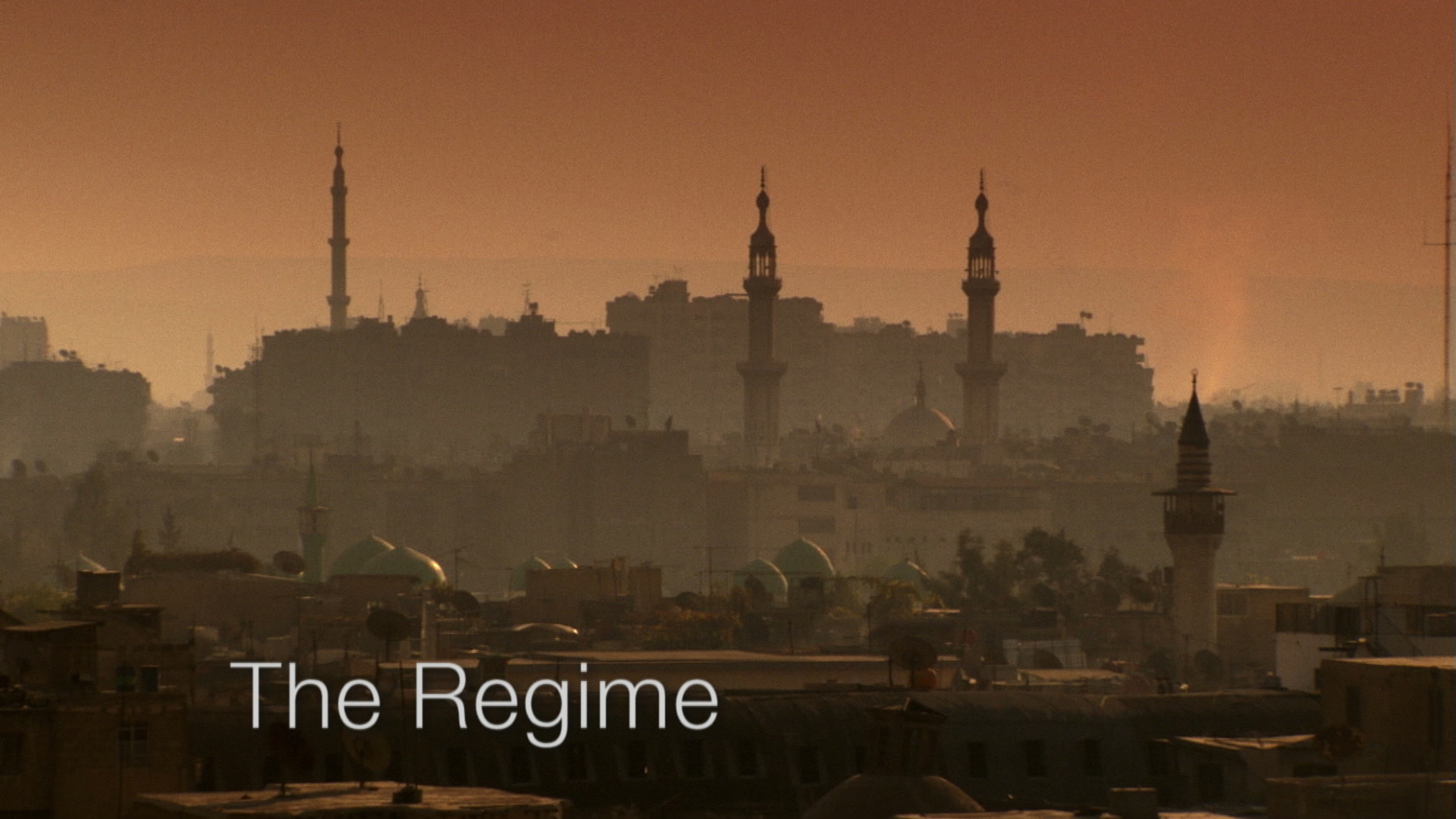
ANNOUNCER: The Regime begins right now.
The Regime
Reported with Anthony Shadid.
NARRATOR: What kind of government turns so fiercely on its own citizens? What kind of man is its leader? And why does what happens here matter?
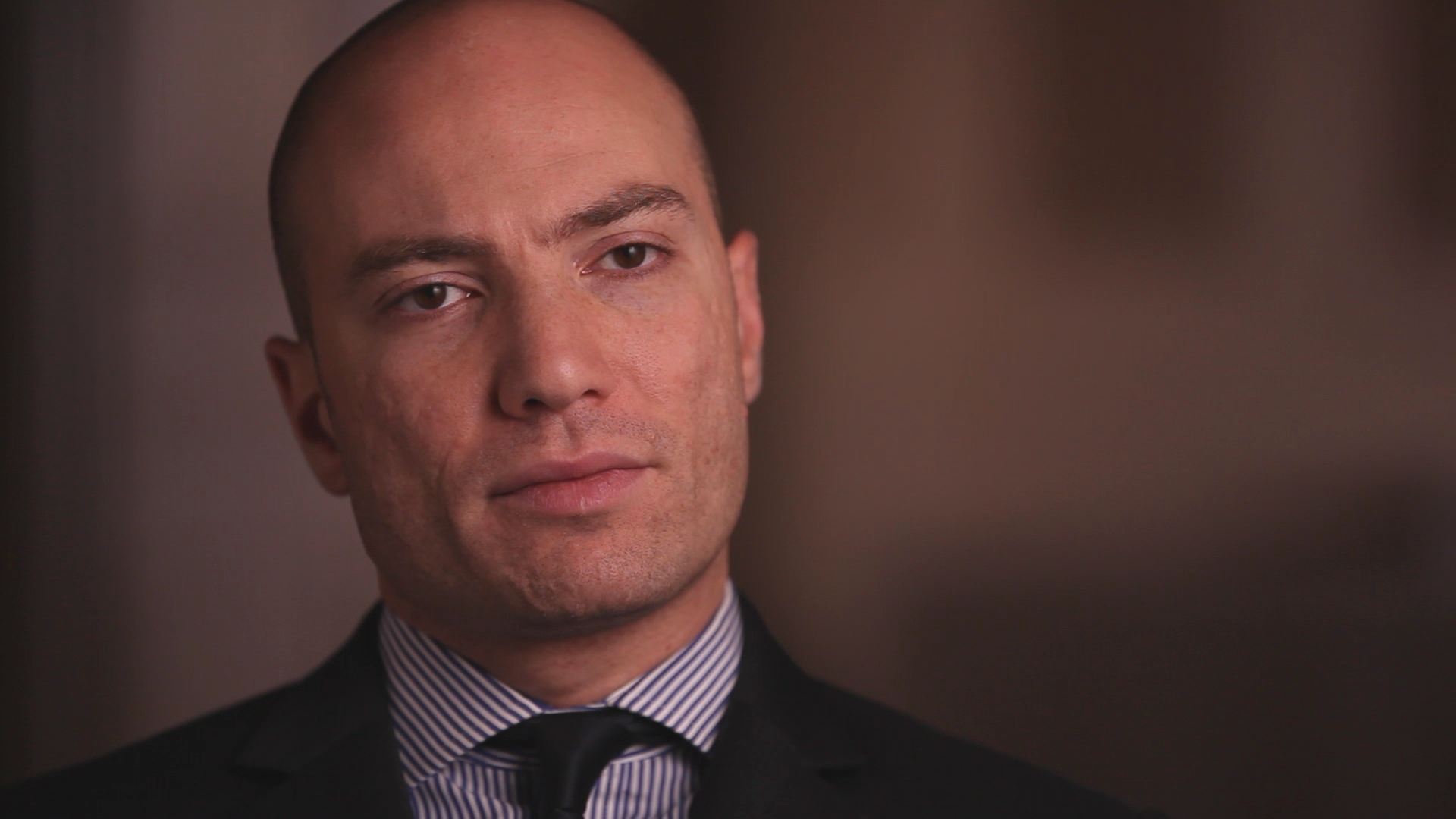
ANTHONY SHADID, The New York Times: I think it would be easy to make the argument that Syria’s rebellion is the most important of all the rebellions happening in the Arab world. Syria is so embedded in the relationships in the region, its longstanding alliance with Iran, its longstanding alliance with Hezbollah. The border it shares with Israel, the border it shares with Turkey and Iraq. And the idea that something could spiral out of control very quickly is not is not beyond the realm of possibility.
NARRATOR: The Syrian rebellion began in a small farming town 60 miles south of Damascus. On March 6th, 15 young boys painted messages on these school walls.
[Graffiti, subtitles: “Freedom, freedom and freedom, only. ” “Down with the corrupt Assad.”]
AUSAMA MONAJED, Spokesman, Syrian Opposition: They were copying what they’ve been listening to in Al Jazeera and other TV channels covering the Egyptian uprising and the Tunisian uprising.
NARRATOR: Soon after, the boys were rounded up by the government’s secret police, the Mukhabarat. Their fathers went to see the police chief, a cousin of Syria’s president, Bashar al Assad, and begged him to release their children.
AUSAMA MONAJED: He refused. And he said, “Forget that you have these kids. Go and make other ones.”
MURHAF JOUEJATI, Middle East Scholar: And if they were not men enough to make children, then, “Bring us your wives, and we will make children for you.”
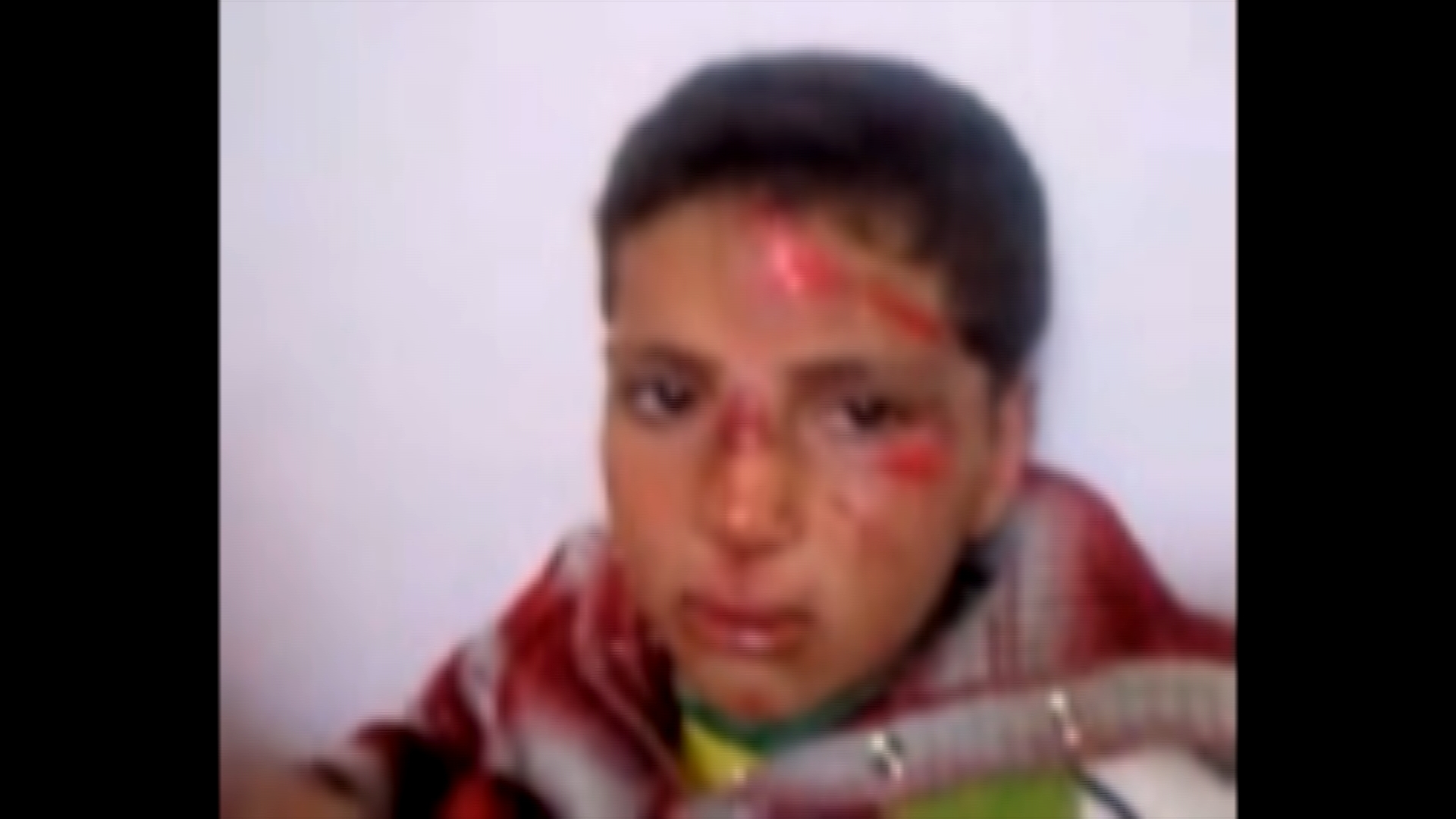
NARRATOR: One boy was never returned. He is presumed dead. Images of another circulated on You Tube.
AMR AL AZM, Syrian Analyst: Several of the children had their fingernails pulled out. They were beaten. And there are even reports of rape being committed against these children.
And in a close-knit tribal society like that, there was only one thing they could do, they rioted.
ANTHONY SHADID: That very instance of repression, of torture, seemed to galvanize the town itself. Here were the children of the town being mistreated by a government that was distant, that had neglected Deraa. And almost from that moment, the uprising seemed to gained momentum.
MURHAF JOUEJATI: It led to a major demonstration that was put down brutally by force, with the killing of several civilians. And it snowballed from there.
NARRATOR: Many Syrians, who hoped that President Bashar al Assad might intervene, felt betrayed.
AUSAMA MONAJED: Those who believed in President Bashar al Assad lost all that faith when the first bullet was fired at a civilian in the street in Syria.
NARRATOR: For over four decades, the Assads have ruled Syria, a fractious country of many tribes and religions. The Assads come from a long-persecuted minority Muslim sect, the Alawites.
DAVID LESCH, Author, The New Lion of Damascus: The Alawites had traditionally been the repressed and oppressed in the country. In fact, a famous Sunni medieval philosopher by the name of Ibn Taymiyyah once declared that the Alawites were worse than Jews and Christians and were infidels and there should be holy war carried out against them.
[www.pbs.org: Who are Syria’s Alawites?]
NARRATOR: But Hafez al Assad found a path to power through the military. Under French colonial rule, Sunnis had resisted serving, while Alawites like Hafez found opportunity. The young Assad was also a rising star in Syria’s Socialist Ba’ath Party. At age 40, he engineered a coup to seize the presidency.
ANTHONY SHADID: Hafez al Assad rose to power from the bottom up. He had to fight the battles that came with the coup d’etats, that came with trying to corral the different forces of the country into his camp.
NARRATOR: He ruled by putting trusted family members in high government posts.
JOSHUA LANDIS, Middle East Scholar: The brother is in charge of security, the cousins of the banking system, in-laws in security, as well, military. So the reality is, this is a family business.
NARRATOR: And like Tito in Yugoslavia, or Hussein in Iraq, Assad also knew how to use force. His Ba’ath Party repressed any ethnic or religious challenges.
DAVID LESCH: The Ba’ath Party promised to get rid of sectarianism. He demanded, and for the most part, the Syrian population was receptive to this Faustian bargain, that the Syrian people would accept a little bit less freedom and liberty in return for stability.
NARRATOR: Assad also secured his power by taking in millions in Soviet military aid and welcoming thousands of Soviet advisers.
But in 1979, there was a revolution in Iran. The dynasty of the Shah was replaced by an Islamic state under Ayatollah Khomeini. In Syria and across the Middle East, Islamic fundamentalists rose up.
DAVID LESCH: And there were attacks against the regime. It was essentially almost a civil war.
NARRATOR: A bombing campaign targeted government buildings and Alawite military officers. The attacks went on for several years.
DAVID LESCH: And in 1982, the regime basically said, “That’s it. That’s enough. We have to deal with this once and for all. We have to show that we’re in control.”
NARRATOR: Their chief target was the stronghold of Syria’s Muslim Brotherhood, Hama.
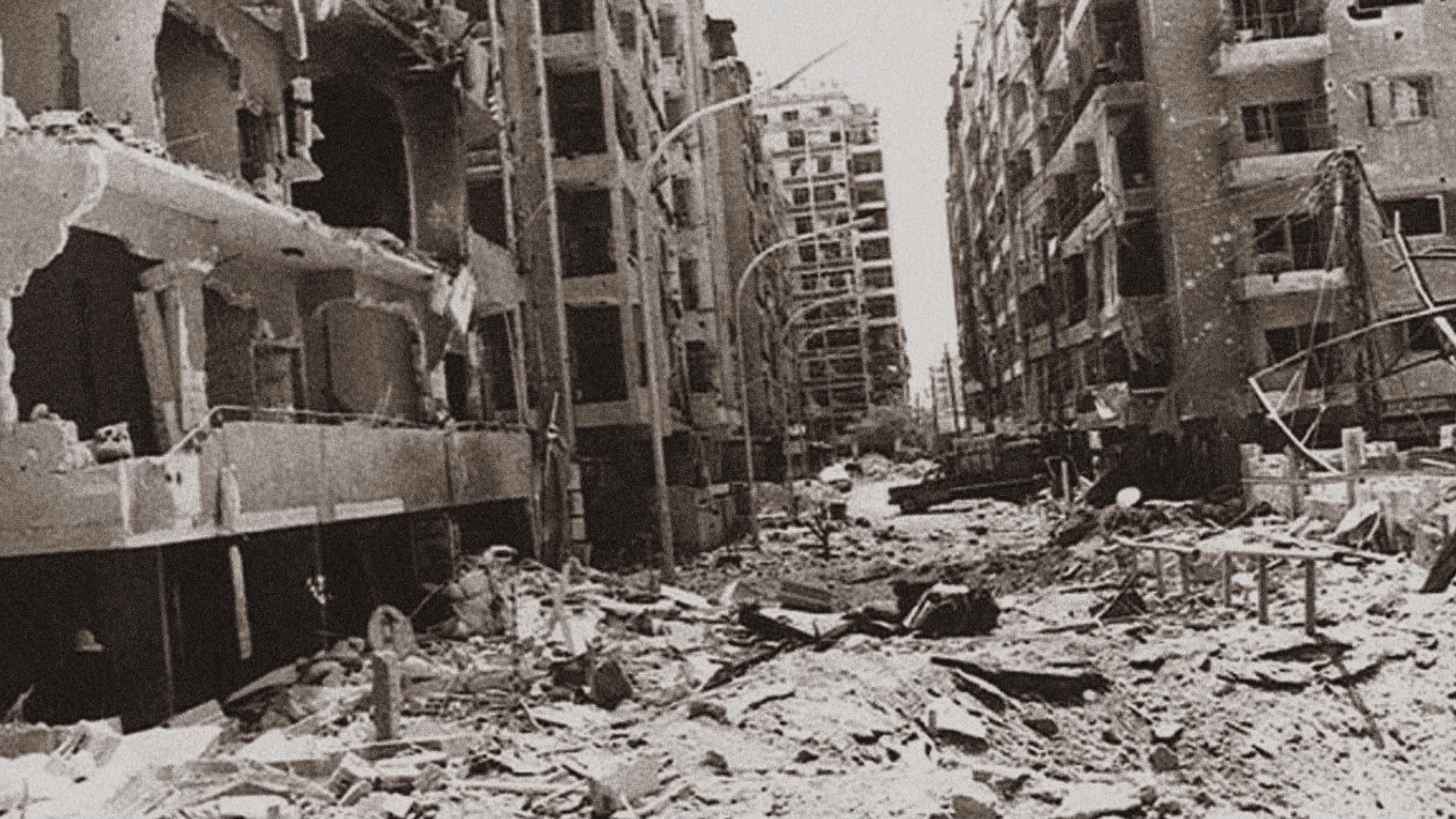
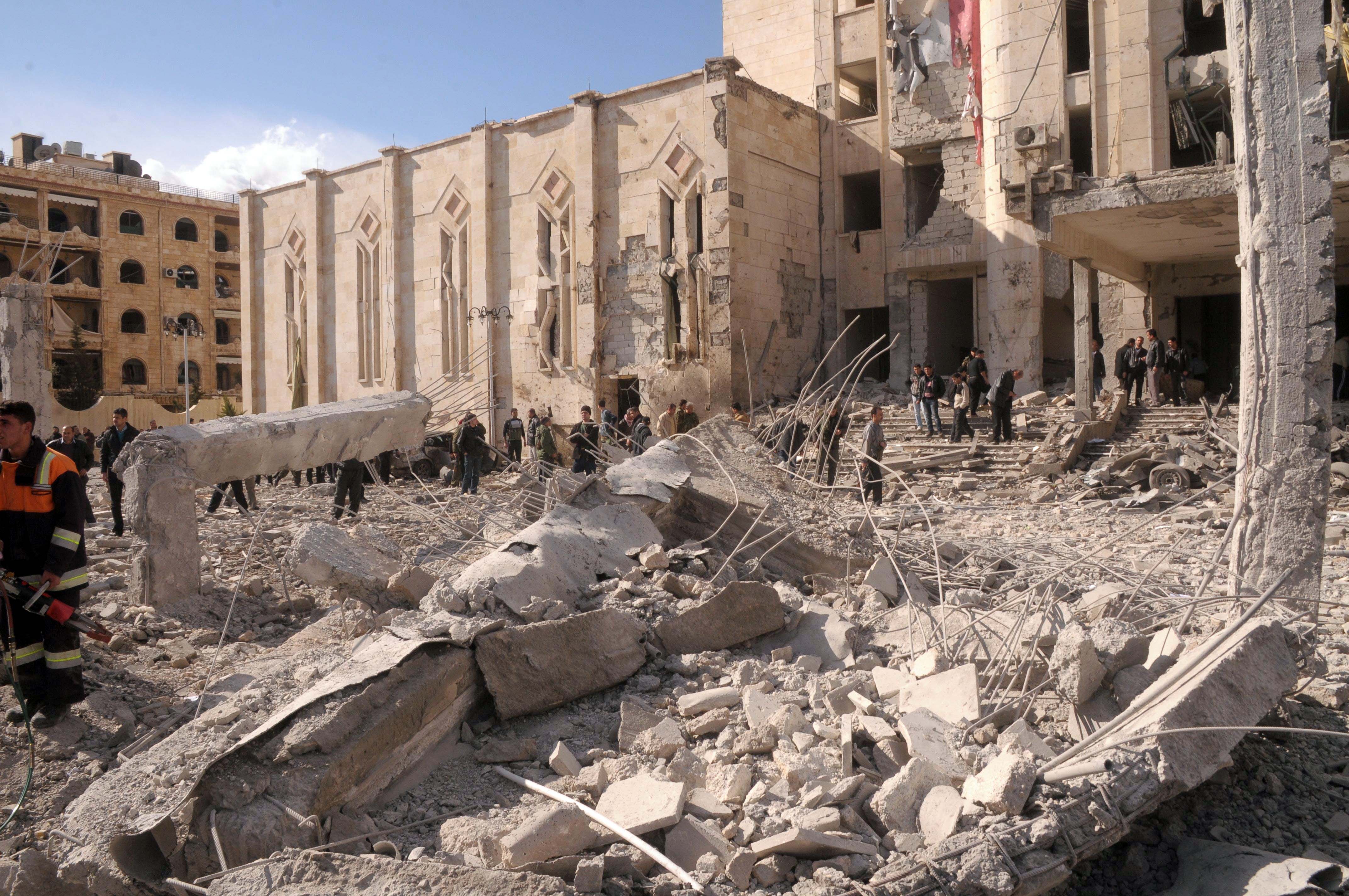
ANDREW TABLER, Author, In the Lion’s Den: In 1982, the Syrian regime launched one of the worst massacres in the history of the Middle East. The regime used artillery to level large parts of the town. Between 10,000 and 30,000 people were killed or were disappeared by the regime.
NARRATOR: Bodies were buried before these pictures were taken.
AMR AL AZM, Syrian Scholar: I just remember there was a lot of rubble and a lot of destruction. It looked like a war zone.
NARRATOR: Amr al Azm was studying archeology. On his way to a dig, he drove through the city.
AMR AL AZM: And the other thing I remember were these neatly bulldozed area where areas had been cleared and bulldozed as we drove through the city. These were probably also the mass graves that everybody talks about.
JOSHUA LANDIS: That was a very stark moment in which the Alawite-dominated regime, the Ba’ath Party, made it clear to Syria that it would not brook any opposition.
DAVID LESCH: It was a ruthless— obviously, a Machiavellian way to deal with a problem, but it did deal with the problem from the perspective of the Syrian regime because until recently, you really haven’t had any serious Islamist opposition to Hafez al Assad or his son when he came to power in 2000.
NARRATOR: A phrase was coined, “the Hama Rules,” the idea that you quash rebellion by making sure that your citizens know that you play by no rules at all.
Almost 30 years later, Hafez’s son, President Bashar al Assad, faces a similar test in Hama.
ANTHONY SHADID: Hama looked like Cairo. It looked like Tunis. This was a popular uprising. And the government was very threatened by that narrative.
I think there’s a sense out there within the government that what they’re facing right now is redolent of what they faced in the late ’70s and early ’80s. And it helps feed that notion that, “We can deal with this by security and security alone.”
AMR AL AZM: The regime has a playbook. If you’re faced with a crisis, go back to the playbook and see what we did the last time we got through a crisis. So the last time they got through a similar crisis was Hama. So you have a protest. You have an uprising. You suppress it. The playbook does not say negotiate with the protesters, so there’s no negotiation.
ANTHONY SHADID: One very high-ranking Turkish official told me that what’s going on inside the leadership is that Bashar’s mother herself is telling him that these are the same events, that they remind her of what happened in the late ’70s and early ’80s. And her advice to him is that he has to act like his father. He has to be strong, he has to be decisive, and he has to crush this element of rebellion against him.
[www.pbs.org: More from Anthony Shadid]
NARRATOR: Bashar sent in tanks, armored vehicles and snipers.
DAVID LESCH, Assad Biographer: This is how the Assads, both father and son, deal with domestic threats. They retreat into their Alawite fortress, and there’s this convulsive reaction to put down any sort of domestic threats, and to put them down ruthlessly.
NARRATOR: Many Syrians had hoped Bashar would be different than his father. During the first massacre of Hama, Bashar was studying medicine at the University of Damascus. The studious 17-year-old expressed no political ambitious. After graduation, he moved to London.
DAVID LESCH: He was not earmarked for the presidency. He was going to be an ophthalmologist and he was prepared to do that for the rest of his life.
NARRATOR: The heir apparent was Bashar’s older brother, Basil. But in 1994, he was killed in a car accident. Bashar was ordered to come home. He joined the Republican Guard and was sent to serve in Lebanon, preparing for the day he would take office.
AMR AL AZM: We all knew he was going to take over. We all knew that Hafez al Assad was on his last legs, if you want. You know, he was close to death. It was very clear that he was very ill. And the question was always how well groomed has Bashar been?
NARRATOR: He was inaugurated in July 2000. The young doctor, with his fashionable British-born Syrian wife, a former banker at JP Morgan, promised reform.
ANDREW TABLER: People were giddy with the idea of reform early on in Bashar’s reign. He opened up the country to the Internet. He lifted exit permits, which were required for Syrians to travel, and he allowed more trade in the country.
JOSHUA LANDIS, Editor, Syria Comment: He said, “We can open up. We’re going to have some private newspapers, private press, Internet.” And he believed that he could win the hearts and minds of the people through modernization and let a lot more light in.
MURHAF JOUEJATI, Middle East Scholar: He had allowed what became to be known as the “Damascus Spring.” He promised reforms, and he promised political reforms. And so there were political salons that began to emerge and people began to talk about ideas. How is Syria going to meet the future? Which path is it going to take? And there was an era, I would say, in the 2003, 2004 in which there was an open debate, and a healthy one.
JOSHUA LANDIS: He was genuinely popular amongst the young people, who hadn’t lived through his father and who saw him as a potential reformer. And he kept on telling them that life is going to get better. And they could see fairly dramatic changes, at least for the wealthy.
NARRATOR: In Damascus and Aleppo, the two largest cities, the transformation was evident.
DAVID LESCH: There’s been a great deal of infrastructural improvement in both cities. It’s very noticeable to anyone who’s been to Syria over the years. There’s been a nouveau riche that has been created.
ANTHONY SHADID: There was a sense of commercialism. People felt that they were seeing things in the street that they might see in Beirut, a much more prosperous city, in some ways.
NARRATOR: But the regime’s old guard watched the Damascus Spring with fear. They urged Bashar to stop his political reforms. They told him it would undermine the regime.
MURHAF JOUEJATI: The political establishment — the Ba’ath Party — and those in the senior ranks of authority decided that if this free political debate was going to continue, they were going to lose their heads. And so there was a sudden clampdown. It was the return of authoritarianism.
NARRATOR: In 2005, hundreds of activists and intellectuals were arrested. The Damascus Spring was over. For the next several years, as Syria faced drought and high unemployment, especially in the countryside, President Assad’s popularity eroded.
This year, a popular revolt in Tunisia toppled a dictator. Egypt was next. It was unclear if the Arab Spring would spread to Syria.
ANTHONY SHADID: There was a sense that there was going to be a contagion, that this unrest might spread to other parts of the Arab world. But even at that moment, I think there was a sense that Syria was too authoritarian. Syria wasn’t at the point where it would have fed a rebellion. And I think that’s why, until now, we’ve seen this uprising focused in the countryside, rather than the big cities.
This is a movement of the rural parts of Syria, this disenfranchised countryside that was stricken by drought, neglected by the government. And they had a lot less to lose, say, than the bigger cities like Damascus and Aleppo.
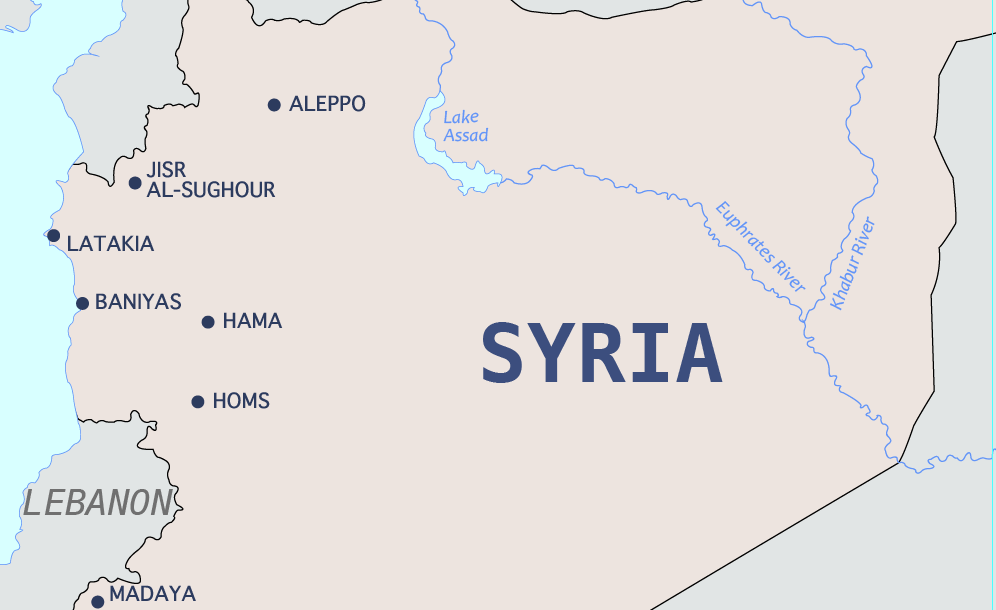
NARRATOR: At first, in rural towns like Deraa, Homs, Latakia and Hama, workers and farmers were timid in their demands.
AMR AL AZM: Initially, when the protest went out, people were asking for dignity. They were asking for housing, subsidized heating fuel. “We want jobs. We want cheap bread.”
MURHAF JOUEJATI: And it is only when the authorities turned brutal on them, deadly, that they began to chant that they want a change of regime.
[www.pbs.org: A map of Syria?s protests]
NARRATOR: A month after the uprising began, President Assad came before parliament. Syria’s business and political elites applauded him.
AMR AL AZM, Syrian Analyst: He walked in and it was all very jovial. There was a lot of clapping and cheering every time he spoke. At one point, one of the members of parliament stands up and says, “Sire, you are such a brilliant leader that you should not just be the leader of Syria, you should be the leader of the world.”
MURHAF JOUEJATI: The expectation— not only the popular expectation but the expectation of those circles of power were that Bashar al Assad was going to stand there and introduce a package of reforms that, hopefully, would allay these grievances and would meet with the popular demands. Instead, he stands up there to accuse this entire uprising of being a foreign conspiracy.
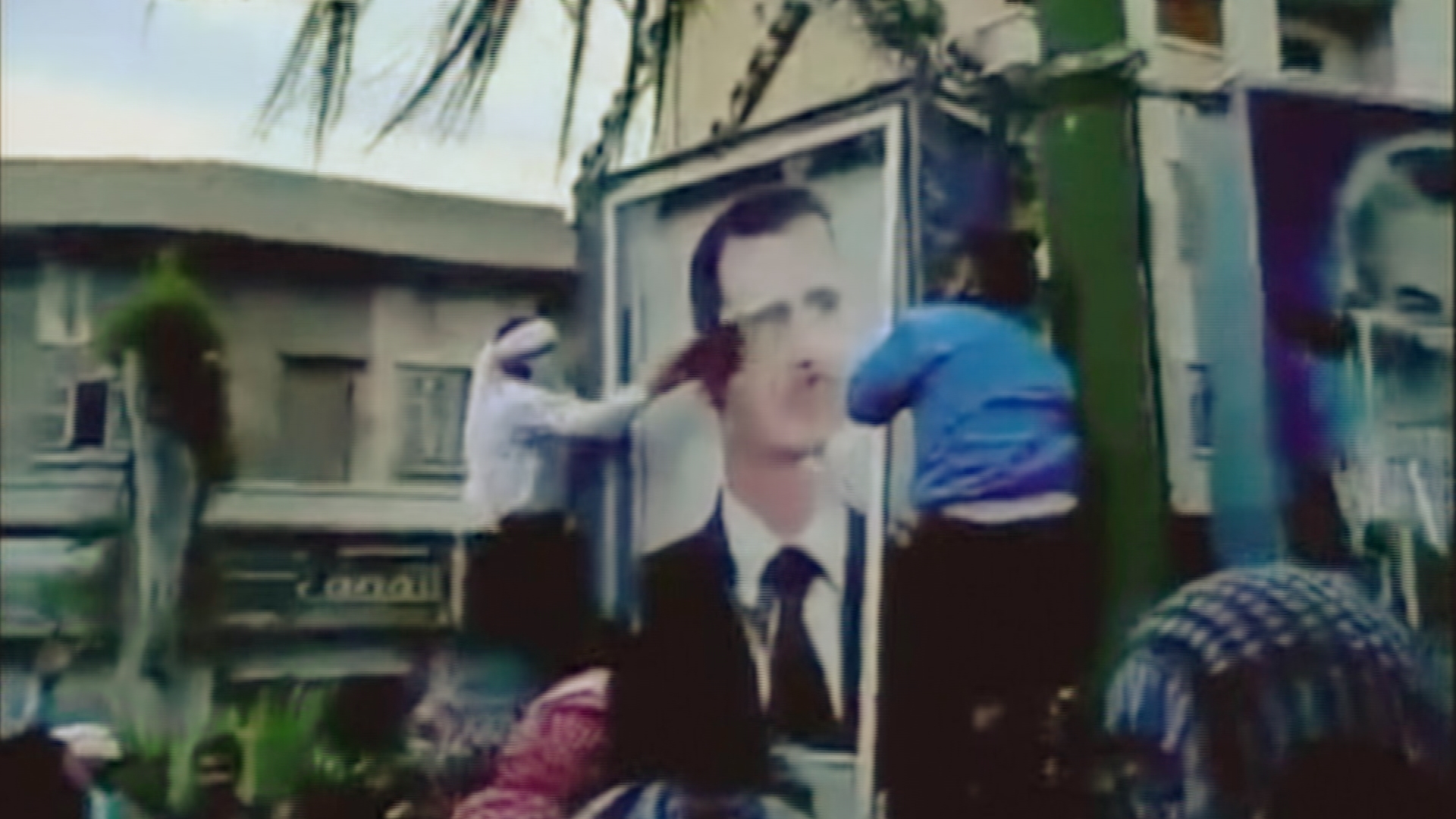
Pres. BASHAR AL ASSAD: [subtitles] They (conspirators) falsified pictures, made up misleading information, and they forged everything.
AMR AL AZM: There was no sense of remorse. That’s what shocked people. There seemed to be a complete detachment, as if, “Everything’s going to be OK. My people love me. And look, my car is being mobbed as I leave the parliament.”
NARRATOR: Outside Damascus, the calls for Bashar’s resignation were only getting louder.
PROTESTERS: [subtitles] Time to leave, Bashar!
NARRATOR: As the uprising spread, demonstrators picked up a song written by a bricklayer from Hama. Then it was recorded by a popular Syrian singer, Ibrahim Kashoush. It became the people’s anthem.
PROTESTERS: [subtitles] Time to leave, Bashar! To hell with you, Bashar! And anyone who supports you. I’m tired of looking at you. You’d better get out, Bashar!
AUSAMA MONAJED, Spokesman, Syrian Opposition: It’s kind of a popular song. And the lyrics was carefully chosen, and sometimes funny, sometimes humor, sometimes very deep. And it was soon all over the country.
NARRATOR: But in July, the singer was silenced.
AUSAMA MONAJED: Eventually, they got hold of him. And they tortured him brutally, to a limit that they took off his— his throat. And they ditched him in the river. When he was discovered, his throat was obviously cut out, just to send a message that whoever dares to chant against Bashar al Assad will face a similar destiny.
NARRATOR: The regime also organized mass rallies of its own. In Damascus and Aleppo, government workers were called to the streets.
SUPPORTERS: [subtitles] We want Bashar! God, Syria, and Bashar!
DAVID LESCH, Author, The New Lion of Damascus: There is a very strong well of support for the regime in those cities. And this is vital for the regime because the last thing they want to see is a situation that occurred in— in Egypt, in Tahrir Square, in the center of Cairo. You know, if that happens, if there are large-scale protests in Damascus and Aleppo, that’s when it becomes, you know, almost a certainty that the regime will fall.
JOSHUA LANDIS: Today, it’s the upper-class Sunnis from the cities who are hanging with the regime and feel like things were going in the right direction and they don’t see any alternative. And they’re frightened of the countryside getting too much power and taking over and perhaps being too fundamentalist and other things for them.
NARRATOR: For now, months after the uprising began, Bashar al Assad is holding on, even declaring victory.
JOSHUA LANDIS: Most people thought this regime would have crumbled and fallen by now. They gave it Ramadan. Everybody was saying Ramadan’s going to do it, six months, this sort of thing. And now we’re in the seventh month, and the regime is confident.
ANTHONY SHADID: There’s no question, at this point, that the Syrian government thinks it’s won. There’s a sign in Damascus these days that says, “It’s over.” Another sign says, “Congratulations, Damascus. We won.” I think there is a mindset in the government that does believe it’s won.
NARRATOR: But the opposition is not conceding. They have formed a political party and called for outside help. Defecting military officers have established their own militia. Syria’s neighbors now worry that a Syrian civil war is imminent and may overflow its borders.
ANTHONY SHADID: When the Arab revolts began at the beginning of the year, there was so much hope. But what we’re seeing with Syria is the danger, is the flip side of those Arab revolutions. Civil war in Syria would have reverberations immediately in the rest of the region. And I think everyone’s bracing themselves for that.
JOSHUA LANDIS: Syria is the hub of this tinderbox in a region which is extremely unstable. And should it fall and there be civil war, it could ignite flames of revolution and undermine regimes which are extremely important. So it’s hard to see where this ends.