
Iran Flops in Bid for Board of Women's Org; Loses World Philosophy Day
11 Nov 2010 03:43No Comments
Press Roundup provides selected excerpts of news and opinion pieces from the Iranian and international media. Click on the link to the story to read it in full. Tehran Bureau has not verified these stories and does not vouch for their accuracy. The inclusion of various opinions in no way implies their endorsement by Tehran Bureau. Please refer to the Media Guide to help put the stories in perspective. You can follow other news items through our Twitter feed.
THE LEAD
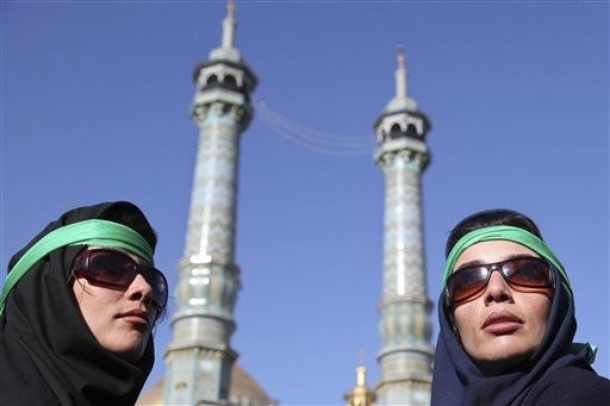
Iran Fails in Bid for Key UN Women's Agency
AFP | Nov 10
Iran failed Wednesday to secure a seat on the board running the new UN super agency for women in the face of a fierce diplomatic onslaught against its rights record.
Saudi Arabia, criticised for refusing even to let women drive, got an automatic seat and rights groups said they will now seek to put the spotlight on the Islamic kingdom's record.
Four UN agencies were merged this year to set up UN Women, with a 500-million-dollar budget per year, under the leadership of former Chilean president Michelle Bachelet.
Iran was beaten to an Asian seat on the executive board by East Timor, a late entrant to the contest, in a vote at the UN General Assembly. Iran had originally been guaranteed a place as the Asia region had put forward 10 candidates for 10 seats.
But East Timor put itself forward as a spoiler late last week as controversy mounted over Iran's rights record, diplomats said. It won 36 votes to secure the last Asian seat, against 19 votes for Iran.
The United States, European Union, Australia and Canada carried out an intensive diplomatic campaign to sway votes against Iran, diplomats said.
"It was an expression of disapproval of Iran's rights record," Norway's UN ambassador Morten Wetland told AFP, explaining his country's decision to back East Timor.
"We are extremely relieved," said Philippe Bolopion, UN specialist for the Human Rights Watch group. "Iran has a catastrophic record on rights," he said.
"It is a country which has distinguished itself by actively repressing women's rights activists, they have harassed many and imprisoned some," he told AFP.
Iranian Nobel Peace Prize winner Shirin Ebadi had said before the vote that having either Iran or Saudi Arabia on the board of UN Women would [be] "a joke."
Ebadi said that Saudi Arabia's record on women is worse than Iran['s].
Unesco Backs Off Philosophy Day in Iran
New York Times | Nov 9
The United Nations Educational, Scientific and Cultural Organization decided Tuesday to pull the plug on another embarrassment to its reputation, dissociating itself from this year's celebration of philosophy, to be held in Iran in less than two weeks.
Unesco has been celebrating World Philosophy Day since 2002, but an agreement made quietly in 2008 for Iran to host this year's event became extremely controversial, given Iran's record of repression and censorship after disputed elections in 2009.
Academics vowed to boycott this year's event, scheduled for Nov. 21 to 23, and European nations, joined by the United States, urged the organization's new director general, Irina Bokova, to cancel the event.
A Paris-based event for Philosophy Day, which Ms. Bokova intends now to be the main celebration, is expected to go ahead as scheduled on Nov. 18.
There were indications that Iran's state-supervised news media was attempting to gloss over Unesco's absence. A report by the semiofficial Mehr news agency, for example, said that besides the "gathering which will be held in Iran for the International Day of Philosophy, Unesco will hold various events at its headquarters in Paris."
Over the spring and summer, diplomats and nongovernmental organizations pointed to the arrests and deportations of notable Iranian academics after the elections, and to evidence that the event was being run by hard-line voices in the complicated Iranian system.
Ramin Jahanbegloo, an Iranian-Canadian philosopher who was jailed in 2006 and now teaches at the University of Toronto, was instrumental in organizing an academic boycott of the Tehran event, and urged Ms. Bokova to reconsider.
He pointed out that President Mahmoud Ahmadinejad had installed a hard-line politician, Gholam Ali Haddad Adel, whose daughter is married to the son of Iran's supreme leader, Ayatollah Ali Khamenei, as head of the Iranian Institute of Philosophy.
Iran Will Hold Int'l Philosophy Day Better than the Past, Envoy
IRNA | Nov 10
Iran's Permanent Representative to The United Nations Educational, Scientific and Cultural Organization (UNESCO) Mohammad Reza Majidi said on Wednesday that the Islamic Republic of Iran will hold the international Philosophy Day better than the past.
Speaking to IRNA, he said the Zionists tried to create obstacle[s] to holding such an international event in Iran but to no avail.
The International Philosophy Day was held for the first time in the year 2002 and the occasion will be marked in over 80 countries each year including the Islamic Republic of Iran which has been designated to mark the occasion this year, he said.
Tens of philosophers along with ambassadors at UNESCO are to take part in the occasion in Iran and the country is to host the Philosophy Day much better than before, he underlined.
He said that there is no doubt the recent statement issued by UNESCO on its failure to cooperate on organizing the event was due to political pressures exerted by the Zionists which will be regarded as a black spot in the records of activities of this international body.
OTHER NEWS
Four Student Activists Transferred to Evin: Student Union Crackdown Intensifies
ICHRI | Nov 10
An informed source told the International Campaign for Human Rights in Iran in an interview that four members of the Daftar Tahkim-e Vahdat student organization arrested in recent days, Ali Gholizadeh, Mohsen Barzegar, Alireza Kiani, and Mohammad Heydarzadeh, have been transferred to Evin prison. All four are students at university. The source told the Campaign that the prosecutor in Babol told Barzegar and Kiani's families that they were arrested based on cases launched against them by judicial authorities in Tehran. Another source in Mashad quoted Ali Gholizadeh's family saying that he was being transferred to Evin prison in Tehran.
The arrest of another four members of Daftar Tahkim-e Vahdat, a student organization pronounced "illegal" by Iran's Ministry of Science and Ministry of Intelligence, marks a new phase of crackdowns on student activists. Raja News, a website close to security and judicial circles, said in a 31 October report titled "The movements of the team were related with the MEK for reviving the Allameh group in a new cover," emphasized the student group's "illegal" status, waging several charges against the student activists. The sources for such reports are unknown. In the past, similar articles have appeared and in their wake, a marked rise in the arrests of student and political activists has occurred. Raja News claimed that two members of the organization are connected to Pjak and MEK groups and that the students received funds from the organizations. In its report Raja News claimed that several "low grade activists of certain universities" have been "deceived" in order to "create a new group which would follow the interests of the terrorist group MEK, under the guise of a student organization named 'Allameh Group.'"
"Compared to other groups, the pressure on Tahkim-e Vahdat's General and Central Council members has been immense and mounting daily over the past few years. It shows the regime is hard at work to eliminate the nationwide student organization in different ways," a member of Daftar Tahkim-e Vahdat told the Campaign regarding the recent arrests of their members.
"But arresting members of Tahkim-e Vahdat on the threshold of 7 December and after the organization's renewed efforts show that security forces have no intention of compromising with organizations that seek freedom, democracy, and human rights," he added.
"The new gathering of Tahkim-e Vahdat was held under dangerous and suppressive circumstances. Security forces acted quickly to arrest selected members," said the Tahkim-e Vahdat member who requested anonymity. "It seems the arrests and crackdown on different layers of student movement is intensifying as we get closer to Student Day (7 December), and in order to achieve maximum suppression, the universities would implement scenarios implemented by security forces," he added.
Iran Proposes Date, Venue, Says Not to Discuss Nuclear Issue with Major Powers
Xinhua | Nov 11
Iran proposed Nov. 23 or Dec. 5 as the date for planned talks with major powers in Istanbul but Iranian President Mahmoud Ahmadinejad said Iran will not discuss the nuclear issue in the proposed talks.
In an official letter to the European Union's foreign policy chief Catherine Ashton on Tuesday, the content of which was not disclosed, Iran's chief nuclear negotiator Saeed Jalili delivered the country's suggestion on the venue and date for the talks with G5+1.
[The] Iranian President said in a televised speech in the central city of Qazvin on Wednesday that Iran will not make any concession over its nuclear rights and the Islamic Republic will only talk about international problems.
"Iran is ready to hold talks on equal conditions to help settle ongoing problems, ease international concerns and establish peace and security in the world," he said, adding the Islamic Republic will never talk about its basic rights.
The Iranian nation would never allow anyone to violate its legitimate rights even by an iota, he said, expressing the Islamic Republic's readiness to negotiate based on justice and respect, according to local satellite Press TV.
Ahmadinejad called on the West to sit down at the negotiating table with an equal status and based on mutual respect. "Under such condition[s], Iran can hold talks on global issues," he said.
Iran will welcome any hand extended with honesty but would cut off any hand with deception, he was quoted by Press TV as saying.
Iran Nuclear Rights Not Negotiable, Ahmadinejad Says
BBC | Nov 10
"We have said that the talks be based on justice and respect," [Ahmadinejad] said in a televised speech in the central Iranian city of Qazvin. "That means you [the West] have to climb down from your ivory towers and put aside your arrogance."
Mr Ahmadinejad has previously set out conditions for any nuclear talks, including that the parties publicly declare their positions on Israel's reported nuclear arsenal.
Iran has repeatedly argued that as a member of the Non-Proliferation Treaty (NPT), it has the right to pursue "peaceful nuclear technology" for which it has begun a uranium enrichment drive.
There have been calls from the West for Iran to abandon the sensitive enrichment work, amid accusations it is pursuing a secret nuclear weapons programme.
BP Ready to Shut North Sea Gas Field over Iran Sanctions
AFP | Nov 10
Energy giant BP said Wednesday it was making preparations to shut down a gas field off Scotland it operates with Iran, because of EU sanctions against the Islamic republic.
"We're still awaiting clarification from the UK government about this issue and the implications of the new sanctions regulations for fields, but pending that clarification, we are making preparations to shut the field," a BP spokesman told AFP.
The shutdown of the Rhum field would take "several days", he added.
The Rhum field, lying 250 miles (400 kilometres) off Scotland's northeast coast in the North Sea, is a 50-50 venture between BP and the National Iranian Oil Company (NIOC) under a deal that pre-dates the 1979 Islamic revolution.
Iran, Vatican Discussing Creation of Monotheistic Religions Front
Tehran Times | Nov 10
The establishment of a united front of monotheistic religions is being discussed by Iranian and Vatican officials at a meeting currently underway in Tehran.
The seventh round of meetings between Iran's Center for Interreligious Dialogue and the Vatican's Pontifical Council for Interreligious Dialogue (PCID) began on Monday at the Islamic Culture and Relations Organization (ICRO) headquarters.
At the meeting, ICRO Director Mohammad-Baqer Khorramshad said that the united front can be set up through emphasizing the cultural affinities of the monotheistic religions.
The dissemination of the ways monotheistic religions respond to the basic needs of people can be helpful in the interreligious dialogue, Khorramshad added.
PCID President Cardinal Jean-Louis Pierre Tauran, PCID Secretary General Archbishop Pier Luigi Celata, and a number of other Vatican officials are attending the meeting.
Cardinal Tauran thanked Iran for its efforts to organize the meeting.
Mutual respect and trust and the younger generation should be topics of discussion in the dialogue between monotheistic religions, Cardinal Tauran said.
The belief in a plurality of deities and membership in polytheistic sects are the main blights of modern societies, he added.
Unity within the monotheistic front is the only way to avoid depravity, he noted.
London Irked by Baha'i Oppression in Iran
UPI | Nov 10
The British government has expressed "deep concern" over the harassment of the Baha'i religious community in Iraq, a British foreign minister said.
Alistair Burt, the British Foreign Office minister for the Middle East, said London was continuing to stand by members of what he said was a repressed community in Iran.
"I have deep concern at the ongoing harassment of Baha'is in Iran," he said in a statement. "In particular, we have not forgotten the plight of the seven Baha'i leaders whose appeal process continues following their appalling conviction to 20 years in prison in August."
An indictment against seven members of the Baha'i religious community in Iran accuses them of "espionage for foreign elements."
They were formally sentenced to prison in an Iranian court in August.
An Iranian court accused the group of collaborating with "foreign elements" with the intent of "distorting" the reputation of the Islamic republic.
Iranian law doesn't recognize Baha'ism, a faith founded in 19th century Persia, as a legitimate religion. A ban on the Baha'i activities was imposed in 1983.
Iran to Test-Fire Domestically Manufactured S-300 Missiles
Tehran Times | Nov 11
Iran will soon test-fire its new domestically manufactured long-range anti-aircraft missiles, including a system similar to the Russian S-300 missile system, Brigadier General Mohammad Hassan Mansourian said on Wednesday.
"In order to meet some of the country's security needs, (Iran) planned to purchase the S-300 from Russia, but due to pressure by the United States and the Zionist regime, that country used (UN) Resolution 1929 as an excuse not to deliver the defensive weapon to our country," Mansourian told the IRNA news agency.
Russia signed a deal to deliver five batteries of S-300PMU-1 air defense systems to Iran in 2007 but cancelled the sale in September 2010, claiming the systems, along with a number of other weapons, were covered by the fourth round of UN Security Council sanctions imposed on Iran over its nuclear program.
The S-300 system, which can track targets and fire at aircraft 120 kilometers (75 miles) away, features high jamming immunity and is able to simultaneously engage up to 100 targets.
N Korea Supplying Nuclear Technology to Iran and Myanmar: Report
PTI (via Times of India) | Nov 10
A UN report, which alleges that North Korea may have supplied nuclear technology to Syria, Iran and Myanmar, may be submitted before the Security Council today after being blocked by China for the past six months.
The 75-page report, "reinforces US claims that North Korea has emerged as a key supplier of banned weapons materials to Washington's greatest rivals," 'The Washington Post' reported.
The findings of the report indicate, "North Korean involvement in nuclear ballistic missile related activities in certain other countries, including Iran, Syria and Myanmar".
China has lifted its hold on the report two days ahead of President Barack Obama's meeting with China's President Hu Jintao at the G20 meeting in Seoul.
North Korea has been under UN sanctions since it conducted nuclear tests in 2006 and 2009.
Are Relations between Syria and Iran Cooling Off?
Haaretz | Nov 11
Are relations between Syria and Iran cooling off? Has Tehran overdone things in Damascus? Huda al-Husseini, a veteran Lebanese correspondent, has information that seems to point in this direction. In a long and detailed article published last week in the Saudi-owned and London-based newspaper Asharq Al Awsat, she explains that not only were senior Syrian officials far from enthusiastic about Hezbollah's grandiose performance for Mahmoud Ahmadinejad when the Iranian president visited Lebanon last month, but Syria also appears to have been responsible for confiscating a large shipment of explosives that Iran was planning to send to Hezbollah via Italy.
According to the article, a container holding seven tons of RDX explosives was confiscated from the deck of the cargo ship Finland in an Italian port on September 22. The ship belongs to MSC Mediterranean Shipping Company, a Swiss shipping line, and was on its way from Iran to Syria. The explosives, which had been sent by Iran's Revolutionary Guards, can be used as ammunition for M-302 missiles, which have a 150-kilometer range, and M-600 missiles, which have a range of 250 kilometers and carry 500-kilogram warheads. The discovery of the explosives was published at the time in the Italian press.
What is unusual about this revelation, according to Iranian opposition sources who intercepted the Revolutionary Guards' report about the confiscation, is that it was a Syrian citizen who told the Italian authorities about the illegal cargo. According to an investigation carried out on the demand of Hezbollah and the Revolutionary Guards' representatives in Lebanon, employees of the Syrian Defense Ministry were the ones to inform on Iran. It appears that this investigation and its findings were the reason for the urgent visit to Syria at that time by Haidar Moussawi, the head of Iranian intelligence.
IEA: Iran's $66 Billion 2009 Energy Subsidy Is World's Highest
Dow Jones (via Tehran Times) | Nov 10
Iran's fossil-fuel subsidy was higher than any other country in 2009 at $66 billion, the International Energy Agency said Tuesday, creating strain on the country's economy and inefficiencies in its energy sector.
In its World Energy Outlook report, the IEA recognized Iran's recent efforts to address the problems created by the subsidies, but noted many challenges remain before changes are implemented.
"The chronic under-pricing of domestic energy in Iran represents a large subsidy that burdens the economy and contributes to deep inefficiencies in the energy sector," the agency said.
In its fifth Five-Year Development plan, covering 2010-2015, Iran hopes to overhaul its energy subsidy policy with the gradual implementation of market-based energy pricing and the replacement of subsidies with targeted assistance to lower-income groups.
Iran's aim is to raise the price of gasoline, diesel, kerosene, liquefied petroleum gas and other oil derivatives to at least 90% of the Persian Gulf export free-on board price, elevate gas tariffs for households to 75% of the Persian Gulf export price -- with preferential rates being applied to industrial consumers -- and determine average electricity prices based on the full cost of production.
The Iranian government expects to redistribute 50% of fiscal benefits resulting from the subsidy cuts through either direct cash or non-cash compensation for low-income groups, the agency noted.
Carla Bruni Labelled Adulteress by Iranian State Newspaper in Stinging Attack on Sarkozys
Daily Mail | Nov 9
Iran has launched a second scathing barrage of insults at French First Lady Carla Bruni -- branding her an adulteress with a "vastly immoral lifestyle."
The hardline newspaper Kayhan -- the mouthpiece of the extremist Islamic regime -- also claimed President Nicolas Sarkozy had said he would be "happy if his wife died."
The verbal onslaught comes after both Sarkozy and Bruni had pleaded with Iran not to stone to death 43-year-old mother-of-two Sakineh Mohammadi-Ashtiani, accused of cheating on her husband and then helping to kill him.
Bruni signed a petition in August calling for Sakineh's release, and saying: "I just can't see what good could come out of this macabre ceremony, whatever the judicial reasons put forward to justify it."
Her stance prompted the Kayhan newspaper to label her a prostitute and a hypocrite for her own "marital infidelities."
Earlier this month President Sarkozy warned Iran that diplomatic relations will be frozen if the death sentence on Sakineh is carried out.
Kayhan has now retorted with a further tirade of vitriol aimed at Bruni and Sarkozy.
It wrote in an editorial this week: "Sarkozy speaks up to defend an murderous and unfaithful woman in Iran while it emerges he is apparently very unhappy with his own third wife Carla Bruni, because of her infidelity and vastly immoral lifestyle.
"It's for this reason that he says that even if Bruni dies, not only would this not sadden him, it would actually make him happy.
"Sarkozy, after having cheated on and divorced his first two wives, then married the Italian Bruni who has surpassed even him in the area of infidelity."
Kayhan aims to "defend the ideology of the Islamic Revolution" and is directly under the supervision of President Mahmoud Ahmadinejad's government.
Fight Escalates over Insurance Ties to Iran
California Watch | Nov 10
California's battle over insurance companies with investments linked to Iran's nuclear, energy and military industries has landed in court.
Insurance Commissioner Steve Poizner, who has been cajoling insurance companies to halt their Iranian-linked investments, yesterday sued the state's own rule-making agency, which had called his efforts "underground regulations."
The dispute pits Poizner against the Office of Administration Law, a little-known but powerful state agency that writes many of the regulations under California law. With the backing of insurance companies, the rule-making board has attempted to strike down Poizner's effort to halt insurance investments linked to Iran.
Poizner, who is leaving office in January, has identified 50 foreign companies that do business with Iran's military, energy and nuclear sectors, and he has asked for any California-licensed insurance company to divest in those businesses.
"Iran's pursuit of nuclear weapons, its support of international terrorism," Poizner's lawsuit contends, "and its despotic rule not only render it unstably politically and economically, but put at risk any company that does business with Iranian nuclear, defense, and energy sectors."
In Video, Nasrallah Claims Iran's Leaders are Arabs
insideIRAN | Nov 9
A video of Seyyed Hassan Nasrallah, the leader of Hezbollah in Lebanon, has surfaced on YouTube in the past few days. In the video, the Lebanese Shiite leader says there is no such thing as Persian culture and that Iran's leaders, Ayatollah Ali Khamenei and the late Ayatollah Ruhollah Khomeini, are actually Arabs.
This video, which seems to be a compilation of a number of speeches given by Nasrallah for various occasions, has angered many Iranians who are offended by the remarks of a man believed to be Iran's most trusted ally in the region.
According to the YouTube video, Nasrallah says, "Today in Iran, there is no such thing as Persian or Persian speakers. There is the Islamic civilization in Iran ."
In the second half of the video clip, Nasrallah talks about the aftermath of the June 12 elections and says, "In recent weeks, some people dreamed of toppling the Islamic Republic and [fantasized] about the end of the Islamic Revolution. These are nothing but mirages." He claimed that "Imam Ali Khamenei's" wisdom saved the Iranian masses.
It is not clear why this video is getting so much attention now, almost 17 months after Nasrallah made these comments. As for Nasrallah's intent, he knows full well that Arabs are sensitive to the growing influence of Iran in the region and many Arabs view Hezbollah as an Iranian extension in the Arab world. By denying Iran's Persian culture, Nasrallah was trying to enhance Iran's Islamic credentials and non-Iranian identity in an attempt to boost Iran's image as "one of us" in the region heavily dominated by Arabs.
BBC to Resume Broadcasts from Iran after 18-Month Gap
Guardian | Nov 10
The BBC is to resume broadcasts from Iran nearly 18 months after its correspondent was thrown out during the mass unrest that followed the country's disputed presidential election in 2009.
The move is being interpreted as a slight thaw in Iran's tense relations with Britain and the west, especially because the BBC is often attacked by Iranian hardliners as a propaganda arm of the UK government.
The first public sign of the relaxation came with a report by an Iranian employee of the BBC's Tehran bureau, published today. The bureau remained open even when its last correspondent, Jon Leyne, was expelled in June 2009.
Leyne, a highly experienced correspondent, was even accused of organising the shooting of Neda Agha-Soltani, the young woman whose death live on camera during street protests became a symbol of Iranian state oppression across the world.
Leyne is to be replaced by James Reynolds, a former Beijing correspondent. Reynolds will not initially be based in Tehran, but is expected to make regular trips there to test the waters. In his absence, an Iranian BBC employee will be allowed to file radio and online reports.
In another unexpected sign of progress, Iran's minister of culture and Islamic guidance, Mohammad Hosseini, indicated on Monday that he would consider positively an application for a correspondent from the BBC's Persian TV (PTV) satellite channel.
The channel has been the target of unremitting hostility, including systematic jamming of its signals, since it began operating in January last year.
Iran Ramps Up Space Program
MSNBC | Nov 10
Iran has its sights set on putting an astronaut on the moon by 2025, after becoming the first Islamic nation to put its own payload into space last year. But the grand goal of getting to the moon may be among the least of the benefits Iran expects to reap from its expanding space program.
Iran's motivations for a space program are most likely practical: developing possible ballistic missile technology and building international prestige as a message to friends and enemies alike, analysts say.
"They will clearly use dual-use technology for a military buildup, and as long as they at least dabble in human spaceflight, they get advantageous press coverage on that as well," said Joan Johnson-Freese, professor of National Security Studies at the Naval War College in Newport, R.I.
Iran launched its first domestically built satellite in February 2009 and promises more satellite launches in 2011. It also has offered to help any other Muslim countries with developing their own space programs, according to a FAQ recently compiled by Tiffany Chow, a researcher at Secure World Foundation, a watchdog group based in Washington, D.C., that tracks space security issues.
Such political signals may serve Tehran's purpose even if the country lacks the technical capabilities to back up its intentions, analysts said.
"Given the current state of Iran's launch capabilities, it is unlikely that they'd be able to develop a human spaceflight program and successfully send an Iranian to the moon by 2025," Chow pointed out.
OPINION & ANALYSIS
After the 'Shellacking,' Could a Strike on Iran Save Obama Politically?
Dominic Tierney, Assistant Professor of Political Science at Swarthmore College (Atlantic) | Nov 9
Earlier this year, Sarah Palin offered President Obama some advice on bolstering his domestic standing: "Say he played the war card. Say he decided to declare war on Iran...things would dramatically change. If he decided to toughen up and do all that he can to secure our nation and our allies, I think people would perhaps shift their thinking a little bit."
Daniel Pipes elaborated on this thesis in a piece titled: "How To Save the Obama Presidency: Bomb Iran." According to Pipes, Obama needs a game changer to alter his image as a "lightweight, bumbling ideologue." Attacking Iranian nuclear facilities would "prompt Republicans to work with Democrats, make netroots squeal, independents reconsider, and conservatives swoon."
Looking ahead to the 2012 election, Elliott Abrams wrote in The Atlantic's debate series on "The Point of No Return" -- Jeffrey Goldberg's September cover story for the magazine -- that "[t]he Obama who had struck Iran and destroyed its nuclear program would be a far stronger candidate, and perhaps an unbeatable one."
Needless to say, bombing Iran for a domestic political payoff is an obscene idea. So let's assume that Palin, Pipes, and Abrams see such payoff as a side benefit, rather than something that ought to enter the president's calculus.
Still, it's important to consider the fallout from war with Iran because the ripple effects at home could have dramatic consequences for the president's broader agenda. And this is no academic question. In "The Point of No Return," Goldberg revealed how seriously Israel is contemplating an attack on Iranian nuclear sites -- a move that could ultimately draw in the United States. The prediction market intrade.com puts the odds of an overt U.S. or Israeli air strike against Iran before the end of 2011 at about 15-20 percent.
With last week's grim midterm election for his party, Obama may appear politically weaker than ever. Are Palin, Pipes and Abrams right? Would Obama benefit domestically from war with Iran? Based on the experience of recent wars, and drawing on evidence from my new book How We Fight: Crusades, Quagmires, and the American Way of War, we can predict how Americans would respond to military action against Iran. U.S. opinion may follow five distinct phases: division, rally, crusade, quagmire, and regret. Ultimately, war with Iran offers few domestic political benefits and a great many risks.
Iran Hawks Step Up Pressure on Obama -- Some See Echoes of Iraq
Zachary Roth (Yahoo News) | Nov 9
Emboldened by President Obama's political struggles, foreign-policy hard-liners are stepping up efforts to press the administration to take a tougher stance -- and perhaps even launch an attack -- on Iran.
Some observers see parallels with the successful multiyear campaign for a U.S. invasion of Iraq. "The theoreticians who called for war in Iraq as a way to stop Saddam acquiring weapons of mass destruction are at it again, with the same playbook," Joel Rubin of the liberal National Security Network told The Upshot.
Of course, advocates of an aggressive foreign policy have long talked up the notion of an attack on Iran as a means of preventing the Islamic republic from acquiring a nuclear weapon -- remember Sen. John McCain's "Bomb Iran" performance from the 2008 presidential campaign? But with a weakened president, the effort to promote a military strike is "definitely going into a higher gear" of late, Matthew Duss of the liberal Center for American Progress told The Upshot.
During the 1990s, a well-connected group of neoconservative foreign policy thinkers, including Weekly Standard Editor Bill Kristol and Richard Perle, who would later chair the Defense Policy Advisory Board in the George W. Bush administration, worked with Republicans in Congress to pass the Iraq Liberation Act, making regime change in Iraq the official policy of the U.S. government. The legislation wasn't aimed at spurring then-President Clinton to launch an invasion -- there was little chance of that. Instead, the idea was to give the goal of regime change long-term momentum and a bipartisan veneer, since the law was signed by a Democratic president. That helped pave the way once the country had a Republican president more likely to sign off on an invasion.
Supporters of the Obama administration's diplomatic approach say that advocates of an Iran invasion are pursuing the same long-term strategy now.:By putting the issue on the table right now, Iran hawks are hoping to limit the president's room to maneuver, and make it easier for a future president to launch a military strike. "Iraq didn't happen in two months," Rubin told The Upshot, noting that it took five years from the passage of the Iraq Liberation Act in 1998 until the 2003 invasion. "So this is the playbook."
Indeed, Marc Lynch of Foreign Policy magazine wrote recently that he's anticipating "some kind of Iran Liberation Act on the horizon" from the GOP Congress.
Duss agreed. "You see them running a very similar game as they ran in the '90s," he said. During that period, Republicans and their allies frustrated many of Clinton's political goals, "then offered [the Iraq Liberation Act] as a way to be bipartisan."
And last week's election results give the hawks more leverage. "After the election, they feel the broader Obama agenda has been rejected," Rubin said. "There's a feeling they may have Obama a bit more on the ropes."
U.S. Needs to Recalibrate Iran Policy
With the possibility of a resumption of U.S.-Iranian talks looming on the horizon, administration officials should be figuring out how to make the trip to Geneva worthwhile. The key challenge facing the U.S. is to muster the political will to think big, which means nothing less than a recalibration of our Iranian policy.
By "recalibration," we do not mean retreating from the sanctions strategy for which the administration deserves credit. But sanctions alone will not elicit Tehran's cooperation. What is needed is a set of robust economic, political and strategic incentives that give Iran's leaders reason to cooperate. Unless U.S. negotiators leverage sanctions with incentives, the future will bring only a choice between two bad options: military conflict or containment of a nuclear Iran.
The opportunity to rebalance U.S. policy will not last forever. Sanctions have intensified the debate between the ultraconservative hard-liners, led by President Mahmoud Ahmadinejad, and the more pragmatic leaders in the parliament, business community and universities, many of whom have assailed Ahmadinejad for policies that have only isolated Iran. The U.S. challenge is to help open a path for those regime voices who might have an interest in backing a mutually acceptable compromise on the nuclear issues.
Incentives must begin with recognition of Iran's rights, like all other nations under the Nuclear Non-proliferation Treaty, to enrich uranium, provided that Iran fully complies with the safeguards set out by the International Atomic Energy Agency. Given the secretive history of Iran's nuclear program, and the many questions raised by the IAEA, the U.S. and its allies have every right to insist Iranian enrichment be undertaken under stringent conditions and close international supervision.
The international community should make a concerted effort to help Iran modernize its state-owned oil industry, and/or create a regionwide gas and electric grid to provide energy for Iran and its neighbors. If the U.S. and its allies, together with Russia and China, set out such possibilities, it might energize a far-ranging diplomatic negotiation with a real chance of success.
Delusion Points
Two years into Barack Obama's presidency, it has become a cliché to observe that the newish president, who spent his 2008 campaign promising a U-turn from his deeply unpopular predecessor's activities abroad, has ended up with a foreign policy that looks surprising like George W. Bush's. The United States has more troops in Afghanistan than it did at the end of the Bush years, Guantánamo is still open, efforts to engage Iran have failed, and while American soldiers may have begun pulling back from Iraq, they've left plenty of Western defense contractors in their wake.
[With this week's] release of Bush's memoir, Decision Points, this line of thinking is reinforcing one of the Beltway press corps' favorite rituals: the "was he really that bad?" nostalgia for a president that the same reporters and analysts were happily pummeling only two years ago.
Don't believe a word of it. George W. Bush's presidency really was that bad -- and the fact that Obama has largely followed the same course is less a measure of Bush's wisdom than a reminder of the depth of the hole he dug his country into, as well as the institutionalized groupthink that dominates the U.S. foreign-policy establishment.
Department of Rhetorical Catastrophes, Part II: The "Axis of Evil"
In the months following 9/11, the United States received a surprising degree of help in Afghanistan from Iran, a country which (whatever its history with the United States) was no friend of al Qaeda and a bitter enemy of the Taliban. Intelligence sharing and diplomatic coordination with Tehran helped the United States rout the Taliban and later install Hamid Karzai's government in Kabul.
How did Bush reward Iran for this valuable assistance? By labeling it part of an "Axis of Evil" in his January 2002 State of the Union address, along with Iraq and North Korea. This foolish bit of bombast derailed any possibility of building a better relationship with pre-Ahmadinejad Iran, which may have been precisely what Bush's neoconservative speechwriters intended.
Snubbing Iran, Again
In the midst of the "Mission Accomplished" euphoria that followed the fall of Baghdad in April 2003, a worried Iran sent a Swiss intermediary to Washington with a far-reaching offer for a "grand bargain," including an end to Iranian support for groups such as Hezbollah and a deal on Iran's nuclear energy program. The offer was reportedly approved by Iran's top leaders, including Supreme Leader Ayatollah Ali Khamenei. The Bush administration turned the Iranians down flat -- why negotiate with the next candidate for regime change? -- and Cheney and Secretary of Defense Donald Rumsfeld reportedly reprimanded the Swiss ambassador for even delivering the message in the first place.
Instead of a possible rapprochement, we ended up with Mahmoud Ahmadinejad as Iran's president and a steadily worsening relationship with Tehran. Would a different response have left us in a better position today? We'll never know.
How Not to Stop Nuclear Proliferation
Bush was clearly worried about the dangers of nuclear proliferation, especially after 9/11. But the decisions he made unwittingly encouraged it. He threatened would-be proliferators with sanctions and regime change, and refused to hold serious talks with them until they fully complied with American demands. If anything, this approach gave North Korea and Iran a powerful incentive to obtain a nuclear deterrent to protect themselves from the United States. [...] It is not clear whether Iran is developing nuclear weapons, but it is certainly in the process of developing a sophisticated nuclear enrichment capability that will bring it close to the point where it could build a nuclear weapon if it ever decided that a deterrent was needed. During Bush's eight years in the White House, Iran went from having a few hundred nuclear centrifuges to having more than 5,000. And while Iran faced economic sanctions and the threat of military force, India refused to sign the Nuclear Non-Proliferation Treaty or open all of its nuclear facilities to outside inspections -- and still obtained a generous new nuclear cooperation agreement.
Don't Ignore Iran's Human Rights Abuse
Massoumeh Torfeh, School of Oriental and African Studies Research Associate (Guardian) | Nov 9
Iranian human rights activists are calling on the international community not to ignore human rights violations in Iran during their planned talks later this week. Iran has agreed to 5+1 talks (UN permanent members and Germany) as proposed by the European Union's high representative on foreign affairs, Catherine Ashton.
Ashton directly criticised the lack of judicial procedures in Iran last week when she condemned the planned execution of the Iranian woman, Sakineh Mohammadi Ashtiani, on the charge of adultery. "Ms Ashtiani was not given a fair trial," said a statement by her office, "not least in view of the detention of her lawyer, Mr Javid Houtan Kian, and her son who has campaigned for her release."
Shadi Sadr, an Iranian rights lawyer, herself the victim of beatings and solitary confinement in Evin prison, welcomes the intervention by EU foreign affairs chief, and is calling on Ashton to include the issue of human rights in future exchanges with Iran.
An important woman's rights activist who was forced to flee Iran fearing her life, Sadr has set up a pressure group, Justice for Iran. She is consulting with EU and UN rights experts to find an international mechanism for bringing Iranian officials to justice in international courts. She says human rights sanctions should be imposed on these officials in conjunction with the punitive nuclear sanctions to ban their travel and freeze their assets in western countries.
Over the past few months at least five human rights lawyers have been detained and five more have been forced into exile including Ashtinia's first lawyer, Mohammad Mustafaei, and Sadr. At least 10 more have been imprisoned in the same period and released on bail. Tehran's revolutionary court fabricates accusation that these lawyers are "threatening the national security", the punishment for which could be execution. Those who have managed to be released have had to pay hefty bails or leave their homes as collateral.
Why Malcolm Gladwell Is Wrong About Social Media
Neri Zilber (Leftist Review) | Nov 6
Malcolm Gladwell has made a career out of making conventional wisdom, and by extension the majority of us, look stupid. More often than not it comes off brilliantly, as evidenced by a string of bestsellers that, whatever their own merit, have succeeded -- in the best spirit of the public intellectuals of yesteryear -- in making broad yet everyday intellectual inquiry sexy again.
But sometimes, let's be honest, Gladwell comes off sounding like a haughty contrarian, camouflaging his own select examples and agenda with others' scientific studies. This was the case most recently with his much discussed article in The New Yorker, about the fallacies of the purported social media "revolution." Titled "Small Change: Why the Revolution Will Not Be Tweeted," the article takes apart the idea that our new social media platforms are a galvanizing tool for social activism, change, and yes, revolution.
In a classic Gladwell-ian twist, this theory, much in vogue especially after Iran's post-election upheaval last year, is not only wrong but actually pernicious. In other words, not only do these new media platforms not do what everyone says they do -- "reinvent[ing] social activism.... [thereby] making it easier for the powerless to collaborate, coordinate, and give voice to their concerns," according to Gladwell -- but they actually make people lazy, so that, he says, "we seem to have forgotten what activism is."
One can quibble about the impact that outside "moral solidarity" has against a regime like Iran's, and on a crisis like the post-election upheaval. But what shouldn't be up for debate -- and what Gladwell consistently underappreciates -- is the fact that without social media, the Iranian opposition protests simply would not have been as big of an international story -- informationally, but also in terms of the visceral emotional attachment many people all across the world felt (and still feel) towards the Iranian people themselves.
Images from inside running street battles, or of the storming of a Basiji compound, or of a young woman bleeding to death from a gunshot wound, have an impact far beyond the isolated incident or event being covered. In the wider debate over Iran policy, such images help to "humanize[] the latest Enemy," as one Salon article put it at the time, and decelerate the "prospect of attacking and bombing another country as though it's some abstract decision in a video game."
DOCUMENTS & DECLARATIONS
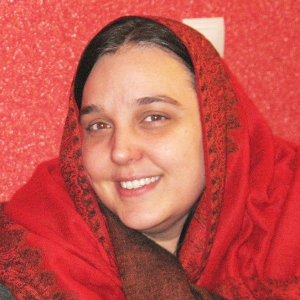
Iran: Rights Defender Dedicates Award to Women Activists
News Release from Human Rights Watch | November 10
Sussan Tahmasebi, recipient of the Alison Des Forges Award for Extraordinary Activism for 2010, dedicated her award to the imprisoned lawyer and human rights defender Nasrin Sotoudeh and other detained women activists on November 10, 2010. Human Rights Watch is presenting the award to Tahmasebi for her courageous work to promote civil society and women's rights in Iran.
Tahmasebi expressed her concern about Sotoudeh's deteriorating health. Sotoudeh has been on a "dry" hunger strike since October 31, 2010, refusing to eat or drink anything to protest being held in solitary confinement since her arrest on September 4. Prosecutors charged Sotoudeh with various national security crimes, but have not made public any information regarding the basis for these charges.
Since 2005, and especially since the disputed presidential election in June 2009, Iran has stepped up repressive measures against Iranian civil society activists, including those who advocate women's rights and speak out against discriminatory laws. The government has arrested scores of volunteers and members of the One Million Signatures Campaign, a grass-roots campaign aimed at overturning discriminatory laws.
Tahmasebi expressed particular concern about three other women sentenced to prison for their work:
* Bahareh Hedayat, the first secretary of the Women's Commission of the Office to Foster Unity (Tahkim-e Vahdat), and the first - and so far only - woman elected to the national student organization's central committee. Authorities arrested her on December 30, 2009, and charged her with various national security crimes, including "propaganda against the system," "disturbing public order," "participating in illegal gatherings," and "insulting the president." In May, Judge Moghiseh of Branch 28 of the Revolutionary Court sentenced Hedayat to nine and a half years in prison in relation to her student and women's rights activities. In July, an appeals court upheld the sentence. She has remained in prison since her arrest and is currently serving her term.
* Jila Baniyaghoub, an award-winning journalist and women's rights activist. Security forces arrested her and her husband in their home on June 20, 2009. Prosecutors charged her with "propaganda against the regime" for her journalism and released her on bail after she spent two months in detention. Her husband, Bahman Ahmadi Amoui, is currently serving a five-year sentence on various national security charges related to his journalism. On June 8, a revolutionary court sentenced Baniyaghoub to a year in prison and barred her from working as a journalist for 30 years. In late October an appeals court affirmed the lower court's ruling. She has not yet begun her sentence.
* Shiva Nazar Ahari, a human rights activist who worked with the Committee of Human Rights Reporters. Security forces arrested her on December 20, 2009, as she and several colleagues were preparing to take a bus to Qom to attend the funeral of Grand Ayatollah Hossein-Ali Montazeri, a dissident cleric who long criticized the government. Prosecutors charged her with "assembly and collusion to commit a crime," "propaganda against the regime," and moharebeh, a vaguely defined offense meaning "enmity against God" that carries the death penalty and is often reserved for people accused of belonging to an organization that takes up arms against the state. On September 18, a revolutionary court sentenced Ahari to six years in prison, to be served in Izeh prison, 500 miles from Tehran, her home town. Ahari's lawyer has appealed.
End the War Threats and Sanctions Program Against Iran, Support the Struggle for Democracy Inside Iran
Statement by Campaign for Peace and Democracy | October
Please join in signing the statement below. Your support can make a difference.
If you have difficulty signing on, please send an email with your name and, if you wish, your affiliation or other identification, to: cpd@igc.org
We, the undersigned, oppose the U.S.-led campaign to impose harsher sanctions on Iran, and the ongoing threat of war against that country. Despite Washington's claims, its policy is clearly not animated by a genuine concern for protecting the world from the threat of nuclear war; otherwise how could Washington support such nuclear-armed states as India, Israel, and Pakistan, or maintain its own huge nuclear arsenal? Nor is U.S. policy driven by the goal of defending democracy. If it were, how could the United States support brutally authoritarian regimes such as those in Saudi Arabia and Egypt?
Months after it began its recent program to sanction Iran for its nuclear activities, the United States, in a move described by The New York Times as "more symbolic than substantive," denied visas to and froze the foreign assets of eight Iranian officials, citing their role in the post-election crackdown. This symbolic gesture cannot obscure the fact that Washington's fundamental motivation for imposing the comprehensive sanctions aimed at Iran's nuclear program is to neutralize or eliminate a major threat to its power in the region.
In June 2009 people around the world were inspired by the courageous protests in Iran, when hundreds of thousands, possibly millions, took to the streets to demand their democratic rights. Since then the Iranian government has tried to repress the movement: hundreds of political prisoners remain behind bars, often tortured, deprived of medical care, and forced to live under dangerously unhealthy conditions. We support those who struggle for democracy and social justice inside Iran.
Far from helping the Iranian people, sanctions and war threats strengthen Ahmadinejad's regime, helping it to shift the blame for worsening economic conditions from itself entirely onto the external enemy. In the past the Iranian elite has proven able to circumvent sanctions, but if Washington actually succeeds in preventing Tehran from importing refined petroleum, exporting oil and other items, and conducting normal trade and banking activities, over time millions of ordinary Iranians will suffer.
State of Civil Society in Iran: 2010
Policy Paper by Sohrab Razzaghi (University of Amsterdam Knowledge Program via Arseh Sevom) | October
Executive Summary
In the face of organizational limitations and roadblocks, parts of civil society in Iran have enjoyed significant growth over the past few decades. Recently, however, autocratic powers planned and executed an extensive attack on it. At present, civil society is in a hazardous situation. This is as a combined result of the following:
* The emergence of a new class of politicians
* The formation of a garrison-based government
* The involvement of the established Islamic Revolutionary Guards Corps (IRGC) in politics, economy, culture, and cyber space
* The prevalence of anti-democratic, civil society phobic discourse
Additionally, civil society organizations in Iran lack a clear understanding of the situation and are hampered in their efforts to manage the changes required to respond to emerging social needs and political and social transformations. The conservative and passive approach of Iranian civil society organizations on the one hand, and the silence and indifference of the international community on the other, bodes ill for civil society in Iran. Continuation of the current situation might mean the replacement of authentic, independent civil society with a "paper" one.
This study is based on interviews and discussions with a number of Iranian civil society activists. The focal point of the study is to identify the transitional orientation of civil society in such a dangerous situation. The study includes a situational analysis of the present state of civil society in Iran. It defines strategic challenges and gives an assessment of the strengths and weaknesses, threats, and opportunities. Furthermore, it offers proposals in order to transform weaknesses into strength and threats into opportunities in order to prevent the premature death of Iran's civil society.
A. Consensus on the following major propositions
* The key element in the underdevelopment and lack of sustainable democracy in Iran is the weakness of civil society and non-participation in the development process.
* Civil society is a transitional force into democracy and control of political power.
* Transition from a weak civil society to a strong and sustainable one is the most important and effective way to battle the two historical problems of underdevelopment and lack of sustainable democracy.
* The structure and the nature of the government in Iran is anti-civil society. In recent years, the garrison-based state has employed strategies of suppression, limitation, and replacement of civil society.
* To play a decisive role in the development and establishment of democracy and civil rights movement in Iran, civil society must have a defined strategy and plan of action, otherwise it will become a follower of other strategies.
B. Key priorities in the present situation
A democratic government necessitates a strong democratic society without which it cannot sustain itself.
* Expansion of the discourses of democracy, human rights, and peace for the creation of a healthy, vital and democratic society.
* Development of knowledge and skills on networking, advocacy, leadership, peace-building, and civil society building.
* Empowerment of the political, social, cultural, and digital environments as key strategies in the transition to democracy and strengthening of civil society. Empowerment of citizens through increasing awareness, education on rights and responsibilities, expansion of knowledge and skills to work within associations, and practice with democracy at the micro-level.
* Development and expansion of communications and relations with international civil society.
* Reconstruction of social networks both in physical and cyber space and expansion of cooperation and solidarity among civil activists; coalition among civil society organizations; and coalition-building with international civil society.
* Development of a strategy to combat the imposing culture of silence, stagnation, and limitations on the circulation of information;media-pluralism and free access to information among activists and organizations.
Sunni Hamas and Shiite Iran Form a Common Political Theology
For the last few months, a forty-three-page Arabic-language booklet has been emailed to Hamas activists in the Gaza Strip and to select members of the group in the West Bank and elsewhere. Titled The Muslim Brotherhood and the Islamic Revolution in Iran, this new publication represents the most important attempt to date to connect the growing cooperation between Hamas and its Iranian mentors to religious affinities, rather than political expediency. The argument, in essence, is that the Muslim Brotherhood -- with Hamas as its Palestinian branch -- is a natural partner of Iran, with which it shares a common set of values and a joint vision of the revival of the caliphate, despite the divide that historically separates Sunnis from Shiites and often sets them against each other.
Subtitled The Dialectic of State and Nation in the Thought of the Imams al-Banna and Khomeini, the booklet is not being sold openly in stores. The preface was written by Dr. Muhammad al-Hindi, the leader of Palestinian Islamic Jihad in Gaza, who warns that "enemies of the nation" are trying to exploit the Sunni-Shiite rift in order to sabotage the struggle for an Islamic state. The booklet's author, sixty-year-old Dr. Ahmed Yousef, is a well-known movement leader who now holds the title of Foreign Ministry director-general in Gaza's Hamas government. Dr. Yousef lost his previous position as Prime Minister Ismail Haniyah's political advisor because his statements on the conditions for a hudna (ceasefire) with Israel were deemed too "soft" by others in the local command.
Yousef is widely recognized as one of the main spokesmen for the more moderate wing of Hamas. He was allowed to define "What Hamas Wants" in a New York Times op-ed in June 2007.
It is, in fact, his reputation as a "moderate" that makes Yousef's recent contribution both interesting and meaningful. He explains that Hamas's dependence on Iran is not an accidental marriage of convenience, as is often claimed by other movement leaders, but an inevitable partnership based on the common aspiration for the divine ideal of the "Islamic State." He accuses "Salafis and Wahhabis in the Gulf," as well as unnamed Gulf governments, of responsibility for the long periods of acute tension between the Muslim Brotherhood and the Islamic Republic over the years. In this way, he indicates that today, Iran's friendship is more important to Hamas than Saudi backing. Although Iran's support for the Asad regime in Syria, which crushed the Brotherhood's armed revolt there in 1982, added to their mutual animosity, Yousef argues that Iran and Hamas have an impressive track record of cooperation and a solid basis of similar, though not necessarily identical, religious convictions.


 via RSS
No Comments