
Existence of Anti-Ahmadinejad Brief Denied; Clashing Nuke Reports
24 Nov 2010 18:15No Comments
Press Roundup provides selected excerpts of news and opinion pieces from the Iranian and international media. Click on the link to the story to read it in full. Tehran Bureau has not verified these stories and does not vouch for their accuracy. The inclusion of various opinions in no way implies their endorsement by Tehran Bureau. Please refer to the Media Guide to help put the stories in perspective. You can follow other news items through our Twitter feed.
THE LEAD
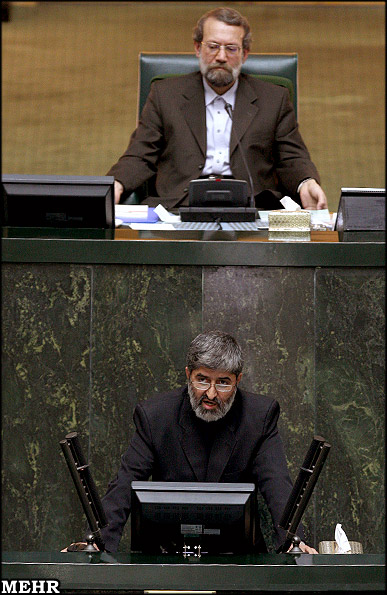
Iran Lawmakers Complain About Ahmadinejad
New York Times | Nov 23
Iranian Parliament members recently sent a letter detailing a long list of complaints against President Mahmoud Ahmadinejad to Iran's powerful Guardian Council, Iranian news media have reported, marking a new phase in an effort by traditional conservatives to rein in the administration and reassert the powers of Iran's legislative body.
The letter, which could theoretically result in the president's impeachment, was rapidly disavowed by its putative supporters. Many denied having signed the document.
The letter to the Guardian Council was released to the news media by the Parliament's in-house news agency. It listed 14 "infringements," including foot-dragging by the administration on the implementation of a variety of laws, as well as financial irregularities.
Those included three years of unauthorized imports of gasoline and diesel worth around $10 billion and the failure to account for up to 40 percent of Mr. Ahmadinejad's spending on his numerous visits to Iran's regions.
Subsequent news reports said that the petition had been signed by more than 40 members of Parliament, among them a number of prominent critics of the president. But on Monday, several members who had been named publicly as supporters of the plan distanced themselves from the letter, some issuing stern denials that the plan had been presented to members for their signatures.
"I did not sign this letter and know nothing about it," one of them, Elias Naderan, was quoted as saying in Jam-e-Jam, a Web site that is linked with Iran's state broadcaster, IRIB.
Another member, Hamid-Reza Fuladgar, in the same report, said, "There has been no letter to pose questions to the president, let alone have 40 M.P.'s sign it."
On Tuesday, Ali Motahari, reported to be the architect of the plan to call Mr. Ahmadinejad to account, was criticized by pro-government members of Parliament. Mr. Motahari has not commented on the letter.
Mr. Ahmadinejad's power seemed to be further consolidated on Saturday with a statement issued from a joint committee set up in August to resolve the differences between the administration and the Parliament. The statement appeared to grant the president the "right" to issue warnings to other branches of government when, in the president's opinion, they failed to act in line with the "fundamentals of the Constitution."
Although the Parliament speaker, Ali Larijani, and other prominent members denied that the committee had agreed on any such statement, political experts here said the fact that it was issued was a sign that Iran's highest authorities were backing the president in his battle with the legislative branch.
Photo: Majles Speaker Ali Larijani (top), Tehran representative Ali Motahari (bottom).
Iran Ramps Up Uranium Enrichment despite Shutdown
Los Angeles Times | Nov 24
A steady expansion of Iran's nuclear program was interrupted at least briefly this month by the complete shutdown of its uranium enrichment production, according to an analysis of a report Tuesday by the United Nations' nuclear watchdog.
Despite international sanctions and reports in the Western media that a computer virus had damaged sensitive equipment, Iran ramped up its production rate of enriched uranium and apparently worked out technical glitches to increase the number of delicate centrifuges producing the nuclear fuel, the latest quarterly report by the International Atomic Energy Agency indicates.
But during a Nov. 16 visit, a cryptic footnote in the report says, inspectors observed that no uranium was being fed into any centrifuges, though Iranians claimed Monday that they were operating again within days. Some observers have speculated that a virus called Stuxnet may have caused the shutdown, claims rejected as "lies" on Tuesday by Ali Akbar Salehi, the head of Iran's nuclear program.
But in comments to state media, he failed to offer an explanation for the stoppage.
From a cursory look it did not appear that this month's interruption affected Iran's total enriched uranium claims, said David Albright of the Institute for Science and International Security, an arms-control think tank. "The lasting damage didn't seem to be that great. Production went up slightly."
IAEA Report Shows No Technical Problem In Iranian Enrichment Activities: Envoy
Bernama | Nov 24
The latest report of the UN nuclear watchdog showed that western media reports alleging enrichment activities in Iran had encountered technical problems were "baseless," China's Xinhua news agency quoted an Iranian diplomat as saying here Tuesday.
"It also shows that hostile measures by certain espionage and terrorist organisations in a western country aiming to create problems for Iran have failed and peaceful activities have continued," said Ali Asghar Soltanieh, Iran's envoy to the IAEA (International Atomic Energy Agency).
Echoing his previous IAEA reports, [agency Director General Yukiya] Amano said while the agency continued to verify the non-diversion of declared nuclear material in Iran, Iran had not provided the necessary cooperation to permit the agency to confirm that all nuclear material in Iran was in peaceful activities.
Soltanieh said IAEA was expected to present its reports more balanced.
US Stresses Iran's 'Continued Failure' to Comply with IAEA
AFP | Nov 23
The United States Tuesday criticized Iran for its "continued failure" to cooperate with the International Atomic Energy Agency, after a new report by the agency said Iran was still refusing to halt uranium enrichment.
"We're obviously studying the report, but the key point is that it underscores Iran's continued failure to comply with its international nuclear obligations and also a sustained lack of cooperation with the IAEA," said State Department spokesman Mark Toner.
Iran is under four sets of UN Security Council sanctions over its refusal to suspend uranium enrichment, which is at the center of fears about Tehran's atomic ambitions.
OTHER NEWS
Israel Backs Off Iran -- for Now
Politico | Nov 24
Some Israeli officials say the country's fingers are off the hair-trigger that would launch a strike on the Iranian nuclear program, but that convincing the United States to take a harder line on Iran remains a top national priority.
The apparent willingness of the Israelis to postpone a demand for confrontation by months -- at least -- represents a success for the Obama administration, which has sought to convince Israel that it should give sanctions a chance to work.
It also, Israelis said, represents the belief on both sides that Iranian technical difficulties -- some of them reportedly the result of a computer virus attributed to Israeli intelligence -- have slowed the program.
"The Iranians are moving more slowly than they want to - but they are still moving," said Yossi Kuperwasser, the deputy director general of Israel's Strategic Affairs Ministry. "Everybody understands that you have to give some time for the sanctions to bear their full fruit."
"We think that people are underestimating the effect of the sanctions," said an aide to a hawkish Israeli minister. "There are indications that the regime is quite beside itself about them and on the defensive more and more."
Gambia's Government Severs Ties with Iran; Orders Iranians Out of Country
Bloomberg | Nov 23
Gambia's President Yaya Jammeh severed ties with Iran and ordered diplomats out of the West African nation, his press officer said, a week after a shipment of Iranian arms destined for the country was seized in Nigeria.
The decision by the Gambian government was "directly linked" to the arms shipment, Agence France-Presse reported, citing an unidentified official in the Gambian presidency. Seydi Mahamadou, press officer for Gambian President, said in a phone interview today from the capital, Banjul, that he didn't know the reason for the decision.
The weapons shipment, which included small-arms ammunition, mortars and rockets, may have been destined for separatists in the southern Casamance region of neighboring Senegal, Strategic Forecasting Inc., the Austin, Texas-based intelligence group, said in an e-mailed note today. The rebels began attacks on military and civilian targets in Casamanace in 1982 to demand independence for the region.
Jammeh, who has ruled Gambia for 16 years, is from the Casamance region and is "thought to be quietly and unofficially sympathetic to Casamance rebels' cause of greater autonomy if not independence for the southern region of Senegal," Stratfor said. "The Gambian government is now likely scrambling to distance itself from the Iranian weapons shipment."
Gambia Cut Ties with Iran Due to U.S. Pressure, Donya Reports
Bloomberg | Nov 24
A senior member of Iran's parliament said Gambia severed ties with the Islamic Republic as a result of Western pressure aimed at stifling Iranian influence in Africa, Donya-e-Eqtesad reported.
The U.S. and its allies are working to undermine the policy of President Mahmoud Ahmadinejad's government to strengthen ties with Africa, the Tehran-based newspaper cited Alaeddin Boroujerdi, head of the parliament's national security and foreign policy committee, as saying.
Boroujerdi played down reports that Gambian President Yaya Jammeh's decision was linked to the seizure last month by Nigeria of an Iranian shipment of rockets, grenades and mortars destined for Gambia, according to Donya-e-Eqtesad.
The shipment "had been contracted several years ago and was to be sent in line with international law," Boroujerdi said, according to the paper. After its seizure in Nigeria, "Western media launched a negative campaign against Iran," it him as saying. Iran has sent a special envoy to discuss the issue with Gambian authorities, he added, the paper said.
Bolivia Rebuffs U.S. Warning on Iran
Tehran Times | Nov 24
Bolivian President Evo Morales has rejected U.S. warnings to downgrade ties with Iran, saying the South American nation will ally with any country if it is in its interests.
"Nobody will stop me" from negotiating with any country, Morales said at the opening of a biannual conference of regional defense ministers, AFP reported on Monday.
U.S. Secretary of Defense Robert Gates also attended the gathering. He had earlier warned Latin American nations against nuclear cooperation with Tehran.
"Bolivia, under my leadership, will have agreements and alliances with everyone," the Bolivian president added. "We have the right, and we have a culture of dialogue."
Bolivia and Iran have strong political and economic ties. Iran also plans to help Bolivia build a nuclear power plant.
OPINION & ANALYSIS
Iran's Nuclear Curiosity
Ali Bulaç (World Bulletin) | Nov 23
After the Islamic revolution in 1979, Imam Khomeini was not keen on the production of nuclear energy and weapons. Khomeini was concerned about possible damage to the environment and the death of civilians. However, Iran was all but forced to accept the nuclear program over time:
(1) Israel turned out to have a big repository of nuclear weapons.
(2) In 1988, Saddam Hussein threatened to strike Iran with nuclear weapons. This was the main reason Khomeini was forced to accept a cease-fire.
(3) In 2003, the US occupied Iraq, claiming that it had nuclear weapons. But, if Iraq had really had nuclear weapons, the US would not have dared to invade, which is the case in North Korea.
(4) Oil may be exhausted in time, and Iran will eventually need nuclear energy.
All of these reasons for Iran to develop a nuclear program are still justifiable and understandable. If Saddam Hussein had used nuclear weapons against Iran, millions of Iranians would have died. After feeling such intense fear at the end of their eight-year war, Iran realized the deterring power of nuclear weapons.
Iran: We Are All Computer Criminals
Hamid Tehrani (Global Voices Advocacy) | Nov 23
Iran's government has a law at its disposal that make it possible to label almost any Internet user a criminal.
The "Law of Computer Crimes" (one law with 56 articles) was approved by Iran's parliament in January 2009. It has been instrumental in the prosecution and repression of several cyber-activists and bloggers, but its articles have never received much public attention or scrutiny.
So let's look at some confusing, surreal and catch-all aspects of the law concerning internet use and online content.
These are the main categories of criminal content under the computer crimes law, as listed on the blog of a public revolutionary prosecutor (cross-checked with two sources):
A - Immoral content
B - Anti-Islamic content
C - Anti-security and disturbing the public peace
D - Criminal content regarding intellectual property and audio and visual issues
E - Content encourages, invites or provokes others to commit criminal acts
F - Content against state and public institutions and their responsibilities
G - Content used to facilitate other computer crimes
It seems rational within the framework of the Islamic Republic to ban publishing and distribution of anti-Islamic content, but the definitions of criminal content are even more far reaching. Insulting and satirizing the state, public institutions, and authorities is also looked upon as criminal.
In other words, you could be charged with committing computer crimes if you insult Iran's leaders, prophets, and religion, or even make a joke about public transportation or state-run electricity.
DOCUMENTS & DECLARATIONS
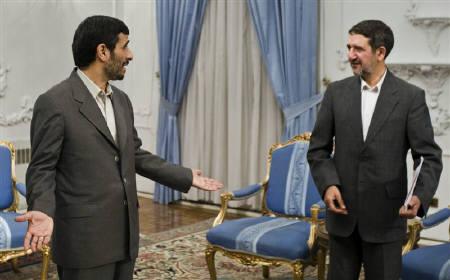
Transcript of Interview with Ahmadinejad Adviser Mojtaba Samareh Hashemi
Transcript of Interview Conducted by Thomas Erdbrink (Washington Post) | Nov 23
A transcript of an interview with Mojtaba Samareh Hashemi, top aide to Iranian President Mahmoud Ahmadinejad, on Monday, Nov. 22, at the presidential building in Tehran. Samareh Hashemi, 52, is a foreign policy expert and a longtime confidant of Ahmadinejad.
How do you see the upcoming talks on Dec. 5 between Iran and the P5+1 [United States, Russia, China, France, Britain and Germany]? Do you feel they can have any results?
In the name of God. There is a mutual point, and that is the readiness on both sides for negotiations. Of course, the Islamic Republic of Iran has always been ready for negotiations.
But the delay in the negotiations has been a good opportunity for the other side to realize the effects of its political decisions [made] through the Security Council and even the actions taken beyond the Security Council.
Which decisions are you referring to exactly?
I mean the sanctions. Even if these negotiations had been delayed even longer, the results of their actions would only have become clearer for them. This does not mean that we prefer delay. However, the delay has been good for them.
So you mean the sanctions have failed, and now the other parties are ready to talk?
I think I have answered your questions. I just hope that our counterparts in the negotiations, the Westerners, do not fool themselves.
Iranian officials have said the Green Movement is dead. What do you think?
If those who have said this mean that they have lost their public base, it is completely correct. Especially when the interference of the U.S. and British and some other European governments in the events of the Iranian elections became known -- interferences that in reality instigated some of the people -- many pulled aside.
More than 18 months after the elections, still many people are arrested for alleged seditious activities. When will these arrests come to an end?
There are not many arrests or arrested. Many have been freed. But there are some whose cases have not yet been brought to trial. But most of those arrested have been freed. You see that the leaders of the sedition [former presidential candidates Mir Hossein Mousavi and Mehdi Karroubi, who challenge the outcome of the elections]...happen to have been free from the beginning and are still free.
But still we hear of several arrests in the country on an almost daily basis...
I have not heard anything about this; I think your information is not correct.
UN Human Rights Chief Concerned by Iranian Crackdown on Human Rights Defenders
News Release from International Campaign for Human Rights in Iran (ICHRI) | Nov 23
The UN High Commissioner for Human Rights Navi Pillay on Tuesday expressed renewed concern for the fate of human rights defenders in Iran, particularly Ms. Nasrin Sotoudeh who was on hunger strike for several weeks in Tehran's Evin Prison.
"I am very concerned that Nasrin Sotoudeh's case is part of a much broader crackdown, and that the situation of human rights defenders in Iran is growing more and more difficult," she [said].
Ms. Sotoudeh, a prominent human rights lawyer involved in defending many high profile cases, was arrested on 4 September and has reportedly been in solitary confinement since then. She is said to have been charged with national security offences. Following her first court appearance on 15 November, Ms. Sotoudeh reportedly broke the hunger strike she had conducted over a period of several weeks in protest at her detention.
"I urge the Iranian authorities to review her case urgently and expedite her release," Pillay said.
Several other people who are currently detained are associated with the Centre for Human Rights Defenders (CHRD) founded by Nobel Laureate, Shirin Ebadi. Mr Mohamad Saifzadeh, a lawyer and co-founder of CHRD, was sentenced to nine years in prison and a ten-year ban on practicing law for "forming an association whose aim is to harm national security." Other members of CHRD are being prosecuted on similar charges, or have been detained for shorter periods and prevented from travelling abroad.
Most recently, on 13 November 2010, five lawyers were arrested in Tehran on security charges. Although two have reportedly been subsequently released, the other three are believed to be still in custody.
Other organizations whose members have been arrested or convicted in recent months include the Committee for the Defence of Political Prisoners in Iran and the Committee of Human Rights Reporters, as well as individual lawyers representing clients in sensitive cases together with student activists and leaders.


 via RSS
No Comments