Navigating Regulations on Animal-Derived Objects
More information about the complex regulations that govern the owning and trading of artifacts derived from rhino horn, animal parts, and extinct species.
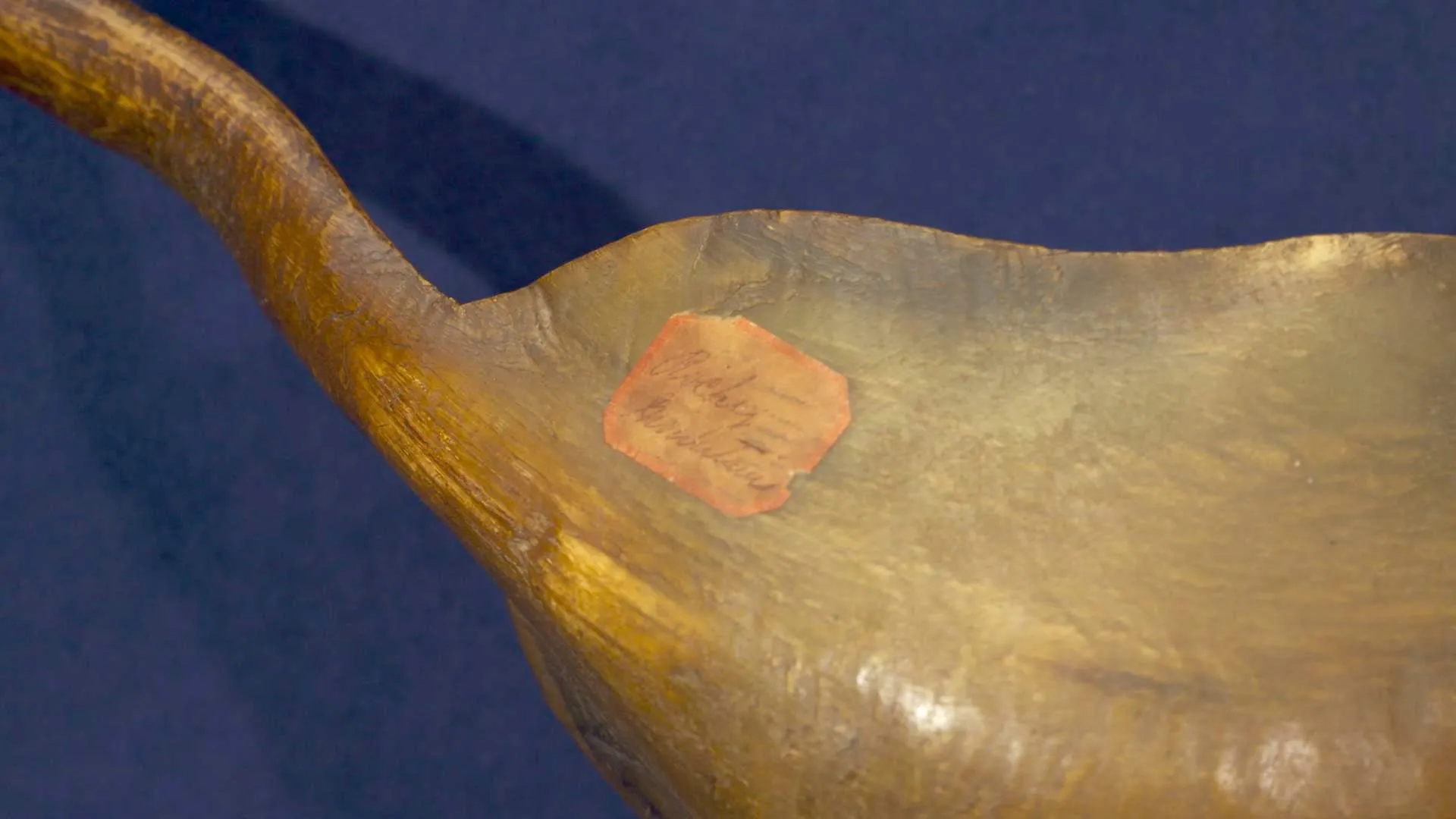
A large ladle crafted from the horn of a Rocky Mountain sheep circa 1850, appraised by Tribal Arts expert Bruce Shackelford during the August 2021 ANTIQUES ROADSHOW event in Bretton Woods, New Hampshire.
Sep 24, 2026
Originally published on: Jan 2, 2012
KEY POINTS FROM THIS ARTICLE:
- Identity Determines Legality: Regulation varies drastically by species — scientific identification down to the exact species level is the essential first step before buying, selling, or transferring any animal-derived artifact.
- State-Level "Mammoth Bans": Although fossilized mammoth and mastodon ivory are not protected under federal law or CITES, several states ban their commercial sale to prevent illegal elephant ivory from being passed off as fossil ivory.
- Paperwork Is Everything: Legally acquiring or inheriting an item is not enough; transferring or exporting protected species parts without proper permits or customs declarations can result in severe legal penalties.
- Protections for Non-Endangered & Native Art: While non-endangered game species (e.g., Rocky Mountain sheep) remain generally legal to trade, authentic Alaska Native handicrafts made from marine mammal parts are explicitly protected under federal law (including the MMPA and ARTIST Act).
When Doug, a resident of Tulsa, Oklahoma, brought his collection of five Chinese carved rhinoceros-horn libation cups to the ANTIQUES ROADSHOW Tulsa event in 2011, expert appraiser Lark Mason delivered the highest appraisal in the history of the series: $1 million to $1.5 million at auction. (At auction in 2012, two of the five cups were sold for $146,500 and $182,500, respectively.)
While the sheer craftsmanship of these ca. 1700 vessels drove their immense value, the appraisal also highlighted an inescapable reality for collectors: rhinoceroses are critically endangered, and international trade in rhino horn is subject to strict legal bans.
"All animal materials could have some form of regulation," says Michael McCullough, a New York attorney specializing in customs and trade law. "Many people think it needs to be some exotic animal, but it doesn't."
Buying or selling antiques derived from animals carries legal risks far beyond a typical financial investment. Between federal statutory enforcement, international treaties like CITES, and strict state-level environmental codes, even well-intentioned collectors can easily run afoul of the law.
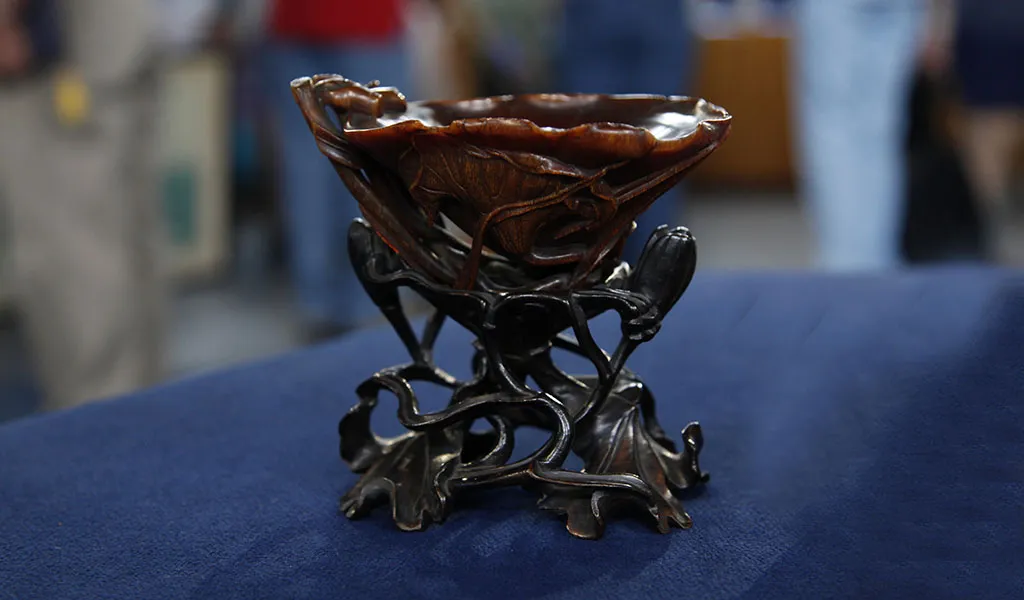
One of Doug’s intricately carved rhino-horn cups, ca. 1700.
1. The Labyrinth of Protected Species & Documentation
"All animal materials could have some form of regulation," says Michael McCullough, a New York attorney specializing in customs and trade law. "Many people think it needs to be some exotic animal, but it doesn't."
Red flags like scrimshaw, cat-pelt rugs, carved horns, and eagle-feather headdresses are obvious. However, broad legislation — such as the Migratory Bird Treaty Act, which protects over 1,000 bird species including non-endangered species like the American crow and turkey vulture — catches many common artifacts in its legal net.
- Step 1: Scientific Identification
"It's not enough to say, 'Oh, this looks like it could be bear fur or whalebone,'" McCullough explains. "The material needs to be identified scientifically, down to the level of species."
Universities, accredited museums, and certified appraisers are the best starting points for formal identification. Once the species is determined, you can evaluate its standing under federal law and the Convention on International Trade in Endangered Species (CITES).
- Step 2: Paperwork & Provenance
Even for legitimate antiques created centuries before conservation laws existed, paperwork is everything. Transporting or selling a legally acquired antique without proper customs declarations or CITES permits can lead to severe civil and criminal penalties, including seizure and imprisonment.
"In some cases, an item can stay in your family, but you can't sell it," says McCullough. "You might not even be able to donate it to a museum."
2. Objects Derived from Non-Endangered & Marine Species
Not all animal-derived antiques are restricted. For example, a ca. 1850 Plains Indian ladle carved from a Rocky Mountain ram's horn (appraised at a ROADSHOW event in Bretton Woods, New Hampshire) represents a species that is managed as game but is not endangered. Objects made from such non-threatened species remain legal to own, buy, and sell under federal law.
However, state-level hunting and game laws vary widely. Parts from animals such as American black or brown bears may be legal to trade in one state but banned in another.
Note on Marine Mammals & Alaska Native Art: Marine mammal materials are regulated under the Marine Mammal Protection Act (MMPA), with jurisdiction shared between the U.S. Fish and Wildlife Service (for walrus, polar bear, and sea otters) and NOAA Fisheries (for whales, baleen, seals, and sea lions). Under federal law — including the ARTIST Act of 2026 — authentic handicrafts and artwork created by Alaska Natives using legally harvested marine mammal materials are explicitly protected for commercial sale across state lines.
3. Extinct Species (Mammoth and Mastodon Ivory)
Because woolly mammoths and mastodons have been extinct for thousands of years, their fossilized tusks are not protected under federal endangered species laws or CITES. Under federal law, genuine mammoth ivory requires no federal permits to buy, sell, or transport.
However, collectors must navigate a significant legal trap: State-level mammoth bans.
Because fossil mammoth ivory looks almost identical to elephant ivory, several major U.S. states — including New York, California, New Jersey, Hawaii, Illinois, Nevada, and the District of Columbia — have enacted laws that explicitly ban the commercial sale of mammoth and mastodon ivory. These state laws were designed to prevent illegal elephant ivory from being intentionally mislabeled and sold as "fossil mammoth."
Guidelines for Collectors of Extinct Species Materials:
- Check state laws: While you may legally own or inherit mammoth ivory in states like New York or California, dealers cannot legally sell or ship mammoth ivory into those jurisdictions.
- Demand verifiable provenance: Always obtain written documentation from professional dealers confirming the scientific origin, age, and excavation history of the specimen.
- Preserve family records: Retain old bills of sale, historic photographs showing the object in a family home, written appraisals, or estate inventories. This provenance establishes a timeline that protects the item's value and legality for future generations.
Antiques carved from animal materials tell fascinating cultural and artistic stories, but they also carry modern legal hazards and responsibilities. In a landscape shaped by evolving international, federal, and state laws, documentation is a collector's best protection. When in doubt about an object's history or material origin, the safest approach is always to seek professional identification and verify local regulations before attempting a transaction.
By prioritizing transparency, maintaining thorough records, and working closely with trusted experts, collectors can help preserve both historic artifacts and the ethical standards surrounding them.
Related Resources
- Convention on International Trade in Endangered Species (CITES)
- Endangered Species Act (U.S. Code: Title 16, Ch. 35)
- Protected Species Parts (NOAA/U.S. Department of Commerce)
- Migratory Bird Treaty Act (USFWS)
- Marine Mammal Parts and Products in Alaska (NOAA)
- Laws & Policies: Marine Mammal Protection Act (NOAA)
- Alaska's Right To Ivory Sales and Tradition (ARTIST) Act
Editor’s Note — The information on this page was last updated on September 24, 2026.
This digest is for general educational purposes only and does not constitute legal advice. Federal, state, and international regulations governing animal-derived materials — including endangered species parts, marine mammal ivory, bird feathers, and fossilized extinct species — are subject to revision and change over time.
It is ANTIQUES ROADSHOW's goal to monitor and report on such changes in a timely way; however, anyone seeking to buy, sell, or transfer animal-derived antiques should consult a qualified legal expert and official authorities — such as the U.S. Fish and Wildlife Service, NOAA Fisheries, or relevant state wildlife agencies — for the most up-to-date information on these topics.
The most recent updates to this overview were developed using official regulatory resources, with research synthesis and content organization aided by Google Gemini under editorial supervision by ANTIQUES ROADSHOW staff.
Ben Phelan is a freelance writer in Louisville, Kentucky. He has been a contributor to ANTIQUES ROADSHOW Online since 2007.
Luke Crafton is ANTIQUES ROADSHOW's director of digital content and managing editor of the series website. Luke has been a producer with ROADSHOW since 2006.
Melanie Albanesi is a former digital producer for ANTIQUES ROADSHOW and frequent content contributor to the series website. Melanie was a producer with the series from 2019 to 2026.