<?xml version="1.0" encoding="UTF-8"?>
<rss version="2.0"
	xmlns:content="http://purl.org/rss/1.0/modules/content/"
	xmlns:wfw="http://wellformedweb.org/CommentAPI/"
	xmlns:dc="http://purl.org/dc/elements/1.1/"
	xmlns:atom="http://www.w3.org/2005/Atom"
	xmlns:sy="http://purl.org/rss/1.0/modules/syndication/"
	xmlns:slash="http://purl.org/rss/1.0/modules/slash/"
	>

<channel>
	<title>American Masters &#187; By Artist</title>
	<atom:link href="http://www.pbs.org/wnet/americanmasters/category/episodes/by-artist/feed/" rel="self" type="application/rss+xml" />
	<link>http://www.pbs.org/wnet/americanmasters</link>
	<description>A series examining the lives, works, and creative processes of outstanding artists.</description>
	<lastBuildDate>Thu, 24 May 2012 16:04:03 +0000</lastBuildDate>
	<generator>http://wordpress.org/?v=2.8.4</generator>
	<language>en</language>
	<sy:updatePeriod>hourly</sy:updatePeriod>
	<sy:updateFrequency>1</sy:updateFrequency>
			<item>
		<title>Johnny Carson: King of Late Night: About the Documentary</title>
		<link>http://www.pbs.org/wnet/americanmasters/episodes/johnny-carson-king-of-late-night/about-the-documentary/2051/</link>
		<comments>http://www.pbs.org/wnet/americanmasters/episodes/johnny-carson-king-of-late-night/about-the-documentary/2051/#comments</comments>
		<pubDate>Mon, 09 Apr 2012 19:22:35 +0000</pubDate>
		<dc:creator>colin fitzpatrick</dc:creator>
				<category><![CDATA[A, B, C]]></category>
		<category><![CDATA[By Title]]></category>
		<category><![CDATA[Featured]]></category>
		<category><![CDATA[Film + Television]]></category>
		<category><![CDATA[Performing Arts]]></category>
		<category><![CDATA[comedy]]></category>
		<category><![CDATA[Conan O'Brien]]></category>
		<category><![CDATA[David Letterman]]></category>
		<category><![CDATA[Dick Cavett]]></category>
		<category><![CDATA[documentary]]></category>
		<category><![CDATA[Ellen DeGeneres]]></category>
		<category><![CDATA[Jay Leno]]></category>
		<category><![CDATA[Jerry Seinfeld]]></category>
		<category><![CDATA[Jimmy Fallon]]></category>
		<category><![CDATA[Johnny Carson]]></category>
		<category><![CDATA[Kevin Spacey]]></category>
		<category><![CDATA[television]]></category>
		<category><![CDATA[The Tonight Show]]></category>
		<category><![CDATA[variety show]]></category>

		<guid isPermaLink="false">http://www.pbs.org/wnet/americanmasters/?p=2051</guid>
		<description><![CDATA[Johnny Carson (10/23/1925 – 1/23/2005) was seen by more people on more occasions than anyone else in American history. Over the course of 30 years, 4,531 episodes and 23,000 guests, he became a fixture of national life and a part of the zeitgeist. In a 2007 TV Land/Entertainment Weekly poll, Americans voted Carson the greatest [...]]]></description>
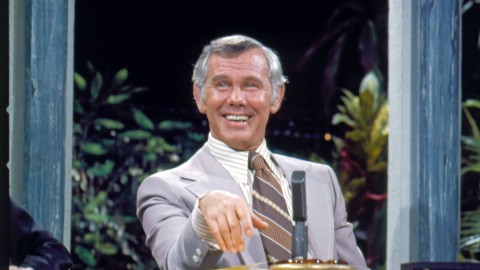
			<content:encoded><![CDATA[<p>Johnny Carson (10/23/1925 – 1/23/2005) was seen by more people on more occasions than anyone else in American history. Over the course of 30 years, 4,531 episodes and 23,000 guests, he became a fixture of national life and a part of the zeitgeist. In a 2007 TV Land/<em>Entertainment Weekly</em> poll, Americans voted Carson the greatest icon in the history of television. Two-time Emmy®-winning filmmaker Peter Jones explores his life, career, complexities, and contradictions in the two-hour documentary <strong><em>American Masters Johnny Carson: King of Late Night</em></strong> premiering nationally Monday, May 14, 2012 at 9 pm (ET) on PBS (<a href="/wnet/americanmasters/schedule/">check local listings</a>). 2012 marks the 50th anniversary of Carson taking over <em>The Tonight Show</em> from Jack Paar and the 20th anniversary of his retirement.</p>
(<a href='http://www.pbs.org/wnet/americanmasters/episodes/johnny-carson-king-of-late-night/about-the-documentary/2051/'>View full post to see video</a>)
<p>Narrated by two-time Oscar®-winner Kevin Spacey, the film features 45 original interviews with Carson’s friends, family and colleagues, including his second wife, Joanne, Dick Cavett, Doc Severinsen, and other <em>The Tonight Show</em> staff. Performers who appeared, or began their careers, on <em>The Tonight Show Starring Johnny Carson</em> are also interviewed, including David Letterman, Jay Leno, Mel Brooks, Jerry Seinfeld, Ray Romano, Drew Carey, Garry Shandling, Steve Martin, Angie Dickinson, Ellen DeGeneres, Carl Reiner, Don Rickles, Bob Newhart,Joan Rivers, and David Steinberg. Late night TV hosts Jimmy Fallon and Conan O’Brien also discuss Carson’s influence on their careers.</p>
<p>For 15 years Jones wrote an annual letter to Carson requesting his cooperation in the production of a documentary. His appeals went unanswered until 2003, when he received a telephone call from Carson himself: “You write a damn fine letter, Peter, but I don’t have anything more to say.” Following Carson’s death in 2005, Jones directed his letters to Johnny’s nephew, Jeff Sotzing, who controls his uncle’s archives. Finally, in 2010, Sotzing agreed to cooperate and the Carson Entertainment Group granted unprecedented access to Johnny’s personal and professional archives, including family photo albums, home movies, memorabilia, and all existing episodes of <em>The Tonight Show</em> from 1962 until his retirement in 1992. His simple reason: “I didn’t want people to forget Johnny Carson.”</p>
<p>Quite possibly the biggest star that television has ever produced, Carson commanded, at his peak, a nightly audience of 15 million viewers – double the current audience of Leno and Letterman – combined. Rarely giving interviews, Carson chose to remain a very private man whose public persona made him an American superstar. He once revealed, “I can get in front of an audience and be in control. I suppose it’s manipulation. Offstage, I’m aloof because I’m not very comfortable.” <strong><em>American Masters Johnny Carson: King of Late Night</em></strong> explores this dichotomy and enigma, unearthing clues about Carson’s childhood, early days in the business, and personal and professional life.</p>
<p>“Carson has been one of the holy grails for documentary filmmakers, but there’s such a protective veil surrounding Johnny that I was beginning to wonder if this would ever happen,” says Jones, whose films for PBS include the Peabody Award-winning <em>Inventing LA: The Chandlers and Their Times</em> (2009) and <strong><em>American Masters: Goldwyn</em></strong> (2001).</p>
<p>“I am thrilled that the 20-year process of Johnny Carson taking his rightful place in <strong><em>American Masters</em></strong> has come to fruition at last!” remarks Susan Lacy, series creator and executive producer. “There is no one who touched more entertainment careers than Johnny. All of us are actually in his debt to some degree.”</p>
<p>In 2011, <strong><em>American Masters</em></strong> earned its eighth Emmy® Award for Outstanding Primetime Nonfiction Series in 11 years. Now in its 26th season, the series is a production of <a href="http://www.thirteen.org/">THIRTEEN</a> for <a href="http://www.wnet.org/">WNET</a>, the parent company of THIRTEEN and WLIW21, New York’s public television stations, and operator of NJTV. For nearly 50 years, WNET has been producing and broadcasting national and local documentaries and other programs to the New York community.</p>
<p><strong><em>Johnny Carson: King of Late Night</em></strong> is a co-production of Peter Jones Productions, Inc. and THIRTEEN’s <strong><em>American Masters</em></strong> for WNET.Writer/Director/Producer: Peter Jones. Director/Editor/Producer: Mark Catalena. Producer: Brian Tessier. Narrator: Kevin Spacey. Music: Earl Rose. <strong><em>American Masters</em></strong> Series Creator and Executive Producer: Susan Lacy.</p>
<p><strong><em>American Masters</em></strong> is made possible by the support of the National Endowment for the Arts and by the Corporation for Public Broadcasting. Additional funding for <strong><em>American Masters</em></strong> is provided by Rosalind P. Walter, The Blanche &amp; Irving Laurie Foundation, Rolf and Elizabeth Rosenthal, Cheryl and Philip Milstein Family, Jack Rudin, Vital Projects Fund, The André and Elizabeth Kertész Foundation, Michael &amp; Helen Schaffer Foundation, and public television viewers.</p>
]]></content:encoded>
			<wfw:commentRss>http://www.pbs.org/wnet/americanmasters/episodes/johnny-carson-king-of-late-night/about-the-documentary/2051/feed/</wfw:commentRss>
		<slash:comments>77</slash:comments>
		</item>
		<item>
		<title>Margaret Mitchell: American Rebel: About the Documentary</title>
		<link>http://www.pbs.org/wnet/americanmasters/episodes/margaret-mitchell-american-rebel/about-the-documentary/1974/</link>
		<comments>http://www.pbs.org/wnet/americanmasters/episodes/margaret-mitchell-american-rebel/about-the-documentary/1974/#comments</comments>
		<pubDate>Thu, 09 Feb 2012 20:03:06 +0000</pubDate>
		<dc:creator>colin fitzpatrick</dc:creator>
				<category><![CDATA[By Title]]></category>
		<category><![CDATA[Current Season]]></category>
		<category><![CDATA[Featured]]></category>
		<category><![CDATA[Literature]]></category>
		<category><![CDATA[M, N, O]]></category>
		<category><![CDATA[Atlanta]]></category>
		<category><![CDATA[author]]></category>
		<category><![CDATA[documentary]]></category>
		<category><![CDATA[fiction]]></category>
		<category><![CDATA[film adaptation]]></category>
		<category><![CDATA[Georgia]]></category>
		<category><![CDATA[Gone With The Wind]]></category>
		<category><![CDATA[Margaret Mitchell]]></category>
		<category><![CDATA[novel]]></category>
		<category><![CDATA[Pulitzer Prize]]></category>
		<category><![CDATA[rebel]]></category>
		<category><![CDATA[The Great Depression]]></category>

		<guid isPermaLink="false">http://www.pbs.org/wnet/americanmasters/?p=1974</guid>
		<description><![CDATA[Margaret Mitchell was no ordinary writer. The one book she published in her lifetime – Gone With the Wind – sold millions of copies at the height of the Great Depression in America and won the Pulitzer Prize in 1937, 75 years ago.  With over 30 million copies sold to date, it is one of [...]]]></description>
			<content:encoded><![CDATA[<p style="text-align: left">Margaret Mitchell was no ordinary writer. The one book she published in her lifetime – <em>Gone With the Wind</em> – sold millions of copies at the height of the Great Depression in America and won the Pulitzer Prize in 1937, 75 years ago.  With over 30 million copies sold to date, it is one of the world’s best-selling novels. Equally impressive, the film adaptation of <em>Gone With the Wind</em> broke all box office records when it premiered in 1939, and received 10 Academy Awards.<strong><em> Margaret Mitchell: American Rebel </em></strong>premieres nationally Monday, April 2 at 9 p.m. followed by <strong><em><a href="/wnet/americanmasters/episodes/harper-lee-hey-boo/about-the-documentary/1972/">Harper Lee: Hey, Boo</a> </em></strong>at 10 p.m. (<a href="/wnet/americanmasters/schedule/">check local listings</a>).</p>
<p style="text-align: left"><strong>Watch a preview</strong>:</p>
<p style="text-align: left">(<a href='http://www.pbs.org/wnet/americanmasters/episodes/margaret-mitchell-american-rebel/about-the-documentary/1974/'>View full post to see video</a>)</p>
<p>But who was the creator behind two of the world’s greatest lovers – Scarlett and Rhett – and the tumultuous romance that left book readers and film viewers wondering about their final fate together in one of storytelling’s most talked about cliffhangers? She was certainly no ordinary woman either.</p>
<p><strong><em>Margaret Mitchell: American Rebel</em></strong>, a GPB production in association with THIRTEEN’s <strong><em>American Masters</em></strong> for WNET, explores the author’s extraordinary life.</p>
<p>Born in Atlanta in 1900, Margaret Mitchell was a force to be reckoned with until a tragic accident lead to her untimely death in 1949 – a debutante<strong> </strong>who challenged society with a brazen dance; a reporter who roamed town when tradition called for women to stay at home; and a philanthropist who risked her life in the name of generosity.</p>
<p>“Margaret Mitchell was always a writer and always a rebel,” says Emmy<sup>®</sup>-winning executive producer/writer Pamela Roberts. “She was captivating and complex. She took chances every day of her life, and she changed the world with her one book, <em>Gone With the Wind</em>. Only Margaret Mitchell could have created Scarlett O’Hara.”</p>
<p>As a debutante from Atlanta’s upper crust, Mitchell challenged the stifling social restrictions placed on women at the time. She was one of Georgia’s first female newspaper reporters and used the money she made from <em>Gone With the Wind </em>to fund many causes, including the education of the South’s first African-American medical doctors.</p>
<p>Mitchell had a charismatic personality and a great sense of humor, but she also dealt with depression and illness. Setbacks in her early life included the loss of her mother and her fiancé as a teenager. A failed first marriage followed, but in spite of all that, she found her soul mate in her second husband, John Marsh, and with his support she wrote <em>Gone With the Wind</em>.</p>
<p><strong><em>Margaret Mitchell: American Rebel</em></strong> engages leading authors, historians, biographers and people with personal connections to Mitchell to reveal a complex and mysterious woman who experienced profound identity shifts in her life and who struggled with the two great issues of her day: the changing role of women and the liberation of African Americans. Interviewees include friend Sara Mitchell Parsons, Carolyn Equen Miller (daughter of Mitchell’s lifelong arch rival Anne Hart Equen), Pat Conroy (<em>The Prince of Tides</em>), Pearl Cleage (<em>What Looks Like Crazy on an Ordinary Day</em>), Molly Haskell (<em>Frankly My Dear: Gone With the Wind Revisited</em>), Darden Asbury Pyron (<em>Southern Daughter/The Life of Margaret Mitchell and the Making of Gone With the Wind</em>), and John Wiley (<em>Margaret Mitchell’s Gone With the Wind</em>).</p>
<p>Roberts shot extensive reenactments for the film based on Mitchell’s personal letters, which trace Mitchell throughout her life, starting at age three, that show how Mitchell’s upbringing<em> </em>influenced <em>Gone With the Wind</em>. <strong><em>Margaret Mitchell: American Rebel</em></strong> also examines <em>Gone With the Wind</em>’s cultural impact. For some the work was a racial lightning rod, while for others it proved a model for survival.</p>
<p><strong><em>Interviewees </em></strong>(in alphabetical order):</p>
<p><em> </em></p>
<p><em> </em></p>
<p><em> </em></p>
<p><em> </em></p>
<p><strong>Ann Boutwell</strong> – docent, Margaret Mitchell House Museum; Atlanta historian<strong><br />
Kathleen Clark</strong> – University of Georgia historian writing a book on Margaret Mitchell<strong><br />
Pearl Cleage</strong> – novelist, poet, playwright<strong><br />
Pat Conroy</strong> – novelist; wrote introduction to 75<sup>th</sup> anniversary edition of <em>Gone With the Wind</em><strong> </strong>and<strong> </strong>his book <em>My Reading Life </em>(2010) devotes a chapter to <em>Gone With the Wind</em><strong><br />
Robert Franklin</strong> – president, Morehouse College (Atlanta, GA)<strong><br />
Debra Freer</strong> – editor, <em>Lost Laysen</em> (Mitchell’s 1916 novella,first published in 1996)<strong><br />
Molly Haskell</strong> – author, <em>Frankly My Dear: Gone With the Wind Revisited</em>; film historian<strong><br />
Ira Joe Johnson</strong> – author, <em>Benjamin E. Mays and Margaret Mitchell: A Unique Legacy in Medicine</em><strong><br />
Clifford Kuhn</strong> – Georgia State University historian<strong><br />
Carolyn Miller</strong> – daughter of Mitchell’s lifelong arch rival Anne Hart Equen<strong><br />
Sara Mitchell Parsons</strong> – friend of Mitchell in Atlanta (no relation)<strong><br />
Darden Asbury Pyron</strong> – author, <em>Southern Daughter/The Life of Margaret Mitchell and the Making of Gone With the Wind</em><strong><br />
Marianne Walker</strong> – author, <em>Margaret Mitchell and John Marsh: The Love Story Behind Gone With the Wind</em><strong><br />
Elizabeth West</strong> – Georgia State University English professor specializing in Africa-American literature and studies<strong><br />
John Wiley</strong> – author, <em>Margaret Mitchell’s Gone With the </em>Wind; editor, <em>The</em> <em>Scarlett Letter</em></p>
<p><strong><em>Margaret Mitchell: American Rebel </em></strong>is a GPB production in association with THIRTEEN’s <strong><em>American Masters</em></strong> for WNET. Pamela Roberts is executive producer and writer. Kathy White is director of reenactments. Charlene Fisk is co-producer and editor. Kevan Ward is director of photography.</p>
<p><strong><em>American Masters </em></strong>is made possible by the support of the National Endowment for the Arts and by the Corporation for Public Broadcasting. Additional funding for <strong><em>American Masters</em></strong> is provided by Rosalind P. Walter, The Blanche &amp; Irving Laurie Foundation, Rolf and Elizabeth Rosenthal, Cheryl and Philip Milstein Family, Jack Rudin, Vital Projects Fund, The André and Elizabeth Kertész Foundation, Michael &amp; Helen Schaffer Foundation, and public television viewers.</p>
]]></content:encoded>
			<wfw:commentRss>http://www.pbs.org/wnet/americanmasters/episodes/margaret-mitchell-american-rebel/about-the-documentary/1974/feed/</wfw:commentRss>
		<slash:comments>5</slash:comments>
		</item>
		<item>
		<title>Harper Lee: Hey, Boo: About the Documentary</title>
		<link>http://www.pbs.org/wnet/americanmasters/episodes/harper-lee-hey-boo/about-the-documentary/1972/</link>
		<comments>http://www.pbs.org/wnet/americanmasters/episodes/harper-lee-hey-boo/about-the-documentary/1972/#comments</comments>
		<pubDate>Thu, 09 Feb 2012 19:39:32 +0000</pubDate>
		<dc:creator>colin fitzpatrick</dc:creator>
				<category><![CDATA[By Title]]></category>
		<category><![CDATA[Current Season]]></category>
		<category><![CDATA[Featured]]></category>
		<category><![CDATA[J, K, L]]></category>
		<category><![CDATA[Literature]]></category>
		<category><![CDATA[1960s]]></category>
		<category><![CDATA[authors]]></category>
		<category><![CDATA[books]]></category>
		<category><![CDATA[documentary]]></category>
		<category><![CDATA[fiction]]></category>
		<category><![CDATA[Harper Lee]]></category>
		<category><![CDATA[Pulitzer Prize]]></category>
		<category><![CDATA[The Deep South]]></category>
		<category><![CDATA[TO KILL A MOCKINGBIRD]]></category>
		<category><![CDATA[writer]]></category>

		<guid isPermaLink="false">http://www.pbs.org/wnet/americanmasters/?p=1972</guid>
		<description><![CDATA[One of the biggest bestsellers of all time, To Kill a Mockingbird (1960) is the first and only novel by a young woman named Nelle Harper Lee, who once said that she wanted to be South Alabama’s Jane Austen. Lee won the Pulitzer Prize and became a mystery when she stopped speaking to press in [...]]]></description>
			<content:encoded><![CDATA[<p style="text-align: left">One of the biggest bestsellers of all time, <em>To Kill a Mockingbird</em> (1960) is the first and only novel by a young woman named Nelle Harper Lee, who once said that she wanted to be South Alabama’s Jane Austen. Lee won the Pulitzer Prize and became a mystery when she stopped speaking to press in 1964. <strong><em>Harper Lee: Hey, Boo </em></strong>premieres nationally Monday, April 2 at at 10 p.m. preceded by<strong><em> <a href="/wnet/americanmasters/episodes/margaret-mitchell-american-rebel/about-the-documentary/1974/">Margaret Mitchell: American Rebel</a></em></strong> at 9 p.m. (<a href="/wnet/americanmasters/schedule/">check local listings</a>).</p>
<p style="text-align: left"><strong>Watch a preview</strong>:</p>
<p style="text-align: left">(<a href='http://www.pbs.org/wnet/americanmasters/episodes/harper-lee-hey-boo/about-the-documentary/1972/'>View full post to see video</a>)</p>
<p>More than 50 years after its publication, <em>To Kill a Mockingbird </em>has been translated into more than 40 languages worldwide, still sells nearly one million copies each year and is required reading in most American classrooms, making it quite possibly the most influential American novel of the 20th century. The 1962 film version, starring Gregory Peck as Atticus Finch, won a trio of Academy Awards.</p>
<p><strong><em>Harper Lee: Hey, Boo </em></strong>chronicles how this beloved novel came to be written, provides the context and history of the Deep South where it is set, and documents the many ways the novel has changed minds and shaped history. For teachers, students or fans of the classic, <strong><em>Hey, Boo </em></strong>enhances the experience of reading <em>To Kill a Mockingbird.</em></p>
<p><em> </em></p>
<p>Containing never-before-seen photos and letters, <strong><em>Hey, Boo </em></strong>features insightful interviews with friends and an exclusive interview with Lee’s sister, Alice Finch Lee (age 99 at filming), who share intimate recollections, anecdotes and biographical details for the first time, offering new insight into the life and mind of Harper Lee, including why she never published again. Oprah Winfrey; Tom Brokaw; Pulitzer Prize-winners Rick Bragg, Anna Quindlen, Richard Russo, Jon Meacham, and Diane McWhorter; and civil rights leader Andrew Young address the novel’s power, influence, and popularity, and the many ways it has shaped their lives.</p>
<p><strong><em>Interviewees </em></strong>(in alphabetical order):</p>
<p><strong>Mary Badham</strong> – actress, played Scout Finch in <em>To Kill a Mockingbird </em>(1962)<strong><br />
Boaty Boatwright</strong> – casting director, <em>To Kill a Mockingbird </em>(1962)<strong><br />
Rick Bragg</strong> – author<strong><br />
Tom Brokaw</strong> – news anchor, journalist and author<strong><br />
Joy Brown</strong> – Lee’s friend<strong><br />
Michael Brown</strong> – Lee’s friend<strong><br />
Reverend Thomas Lane Butts</strong> – Pastor Emeritus of Lee’s church<strong><br />
Rosanne Cash</strong> – musician and author<strong><br />
Mark Childress</strong> – author<strong><br />
Jane Ellen Clark</strong> – former director, The Monroe County Heritage Museum<strong><br />
Allan Gurganus</strong> – author<strong><br />
David Kipen</strong> – former director of literature, National Endowment for the Arts<strong><br />
Wally Lamb</strong> – author<strong><br />
Alice Finch Lee</strong> – Lee’s sister<strong><br />
James McBride</strong> – author and musician<strong><br />
Diane McWhorter</strong> – historian<strong><br />
Jon Meacham</strong> – historian<strong><br />
James Patterson</strong> – author<strong><br />
Anna Quindlen</strong> – author<strong><br />
Richard Russo</strong> – author<strong><br />
Lizzie Skurnick</strong> – author<strong><br />
Lee Smith</strong> – author<strong><br />
Adriana Trigiani</strong> – author<strong><br />
Mary Tucker</strong> – educator and Monroeville, Alabama resident<strong><br />
Scott Turow</strong> – author<strong><br />
Oprah Winfrey</strong> – TV and film producer, founder of <em>O, The Oprah magazine</em>, radio programmer, actress, philanthropist, and chairman of Harpo Inc.<strong><br />
Andrew Young</strong> – civil rights leader</p>
<p><strong><em>Harper Lee: Hey, Boo</em></strong> is a production of Mary Murphy &amp; Company, LLC. Mary McDonagh Murphy is producer, writer and director. Rich White is director of photography. Christopher Seward is editor and producer. Susan Lacy is the series creator and executive producer of <strong><em>American Masters</em></strong>.</p>
<p><strong><em>American Masters </em></strong>is made possible by the support of the National Endowment for the Arts and by the Corporation for Public Broadcasting. Additional funding for <strong><em>American Masters</em></strong> is provided by Rosalind P. Walter, The Blanche &amp; Irving Laurie Foundation, Rolf and Elizabeth Rosenthal, Cheryl and Philip Milstein Family, Jack Rudin, Vital Projects Fund, The André and Elizabeth Kertész Foundation, Michael &amp; Helen Schaffer Foundation, and public television viewers.</p>
]]></content:encoded>
			<wfw:commentRss>http://www.pbs.org/wnet/americanmasters/episodes/harper-lee-hey-boo/about-the-documentary/1972/feed/</wfw:commentRss>
		<slash:comments>10</slash:comments>
		</item>
		<item>
		<title>Cab Calloway: Sketches: About the Documentary</title>
		<link>http://www.pbs.org/wnet/americanmasters/episodes/cab-calloway-sketches/about-the-documentary/1958/</link>
		<comments>http://www.pbs.org/wnet/americanmasters/episodes/cab-calloway-sketches/about-the-documentary/1958/#comments</comments>
		<pubDate>Thu, 19 Jan 2012 20:34:25 +0000</pubDate>
		<dc:creator>colin fitzpatrick</dc:creator>
				<category><![CDATA[A, B, C]]></category>
		<category><![CDATA[By Title]]></category>
		<category><![CDATA[Current Season]]></category>
		<category><![CDATA[Featured]]></category>
		<category><![CDATA[Music]]></category>
		<category><![CDATA[Cab Calloway]]></category>
		<category><![CDATA[composer]]></category>
		<category><![CDATA[documentary]]></category>
		<category><![CDATA[Gail Levin]]></category>
		<category><![CDATA[Harlem Renaissance]]></category>
		<category><![CDATA[jazz]]></category>
		<category><![CDATA[musician]]></category>
		<category><![CDATA[segregation]]></category>
		<category><![CDATA[Steve Brodner]]></category>
		<category><![CDATA[swing]]></category>
		<category><![CDATA[The Cotton Club]]></category>

		<guid isPermaLink="false">http://www.pbs.org/wnet/americanmasters/?p=1958</guid>
		<description><![CDATA[“Hi de hi de hi de ho!” Charismatic music and dance pioneer Cab Calloway (12-25-1907 – 11-18-94) is an exceptional figure in the history of jazz. As a singer, dancer and bandleader, he charmed audiences around the world with his boundless energy, bravado and elegant showmanship. Calloway was also an ambassador for his race, leading [...]]]></description>
			<content:encoded><![CDATA[<p>“Hi de hi de hi de ho!” Charismatic music and dance pioneer Cab Calloway (12-25-1907 – 11-18-94) is an exceptional figure in the history of jazz. As a singer, dancer and bandleader, he charmed audiences around the world with his boundless energy, bravado and elegant showmanship. Calloway was also an ambassador for his race, leading one of the most popular African American big bands during the Harlem Renaissance and jazz and swing eras of the 1930s-40s. <strong><em>American Masters </em></strong>celebrates “The Hi De Ho Man’s” career and legacy during Black History Month with the new documentary <strong><em>Cab Calloway: Sketches</em></strong> premiering nationally Monday, February 27<em> </em>at 10 p.m. (ET) on PBS (<a href="/wnet/americanmasters/about-the-series/introduction/14/">check local listings</a>). In the New York metro-area the film airs Sunday, February 26<em> </em>at 8 p.m. on THIRTEEN.</p>
<p><strong>Watch a preview</strong>:</p>
(<a href='http://www.pbs.org/wnet/americanmasters/episodes/cab-calloway-sketches/about-the-documentary/1958/'>View full post to see video</a>)
<p>Emmy<sup>®</sup>-winning filmmaker Gail Levin explores Cab Calloway’s musical beginnings and milestones in the context of the Harlem Renaissance and segregationist America using archival footage, animation based on caricatures by famed illustrator Steve Brodner and French cartoonist Cabu, and interviews. The animated Cab dances alongside Matthew Rushing, choreographer/principal dancer of Alvin Ailey American Dance Theater (<em>Uptown</em>), who explains how modern Calloway’s movements were and his impact on hip-hop. Additional interviewees include Calloway’s daughters Cecelia and Camay; grandson and Cab Calloway Orchestra bandleader Chris “Calloway” Brooks; horn player Gerald Wilson; and <em>The Blues Brothers</em> (1980) director John Landis and band members Steve Cropper, Lou Marini and Donald “Duck” Dunne. The film introduced Cab and his music to a new generation, when he acted and performed as The Blues Brothers’s mentor, Curtis.</p>
<p>“I am especially delighted to bring Cab Calloway to younger audiences – and he does become quite alive through the inventive animation in this film,” says Susan Lacy, <strong><em>American Masters</em></strong> series creator and executive producer. “He, and his era, are such a vital part of our musical cultural heritage – and such an energetic one!”</p>
<p>“This film is not just another biopic in the sense of interviews and recollections, but a reinvigoration of the whole Calloway presence – a reprise of a timeless virtuoso,” adds Levin.</p>
<p>With The Cotton Club – where Blacks could perform but not attend – as his home stage, Cab became a star of New York’s jazz scene, and then a household name with his signature song “Minnie the Moocher.” Despite its tragic, taboo subject matter, the song broke into the mainstream and was even used in Max and Dave Fleischer’s Betty Boop cartoon of the same name, along with Cab’s dance moves. Breaking the color barrier with this “hi de ho” hit, Cab was one of the first Black musicians to tour the segregationist South. He published a <em>Hepster’s Dictionary</em> of his jive slang in 1938,<strong> </strong>starred in films including <em>Stormy Weather</em> (1943) with Lena Horne and Bill “Bojangles” Robinson, and played Sportin’ Life – a role George Gershwin modeled on him – in a 1952 touring production of <em>Porgy and Bess</em>, making “It Ain’t Necessarily So” an enduring part of his brand. With his zany theatricality – scat singing, jive talking, zoot suit wearing, straight-hair, head-shaking, and backslide dance (a precursor to Michael Jackson’s moonwalk) – Cab transcended racial specificity on his own terms.</p>
<p>In 2011, <strong><em>American Masters</em></strong> earned its eighth Emmy<sup>®</sup> Award for Outstanding Primetime Nonfiction Series in 11 years. Now in its 26<sup>th</sup> season, the series is a production of THIRTEEN for WNET, the parent company of THIRTEEN and WLIW21, New York’s public television stations, and operator of NJTV. For nearly 50 years, WNET has been producing and broadcasting national and local documentaries and other programs to the New York community.</p>
<p><strong><em>Cab Calloway: Sketches </em></strong>is a co-production of Artline Films, ARTE France, and AVRO, in association with Inscape Productions and THIRTEEN’s <strong><em>American Masters</em></strong> for WNET. Gail Levin is director and executive producer for Inscape Productions. Jean-François Pitet and Gail Levin are co-writers. Olivier Mille is producer for Artline Films. Susan Lacy is the series creator and executive producer of <strong><em>American Masters</em></strong>. This program is made possible in part by the support of CNC, PROCIREP, ANGOA, and SACEM.</p>
<p><strong><em>American Masters </em></strong>is made possible by the support of the National Endowment for the Arts and by the Corporation for Public Broadcasting. Additional funding for <strong><em>American Masters</em></strong> is provided by Rosalind P. Walter, The Blanche &amp; Irving Laurie Foundation, Rolf and Elizabeth Rosenthal, Cheryl and Philip Milstein Family, Jack Rudin, Vital Projects Fund, The André and Elizabeth Kertész Foundation, Michael &amp; Helen Schaffer Foundation, and public television viewers.</p>
]]></content:encoded>
			<wfw:commentRss>http://www.pbs.org/wnet/americanmasters/episodes/cab-calloway-sketches/about-the-documentary/1958/feed/</wfw:commentRss>
		<slash:comments>10</slash:comments>
		</item>
		<item>
		<title>Phil Ochs: There But for Fortune: About the Documentary</title>
		<link>http://www.pbs.org/wnet/americanmasters/episodes/phil-ochs-there-but-for-fortune/about-the-documentary/1954/</link>
		<comments>http://www.pbs.org/wnet/americanmasters/episodes/phil-ochs-there-but-for-fortune/about-the-documentary/1954/#comments</comments>
		<pubDate>Tue, 20 Dec 2011 23:33:46 +0000</pubDate>
		<dc:creator>colin fitzpatrick</dc:creator>
				<category><![CDATA[By Title]]></category>
		<category><![CDATA[Featured]]></category>
		<category><![CDATA[M, N, O]]></category>
		<category><![CDATA[Music]]></category>
		<category><![CDATA[1960s]]></category>
		<category><![CDATA[activisism]]></category>
		<category><![CDATA[alcoholism]]></category>
		<category><![CDATA[anti-war]]></category>
		<category><![CDATA[bipolar disorder]]></category>
		<category><![CDATA[depression]]></category>
		<category><![CDATA[documentary]]></category>
		<category><![CDATA[Kenneth Bowser]]></category>
		<category><![CDATA[Phil Ochs. folk music]]></category>
		<category><![CDATA[political protest]]></category>
		<category><![CDATA[singer wongwriter]]></category>

		<guid isPermaLink="false">http://www.pbs.org/wnet/americanmasters/?p=1954</guid>
		<description><![CDATA[American Masters opens its 26th season with the revealing biography of a conflicted, truth-seeking troubadour who, with guitar in hand, stood up for what he believed in and challenged us all to do the same. Three-time Emmy®-nominated filmmaker Kenneth Bowser examines one of American history’s most iconic folk music heroes and political agitators in Phil [...]]]></description>
			<content:encoded><![CDATA[<p><strong><em>American Masters</em></strong> opens its 26th season with the revealing biography of a conflicted, truth-seeking troubadour who, with guitar in hand, stood up for what he believed in and challenged us all to do the same. Three-time Emmy®-nominated filmmaker Kenneth Bowser examines one of American history’s most iconic folk music heroes and political agitators in <strong><em>Phil Ochs: There But for Fortune</em></strong>, premiering nationally Monday, January 23 at 10 pm (ET) on PBS (<a href="/wnet/americanmasters/schedule/">check local listings</a>).</p>
<p><strong>Watch a preview</strong>:</p>
(<a href='http://www.pbs.org/wnet/americanmasters/episodes/phil-ochs-there-but-for-fortune/about-the-documentary/1954/'>View full post to see video</a>)
<p>As the United States continues to engage in foreign wars, <strong><em>Phil Ochs: There But for Fortune</em></strong> is a timely tribute to an unlikely American hero whose music is as relevant today as it was in the 1960s. Phil Ochs was moved by the conviction that he and his music would change the world. Unyielding in his political principals and unbending in his artistic vision, Ochs tirelessly fought the good fight for peace and justice, in both song and action, throughout his short life (12/19/1940 – 4/9/1976). The tragedies of 1968, including the deaths of Martin Luther King, Jr. and Robert F. Kennedy and the violent events at the 1968 Democratic National Convention in Chicago, changed the country and changed Ochs, who sank deep into depression and alcoholism. This, and a familial tendency to bipolar disorder, led to his suicide at the age of 35.</p>
<p>“His music was always so insightful and clever, so timely and slightly haunting. Humming ‘There But for Fortune’ after Phil Ochs’s death was a bittersweet experience back in the 60s,” says Susan Lacy, series creator and executive producer of <strong><em>American Masters</em></strong>, an eight-time winner of the Emmy® Award for Outstanding Primetime Non-Fiction Series. The series is a production of THIRTEEN for WNET, the parent company of THIRTEEN and WLIW21, New York’s public television stations, and operator of NJTV. For nearly 50 years, WNET has been producing and broadcasting national and local documentaries and other programs to the New York community.</p>
<p>Inspired by Woody Guthrie, Pete Seeger, Elvis Presley and John Wayne, Ochs rose to fame in the early 60s during the height of the folk-and-protest song movement, wielding only a battered guitar, a clear voice and the quiver of his razor-sharp songs. As prolific as he was passionate, he released seven albums and wrote hundreds of songs, the best known of which include “I Ain&#8217;t Marching Anymore,” “Changes,” “Crucifixion,” “Draft Dodger Rag,” “Love Me, I’m a Liberal,” “Outside of a Small Circle of Friends,” “Power and the Glory,” “The War is Over,” and “There But for Fortune,” famously covered by Joan Baez. <strong><em>American Masters Phil Ochs: There But for Fortune</em></strong> is buoyed by these anti-war movement anthems and melodies, which play the role of film narrator, giving contextual depth to the unfolding saga of Ochs’s politics and personal life.</p>
<p>In the film, Joan Baez, Tom Hayden, Pete Seeger, Sean Penn, Peter Yarrow, Christopher Hitchens, Ed Sanders, and others who knew or were inspired by Ochs tell stories of political passions that were equal parts idealism, conviction and fantasy – mixed together with a big ego and often wild disorganization. These interviews together with photos, film clips and historic live performances reveal that Ochs’s lasting legacy in both music and politics ultimately mirrored the complexities and contradictions of the country he loved – and his life, sadly, reflects the arc of the turbulent times in which he lived.</p>
<p><strong><em>Phil Ochs: There but for Fortune</em></strong> is a production of S2BN Entertainment in association with Barking Dog Productions, Inc. and THIRTEEN’s <strong><em>American Masters</em></strong> for WNET. Kenneth Bowser is writer and director. Michael Cohl, Kenneth Bowser and Michael Ochs are producers. Pamela Scott Arnold is editor, with additional editing by Ian B. Wile. Lizzy McGlynn and Brian MacDonald are co-producers. Katie Ehrman, Zev Greenfield and Riva Marker are associate producers. Music is by Phil Ochs. Susan Lacy is the series creator and executive producer of <strong><em>American Masters</em></strong>.</p>
<p><strong><em>American Masters</em></strong> is made possible by the support of the National Endowment for the Arts and by the Corporation for Public Broadcasting. Additional funding for <strong><em>American Masters</em></strong> is provided by Rosalind P. Walter, The Blanche &amp; Irving Laurie Foundation, Rolf and Elizabeth Rosenthal, Cheryl and Philip Milstein Family, Jack Rudin, Vital Projects Fund, The André and Elizabeth Kertész Foundation, Michael &amp; Helen Schaffer Foundation, and public television viewers.</p>
]]></content:encoded>
			<wfw:commentRss>http://www.pbs.org/wnet/americanmasters/episodes/phil-ochs-there-but-for-fortune/about-the-documentary/1954/feed/</wfw:commentRss>
		<slash:comments>28</slash:comments>
		</item>
	</channel>
</rss>

<!-- Served @ 2012-05-29 03:21:31 by W3 Total Cache -->