Visit Your Local PBS Station PBS Home PBS Home Programs A-Z TV Schedules Watch Video Support PBS Shop PBS Search PBS

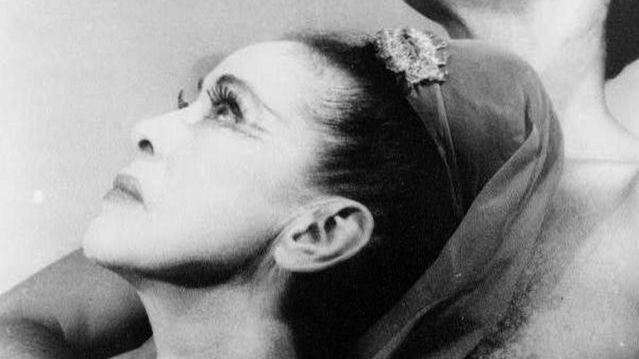
Martha Graham
About the Dancer

“I wanted to begin not with characters or ideas, but with movements . . .I wanted significant movement. I did not want it to be beautiful or fluid. I wanted it to be fraught with inner meaning, with excitement and surge.”

–Martha Graham

Martha Graham’s impact on dance was staggering and often compared to that of Picasso’s on painting, Stravinsky’s on music, and Frank Lloyd Wright’s on architecture. Her contributions transformed the art form, revitalizing and expanding dance around the world. In her search to express herself freely and honestly, she created the Martha Graham Dance Company, one of the oldest dance troupes in America. As a teacher, Graham trained and inspired generations of fine dancers and choreographers. Her pupils included such greats as Alvin Ailey, Twyla Tharp, Paul Taylor, Merce Cunningham, and countless other performers, actors, and dancers. She collaborated with some of the foremost artists of her time including the composer Aaron Copland and the sculptor Isamu Noguchi.

Born in 1894 in Allegheny County, Pennsylvania, Graham spent most of her formative years on the West coast. Her father, a doctor specializing in nervous disorders, was very interested in diagnosis through attention to physical movement. This belief in the body’s ability to express its inner senses was pivotal in Graham’s desire to dance. Athletic as a young girl, Graham did not find her calling until she was in her teens. In 1911, the ballet dancer Ruth St. Denis performed at the Mason Opera House in Los Angeles. Inspired by St. Denis’ performance, Graham enrolled in an arts-oriented junior college, and later to the newly opened Denishawn School. Denishawn was founded by Ruth St. Denis and her husband Ted Shawn to teach techniques of American and world dance. Over eight years, as both a student and an instructor, Graham made Denishawn her home.

Working primarily with Ted Shawn, Graham improved her technique and began dancing professionally. In “Xochital”, a dance made specifically for her by Shawn, Graham danced the role of an attacked Aztec maiden. It was the wildly emotional performance of this role that garnered her first critical acclaim. By 1923, eight years after entering Denishawn, she was ready to branch out. She found her chance dancing in the vaudeville revue Greenwich Village Follies. At the Greenwich Village Follies, Graham was able to design and choreograph her own dances. Though this work provided her with some economic and artistic independence, she longed for a place to make greater experiments with dance. It was then that she took a position at the Eastman School of Music, where she was free of the constraints of public performance. At Eastman, Graham was given complete control over her classes and the entire dance program. Graham saw this as an opportunity to engage her best pupils in the experiential dance she was beginning to create.

These first experimentations at Eastman proved to be the sparks of a new mode of dance that would revolutionize theories of movement in all of the performing arts. For Graham, ballet’s concern with flow and grace left behind more violent traditional passions. Graham believed that through spastic movements, tremblings, and falls she could express emotional and spiritual themes ignored by other dance. She desired to evoke strong emotions, and achieved these visceral responses through the repetition of explicitly sexual and violently disjunctive movements. Beginning with her Eastman students, she formed the now famous Martha Graham School for Contemporary Dance in New York. One of the early pieces of the company was “Frontier” (1935), a solo performance about the pioneer woman. This piece brought together the two men who would be close collaborators throughout her life. Isamu Noguchi, the Japanese-American sculptor, created a sparse and beautiful design that replaced flat backdrops with three-dimensional objects. Together Graham and Noguchi revolutionized set design through this inclusion of sculpture. “Frontier” also included the sound design of Louis Horst, a close friend and strong influence throughout Graham’s life.

Soon after “Frontier”,Graham brought a young ballet dancer named Erick Hawkins into the company. Together they appeared in one of her major works, “American Document” (1938). For the next ten years he would remain with the company and perform in many of her great pieces. The most famous work from this period was “Appalachian Spring” (1944), for which Aaron Copland wrote the score. In 1948 Graham and Hawkins married, but the marriage was short-lived. They continued to work together for a while and then made a permanent break. After this break, Graham plunged deeper into her work and in 1955 presented the world with one of her greatest pieces, “Seraphic Dialogue”. “Seraphic Dialogue” was a powerful and moving version of the story of Joan of Arc. Throughout Graham’s career she would return again and again to the struggles and triumphs of both great and ordinary women. Despite her age, she continued to dance throughout the 60s. It was not until 1969 that Graham announced her retirement from the stage.

For Graham, however, life away from dance was impossible. Though no longer able to perform she continued to teach and choreograph until her death in 1991. It is nearly impossible to track the influence of Martha Graham. Everyone from Woody Allen to Bette Davis cites her as a major influence. She is universally understood to be the twentieth century’s most important dancer, and the mother of modern dance. She performed at the White House for Franklin Roosevelt, and received the Presidential Medal of Freedom and the French Legion of Honor. She was the first choreographer to regularly employ both Asian- and African-American Dancers. Her contributions to the art of stage design and dance production are countless. Martha Graham’s continued experimentation and her constant attention to human emotion, frailty, and perseverance, is one of the greatest individual achievements in American cultural history.

Share    Print    Email    comments (55)

(42 votes)
Loading ... Loading ...

Comments

55 comments

#1

how old are you now?

#2

This is an excellent article.
Thank you.
R. Johnson

#3

do you know what other artists influanced her and which would be a good dance to study for art alvel
xx

#4

Thank you for providing us with this awesome article. She is truly an inspiration!

#5

This was a great article it presented me with enough imformation and details.

#6

yea this is great. i needed to find an artical on her for a danc assignment and this really helped :p

#7

THIS WAS AN AMAZING ARTICLE. I NEEDED THIS SOURCE TO COMPLETE MY NATIONAL HISTORY DAY PROJECT AND THIS HELPED ME ALOT. SHE WAS TRULY AN INSPIRATION.

#8

this was a veryy veryy great article it had all the information that i need to finish up this dance assignment that i have
thanks
:)

#9

THis is the ALMOSt best article i have read :)
but anyways i would like to get to kno yew beacuse of your sense of humor:) *thaanks* love Kresha*

#10

This article seems kinda….BOOOORRRING!!!!HA HA!!:)

#11

good

#12

This article was very helpful and informational. I had a assignment for Dance class and this answered all my questions.
Taylor.

#13

This was an informational article to read. What I would like to know is who is the author of this article on Martha Graham.

#14

this is amazing it has helped me to finish my dance course work thanks

Laura.

#15

Thanks a lot!You helped me with my dance assignment. She is awesome.

#16

i cant not find who wrote this and i need it for a research paper. if you could send me that info that would be ownderful.
this article has helped alot. thanks.

#17

martha graham is cool

#18

Martha graham is awesome koolio

#19

Great article! I’m doing her for my History Day project! She is very inspiring, i’m also a dancer(:

#20

This is such a good article i am doing it for my history day project!

#21

This is the exact information i needed for my friend sam and i to finish up our history project!

#22

im doing her for my national history day project too!!! lol

#23

This info helped us a lot thank you and if anybody has anymore info on her can u please email it to me kbundy68@aol.com thank you were also doing her for our NHD project!!!!

#24

I really enjoyed this article…I am a dancer with a late start, and I hadn’t realized that Martha Graham hadn’t started actually dancing until into her teens…I have always found her inspirational just because I love the technique she has created, but now that just makes things better :)…I needed this information for my class so thanks :)

#25

this was a great artical
it provides me all the infomation i need..
thank’s for posting this who ever did… :)

#26

i would like to use a quote from this in my essay, could you please email me the author and date of this article if possible? many thanks georgina

#27

This is exactly what I needed to finish my Dance Project!!! Thanks

#28

yo dog im totally diggin this website its tight man its tight its sooo cool like i could dance all day cause of this site

#29

thisss wass a really good article but ii am doinq it for my
NHD projectttt.buttt ii rlly need to know who wrote itt. iif you can email it to me at viababex3@aol.com ittt wldd helppp a lot

#30

Thsi article helped me a little, but not sooo much!

#31

omg this helped me alot fer sure! Mi drill teacher wouldve killed me man!

#32

This artical helped me with my choreography, i was inspired by Martha Graham because i think that the way she creates movements is different and technical, i decided to use some of her movements in my choreography for a show called show time.

#33

Yo Jenny-Ferrrr you totaly copied allisamatalie and thats not cool man cause this web site is off the hizzle and they love it wayyyy mor than you!!!

#34

WE also are doing Martha Graham for our history day porgect. See ya there!!!!!!!!!!!

#35

I don’t get how she impacted the world. What did she do?

#36

This article was a great resource material for my art paper. I just need to know who the author and date of the publication are so I can properly cite it and give credit to who it is owed. Thank you.

#37

this was such a good website.
i got an “a” just because of it!:)

#38

this was a good article…i had just what i needed for my dance class report.she had good ideas and was a good dancer. i just didn’t understand wat she did to impact the world? wat does that even mean?

#39

did she enjoy the place she was born? how old was she when she started to like dance.

#40

This really helped with my history project

#41

did she have an eating disorder?

#42

ok thank you for whoever posted this cuz i have a 3 page paper due tomorrow and u just saved my but big time thank u

#43

this article is really helpful and inspiring. it really helped with my final paper but i was hope i could also get the author and date of this article

#44

she looks ugly but her dancing is rather splendid !

#45

she is skinny

#46

she is amazing! i am doing a project on her and its just been so fascinating to learn about how much she worked and has such a passion for what she did. (:

#47

this is sooo intresting l0l:))
omgg she was amazing:) i love her soo much :D
i love having her as my topic for my project:))
holla at yuh guh jakk:) peace:D

#48

im a dancer and martha is fierce

#49

yall cant handle the truth

#50

she has done so much

#51

What was her real inspiration? What made her start the form of dancing she did?

#52

good stuff

#53

this is okay :S

#54

this website is actually my life
i would be failing dance without it
literally

#55

i love martha! she is sooo good!

Post A Comment

Please note - if you do not have a previously approved comment, your comment will be held for moderation.


Your Privacy Matters
Please note that the Thirteen/WNET editorial staff reserves the right to not post comments it deems to be inappropriate and/or malicious in nature, as well as edit comments for length, clarity and fairness. No solicitations or advertisements will be allowed. Users may link to other Web sites relevant to discussion, but most often links to commercial Web sites will not be permitted.

Submit