

| 1873-1875 | 1875-1897 | 1911-1945 | 1953-present |
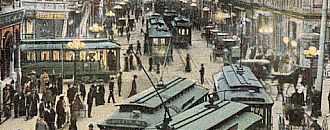 THE BIRTH OF RAIL THE BIRTH OF RAIL |
|
| 1873 | Main Street Railroad Company The Los Angeles City Council authorized the maintenance of two railroad tracks. The Main Street Railroad Company began, but nothing ever came of the project. |
| 1874 | Spring and West 6th Street Railroad The Spring and 6th Street franchise started, serving the downtown Los Angeles area. This single track horse car line began public transit in Los Angeles. |
| 1874-1875 | Main Street & Agricultural Railroad The Main Street and Agricultural Railroad was the first suburban line in Los Angeles. |
| 1875 | East Los Angeles & San Pedro Railway Company Due to low patronage, the railway company went under in just four years. |
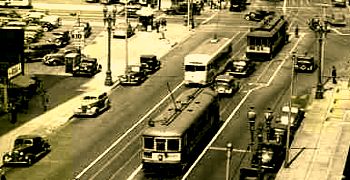 RAIL EXPANSION and MODERNIZATION RAIL EXPANSION and MODERNIZATION |
|
| 1875-1899 | Los Angeles & Aliso Street Railroad Company Regular service began in 1877 and as ridership increased a second line, the East First Street line, was built. In 1899, it became a cable railway. |
| 1883 | City Railroad Company The first line dedicated exclusively to public transit; other lines had been largely focused on real estate promotion. |
| 1885 | Second Street Cable Railroad Company Operated on a single track system. |
| 1886 | The Central Railroad Company Developed in 1883 to be a part of the Los Angeles & Aliso Railroad. It eventually merged with City Railroad. |
| 1886-1888 | Temple Street Cable Railway Company Carried more passengers than any of the other lines at the time. |
| 1896-1897 | Many of the major horse and cable cars operating in Los Angeles converted to electrical power. |
| back to top | |
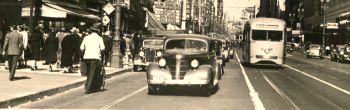 DEATH OF THE TROLLEY DEATH OF THE TROLLEY |
|
| 1911 | Pacific Electric Railway Company Eight separate companies merged into the Pacific Electric Railway Company. |
| 1925-1955 | Pacific Electric Subway The Subway opened on November 30, 1925, running 1,045 feet underground. In 1955, the last line using the subway was converted to buses. By 1933, Pacific Electric and Los Angeles Railway also began bus passenger service, but patronage of both rail and bus had been hurt by the wide-spread use of the automobile. |
| 1945 | Los Angeles Transit Lines The controlling interest in the Los Angeles Railway was purchased by National City Lines, which was run by the five Fitzgerald brothers and had support from the oil industry. They renamed it the Los Angeles Transit Lines, substituting buses on most of the street car lines. Further reading on the death of the trolley in L.A.: “Did Auto, Oil Conspiracy Put the Brakes on Trolleys?” (Los Angeles Times, March 23, 2003) “The Fitzgeralds Go. West.” (Time, December 18, 1944) |
| back to top | |
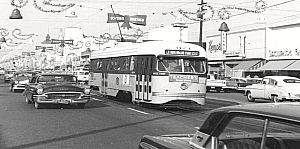 FROM PRIVATE TO PUBLIC TO TODAY FROM PRIVATE TO PUBLIC TO TODAY |
|
| 1953-1958 | Metropolitan Coach Lines Pacific Electric sold its passenger rail cars and buses to the Metropolitan Coach Lines bus company. |
| 1951-1964 | Los Angeles Metropolitan Transit Authority This agency was created by the California Legislature to develop a monorail system along the Los Angeles River. In 1958, the Transit Authority purchased Metropolitan Coach Lines and Los Angeles Transit Lines. Paid for with state dollars, operation of transportation in Los Angeles was public for the first time. |
| 1964-1993 | Southern Rapid Transit District Mandated by the legislature to improve bus systems, and design and build a transit system for Los Angeles. |
| 1976-1993 | Los Angeles County Transportation Commission The California legislature created the Los Angeles County Transportation Commission (LACTC) to oversee public transit and highway policy in the nation’s largest county. |
| 1992-present | Los Angeles County Metropolitan Transportation Authority Metrolink operations began. The new MTA was created by Legislature, merging the Los Angeles County Transportation Commission and the Southern California Rapid Transit District. |
| back to top | |
Sources: Los Angeles County Metropolitan Transportation Authority, the Electric Railway Historical Association of Southern California
Photos: Courtesy of Los Angeles County Metropolitan Transportation Authority and Archive


