
In This Episode << SLIDE LEFT TO SEE ADDITIONAL SEGMENTS
Religious Tensions in India
[MYPLAYLIST=2]
KIM LAWTON, guest anchor: Mourning continued around the world in the wake of the terrorist attacks in Mumbai, India. Nearly 200 people were killed in the 60-hour siege of several sites, and hundreds of others were wounded. Among the dead were two Americans on a spiritual pilgrimage with the Synchronicity Foundation, a meditation community in Virginia. In Israel, thousands of Orthodox Jews attended funerals for six people killed at Mumbai’s Chabad house, an outreach center run by the Chabad-Lubavitch movement within Hasidic Judaism. The Chabad headquarters in New York solicited mitzvot, or good deeds, in their memory. At the Vatican, Pope Benedict XVI led special prayers for all the victims and called the siege “cruel and senseless violence.” Islamic groups around the world also condemned the attacks, which have been linked to Muslim militants from Pakistan. The Muslim Council of Britain said this was a case where a few terrorists “bring the entire faith into disrepute.”
Joining me with more about the implications of all of this is Timothy Shah, adjunct senior fellow for religion and foreign policy at the Council on Foreign Relations. Tim, welcome. Tell us how religion was tied up in this.
TIM SHAH (Adjunct Senior Fellow, Religion and Foreign Policy, Council on Foreign Relations): In a number of ways, and in really two big ways in particular. First is that the group that was most likely involved in these terrible attacks in Mumbai was not just a militant group, as we often see in the press, but it was a group motivated by religious ideology. The group is known as Lashkar-e-Taiba, which means “Army of the Pure,” and it continues to operate openly in Pakistan today. It has reconstituted itself as a faith-based NGO, but it is still a radical Islamic organization motivated by religious ideology. The second way in which religion is involved is that these attacks help to intensify a very volatile mix of religion and politics in India, which especially involves the Hindu nationalist movement and its political wing, the BJP.
LAWTON: Now where does this leave India’s Muslim population?
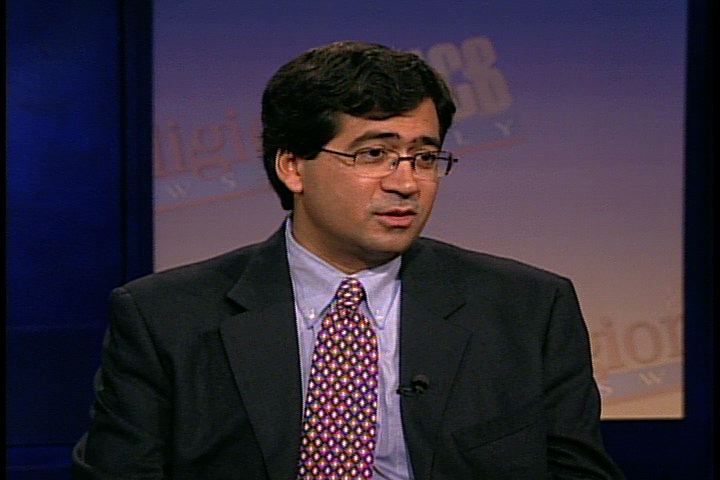
Timothy Shah |
Mr. SHAH: It raises some questions and suspicions in the minds of many Indians and also people outside of India as to whether India’s very large Muslim community was in some way involved in this, if not as the prime instigators perhaps as accomplices. India has a very large Muslim community. It’s the third largest Muslim population in the world, making India the third largest Muslim country in the world of about 130 million people, and so there are questions —so far no concrete evidence I should emphasize — but there are questions and suspicions about the role of India’s Muslims.
LAWTON: But India’s Muslims have not been part of some of these movements by and large, is that correct?
Mr. SHAH: That’s right. There have been a number of attacks — terrorist attacks in India in the last five or six years and there has been evidence in some cases of local, home-grown Muslim groups involved. One group is called the Students Islamic Movement of India — SIMI. That has been involved in some attacks. But by and large the vast majority of India’s Muslims are not only not involved in these kinds of attacks, but have no sympathy whatsoever with them.
LAWTON: And you mentioned, because of — there’s also a violent streak in some of the Hindu nationalist movement …
Mr. SHAH: Yes, absolutely …
LAWTON: … as well, that this really puts the future of India as a multifaith democracy in jeopardy?
Mr. SHAH: That’s right. In fact, it’s actually very striking that in the last few weeks a Hindu terror network was uncovered by Indian police, and there are some elements of the Hindu nationalist movement that have violent tendencies. We’ve seen one group, the Vishwa Hindu Parishad or World Hindu Council, conduct very violent attacks against Christians in eastern India in Orissa, just in the last few weeks and months. So yes, and one really fears that in the light of these attacks these groups would really want to attack Muslims and other religious minorities in a more dramatic way.
LAWTON: All right, Tim Shah from the Council on Foreign Relations, thank you very much.
Mr. SHAH: Thank you.
