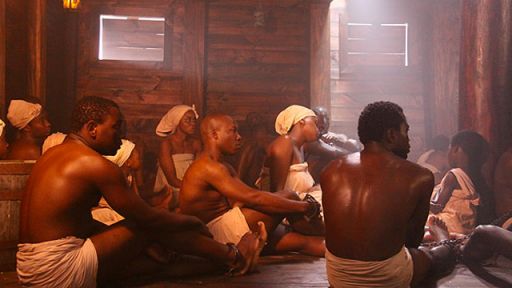
Buried off the waters of Africa’s southernmost coast is the slave ship Meermin, whose fatal voyage tells a lost chapter in the history of the salve trade and one of South Africa’s first freedom fighters: Massavana. The story began nearly 250 years ago in late January 1766, when the Meermin set sail from Madagascar carrying slaves to South Africa. Chained and crammed so tightly below deck they almost could not move was a human cargo bound for the Cape Town colony of Dutch East India Company (VOC). But in a dramatic twist of fate, the ship never made it to its final destination.
Instead, one man, who refused to become a slave, led his fellow prisoners in a mutiny and took over the ship. They then ordered the Dutch crew to sail them back home to freedom. But the experienced Dutch sailors deceived the slaves and steered the boat towards Cape Town anyway. When the slaves realized what had happened, a bloody battle with militia on shore left the surviving slaves captives again and the Meermin a sinking wreck. The final chapter of this affair took place in the Dutch court in Cape Town and it is the record of that trial that allows us to tell this story today. The extraordinary outcome saw 26 year-old mutiny leader Massavana spared execution for lack of evidence although he was effectively imprisoned for life. The two top officers were order dismissed for incompetence.
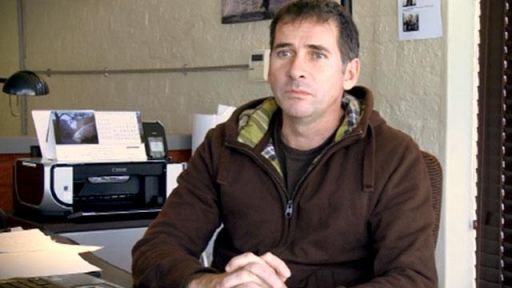
The story is told on THIRTEEN’s Secrets of the Dead’s premiere of Slave Ship Mutiny, airing nationally Wednesday, November 10, 2010 at 8 p.m. (ET) on PBS (check local listings). Narrated by actor Liev Schreiber (Salt and X-Men Origins: Wolverine), the film tracks the efforts of marine archaeologist Jaco Boshoff, historian Nigel Worden and slave descendent Lucy Campbell to discover the full story of this historic event. With the help of detailed VOC archives and court transcripts, they learn what happened on the Meermin, how the slaves were able to overpower their captors, and why the ship ended up wrecked on a wild, windswept beach 200 miles east of Cape Town. An additional interview with South Africa’s leading human rights advocate, Archbishop Desmond Tutu adds context to the story.
Based on survivor accounts, Slave Ship Mutiny re-enacts the incredible events that led to Meermin’s mutiny and shipwreck. Three pivotal characters who contributed to its downfall were first-time slave ship captain Gerrit Muller, chief merchant Johann Krause and his assistant Olaf Leij. As an experienced shipmaster, Krause undermined Muller’s authority. To prevent slaves from dying and spreading diseases in the overcrowded cargo space, he convinced the captain to unshackle the slaves and have them do chores above deck. This was strictly against VOC policies. Krause believed, as a slave master, he was intellectually superior to his human properties and could control them on deck. In a shocking act of boldness, he ordered the slaves to clean Malagasy spears he picked up as souvenirs from Madagascar. As soon as the weapons were handed to the slaves, Massavana and his fellow men seized the opportunity and started a violent revolt against the sailors. The bloody brawl left Muller badly injured and Krause dead. Leij was left in charge of the beleaguered crew instructed by Massavana to sail back to Madagascar which they didn’t. Instead, they sailed towards the Dutch settlement Struisbaai. Doubting Leij, Massavana sent his men to light three bonfires on shore to confirm it was their country. Desperate for help, Leij sent a bottled message which was miraculously received by Johannes La Sueur, magistrate of the settlement. La Sueur lit the smoke signals and cobbled together a make-shift militia of nervous farmers to recapture the rebel slaves with blundering success. Eventually, the confrontation ended with the wrecked Meermin aground, never to sail again.
Looking back, the rulings of the VOC Court of Justice were a huge step in the recognition of oppressed people as free-thinking individuals. Leij was fired from VOC and Muller was stripped of his captain duties and sent back to Amsterdam. Massavana was sentenced at the mercy of the court to be imprisoned on Robben Island, where he died three years later.
From 1658 to 1838, VOC imported an estimated 63,000 slaves into the Cape colony and millions more to North and South America. Massavana was just one of them. His struggle serves as a reminder of that era and his act of defiance encapsulated the indomitable human spirit that still resonates today.
THIRTEEN’s Secrets of the Dead: Slave Ship Mutiny is an Off the Fence production for THIRTEEN in association with ARTE and WNET.ORG for PBS. Joe Kennedy is Writer/Producer. Nic Young and Joe Kennedy are Directors. Katharina Pechel is Producer. Ellen Windemuth is Executive Producer for Off the Fence. Hélène Coldefy is Executive Producer for ARTE. Jared Lipworth is Executive Producer. William R. Grant is Executive Producer of Secrets of the Dead.