|
|
Posted: June 18th, 2008
Voyage of the Courtesans
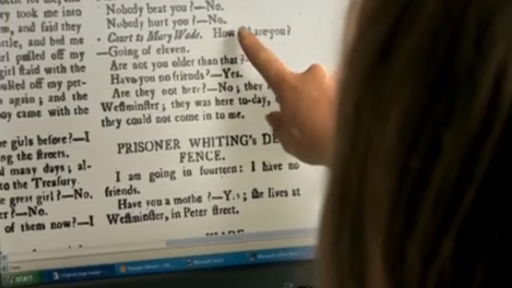
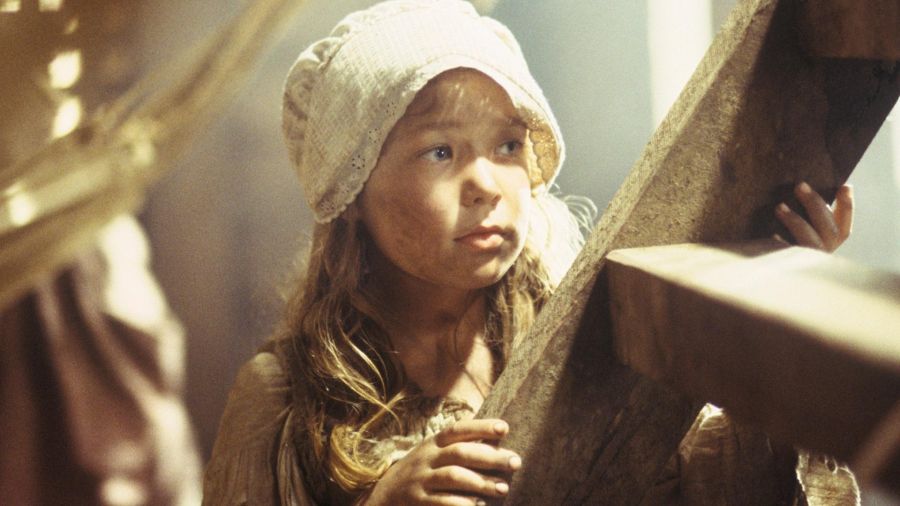
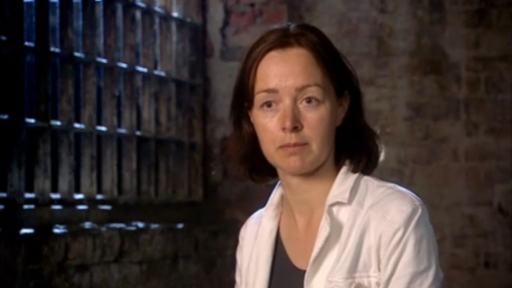
To view this site, you need to have Flash Player 9 Loading chapter info... In 1789, more than 200 female thieves, prostitutes, and con artists were rounded up from London’s most notorious prisons and shipped off to an Australian penal colony aboard a leaky vessel named the Lady Juliana. For the English government, the convicts had two uses: to prevent the starving and isolated male colonists from engaging in “gross irregularities,” and to act as breeding stock for the troubled outpost. But once aboard, the wily women turned their banishment into opportunity, transforming their ship into a rowdy floating brothel. By the time they reached Sydney Cove, they were fit and healthy, and some had even amassed enough money to support themselves. Instead of an assured life of servitude, they took control, and — along with their offspring — helped guarantee a new world’s future. Using intensive research and long-hidden historical records, SECRETS OF THE DEAD: “Voyage of the Courtesans” intertwines current investigations with actual details of the voyage of the Lady Juliana. Three 21st-century Australian women — each of their great-great-great-great-great grandmothers had been a convict in Georgian England — discover the startling story of their ancestors. Helen Phillips, a senior Anglican minister for the diocese of Tasmania, is a descendent of a prostitute named Rachel Hoddy. Delia Dray, a sheep farmer and senior government horticulturalist, traces her lineage back to Ann Marsh, who was convicted of stealing a bushel of wheat. Meagen Benson, a successful bank communications manager, descends from destitute street urchin Mary Wade, who was sentenced for stealing a child’s clothes in a public place. How did Rachel Hoddy, Ann Marsh, and Mary Wade find themselves on a prison ship banished to the ends of the earth? What became of them once they reached Sydney Cove? Providing information from archived documents, detailed records and excerpts from the memoir of Lady Juliana steward John Nicol, and historians’ accounts, SECRETS OF THE DEAD: “Voyage of the Courtesans” follows the modern-day women as they return to the scenes of their ancestors’ crimes in London and discover how these derelict convicts became the founding mothers of Australia. |
Mumbai Massacre: Watch a Preview
Timed for broadcast on the first anniversary of the attacks, this episode brings viewers first-hand survivor accounts, closed-circuit footage of the chaos from within the hotels and actual words spoken by both victims and terrorists.
I find this part of history so interesting. It is funny how today these women are still looked down upon because they were labeled as prostitutes. I am glad to see historians such as Deborah Oxley and Joy Damousi reassess the image of these women and shine some light on the past. People today need to understand that the definition of prostitution almost changed once aboard transport.
When will Voyage of the Courtesans air again? Thank you.
It amazes me that prostitution is still looked down upon. Honestly, I think as much as men desire us; they fear us as well. Their fear stems from us being able to use what we have for survival. No woman just decides to become a “escort”, “lady of the night” or whatever you want to call it. Usually, its a decision of survival due to rules a desperate woman is forced to break by not resorting to becoming a beggar or a thief. I applaud their will for a better future………you’ve been kissed by a NjPixie; Lauren….that’s me!
were there not any native women the colonists could have survived with? Oh, wait, this is an English colony, not a Spanish one.
Jean Luc, i’m confused over you comment “were there not any native women the colonists could have survived with? Oh, wait, this is an English colony, not a Spanish one.” You are wildy mistaken if you for some reason think of spanish colonies were free from massacres??? Though is interesting to note, in the case of the natives of New Zealand, a situation which could be seen as been similar to the Spainish conquests, insofar as the country was essentialy a state or states, unlike the Australia where the Amboriginals were nomadic and dispersed, as to require no conquest per say. That colonist did survive with natives – among reasons are that the natives were settled and had a culture recognisable to westerners such as trade, law, etc; and that the the women were seen as ‘attractive’ to western eyes. Unfortunatley this was not the case in Tasmania – where the opposite was the case.
This reminds me of the movie Rabbit Proof Fence, how servitude in Australia continued for many years. Are there any documentaries on the native women and girls abuse, kidnapping and slavery? I do agree with Lauren, some women are forced into this life style. Everyone doesn’t want Government assistance or to live in dangerous neighborhoods.
I wish all I had to do was spread my legs for awhile and earn big bucks doing “it”! Prostitution is and should always be Illeagal!! That is not what women are for! They should “serve man in the capacity of womanhood and bear children, then keep and maintain a household.”
received my aetn list too late and missed the episodes of secrets of the dead and voyage of the courtsians will these be shown again? if not is there a CD i can rent or obtain
Having played a courtesan in Rigoletto at a Carnival party I have to wonder why operas continually feature courtesans only to punish them. Is this an Italian thing, the morality play punishing self serving women by having them die alone? Or at least have their party ruined by an outraged count putting a curse on the whole shebang since his daughter was ravaged and his family name besmirched? Killjoy. Actually he gets punished too as we see him led off to the dungeon. So being good is subjective, it’s a trial by fire. If you succeed, then good for you to be so clever. Indeed in Rigoletto the duke is a rake and he gets away with it all, singing blissfully about how women are so fickle they are like feathers in the breeze . . . always lying even when they are smiling. Keep smiling girls.
interesting story; it should be remembered that a key factor in establishing the penal colony at Sydney Cove 1n 1778 was that the American Declaration of Independence in 1776 meant that convicts could no longer be transported to the American Colonies and the Colony of New South Wales was established in part to relieve the overcrowding in Jails
I just caught this episode last night, happened to be flipping channels. I am always intrigued by events & situations that start out in wretchedness and, ultimately, prove victorious. I am today doing more research on both Sydney and these women, and posting an article about them on my website,God, History and You
Terry,
There’s a difference?
For those of you interested in a more balanced view of the American frontier, I strongly recommend looking into the contributions made by these women’s counterparts here…American history and historical archaeology have told a very different story than bluenosed ‘official’ versions. In the late 19th century our town had within the space of a few city blocks a fairly conventional old boy’s club city hall, at least two red light districts that served it, and the nation’s first Congresswoman. There’s much more to the social changes of the ‘civilizing’ of the West than ranch wives, spinster school marms and church women. Let’s tell all the tales. A community without women has no roots.
all
Terry Wambolt.I would like to ask this person what century are you from?Because woman are not here just to serve man.Woman can do any thing a man can do work wise I say.Not just to bear children and keep a household.I just wish men could go through what us women do.But theses days in the 20th&21 century we have done alot.And as far as the Courtesans they must have been very strong woman and have alot of guts to surive the voyage all the way to Australian.And to make a new life for them selfs.We were once called the weaker sex.But were never were the weaker sex.We are strong and can do what needs done no matter what.As someone said along time ago a mans work is from sun to sun a womans work is never done.And I’m so looking forward to watching thei programe this week .TY
While this story is interesting it is hardly encouraging. I use no feminist or religious beliefs to guide my opinion. These women were selling sex and its expected that we should look upon them honorably? Them and the men who sought their services should have been lynched.
I wonder how many countries and areas have been settled by women such as these. Times were hard, life was hideous in England then and it is the oldest trade in the world which many men were users. Excellent history lesson (I have so often wondered about Australia and its strange beginnings with the castoffs of society. Hope this is shown again, as I missed the episode.
While prostitution is by no means a career that a parent would wish upon their child, I feel that this was the safest option available to these women. Had they not agreed to prostitution they probably would have been raped and overall abused. Many of these women would have died on the journey to Australia. By becoming prostitutes these women allowed themselves to become in charge of their situation as much as they could. I know that this goes against a lot of people’s basic beliefs and morals, but I think that we need to ask ourselves what we would have done in the same situation. I think that we can all remember the news story of the man who chopped his own arm off when it became wedged in a crack away from the beaten trail. We can’t judge these women fairly, I believe, until we have been in a similar situation.
I also think that the overall story off how Australia was a penal colony is inspiring in itself. What was once a place where no ‘respectable’ person would go is now as much of a part of the ‘respectable’ world as any other country. When we think of Australia today we think of surfing, kangaroos, Crocodile Dundee, and the 2000 Olympics not convicts. I feel that this story of settlement makes Australia all the more unique.
rita and debra g, you have to look at everything in its historical context. “The Floating Brothel” upon which Voyage of the Courtesans was based, was one of the many books I read while researching Star-Crossed (Knopf, 2006), the story of an 18th-century orphaned British teen who narrowly avoided becoming one of these women.