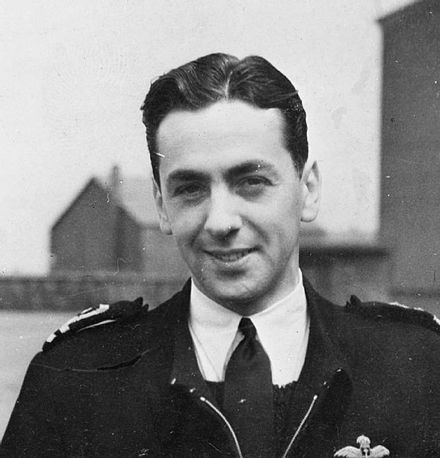
Captain Eric Brown
No test pilot in history has amassed a track record to compare with that of Captain Eric Brown, whose 31-year career with Britain’s Royal Navy included a stint during World War II as the chief test pilot at the Royal Aircraft Establishment in Farnborough, England — the country’s primary flight research facility. Brown, now 86 years old and retired, flew a stunning 487 different types of aircraft, a feat that puts him in the GUINNESS BOOK OF WORLD RECORDS — and is not, he says, likely ever to be repeated. “One must understand that it was obtained in unusual circumstances,” he says. “I was chief test pilot at our main research establishment for the war years and every type of aircraft that one could think of — from Britain and the United States, and captured aircraft from Germany, Italy, and Japan — passed through our hands.”
After the war, Brown continued to fly new aircraft as part of the surge in civilian aeronautics. “We got very involved in that,” Brown says, “and particularly in helping countries in Europe which had been devastated during World War II and had no facilities, or testing facilities, or pilots to assess their aircraft. Also, one must remember that this was the beginning of the jet era and we were in that tremendously fascinating period when we were transforming from piston-engine aircraft to jet aircraft, and learning the problems they produced — which were few, but there were some — and finding out how to operate these. So it was a very formative time.”
For Brown, the flying bug struck early. He took his first flight when he was eight years old. At the controls was his father, who had been a pilot in the Royal Flying Corps during World War I. “We spoke a lot about flying and this was the fundamental reason for my interest,” Brown says. Brown learned to fly on his own while a student at Edinburgh University in Scotland.
“In Britain we have things called university air squadrons and the major universities have a squadron set up by the Royal Air Force in which you are given flying training free of charge,” he says. The Air Force hopes that at the end of the period, when you’ve received your wings, you will stay with them. But you are under no obligation to do so. I started to fly when I was almost 18, and from that point on there wasn’t any doubt that this was what I wanted to do.”

German Messerschmitt 163
During his career, Brown had the opportunity to test both jets and their predecessors, piston-engine aircraft. Although he learned to fly on the older piston-engine models, he quickly jumped on the jet bandwagon. “The jet is the much better aircraft because it is basically an engine with many many fewer moving parts than piston-engine aircraft, so therefore it must be fundamentally more reliable,” he says. Also, if you wish to increase the power, it is almost limitless with the jet engine, whereas the piston-engine almost reached the limit of its power by the end of World War II. Also, the piston-engine can never go supersonic, because it is associated with a propeller and the drag of that propeller will prevent it from going supersonic.”
The Messerschmitt 163, the revolutionary “flying bomb” dreamed up by German aircraft designer Helmut Walter during World War II, and featured in SECRETS OF THE DEAD: “The Hunt for Nazi Scientists,” was neither a traditional piston-driven aircraft nor a jet; it ran on rocket fuel.
“Revolutionary it undoubtedly was. It was very innovative and had a lot of extremely new features,” Brown says. “But if you examine its worth as an operational aircraft, I would say it was a tool of desperation used by the Germans in the later stages of the war and with little honest effect.” The Me-163 may have been a desperation move, but it was “a delight to fly,” Brown says, “once you had gotten your wits about you. It was so rapid that the initial feeling was that it was a jump ahead of you. It was rather like being in charge of a runaway train — but exciting, unquestionably.”
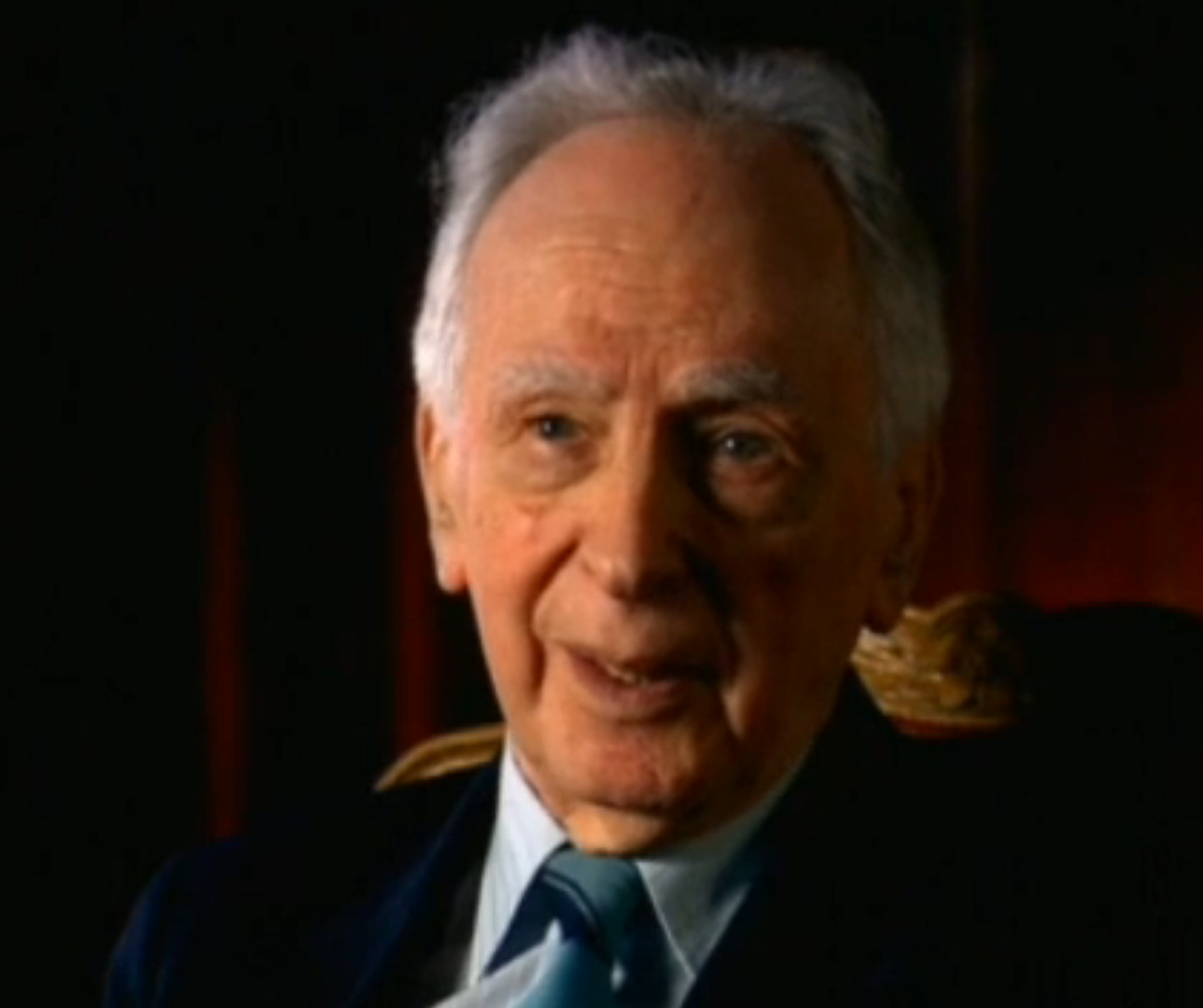
Captain Eric Brown, during filming for The Hunt for Nazi Scientists
These days, the only aircraft Brown pilots are in computer flight simulators, which he tests for eager aircraft aficionados. “The technology is impressive, but doesn’t stack up to the real thing,” he says. “I’m not an enthusiast about flight simulation. I realize that it is the short road to achieving something deeper than you would by having to produce the actual full-flying training under normal conditions. But, I’ve never met a simulator yet that is absolutely accurate in reproducing the handling qualities of the airplane it represents. There are shortcomings.” And yet, Brown adds, flight simulators do have a useful purpose. “One must give it this: simulators are very good for practicing safety drills in aircraft, without any danger of losing the aircraft if anything goes wrong. That is a great advantage.”
Harder than adjusting to the inadequacies of computer flight simulators has been not flying at all, says Brown, who turned in his pilot’s license when he was in his mid-70s. “It is like drug withdrawal, I imagine. You become a nuisance to your wife after you stop flying. You run around rather demented, not sure what to do with yourself. It really does have a rather powerful effect on you, because you had formerly led this high-intensity, active life. But, finally, I’ve come to terms with it. I’ve tried to replace it. I do a huge amount of lecturing and I’m an international university lecturer. I travel a lot, I lecture a lot, and that keeps me out of trouble. Most of the time.”