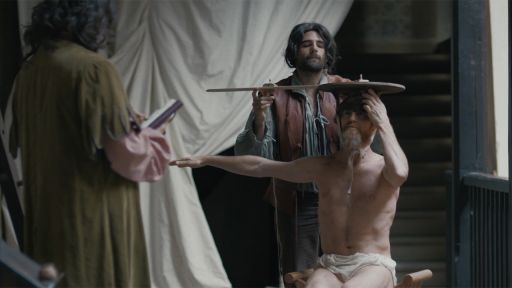
During the Renaissance, the goal of art was the expression of harmony, and harmony is a matter of proportion. Leonardo was fascinated with proportion. Vitruvian Man is a pure expression of the Renaissance – a secular, almost carnal figure whose reach extends to the very ...
The Cerrejón crocodile the scientists unearthed came out to be about 28 feet, which is bigger than any crocodile that we have alive today. More importantly, it was of a size to match the croc from the dinosaur era, Sarcosuchus. Now that we know how ...
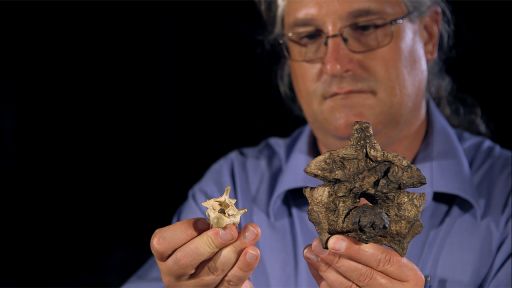
Experts examined the bones they discovered at the Cerrejón mine. They recognized that although it was the size of a crocodile vertebrae, it actually belonged to a snake. Anacondas are the largest snakes alive today, but their vertebrae are dwarfed when placed next to that ...
Richard Rhodes Richard Rhodes is an American journalist and historian is the author or editor of twenty-three books including The Making of the Atomic Bomb, which won a Pulitzer Prize in Nonfiction, a National Book Award and a National Book Critics Circle Award; Dark Sun: ...
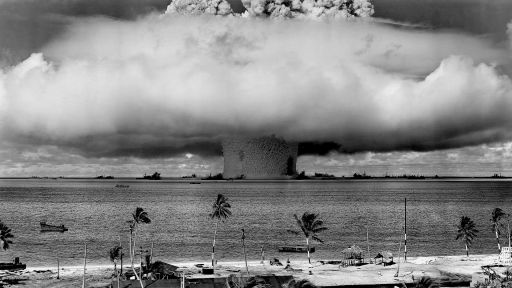
Beginning in the 1950s, American and Soviet scientists embarked on a perilous race to see who could build and detonate the world’s largest bomb. The results exceeded all expectations about how big a bomb could be built. Initially, the Americans led the way, but then ...
Learn how the 1918 flu genome is helping to answer mysteries about the flu virus, such as where it originated, why it was so virulent, and why it struck with such ferocity among presumably healthy young adults.