Overview
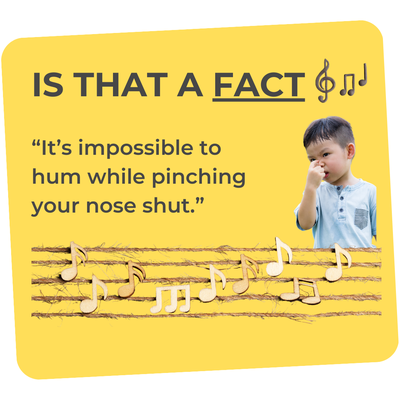
Is that a fact? — Students will be able to explain the difference between fact and opinion, and identify objective and subjective news stories, pink slime journalism, and satire. Grades 5 - 12 (45 mins)
Objectives
Students will be able to:
- Explain the difference between fact and opinion
- Distinguish between objective and subjective news stories
- Define “pink slime journalism”
- Recognize satire
Downloadable Lesson Documents
Before You Watch
Discussion: How can you tell if news you see online or on social media is factual or reflects an opinion?
- Check out these related lessons about Pink Slime Journalism and Satire.
WHILE YOU WATCH
Tell students to preview the following questions. Then answer them while they watch the How2Internet video. According to the video…
- What percentage of 15-year-olds can tell facts from opinions according to a 2018 study? 86% 14% 50% 33%
- Is this statement a fact or opinion (circle one):
“Drinking milk is the best way to lose weight” - Label each statement as fact or opinion (circle one):
Her hair is brown. (fact — opinion)
Her hair is beautiful. (fact — opinion)
Their purple sneakers are cool. (fact — opinion)
They are wearing purple sneakers. (fact — opinion)
Ms. D. teaches English. (fact — opinion)
Ms. D is the best English teacher in the school. (fact — opinion) - Which element is NOT included in an objective news story?
- What are good questions to ask to identify a “pink slime” website?
What is its _______________?
Is it for profit or _______________?
Who are the_______________?
Do the authors have _______________ with bios?
Does it seem to have an agenda or _______________? - The best way to see if an online news source is credible or “pink slime” journalism is to investigate the _______________ page.
- Satire often uses humor or exaggeration to provide social _______________ , get laughs or _______________ , or just make a quick _______________ , not provide factual information.
AFTER YOU WATCH
- What are some red flags that that information posted online or on social media is subjective news, pink slime journalism, or paid sponsorships?
- Why is it sometimes hard to identify if a news story is objective or subjective?
- Do you believe online sites and social media platforms do enough to make sure readers understand what is factual news and what is an opinion piece? Why or why not? What else could be done?
EXIT TICKET
Write a statement that is a fact and a statement that is an opinion. Label them.
Standards
CC.ELA-LITERACY.RL.6 Analyze a case in which grasping a point of view requires distinguishing what is directly stated in a text from what is really meant (e.g., satire, sarcasm, irony, or understatement).
CC.ELA-LITERACY.RL.1 Cite strong and thorough textual evidence to support analysis of what the text says explicitly as well as inferences drawn from the text, including determining where the text leaves matters uncertain.
ISTE 1.2 Digital Citizen—Students recognize the rights, responsibilities and opportunities of living, learning and working in an interconnected digital world, and they act and model digital citizenship in ways that are safe, legal and ethical.
Chris Schwalm is a youth producer at PBS NewsHour Student Reporting Labs (SRL). Before coming to SRL, Chris taught high school journalism for 20 years in Lancaster, Penn. For 12 of those years, Chris reported on nights and weekends for the Lancaster News. In addition to the How2Internet series, Chris wrote SRL and MediaWise’s Teen Fact Checking Network lesson series on media literacy. You can reach him on Twitter/X @cschwalm.
These lessons were developed by PBS NewsHour Student Reporting Labs in partnership with MediaWise and the Teen Fact-Checking Network, which are part of the Poynter Institute. This partnership has been made possible with support from Google.
To provide feedback on this resource, please fill out the form here.