Fake news is making news, and it’s a problem.
Not only did a BuzzFeed data analysis find that viral stories falsely claiming that the Pope endorsed Donald Trump and that Hillary Clinton sold weapons to terrorists receive more Facebook attention than the most popular news stories from established news outlets, but a false story about child trafficking in a Washington, D.C. pizza restaurant inspired a North Carolina man to drive 5 hours with a shotgun and other weapons to investigate.
This lesson gives students media literacy skills they need to navigate the media, including how to spot fake news.
Subjects
Social studies, U.S. government, civics, journalism
Estimated Time
One 50-minute class
Grade Level
6-12
Introduction
A recent study by Stanford University found an overwhelming majority of students were not able to tell the difference between so-called fake news and real news. Part of the solution involves providing students with the media literacy skills they need to evaluate sources, including social media. With the help of News Hour Classroom, students will explore the problems with fake news and gain confidence exploring the media that they come across every day.
Essential question
How do you know if a news source is reliable?
Warm up activity
Complete the following activity with your students: Did fake news influence the outcome of Election 2016? You may also want to show your class Craig Silverman’s story from Buzzfeed, which is the subject of the News Hour piece.
Procedure
Note: Given time constraints, you may choose to watch the video, read the text or choose which questions you will address with your students.
Main activity
- A group of researchers at Stanford University made quite a stir recently when their study revealed how susceptible young people are to fake news. Listen to the NPR story (4:14) Stanford Study Finds Most Students Vulnerable To Fake News and ask your students why they think this piece made front-page headlines. Let your students know that the study has been the subject of conversation in newsrooms and faculty rooms across the country. They will appreciate knowing that you care about their well-being and are interested in teaching news literacy skills. Then, share the following with your students: Prof. Wineburg says one mistake schools make is to block certain websites from students while they are at school. “In many schools there are internet filters that direct students to previously vetted sites and reliable sources of information. But what happens when they leave school and they take out their phone and they look at their Twitter feed? How do they become prepared to make the choices about what to believe, what to forward, what to post to their friends when they’ve given no practice in doing those kinds of things in school?”
- Do your students agree with Dr. Wineburg?
- Should schools block certain websites? Why or why not?
- The News Literacy Project and Checkology created a checklist of “Ten questions for fake news detection.” Read it out loud with your students. Ask them if they have any questions about the checklist and which points they think will help them the most when it comes to detecting fake news.
- Next, explore the following top fake news stories from Craig Silverman’s Buzzfeed article. Using the checklist above–just based on the headline alone–how could students detect the likelihood of these stories being fake?
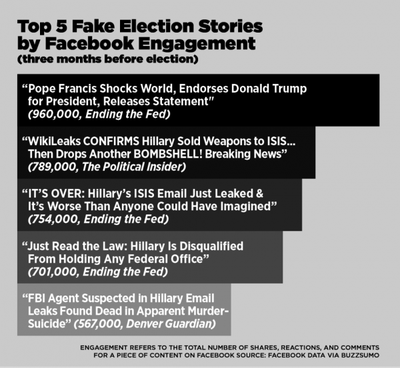
- Have students study two stories from the chart above by looking at the fact checking and debunking Internet rumor website Snopes.
- Nope Francis: Reports that His Holiness has endorsed Republican presidential candidate Donald Trump originated with a fake news web site
- FBI Agent Suspected in Hillary Email Leaks Found Dead: Reports that an FBI agent investigating Hillary Clinton’s use of a private e-mail server killed himself after murdering his wife are just fake news.
- How might students be able to figure out that these are fake news stories?
- What points from News Literacy Project’s checklist apply to these pieces?
- What should you do if you still have questions about the legitimacy of a source?
*Note : If you have any questions or concerns, talk with your technology coordinator or administrator and perhaps think about sending an email home letting parents know you are teaching important media literacy skills. There are many wonderful resources to help teachers learn about media literacy. Here are just a few to check out: The News Literacy Project, NAMLE, Media Education Lab, Project Look Smart and Center for News Literacy.
Extension Activities
- Fake news might be a case of history repeating itself. Check out the role fake news has played in U.S. history in this Washington Post piece: Fake News? That’s a very old story.
- Who are some of the people behind fake news? What would make a person want to create a fake news story? This Eastern European teenager says he’s just giving people what they want and making a lot more than the average yearly income of $5,000 in his hometown. Take a look at this NBC News story: Fake news: How a partying Macedonian teen earns thousands publishing lies
- We also recommend Full Frontal with Samantha Bee’s piece on Fake News, Real Consequences for more mature high school students. Be sure to preview before you show your class.
This lesson was published in 2016, and was updated July 27, 2026.
By Victoria Pasquantonio, PBS NewsHour education editor and 13-year social studies and English teacher.
Sign up to receive our weekly newsletter with Daily News Lessons and community events.
To provide feedback on News Hour Classroom's resources, including this lesson, click here.